
Stockholm spreads across islands where Lake Mälaren meets the Baltic Sea, giving the Swedish capital an unusual sense of space and light. Medieval lanes, grand nineteenth-century boulevards and contemporary design coexist beside water that is always close. Ferries function as public transport, parks occupy former royal land, and an archipelago of thousands of islands begins beyond the center.
This Stockholm travel guide covers Gamla stan, Djurgården, Södermalm, Swedish food, public transport and a practical four-day itinerary. Three days suit the central highlights; a fourth creates time for an archipelago trip or a slower neighborhood day.
Why Visit Stockholm?
Stockholm balances culture and nature exceptionally well. The Vasa Museum preserves a nearly complete seventeenth-century warship, the Royal Palace communicates Sweden’s imperial past, and Fotografiska presents contemporary photography in a converted waterfront building. Between museums, travelers can walk forested Djurgården or cross bridges with broad city views.
The city also excels at everyday pleasures. Fika turns coffee and cake into a deliberate social pause, subway stations contain ambitious public art, and summer evenings stretch late into the night. Prices are high, but parks, viewpoints, many churches and long waterfront routes make an excellent visit possible without constant spending.
Gamla Stan
Begin in Gamla stan early, before Västerlånggatan fills with souvenir shoppers. Stockholm’s oldest district dates to the thirteenth century, though many visible buildings are from the sixteenth and seventeenth centuries. Leave the main street for narrow lanes around Prästgatan, Österlånggatan and the tiny Mårten Trotzigs gränd.
Stortorget is the old town’s central square, framed by colorful façades and the former stock-exchange building that now houses the Nobel Prize Museum. The museum explains Nobel’s legacy and introduces laureates through objects and personal stories. Its compact scale makes it easy to combine with a broader walk.
Stockholm Cathedral stands beside the palace and contains the dramatic medieval sculpture of Saint George and the Dragon. Check service times before entering and dress respectfully. Continue west to Riddarholmen for quieter lanes, a historic church and one of the best waterside views toward City Hall.
The Royal Palace
The Royal Palace remains an official royal residence and contains several visitor areas, including state apartments, the Treasury and the Tre Kronor Museum. Opening arrangements change with ceremonies and official events, so check the Royal Court’s website and decide which sections matter most.
Changing-of-the-guard ceremonies take place on scheduled days and attract crowds in the outer courtyard. Arrive early if the ceremony is a priority, but do not let it determine the entire visit. The interiors and historical exhibitions provide more context than the procession alone.
From the palace, walk downhill toward Skeppsbron for ferry views or cross to the Parliament building on Helgeandsholmen. Gamla stan is especially beautiful after dinner, when illuminated façades reflect in surrounding water.
City Hall and Kungsholmen
Stockholm City Hall is recognizable by its brick tower and golden Three Crowns. Its ceremonial interiors, including the Blue Hall used for the Nobel banquet and the mosaic-covered Golden Hall, can normally be seen only on a guided tour. Reserve ahead in summer and confirm the language.
The tower opens seasonally and offers a broad perspective over central islands, though access may involve stairs and timed groups. Even without entering, the waterfront garden provides superb views toward Riddarholmen and Södermalm.
Djurgården and the Vasa Museum
Djurgården is both a museum island and a major green space. Reach it by tram, bus, seasonal ferry or a pleasant walk along Strandvägen. The Vasa Museum is the essential first stop, built around a warship that sank on its maiden voyage in 1628 and was recovered centuries later.
The ship’s scale is immediately impressive, but exhibitions about construction, life on board, recovery and conservation make the visit meaningful. Allow at least two hours and use official tickets. Pre-purchased admission may not remove every queue, so arrive near opening during busy months.
Nearby Vrak explores maritime archaeology, while the Viking Museum uses multimedia storytelling. Select according to interest rather than attempting every museum. Between visits, walk the canal-side paths and landscaped grounds around Rosendal.
Skansen and Nordic Life
Skansen is the world’s oldest open-air museum, bringing historic buildings and craft traditions from across Sweden to a hillside on Djurgården. Costumed interpreters, workshops and seasonal celebrations turn it into more than an architecture collection. Families can easily spend half a day.
The site also contains Nordic animals. Summer brings folk traditions, while Advent markets and Midsummer celebrations offer distinctive experiences. Check the daily program before arriving.
Skansen’s elevated paths reveal excellent views across the harbor. Comfortable shoes are essential, and the sloping site may require planning for visitors with limited mobility.
Södermalm and Monteliusvägen
Södermalm combines former working-class streets with creative businesses, nightlife and some of Stockholm’s best viewpoints. Start around Slussen, then climb toward Monteliusvägen, a short cliffside path overlooking City Hall, Riddarholmen and Lake Mälaren. Sunrise and sunset are particularly rewarding.
Continue through Mariaberget’s wooden houses and quiet lanes before reaching Hornstull or the cafés around Mariatorget. East of Slussen, SoFo—the area south of Folkungagatan—contains independent shops, vintage stores and restaurants. The neighborhood is lived-in, so keep noise low on residential streets.
Fotografiska occupies a former customs building on the waterfront and stays open later than many museums on selected days. Its changing photography exhibitions and elevated café make it an effective evening option; check current hours and shows.
Östermalm, Norrmalm and Design
Östermalm is known for grand apartment blocks, embassies and polished shopping. Östermalms Saluhall is a handsome food market where counters sell seafood, cheese, meat and prepared Swedish dishes. Prices reflect the location, but browsing is free and lunchtime options vary.
Nearby Strandvägen forms one of Stockholm’s most elegant waterfront avenues and leads toward Djurgården. Inland, the Swedish History Museum covers Viking Age material and broader national history, while the Army Museum provides a focused military collection.
Swedish Food and Fika
Traditional meals extend beyond meatballs. Try gravlax, fried Baltic herring, toast Skagen, potato dumplings or seasonal game. Husmanskost refers to hearty home-style cooking and often provides good-value weekday lunches. Vegetarian interpretations are increasingly easy to find.
Fika is a pause for coffee and something sweet, not simply a takeaway drink. Cinnamon buns are ubiquitous, while cardamom buns offer a more aromatic alternative. Princess cake, layered with cream and green marzipan, is ideal for sharing. Many cafés encourage guests to linger outside peak periods.
For market browsing, compare Östermalms Saluhall with the more everyday counters at Hötorgshallen. Södermalm and Vasastan offer independent bakeries and modern Nordic restaurants, while food halls provide flexible choices for groups.
The Stockholm Archipelago
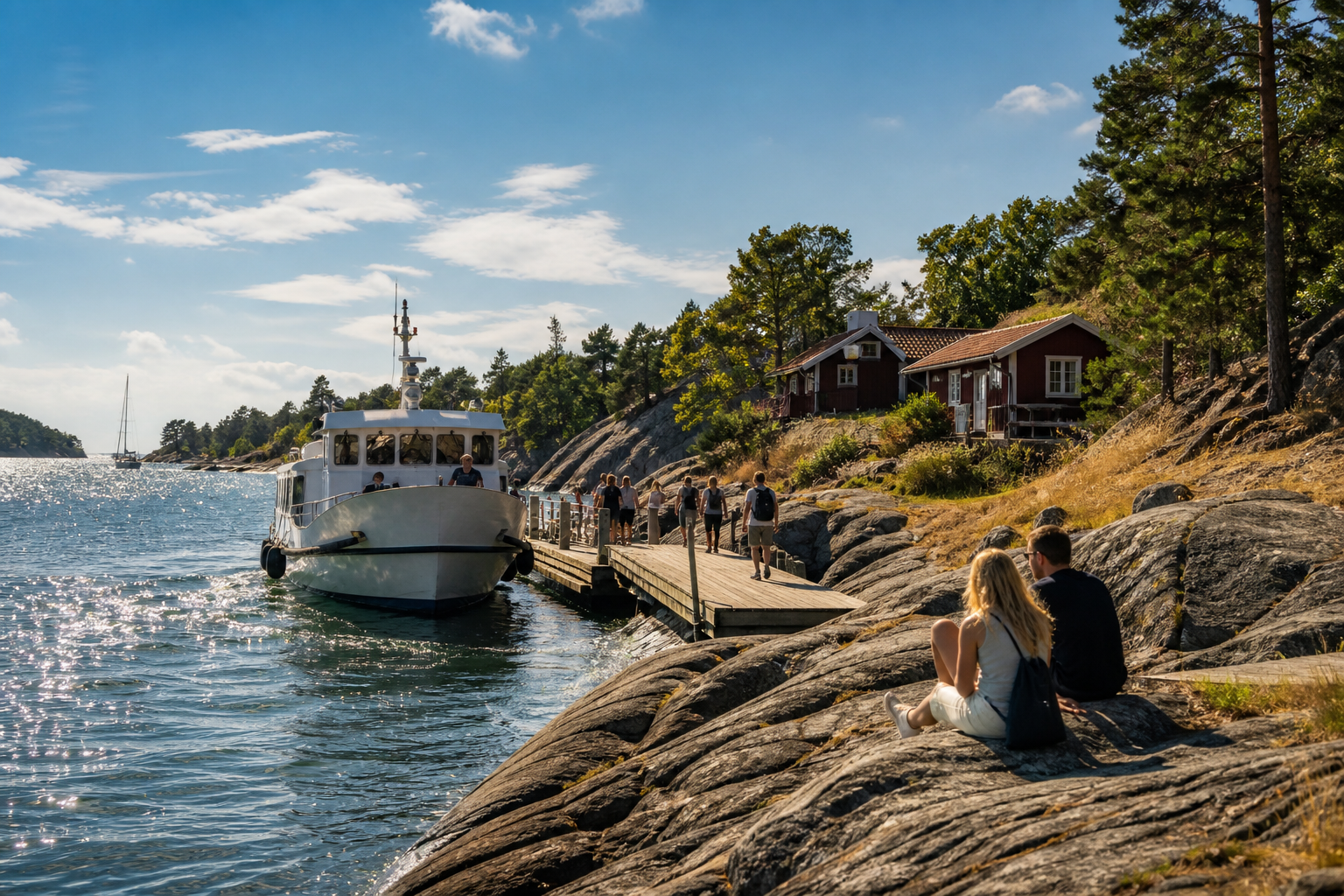
Stockholm’s archipelago begins close to the city and contains thousands of islands, from inhabited communities to bare skerries. A trip does not require an overnight stay. Fjäderholmarna provides a short introduction near the center, while Vaxholm offers a harbor town, fortress views and more time on the water.
Longer routes reach islands such as Grinda or Sandhamn, but schedules vary sharply by season. Plan the return before departure, check which ferry company serves the route and understand whether an SL ticket, separate ticket or reservation is required. Bring layers because wind on deck can be cold even in summer.
Do not overfill an island day. Choose one destination, walk marked paths, eat locally if services are open and leave enough time for the boat journey itself. The changing granite shoreline is the main attraction.
Getting Around Stockholm
Central Stockholm is walkable, but water and bridges make routes longer than they appear. SL integrates metro, buses, commuter rail, trams and certain ferries. Single tickets allow transfers during a defined validity period, while travelcards suit frequent use. Consult SL for current prices and included ferry routes.
Contactless payment can be used for adult single fares, while the SL app and cards support other products. Tap correctly at readers and keep the same payment method throughout. Airport services are separate: Arlanda Express is fast, commuter trains involve an airport supplement, and coaches may be cheaper but slower.
Ferries between Slussen, Skeppsholmen and Djurgården turn transport into sightseeing. Do not assume every archipelago boat belongs to the SL network.
Best Time to Visit
May through September offers long days, green parks and the broadest boat schedules. June is especially bright, while July can be quieter in business districts because residents take holidays. Accommodation remains expensive in peak summer.
Autumn brings color and cultural events, while winter offers Christmas markets and warm interiors. Daylight is very short in December and January, so schedule outdoor views near midday.
Where to Stay
Norrmalm is convenient for first visits and airport connections. Gamla stan is atmospheric but can be busy and involves cobbles. Södermalm suits nightlife and independent dining, Östermalm is elegant and quiet, and Vasastan provides residential cafés with easy metro access.
A Four-Day Stockholm Itinerary
On day one, explore Gamla stan early, visit the Royal Palace and Nobel Prize Museum, then walk to City Hall and return along the waterfront.
Use day two for the Vasa Museum and one additional Djurgården attraction. Ferry back toward Slussen and watch sunset from Monteliusvägen.
On day three, explore Södermalm, Fotografiska and a neighborhood bakery, then visit Östermalm’s market and Strandvägen.
Devote day four to Vaxholm or another seasonally appropriate archipelago island. In poor weather, substitute Skansen, the Nationalmuseum or subway art.
Final Tips for Stockholm
Reserve major museums and archipelago travel during summer, carry a payment card because many businesses are cashless, and pack layers even in July. Respect swimming notices, private waterfronts and quiet residential courtyards.
Stockholm is most memorable when its islands shape the itinerary. Cross bridges on foot, use a commuter ferry, pause for fika and leave space for reflected light on the water. The city’s combination of culture and landscape is not a backdrop; it is the experience itself.
Comments