
Kraków is one of Central Europe’s most rewarding walking cities. Its vast medieval market square anchors a web of historic lanes, Wawel Castle rises above the Vistula, and the former Jewish district of Kazimierz combines profound heritage with contemporary nightlife. Excellent museums, traditional food and nearby excursions make the city suitable for far more than a quick weekend.
This Kraków travel guide covers the Old Town, Wawel, Kazimierz, Podgórze, Polish food, public transport and a balanced four-day itinerary.
Why Visit Kraków?
Kraków escaped the physical destruction suffered by many Polish cities during the Second World War, leaving an unusually coherent historic center. Gothic churches, Renaissance courtyards and Baroque interiors remain connected by the Planty, a green belt following the former city walls. The result is compact, atmospheric and easy to understand on foot.
The city’s appeal is not limited to architecture. Jagiellonian University gives Kraków youthful energy, museums interpret royal, artistic and Jewish history, and an ambitious food scene complements affordable traditional restaurants. It is also an important base for understanding the Holocaust, though visits to related sites require time, preparation and respect.
Main Market Square
Begin at Rynek Główny early, before café terraces and tour groups occupy Europe’s largest medieval market square. The Cloth Hall divides the open space, St Mary’s Basilica rises from its eastern edge, and the Town Hall Tower survives from a demolished civic complex. Walk the full perimeter to appreciate how differently each side developed.
Inside St Mary’s, the carved altarpiece by Veit Stoss is the principal treasure. Tourist access and worship areas have separate arrangements, so check current entry times and dress respectfully. Every hour, a trumpeter plays the hejnał from the higher tower, ending the melody abruptly in accordance with local tradition.
Rynek Underground beneath the Cloth Hall uses archaeological remains and multimedia displays to explain medieval commerce and daily life. Timed entry is useful in busy periods. The museum adds valuable context to a square that can otherwise feel purely decorative.
The Royal Route and Planty
The traditional Royal Route begins near the Barbican and St Florian’s Gate, then follows Floriańska Street to the market square and Wawel. The surviving gate and defensive structures show how travelers once entered the city. Nearby streets become crowded, so explore them early or after dinner.
The Planty encircles the Old Town with trees, benches and walking paths. It replaced demolished fortifications in the nineteenth century and now provides a calm alternative to commercial lanes. A complete circuit takes time, but individual sections connect major attractions efficiently.
On the university side, visit Collegium Maius, the oldest building of Jagiellonian University. Its arcaded courtyard is beautiful, while guided interiors display academic collections associated with scholars including Nicolaus Copernicus. Check tour languages and schedules before arrival.
Wawel Hill
Wawel Hill brings together the Royal Castle, cathedral, courtyards and archaeological layers central to Polish national history. Entry to the grounds is free, while exhibitions inside the castle use separate timed tickets and daily visitor limits. Choose one or two routes rather than attempting everything.
The State Rooms, Royal Private Apartments, Crown Treasury and Lost Wawel exhibitions offer different perspectives. Availability changes with conservation and seasonal conditions, making the official Wawel website essential. Large bags must be checked, and punctual arrival matters for timed entries.
Wawel Cathedral contains royal tombs, chapels and the Sigismund Bell. Access rules differ from the castle museum. After visiting, descend toward the river and the dragon statue, then walk along the Vistula for a view back toward the fortified hill.
Kazimierz and Jewish Heritage
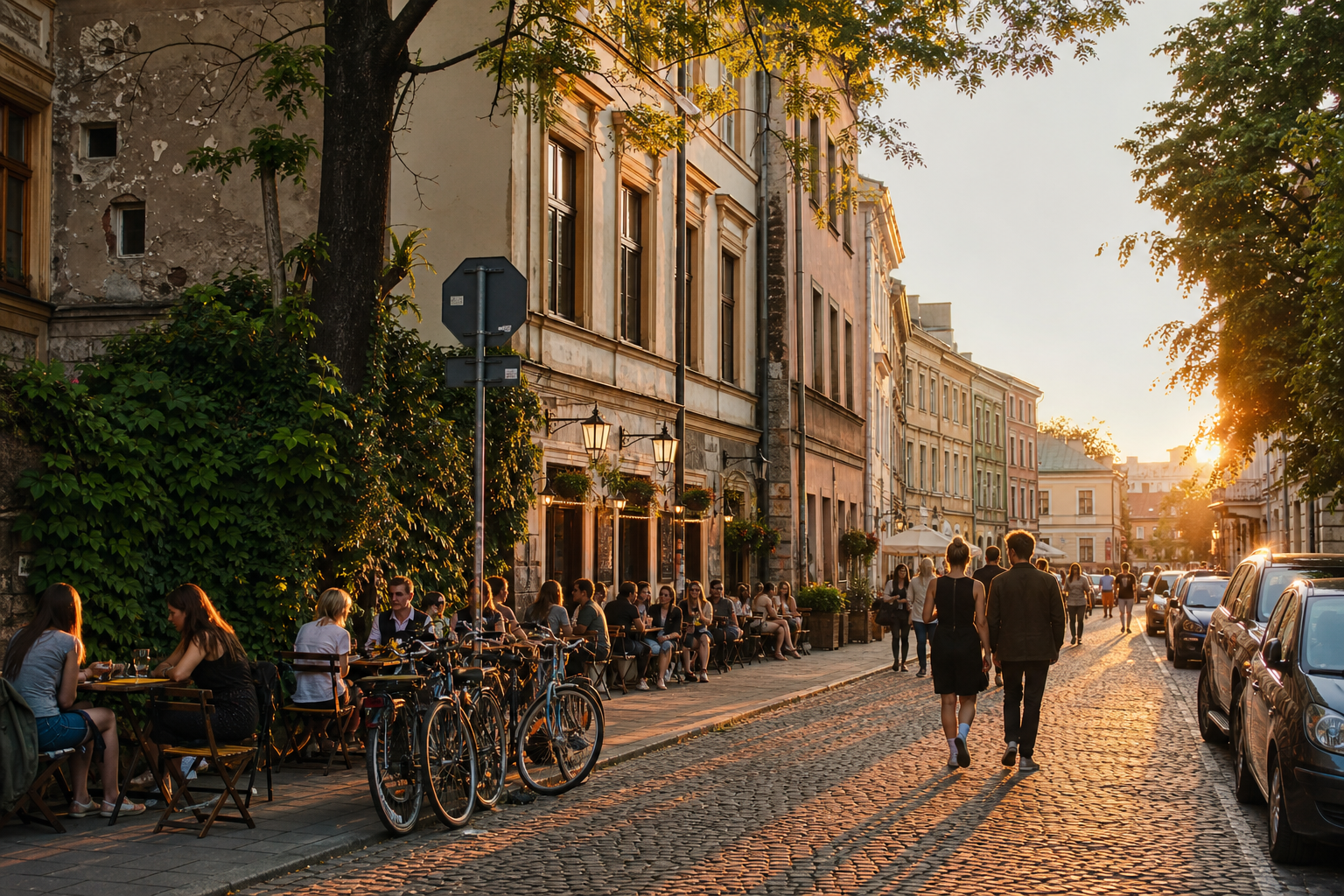
Kazimierz was historically a separate town and became a major center of Jewish life. Around Szeroka Street, the Old Synagogue, Remuh Synagogue and cemetery communicate different periods of that history. Sites remain places of worship or remembrance, so modest clothing and quiet behavior are appropriate.
The Galicia Jewish Museum uses photography and exhibitions to examine Jewish heritage and memory. It complements, rather than replaces, historic synagogues. Allow the district time beyond a checklist: courtyards, workshops and residential streets reveal how layers of Polish and Jewish history overlap.
Today Kazimierz is also known for cafés, restaurants, galleries and nightlife around Plac Nowy. Enjoy that contemporary energy without reducing the neighborhood to entertainment. Evening venues can be noisy, while side streets remain residential.
Podgórze and the Former Ghetto
Cross the Vistula on the Bernatek footbridge to Podgórze. Plac Bohaterów Getta, formerly the center of the Kraków Ghetto, is marked by empty bronze chairs representing absence and displacement. The square demands respectful attention rather than casual posing.
The Eagle Pharmacy museum tells the story of pharmacist Tadeusz Pankiewicz and life inside the ghetto. Nearby fragments of the ghetto wall survive at two locations. Together, these small sites provide essential context before visiting larger Holocaust memorials.
Oskar Schindler’s Enamel Factory houses a Museum of Kraków exhibition primarily about the city under Nazi occupation, not simply the biography popularized by film. Timed tickets often sell out, so book officially and allow at least two hours. The neighboring MOCAK museum offers a contemporary-art counterpoint.
Nowa Huta
Nowa Huta was planned after the Second World War as an industrial socialist city and later incorporated into Kraków. Its broad avenues, monumental residential blocks and central Plac Centralny contrast with the Old Town’s narrow streets.
Independent tours can explain political history, architecture and everyday life more effectively than a quick self-guided visit. The district is also a functioning residential area, not a theme park. Explore respectfully and support local cafés or cultural venues.
Trams make Nowa Huta straightforward to reach. Combine it with the Polish Aviation Museum or newer cultural institutions if time allows, but reserve at least half a day for the district itself.
Polish Food to Try
Pierogi appear with potato and cheese, meat, cabbage and mushroom, or seasonal fruit fillings. Kraków’s most distinctive street food is obwarzanek, a ring-shaped bread sprinkled with salt, sesame or poppy seeds and sold from licensed carts. Eat it fresh in the morning.
Try żurek sour rye soup, bigos stew, potato pancakes and kotlet schabowy. Milk bars provide inexpensive home-style meals with minimal ceremony, while modern restaurants reinterpret regional products with more refined presentation. Lunch specials often offer the best value.
Plac Nowy is associated with zapiekanka, a long open-faced baguette topped with mushrooms, cheese and other ingredients. Quality varies, so choose a busy stall cooking to order. For dessert, look for sernik cheesecake or kremówka custard cake.
Auschwitz-Birkenau as a Day Trip
The Auschwitz-Birkenau Memorial lies near Oświęcim, roughly west of Kraków. It is a place of mass murder and remembrance, not a conventional attraction. Visit only when you can give the experience adequate time and emotional attention.
Reserve through the official memorial website or choose a reputable transport provider that clearly identifies official entry arrangements. Rules, guide requirements and ticket release schedules can change. Avoid tours combining the memorial with entertainment-oriented stops in a rushed day.
Wear weather-appropriate clothing, follow photography restrictions and maintain silence where requested. The two principal sites cover a large area and involve significant walking. Build a quiet evening afterward rather than immediate nightlife.
Wieliczka Salt Mine
Wieliczka offers a very different excursion. Its historic mine contains underground chambers, saline lakes and chapels carved from salt. Standard tourist routes involve many stairs, long walking distances and controlled group tours.
Book an official language-specific tour and check accessibility before purchasing. Temperatures underground remain cool even in summer, so bring a layer. Direct buses, trains and organized transfers connect the mine with Kraków.
Travelers with only three days should usually choose either Wieliczka or Auschwitz-Birkenau, not both. Kraków itself deserves sufficient time.
Getting Around Kraków
The Old Town and Kazimierz are best explored on foot. Trams and buses cover Podgórze, Nowa Huta and outer districts through a time-and-zone ticket system. Buy the correct product from machines or authorized apps and validate paper tickets immediately after boarding.
Kraków Główny railway station connects directly with the old center through the Galeria Krakowska complex. Airport trains link Kraków Airport with the main station, while buses provide additional options. Verify late-night schedules and allow extra time during engineering work.
Best Time to Visit
April through June and September through October provide comfortable walking weather. July and August are busy and can be hot, especially on exposed squares. Winter brings cold, possible snow and atmospheric Christmas markets, along with shorter museum hours.
Air quality can deteriorate during cold periods, so travelers with respiratory concerns should check local conditions. Major festivals, religious holidays and university events affect crowds and accommodation.
Where to Stay
The Old Town is convenient but noisy around nightlife streets. Kazimierz suits restaurants and evening atmosphere, while Podgórze is calmer with good tram connections. Areas near Kraków Główny work well for early trains, and Grzegórzki offers residential value within walking distance.
A Four-Day Kraków Itinerary
On day one, explore the Royal Route, Main Market Square, St Mary’s Basilica and Rynek Underground. Walk a section of Planty after dinner.
Use day two for Wawel Hill, the riverbank and Kazimierz’s synagogues and museums. Stay for dinner around Plac Nowy.
On day three, visit Podgórze, Eagle Pharmacy and Schindler’s Factory, then choose contemporary art or a relaxed Vistula walk.
Devote day four to Nowa Huta, Wieliczka or a carefully planned Auschwitz-Birkenau visit according to your interests and emotional readiness.
Final Tips for Kraków
Reserve Wawel routes, Schindler’s Factory and major excursions through official channels. Wear supportive shoes for cobbles, carry some złoty despite widespread card payment and avoid currency exchanges with unclear rates.
Kraków is most rewarding when beauty and difficult history are given equal seriousness. Enjoy the square, food and nightlife, but also listen closely in Kazimierz and Podgórze. That balance turns an attractive weekend into a more meaningful understanding of the city.
Comments