
Vilnius rewards travellers who enjoy discovering a capital at walking pace. Church towers rise above courtyards and red roofs, narrow lanes lead into unexpected gardens, and wooded hills appear remarkably close to the historic centre. Lithuania’s capital has the architectural richness of a major European city without feeling overwhelming.
Its UNESCO-listed Old Town, complex Jewish heritage, playful Užupis district and ambitious food scene deserve at least two full days. A third day makes room for museums, neighbourhoods or an excursion to Trakai. This Vilnius travel guide brings together the essential sights, food, transport and planning advice for a first visit.
Why Visit Vilnius?
Vilnius has one of the largest surviving medieval old towns in Northern and Eastern Europe, yet its character is predominantly Baroque. Pastel facades, elaborate churches and concealed courtyards reflect centuries when Lithuanian, Polish, Jewish, Belarusian and other communities shaped the city together.
The centre is compact and green. You can move from cathedral monuments to a riverside artists’ neighbourhood in minutes, then climb a hill for a broad panorama. Prices are often moderate compared with western European capitals, while cafés and restaurants range from hearty Lithuanian cooking to precise modern menus.
Cathedral Square and the Palace of the Grand Dukes
Cathedral Square is Vilnius’s ceremonial heart and a useful starting point. The white Neoclassical cathedral stands beside a separate bell tower, creating an unusually open composition at the foot of Castle Hill. Inside, the richly decorated Chapel of Saint Casimir is a highlight.
The reconstructed Palace of the Grand Dukes presents the history of Lithuania’s rulers through archaeological remains, restored rooms and exhibitions. It is extensive, so select a route according to your interest. Verify admission times because national ceremonies and religious services can alter access around the square.
Gediminas Tower and the Best Views
Gediminas Tower crowns the hill above Cathedral Square and remains the city’s most recognisable symbol. A steep path and a funicular provide access, although weather or maintenance can affect either option. The tower museum explains the castle complex and offers panoramic views across Old Town, the modern business district and the Neris River.
For another perspective, climb the Hill of Three Crosses in nearby Kalnai Park. The route includes steps and can be slippery after rain, but the skyline view is excellent near sunset. Comfortable shoes matter because Vilnius combines cobbles, slopes and park paths.
Pilies Street and Vilnius University
Pilies Street leads south from Cathedral Square through the historic core. Its colourful buildings now hold cafés, amber shops and restaurants, but side lanes reveal quieter architectural details. Continue to Literatų Street, where small artworks honour writers connected with Lithuania.
Vilnius University, founded in 1579, forms a remarkable ensemble of courtyards and buildings from different eras. Visitor access commonly includes several courtyards and the Church of St Johns; the bell tower may offer another viewpoint. Academic events can restrict particular spaces, so consult current arrangements.
The Gates of Dawn and Baroque Churches
The Gates of Dawn is the best-known surviving gate of the old defensive wall. Its chapel contains a revered icon of the Virgin Mary and remains an active pilgrimage site. Visitors should speak quietly, dress respectfully and avoid obstructing worshippers.
Vilnius is celebrated for its churches. The Church of St Peter and St Paul, northeast of the centre, has an extraordinary white interior filled with thousands of stucco figures. In Old Town, the red-brick Gothic Church of St Anne creates a striking contrast with the city’s Baroque monuments.
The Orthodox Church of the Holy Spirit and the Basilian Gate reflect other traditions within Vilnius. Choose a few interiors rather than treating churches as a checklist, and confirm hours because services take priority over sightseeing.
Užupis
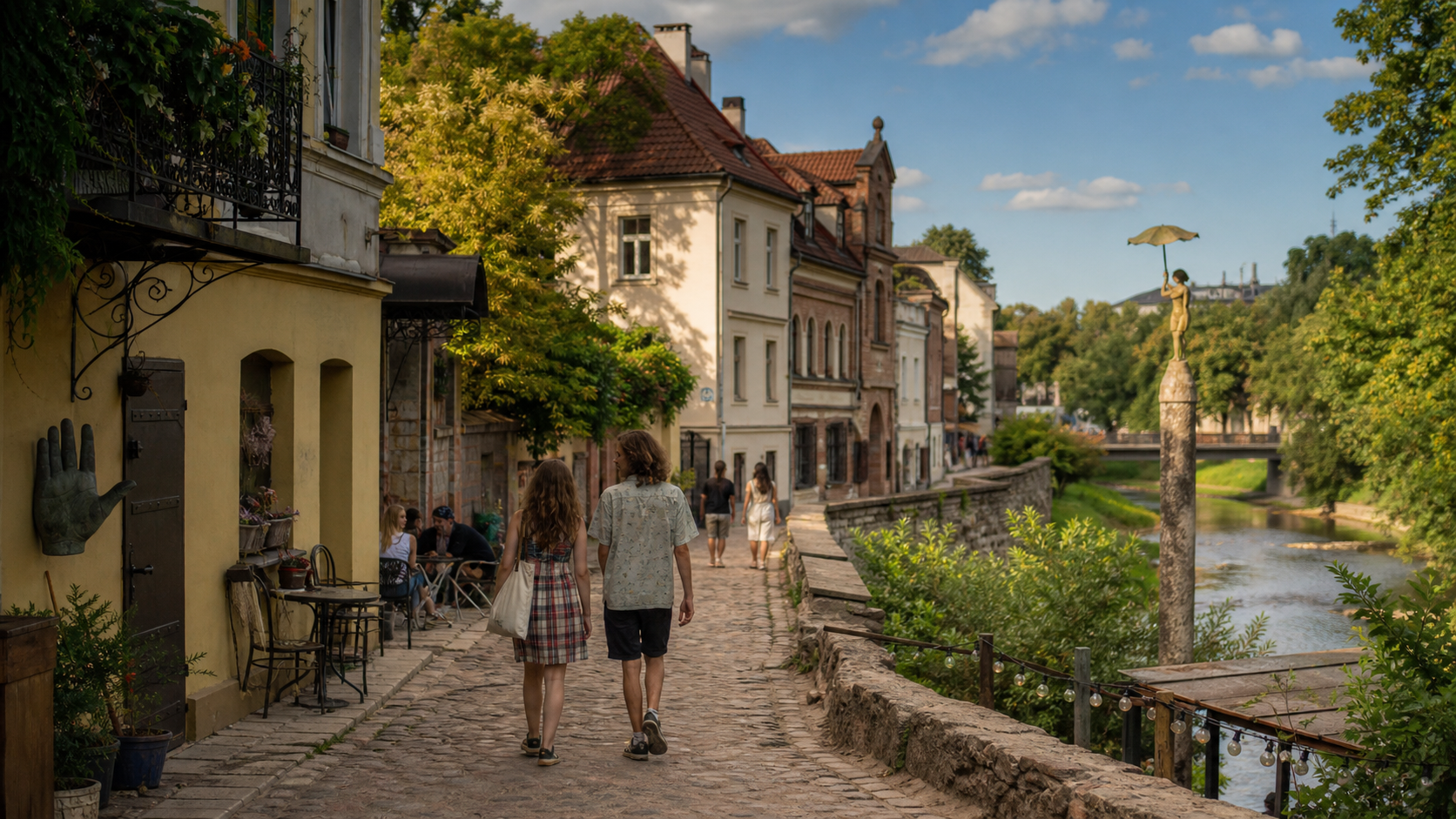
Across the Vilnelė River, Užupis developed from a neglected district into a neighbourhood of artists, cafés and creative businesses. Residents humorously declared an independent republic on 1 April 1997, complete with an anthem, president and constitution translated onto plaques in many languages.
Cross Užupis Bridge, look for the mermaid beneath it and follow the river toward changing sculptures and installations at the art incubator. The Angel of Užupis marks the main square. The district is now fashionable and increasingly polished, but courtyards and riverside paths retain an informal character.
Respect residential entrances. Continue into Bernardine Garden if you want a green walk beyond the central lanes.
Jewish Vilnius and Twentieth-Century History
Before the Second World War, Vilnius was a major centre of Jewish scholarship and culture, sometimes called the Jerusalem of the North. Nazi occupation brought the destruction of its Jewish communities and ghettos. Plaques, street names and memorials around the former Jewish quarter require attentive exploration because much of the physical city was lost.
The Vilna Gaon Museum of Jewish History operates several branches with distinct subjects, so verify which exhibitions are open. Paneriai, outside the centre, is the site where tens of thousands of people—most of them Jews—were murdered. It is a place for sober remembrance, not casual sightseeing.
The Museum of Occupations and Freedom Fights occupies the former KGB headquarters and examines Soviet repression, deportations and resistance. Its basement prison is emotionally difficult. Allow time afterward and balance it with a walk beside the Neris or through Lukiškės Square.
What to Eat in Vilnius
Lithuanian food is filling and closely connected to potatoes, rye, dairy, mushrooms and seasonal berries. Cepelinai are large potato dumplings commonly filled with meat or curd and served with sour cream. Their name refers to their zeppelin shape; share a portion if you plan to taste several dishes.
Try šaltibarščiai, a vivid pink cold beet soup served with potatoes, especially in summer. Potato pancakes, kugelis potato pudding and kibinai pastries are other accessible favourites. Kibinai are associated with the Karaim community of Trakai and make an ideal snack on a day trip.
Dark rye bread accompanies soups, cheeses and smoked foods. Kepta duona—fried rye bread rubbed with garlic and often topped with cheese—is popular with beer. For dessert, look for šakotis, a branching spit cake, or curd snacks coated in chocolate.
Modern restaurants use forest mushrooms, local fish, fermented vegetables and herbs in lighter forms. Lithuanian craft beer is strong, while gira is a lightly fermented rye drink. Tap water is generally safe, and a tip of about ten percent is appreciated for good table service.
Getting Around Vilnius
Old Town is easiest on foot, though buses and trolleybuses are useful for the airport, St Peter and St Paul’s Church and outer districts. JUDU operates the network. Current options include time-based tickets, day passes, a transport card, mobile tickets and contactless bank-card payment on vehicles.
Activate the correct ticket as required and retain it for inspection. Fares and app arrangements change, so check JUDU shortly before travelling. Vilnius Airport is close to the centre and connected by buses and trains; official taxis and reputable ride apps are also available.
The railway and coach stations stand south of Old Town near Halės Market. Driving is unnecessary for a central stay, and parking restrictions make a car inconvenient. Cycling can work outside the cobbled core, but use marked infrastructure and ride cautiously.
Day Trips from Vilnius
Trakai is the classic excursion. Its red-brick island castle stands amid lakes roughly 30 kilometres west of Vilnius. Trains and buses reach the town, but the castle is a further walk from the stations. Combine the museum with a lakeside walk and Karaim kibinai.
For a more sombre trip, visit the Paneriai Memorial with careful advance planning. Kaunas, Lithuania’s second city, is also reachable by train and merits a full day for interwar modernist architecture, museums and its long pedestrian avenue.
Best Time to Visit
May through September offers long daylight, outdoor dining and green parks. June has exceptionally bright evenings, while July and August bring festivals and more visitors. Rain remains possible in every season.
September and October add autumn colour and quieter streets. December can be atmospheric with lights and markets, but daylight is short. Winters are cold, with snow, ice and temperatures well below freezing. Pack layers and footwear with grip rather than relying on a single heavy coat.
Where to Stay
Old Town is ideal for first-time sightseeing, although rooms near nightlife streets can be noisy. The area between Cathedral Square and Gedimino Avenue offers convenient access to museums, shops and transport. Užupis provides character and evening restaurants, while Naujamiestis and the station district offer design hotels and creative venues.
Check recent reviews for street noise, stairs, air conditioning and parking. Historic buildings often lack lifts, and rooftop rooms may become warm in summer.
A Three-Day Vilnius Itinerary
On day one, begin at Cathedral Square, visit the Palace of the Grand Dukes and climb Gediminas Hill. Walk Pilies Street, tour Vilnius University and finish near the Gates of Dawn.
On day two, explore St Anne’s Church, Bernardine Garden and Užupis. Continue through the former Jewish quarter, then visit the Museum of Occupations and Freedom Fights if you have the emotional space.
On day three, take a trip to Trakai. Alternatively, remain in Vilnius for Halės Market, St Peter and St Paul’s Church, the National Gallery of Art and a walk through Žvėrynas.
Practical Tips
Lithuania uses the euro, and cards are accepted almost everywhere, though small cash is useful at markets. English is common in tourism. A simple “labas” for hello and “ačiū” for thank you is warmly received.
Check museum closing days and church access before setting out. Vilnius works best when you leave room for courtyards, viewpoints and unplanned cafés—the quiet discoveries between major sights are central to the city’s appeal.
Comments