
Barcelona offers something few major European cities can match: a long urban shoreline reached by metro, bus, bicycle or foot. The beaches make it possible to combine architecture and museums with a morning swim, seafood lunch or sunset walk. They are convenient city beaches rather than secluded Mediterranean coves, and choosing the right stretch matters.
This guide covers Barcelona’s main beaches from Barceloneta to the Besòs, explains facilities and safety, and suggests coastal escapes when you want clearer water or a quieter setting. Conditions, services and swimming zones change seasonally, so always follow current signs, lifeguards and official guidance.
Understanding Barcelona’s Coast
The city’s sandy coastline was extensively reshaped before the 1992 Olympic Games. Beaches run northeast from the old port, linked by a broad promenade. Names change along the shore, but boundaries are subtle and walking between neighbouring sections is easy.
Peak season brings lifeguards, showers, toilets and beach services, while winter provision is limited. Sea quality and access can change after storms. Coloured flags indicate conditions: never swim against warnings, and remember that the Mediterranean can produce strong currents and sudden waves.
Sant Sebastià
Sant Sebastià lies closest to the W Barcelona hotel at the southwestern end of the urban shoreline. It is broad, central and popular with local swimmers, sports groups and visitors. Its position makes it convenient from the old city, though the walk from Barceloneta metro station is longer than it appears.
The beach has an energetic, mixed atmosphere and easy access to waterfront restaurants. It also becomes extremely busy in summer. Arrive before 10 am for space, keep belongings within reach and use designated facilities rather than nearby residential entrances.
Sant Miquel and Barceloneta
Sant Miquel and Barceloneta are the most famous sections. Their proximity to the Gothic Quarter and harbour makes them ideal for a short beach stop during sightseeing. Volleyball, paddleboarding, informal music and constant pedestrian activity create a lively scene.
Convenience is the advantage; crowds are the cost. The sand fills quickly, vendors circulate and theft is a genuine risk. Never leave a phone beneath a towel while swimming. Take only essentials, use a waterproof pouch or have one person watch the group’s belongings.
Barceloneta’s historic streets contain seafood restaurants and small bars. Choose carefully: waterfront position does not guarantee quality. Move inland, check recent reviews and avoid menus that promote numerous unrelated cuisines with large photographs.
Somorrostro
Somorrostro extends toward Port Olímpic and is associated with the informal settlement that once occupied this coast. Today it attracts younger crowds and sits near nightlife and marina development. Its central location and sports facilities make it active throughout warm months.
Construction around Port Olímpic can alter paths and access. Follow temporary signs. Somorrostro works well for travellers wanting beach time before an evening near the waterfront, but those seeking a peaceful swim should continue northeast.
Nova Icària
Nova Icària is often recommended to families because it has a gentler atmosphere, nearby play and sports areas, and access from the Olympic Port side. The beach is still urban and popular, but usually feels less intense than Barceloneta.
Breakwaters can reduce waves without removing risk. Lifeguard instructions remain essential. Restaurants around the marina provide convenient lunches, while Ciutadella–Vila Olímpica metro station connects the area with the centre.
Bogatell
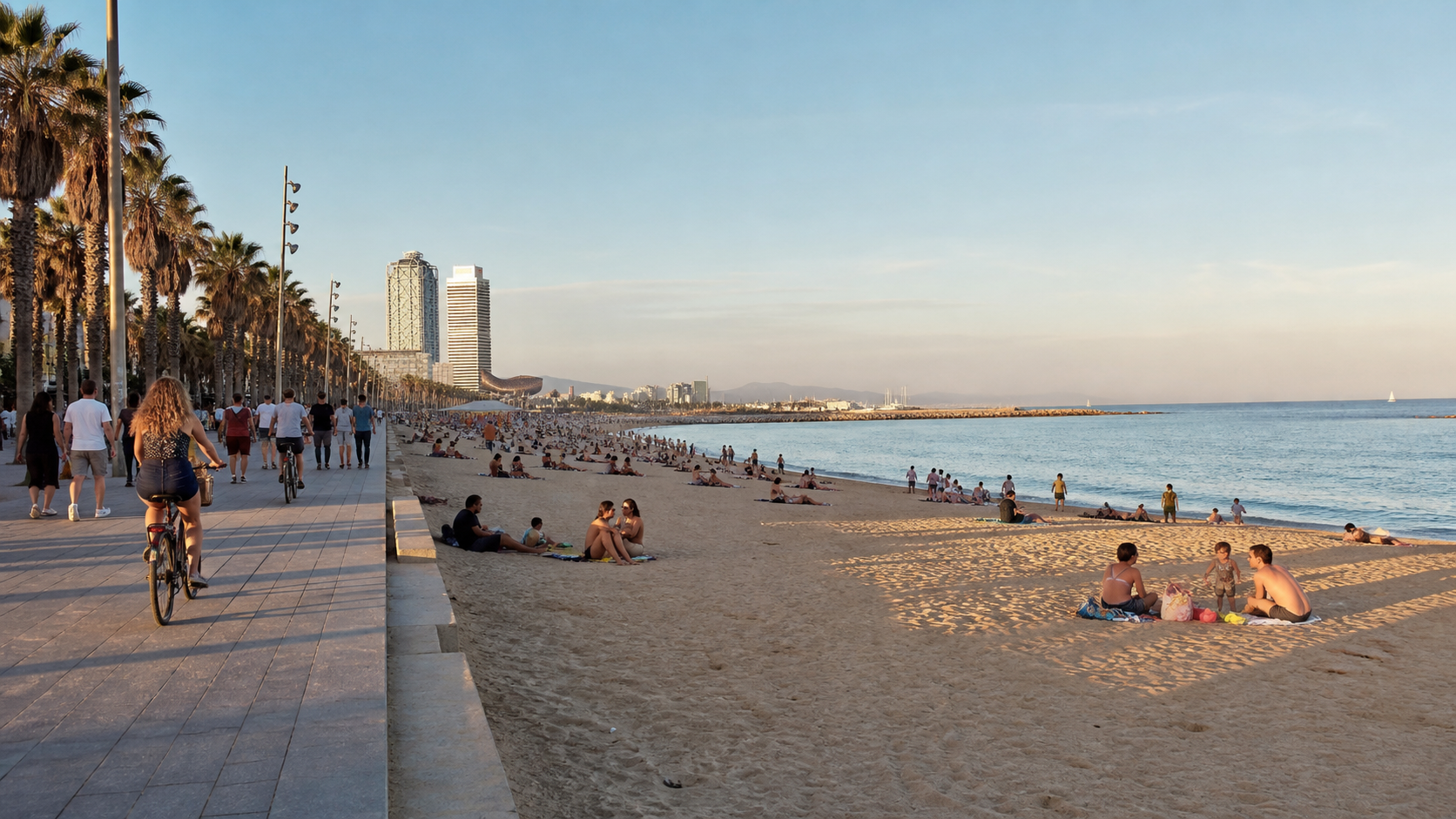
Bogatell offers one of the best balances for most visitors. It is wide, relatively relaxed and backed by a promenade used by runners, cyclists and skaters. The surrounding districts are less tourist-saturated, and Poblenou’s restaurants are within walking distance.
Reach it from Llacuna or Poblenou metro stations, allowing time to walk to the water. Facilities are seasonal, and shade on the sand is limited. Bring an umbrella or rent one where available, particularly between June and September.
Bogatell suits couples, families and travellers who want several beach hours rather than a quick photograph. Morning is calmest; late afternoon becomes social as residents finish work.
Mar Bella
Mar Bella has a sporty, open character and a designated naturist section. It is also popular with LGBTQ+ beachgoers. The atmosphere is inclusive and relaxed, but visitors should understand the setting before choosing a spot.
Water sports and volleyball add activity, while the promenade connects easily to Poblenou. Respect personal space and never photograph people without permission. Nudity is optional, not required, and normal beach etiquette applies.
Nova Mar Bella and Llevant
Nova Mar Bella and Llevant lie farther northeast and generally attract more residents than short-stay visitors. They are useful for travellers staying in Poblenou or the Diagonal Mar area. Wider modern streets and contemporary hotels sit behind parts of the coast.
Llevant is the city’s northeastern end beach and may host specific regulated areas or seasonal services. Check current municipal information, particularly when travelling with dogs, because permitted zones and dates can change.
These beaches feel removed from old-city sightseeing but provide more breathing room. Metro line L4 serves nearby stations, though none is directly on the sand.
Best Beach for Each Traveller
Choose Barceloneta for maximum convenience, Bogatell for an all-round beach day, Nova Icària for family facilities and Mar Bella for a more alternative atmosphere. Poblenou-based travellers should favour Bogatell through Llevant rather than crossing to Barceloneta.
For quiet water and scenic coves, leave the city. Barcelona’s urban beaches are best understood as public spaces integrated into metropolitan life.
Beach Safety and Theft Prevention
Opportunistic theft is the main practical concern. Use a minimal bag that closes securely, avoid displaying valuables and do not fall asleep beside an unattended phone. Groups should swim in turns. Solo travellers can use waterproof storage carried on the body.
Ignore distraction attempts and unofficial offers to watch belongings. At night, choose well-lit sections of the promenade and avoid isolated breakwaters. Emergency points and lifeguards operate seasonally.
Sun exposure is intense even when sea breezes feel cool. Apply high-factor sunscreen, wear a hat and drink water. Beach showers are intended for brief rinsing; drought measures can reduce or suspend their operation.
Swimming Etiquette and Accessibility
Swim inside marked zones and stay clear of watercraft channels. Do not enter when red flags fly. Jellyfish sometimes appear; ask lifeguards for current advice and never touch stranded marine life.
Accessibility varies by beach and season. Some locations provide assisted bathing, ramps or amphibious chairs during set hours. Confirm current services before travelling rather than assuming equipment is continuously available.
Barcelona beaches are smoke-regulated, and rules concerning alcohol, glass, music and sports are enforced. Keep noise reasonable, remove all rubbish and respect naturist or family-designated areas.
When to Visit
June through September provides the warmest water and full services, with July and August the busiest and hottest. Arrive early or after 5 pm. May and October can support pleasant beach days, but water and weather are less predictable.
Winter is excellent for walking, running and watching the sea, not dependable swimming. Storms can reshape the sand and close sections. Sunrise brings peaceful light throughout the year.
What to Bring
Pack water, sun protection, a compact towel, secure footwear for hot promenades and a closed bag. An umbrella is valuable because natural shade is scarce. Keep glass containers away from the sand.
Changing facilities are limited, so arrive prepared. Wearing swimwear in neighbourhood streets, shops or public transport is considered inappropriate; cover up when leaving the beach.
Coastal Day Trips
Sitges, southwest of Barcelona, combines several beaches with a compact old centre, museums and an inclusive social scene. Frequent trains make it the easiest coastal excursion. Beaches near the centre become busy, but walking farther provides alternatives.
Northward, Montgat and Ocata offer long sandy stretches reached by suburban train. The railway runs close to the shore, making access simple but visible in the landscape. Farther away, the Costa Brava provides rocky coves and clearer water around towns such as Tossa de Mar and Calella de Palafrugell, usually requiring buses, a car or organised transport.
Check train disruptions and return times before leaving. Do not underestimate the journey to remote coves, especially without a car.
A Perfect Barcelona Beach Day
Start with coffee in Poblenou and reach Bogatell before the strongest sun. Swim while lifeguard services are operating, then walk the promenade toward Mar Bella. Leave the beach for a proper lunch on Rambla del Poblenou.
Rest during peak afternoon heat and return for an evening waterfront walk. This rhythm provides beach time without sacrificing comfort or treating the sand as the only attraction.
Barcelona’s coast is at its best when approached as part of the city. Choose the section that fits your priorities, follow local rules and protect both yourself and the shared space. For dramatic scenery, take a coastal excursion; for effortless Mediterranean time between museums and meals, the urban beaches are difficult to beat.
Comments