
Alicante tastes unmistakably Mediterranean. Rice absorbs deeply flavoured stocks, seafood arrives from the nearby coast, vegetables reflect the fertile province, and small bars turn salted fish, almonds and local wine into relaxed meals. The city is easy to explore on foot, so a food-focused day can move naturally between the Central Market, traditional lunch restaurants, old-town tapas counters and waterfront terraces.
This guide explains what to order, where different experiences fit into your day and how to avoid common dining mistakes. Restaurant teams, prices and opening hours change, so use the dishes and neighbourhoods as your compass rather than treating any single venue as essential.
Alicante’s Rice Culture
Visitors often arrive expecting paella, but local menus reveal a broader rice tradition. Alicante-style arroces are defined by carefully prepared stock and regional ingredients rather than one fixed recipe. Rice may be cooked dry in a broad pan, left slightly moist or served soupy in a bowl. Ask which style a restaurant prepares and whether the listed price is per person.
Arroz a banda is a classic coastal choice. Fishermen historically cooked fish in broth and used the resulting stock to flavour rice, serving the components separately. Modern versions vary, but the rice should carry concentrated marine flavour without being overloaded with decorative seafood.
Arroz del senyoret, sometimes translated as gentleman’s rice, contains peeled shellfish and bite-sized seafood, making it convenient to eat. Other menus offer rice with red prawns, cuttlefish, rabbit and snails, seasonal vegetables or crust formed against the pan. Socarrat—the toasted layer on the bottom—is prized when crisp and aromatic, not burned.
Rice is usually a shared lunch and often requires a minimum of two diners. Many kitchens prepare it to order, so allow time. Reserve ahead at popular restaurants, particularly on weekends, and specify the rice when requested. Ordering several starters before a large rice can leave a table struggling to finish the main event.
Visit Alicante Central Market
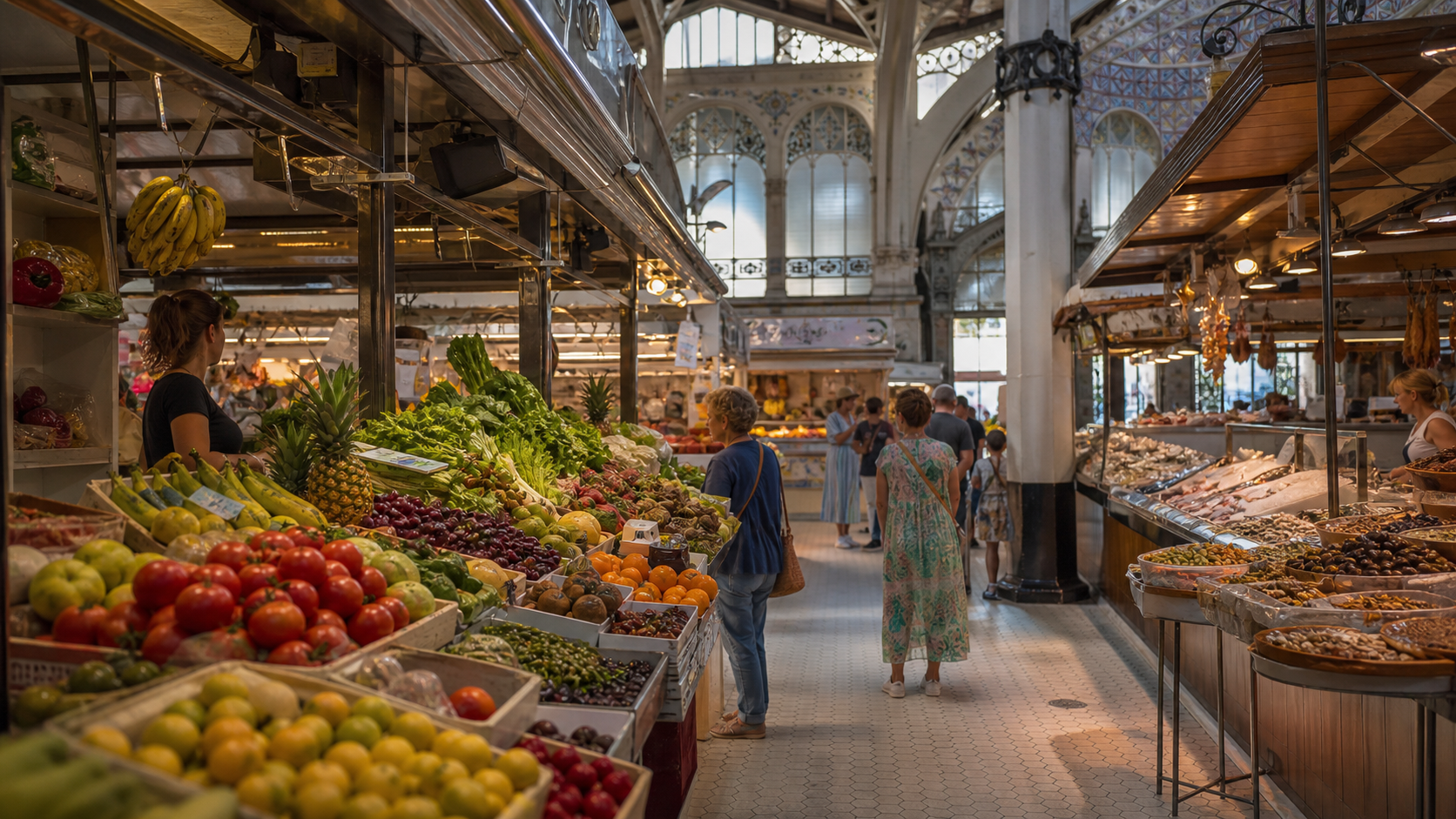
Mercado Central is the best introduction to the ingredients behind the city’s cooking. The early twentieth-century building stands just north of the historic centre and contains stalls selling fish, meat, fruit, vegetables, cheese, olives, spices and preserved foods. Go in the morning, when trading is active and the displays are fullest.
Walk respectfully: this is a working market where residents shop. Do not touch produce without permission, block narrow aisles for photographs or expect every stallholder to speak English. A greeting and a few words of Spanish are appreciated. Ask before photographing people or close-up displays.
Look for local tomatoes, artichokes when in season, citrus, almonds, dates and the intensely sweet grapes associated with the province. Fish counters show the variety of the Mediterranean catch, while delicatessen stalls introduce cured meats and cheeses from inland areas. Some counters prepare snacks, but the market is not solely a food hall. Check its current opening days and hours before making a special journey.
Salted Fish and Maritime Flavours
Salazones—salt-cured fish products—are a distinctive part of southeastern Spanish food culture. Mojama, made from cured tuna loin, is sliced thinly and may be dressed with olive oil and almonds. Hueva, cured fish roe, offers a firmer texture and pronounced salty flavour. Small portions are enough, especially for first-time tasters.
These products make sense with bread, tomatoes, olives or a cool drink. Their intensity reflects preservation traditions developed long before refrigeration. Buy vacuum-packed pieces from a reputable market or specialist shop if you want a travel-friendly souvenir, and check customs rules for your destination before packing animal products.
Fresh seafood appears in many forms: grilled prawns, fried small fish, squid, octopus and simple shellfish preparations. Prices can vary significantly by species and weight. If a menu lists market price, ask for the approximate total before ordering. The best cooking often looks simple because freshness, timing and good olive oil do the work.
Tapas, Montaditos and Bar Etiquette
Tapas in Alicante can mean a small individual plate, a shared portion or a snack accompanying a drink. A montadito is usually a small piece of bread topped or filled with an ingredient. Rather than ordering everything immediately, start with two or three items and add more if needed.
Useful choices include ensaladilla rusa, croquetas, grilled cuttlefish, anchovies, tomato with tuna, meatballs, mushrooms and local cheeses. Menus change with availability. Ask what is prepared in-house and what the kitchen recommends that day.
Standing at the bar is often quicker and more social, while a terrace may carry different prices. Check whether bread or snacks placed on the table are charged. Tipping is appreciated for good service but is not calculated with the fixed percentage expected in some countries; rounding up or leaving a modest amount is common.
Where to Eat by Neighbourhood
The streets around Mercado Central suit breakfast, market snacks and casual tapas. Traditional bars mix with newer coffee shops, providing an energetic start to the day. For lunch, explore streets beyond the most obvious squares and look for restaurants where rice is central to the menu.
The old town around Calle Mayor and the co-cathedral works well for an evening tapas walk. It is atmospheric and convenient, though the busiest lanes naturally attract visitors. Compare menus and walk a block away from major landmarks before choosing.
The Explanada, marina and Postiguet waterfront offer views and a holiday atmosphere. They are ideal for a drink at sunset, but a sea view does not guarantee the city’s best rice. Decide whether your priority is setting or cooking. Residential districts farther from the centre can deliver excellent value, although they require more planning and sometimes a taxi or tram.
Breakfast and Alicante Sweets
A local morning may begin with coffee, toast and tomato, sometimes joined by olive oil, cheese or cured ham. Churros with thick hot chocolate provide a richer option. Specialty coffee shops are increasingly common, but a traditional café remains excellent for observing daily city life.
For something distinctly Alicantine, try coca: a flat baked preparation that may be topped or filled with vegetables, tuna, onion or other savoury ingredients. Styles vary across the province. It works as a snack, light lunch component or item to carry on a train journey.
Turrón is the province’s famous sweet. Hard Alicante turrón combines toasted almonds with a brittle honey-and-egg-white mixture, while the Jijona version is soft and ground. Although strongly associated with Christmas, specialist shops may sell it year-round. Check the almond percentage and ingredient list; quality products let the nuts dominate rather than excessive sweetness.
Chocolate, almond pastries and date-based treats also make easy gifts. Buy modest quantities and store them away from intense heat, especially in summer.
Local Wine, Vermouth and Other Drinks
The Alicante wine designation covers coastal and inland landscapes. Monastrell is an important red grape, producing wines that range from fresh and fruit-driven to powerful and mature. White and rosé wines complement seafood and rice, while sparkling or lighter styles suit a sunny aperitif.
Fondillón is Alicante’s remarkable historic wine, traditionally made from overripe Monastrell grapes and aged for years. It is complex, strong and intended for slow tasting rather than drinking like a table wine. Order a small glass after a meal and ask the server about the producer.
Vermouth before lunch is another enjoyable ritual. Non-drinkers can order sparkling water, coffee or regional soft drinks. In hot weather, alternate alcohol with water and remember that generous pours feel stronger after a day in the sun.
Vegetarian, Vegan and Allergy-Aware Dining
Alicante’s vegetable culture provides many possibilities, but traditional rice stock may contain meat or fish even when visible ingredients appear vegetarian. Ask specifically whether the broth is vegetable-based. Suitable dishes may include grilled vegetables, salads, gazpacho, potatoes, mushrooms and vegetable rice.
Vegan restaurants and clearly labelled options are easier to find in the centre than they once were. Still, explain requirements rather than relying only on a menu symbol. The Spanish phrase “sin productos animales” clarifies that no animal products are wanted.
People with allergies should carry a written translation naming the allergen and the risk of cross-contact. Spanish and European allergen rules help, but busy kitchens, shared fryers and market counters require direct communication. When the allergy is severe, contact the restaurant in advance and choose quieter dining times.
A One-Day Alicante Food Route
Begin around 9 am with coffee and tomato toast, then reach Mercado Central while stalls are active. Browse slowly and sample a small savoury item without filling up. Walk through the centre and waterfront before a pre-lunch vermouth.
Reserve rice for about 1:30 or 2 pm, allowing at least ninety minutes. Afterwards, follow the Spanish rhythm: take a walk, rest or visit a museum instead of immediately beginning another tasting. Late afternoon suits coffee, turrón or ice cream.
In the evening, share tapas across one or two bars in the old town. Finish with a small glass of Fondillón if available. This schedule provides variety while respecting the fact that Alicante’s most important meal is often lunch.
How to Eat Well and Responsibly
Prioritise seasonal products, local businesses and smaller orders that you can finish. Ask for tap water availability and avoid unnecessary single-use packaging when eating nearby. Seafood diners can ask what is local and in season rather than assuming every Mediterranean menu item was caught off Alicante.
Confirm reservations and arrive on time. Spanish meal hours are later than in much of northern Europe, but tourist areas may serve continuously. Kitchens still have their own schedules, and Sunday or Monday closures are common.
Most importantly, remain curious. Alicante’s food is not a list of ten compulsory dishes. It is a relationship between sea, agricultural province, market and table. Taste rice at lunch, share something unfamiliar at the bar and leave room for the almond-rich sweets that carry the city’s flavour home.
Comments