
Tabarca is small enough to cross on foot yet rich enough to fill an entire day. Located off the coast south of Alicante, it combines a walled village, transparent Mediterranean water, rocky coves, a compact beach and a protected marine environment. Boats make it a popular excursion, but the island feels most rewarding when treated as a living place rather than a quick photo stop.
This guide covers transport, swimming, walking, food, history and responsible visiting. Boat schedules, fares and services change by season and weather, so confirm every practical detail with the operator shortly before departure.
Understanding Tabarca
Known officially as Nueva Tabarca, the island belongs to Alicante. It is the largest inhabited island in the Valencian Community, although the settled area and surrounding landscape remain compact. Visitors can walk from the village walls to the far end.
Its strategic position attracted attention for centuries. The present fortified settlement developed in the eighteenth century, when families connected with the Tunisian island of Tabarka were resettled here under the Spanish Crown. Walls, gates, a church, the governor’s house and the regular street plan reflect an ambitious attempt to create a defended community.
The waters around Tabarca became Spain’s first marine reserve in 1986. Seagrass meadows and rocky seabeds support diverse marine life, making clear-water swimming and snorkelling central to the experience. Protection also means visitors have a duty to avoid damaging habitats or removing anything from the sea.
Getting There from Alicante
Seasonal passenger boats usually connect Alicante’s marina with Tabarca. The crossing commonly takes about an hour, depending on vessel and conditions. Some services offer viewing windows below the waterline, but visibility varies and should not be the sole reason for choosing a boat.
Book ahead during summer, weekends and public holidays. Compare departure and return times carefully. Arrive before boarding, locate the exact quay and keep the return ticket accessible. Operators may have different rules for luggage, bicycles and pets.
Boats also depart from Santa Pola, on the mainland closer to Tabarca. Crossings from there are shorter and generally more frequent in the busy season. This can be a useful alternative if you have a car or are staying south of Alicante, but include the road journey and parking when comparing convenience.
Sea conditions matter. Even on a bright day, the crossing can be choppy. Travellers prone to motion sickness should choose appropriate medication with professional advice, sit where the crew recommends and avoid a heavy meal immediately before sailing. Services can be delayed or cancelled for safety.
When to Visit
Late spring and early autumn offer a strong balance of warm water, long daylight and fewer visitors than peak summer. July and August bring the widest range of services but also the greatest crowding, hottest walking conditions and busiest restaurants. Reserve transport and lunch well ahead.
Winter reveals a quieter island, yet boat frequency and hospitality services may be limited. Wind can make exposed paths uncomfortable even when Alicante feels mild. Always check the forecast and operator updates rather than assuming the mainland weather tells the whole story.
For a summer day trip, take an early boat and return late afternoon. The first hours allow a calmer village walk and a better choice of beach space. Overnight stays create an entirely different atmosphere after day visitors leave, but accommodation is limited and needs early planning.
First Walk Through the Walled Village
From the harbour, walk toward the historic village before settling on the beach. The Puerta de Levante, or eastern gate, creates a dramatic entrance through the stone fortifications. Straight streets lead between low houses, small squares and the Church of Saint Peter and Saint Paul.
Move slowly and remember that people live here. Keep voices down, avoid looking into windows and do not block doorways with photography groups. The settlement’s beauty comes from ordinary details: weathered shutters, pale stone, fishing references and glimpses of blue water at the ends of streets.
The church and other buildings may have restricted opening times. Appreciate their exteriors if closed, and never interrupt worship or private events. Interpretive information helps explain why the geometry of the town differs from the organic lanes of older Mediterranean settlements.
Walk to the Lighthouse
Leave the village through the western side and follow the path across the less developed half of the island. The landscape is low, dry and exposed, with rocky shoreline on both sides. The lighthouse becomes the main landmark, while an old cemetery lies nearby.
There is almost no shade. Wear a hat, apply high-protection sunscreen and carry more water than you think you need. Closed shoes or secure sandals are better than flimsy flip-flops because the ground is uneven and sharp in places. Stay on established paths to protect vegetation and avoid unstable edges.
The complete out-and-back walk is easy in distance but harder in strong heat or wind. Allow roughly an hour with pauses. Birdlife may be present, particularly outside the busiest season; observe from a distance and never approach nests.
Beaches and Swimming
The main sandy-and-pebbly beach lies near the harbour and village, making it the simplest place for families and visitors wanting nearby services. Space fills quickly in summer. Water shoes improve comfort on pebbles and rocky entry points.
Smaller coves surround the island. They may offer clearer water and fewer people, but access can be uneven and there may be no lifeguard. Check the sea before entering, never dive without knowing the depth and avoid swimming alone. Wind and boat traffic can affect conditions beyond sheltered areas.
Do not expect a resort beach with unlimited facilities. Bring drinking water, sun protection and a light cover. Use designated bins or carry all waste back to the mainland. Cigarette ends, food packaging and small plastic items are particularly harmful in a windy marine environment.
Snorkelling in the Marine Reserve
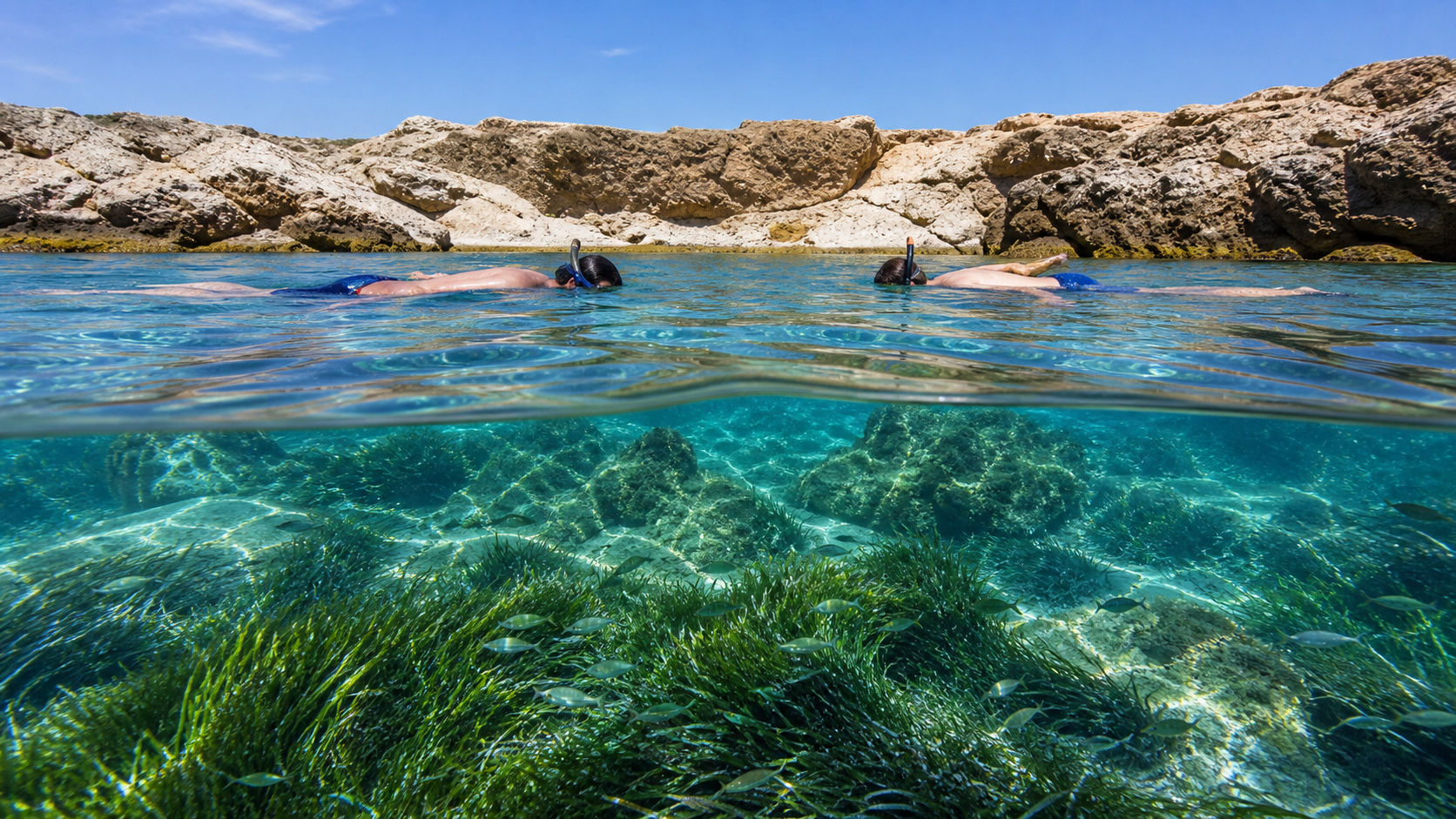
Tabarca’s clear shallows can provide excellent snorkelling. A mask, snorkel and well-fitting fins are useful, although beginners may prefer water shoes and a flotation aid suited to swimming. Enter from a safe, permitted point and keep well clear of boat routes.
Seagrass meadows may look like dark patches, but they are vital habitat and help maintain clear water. Do not stand on, pull or anchor into them. Never collect shells, plants, rocks or animals. Feed no fish, and avoid touching marine life even when it seems harmless.
Use reef-conscious sun habits: apply sunscreen before reaching the water, wear a rash vest and minimise repeated chemical application immediately before swimming. A buddy system is essential. If visibility, waves or your confidence deteriorate, leave the water.
What to Eat
Caldero tabarquino is the island’s signature dish. This fishermen’s preparation usually involves fish cooked for a flavourful broth, followed by rice, with variations between kitchens. It is substantial, commonly intended for at least two people and best reserved in advance.
Ask what the meal includes, how it is served and whether the price is per person. A full caldero lunch can occupy much of the afternoon, which is part of its appeal. Do not book an early return boat immediately after the reservation.
Restaurants also serve rice dishes, grilled fish, seafood and simpler plates. Availability and prices reflect island logistics. Travellers on a budget can bring a picnic, but should buy thoughtfully, avoid excessive packaging and remove every piece of rubbish. Alcohol and intense sun are a poor combination before swimming or sailing.
A Practical One-Day Itinerary
Take an early departure from Alicante and use the crossing to identify the village, lighthouse and harbour layout. On arrival, explore the walled settlement before lanes become busy. Continue across the open landscape to the lighthouse while temperatures are manageable.
Return toward the village for a reserved lunch around early afternoon. Afterwards, rest in shade rather than entering the water immediately after a heavy meal. Spend the later afternoon swimming or snorkelling from a safe cove near your return route.
Reach the harbour at least thirty minutes before departure, earlier if your operator requests it. Weather, queues and a confusingly relaxed holiday mood make last-minute boarding risky. Keep a dry layer available for the crossing back, when wind over wet clothing can feel cold.
Visiting with Children
Tabarca can be memorable for families, but adults must plan for sun, water and limited shade. An early boat, short village walk and main beach create a manageable outline. Skip the full lighthouse walk during extreme heat.
Bring hats, refillable water bottles, snacks, protective clothing, water shoes and any essential medication. Confirm whether the vessel accommodates pushchairs and where they are stored. The historic streets and natural paths are not consistently smooth, so a carrier may be more practical for very young children.
Children should remain within arm’s reach near water and walls. Inflatables are not safety devices and can drift quickly in wind. Teach young visitors to observe marine animals without chasing or handling them.
Accessibility and Essential Preparation
Accessibility varies between boats, quays, village streets and natural shoreline. Contact the operator before booking to discuss boarding methods, wheelchair dimensions and assistance. Ask restaurants directly about step-free access and accessible toilets. Do not rely on a general “accessible” label to cover the entire journey.
Pack lightly: ticket, identification, water, sun protection, swimsuit, towel, secure footwear, basic first aid and a charged phone. Cash can be useful if a card terminal fails, though many businesses accept cards. Mobile coverage and opening services should never replace preparation.
Tabarca works because its history and nature remain concentrated in a fragile space. Choose an early crossing, walk with care, spend locally and leave the marine reserve exactly as you found it. The result is not merely a beach excursion but a complete Mediterranean day shaped by fortifications, island life and remarkably clear water.
Comments