
Madrid wins visitors over through energy rather than a single defining monument. Spain’s capital holds one of Europe’s greatest concentrations of art, a monumental royal center, elegant boulevards and neighborhoods that remain animated late into the night. Its high-altitude light, broad skies and strong café culture give the city an unmistakable character.
Four days provide a balanced first visit. Three can cover the essential museums and historic center at a faster pace, while five or six allow for markets, parks and a day trip. Madrid keeps later hours than many European capitals, so plan mornings selectively, pause during the afternoon and let dinner unfold without rushing.
Why Visit Madrid?
The Prado, Reina Sofía and Thyssen-Bornemisza form an exceptional art triangle along Paseo del Prado. Nearby, Retiro Park adds gardens, monuments and shaded paths to a cultural landscape recognized by UNESCO. The Royal Palace and Habsburg-era streets reveal the city’s political history, while Gran Vía expresses its twentieth-century confidence.
Madrid is equally compelling in its neighborhoods. La Latina fills with conversation around traditional taverns, Lavapiés mixes cultures and independent arts, Malasaña carries a rebellious creative legacy, and Chamberí offers elegant residential streets. The city feels lived in, even close to famous sights.
Museo del Prado
The Prado is Madrid’s essential museum and one of the world’s leading collections of European painting. Velázquez, Goya, El Greco, Rubens, Bosch and Titian are represented through landmark works. Las Meninas and Goya’s Black Paintings attract attention, but quieter galleries reveal relationships between the Spanish court and artists across Europe.
Buy a timed ticket through the official museum site, particularly for weekends and holidays. Two or three hours allow a focused visit; trying to see every room produces fatigue. Choose a route or a shortlist in advance, take breaks and observe any restrictions around photography and bags.
The museum stands on the Paseo del Arte, making it tempting to add another major collection immediately. A more enjoyable plan is to combine the Prado with the nearby Royal Botanical Garden, a meal in Barrio de las Letras or a slow walk into Retiro Park.
Reina Sofía and Thyssen-Bornemisza
The Reina Sofía focuses on modern and contemporary art, with Picasso’s Guernica at the heart of its collection. Works by Dalí, Miró and other Spanish and international artists place the painting within a wider political and artistic context. The building combines a former hospital with later contemporary additions.
The Thyssen-Bornemisza bridges many gaps between the Prado and Reina Sofía. Its collection moves from early European painting through Impressionism, Expressionism, American art and twentieth-century movements. It is often easier to navigate than its larger neighbors and can suit visitors seeking a broad chronological overview.
Check official schedules because permanent collections, temporary exhibitions and free-entry periods may have different rules. Free hours can be extremely crowded. One major museum per half-day is a sensible maximum for most travelers.
Retiro Park and the Landscape of Light
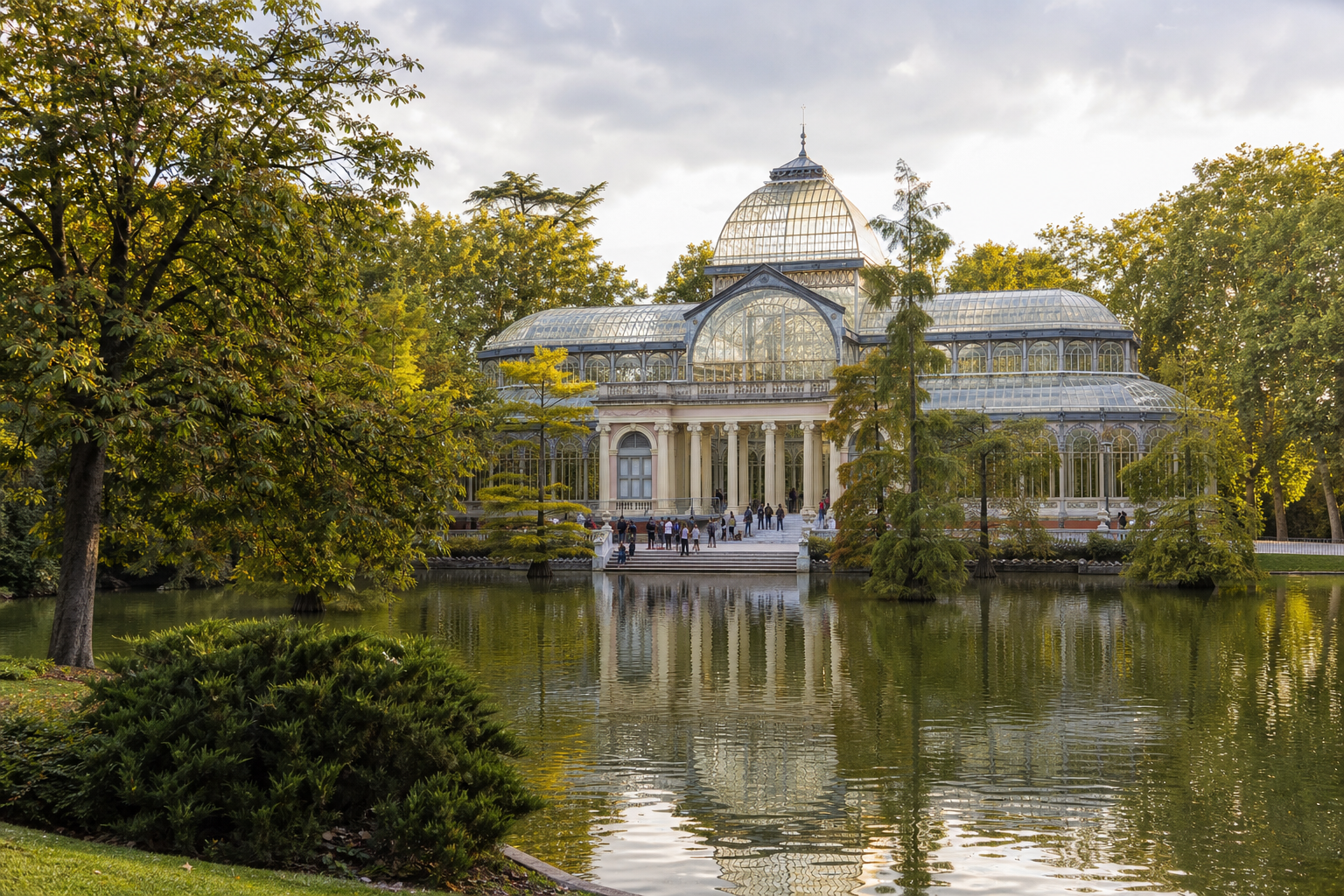
Retiro Park is both a major sight and a place where Madrid relaxes. Paths lead between formal gardens, monuments, fountains and the large boating lake. The iron-and-glass Crystal Palace is among its most photographed structures and commonly hosts installations connected with the Reina Sofía.
Enter near Puerta de Alcalá, then walk toward the lake, Crystal Palace and rose garden according to time and season. Some buildings close for exhibitions or conservation, while the park itself can close during severe weather. Follow municipal notices and avoid climbing on monuments or garden structures.
The surrounding Landscape of Light links Retiro with Paseo del Prado, Cibeles, major museums and scientific institutions. Walking this axis makes the relationship between culture, civic space and nature clearer than traveling between each site underground.
Royal Palace and Madrid de los Austrias
The Royal Palace is the ceremonial home of the Spanish monarchy and contains grand state rooms, historic decoration and royal collections. The scale, armor, frescoes and formal architecture provide a strong contrast to Madrid’s street life. Official events can affect access, so confirm the schedule and reserve an entry time.
Next door, Almudena Cathedral presents a comparatively modern interior. Continue through Plaza de Oriente, the Sabatini Gardens and toward Plaza de la Villa. These streets belong to Madrid de los Austrias, the district shaped during Habsburg rule.
Plaza Mayor is monumental but heavily visited. See its arcades and painted façades, then continue into side streets toward Puerta del Sol or La Latina. Near sunset, the Temple of Debod offers broad views west, although crowd levels and access to the monument itself vary.
Barrio de las Letras and Gran Vía
The Literary Quarter is associated with writers of Spain’s Golden Age. Quotations appear in the pavement around streets once connected with Cervantes, Lope de Vega and their contemporaries. Today the area combines small galleries, bookshops, restaurants and attractive squares.
Gran Vía cuts through central Madrid with theaters, shops and ornate early twentieth-century buildings. Look upward for domes, sculptures and elaborate façades. Plaza de España at its western end provides a useful link toward the Royal Palace and Malasaña.
La Latina, Lavapiés and El Rastro
La Latina is known for winding streets, historic churches and tapas bars around Cava Baja and nearby plazas. Weekends become extremely busy, especially when El Rastro market fills streets south of the center. Visit earlier for a calmer walk and choose small bars away from the most concentrated routes.
El Rastro operates on Sundays and public holidays, selling antiques, clothing, household objects and collectibles. Keep valuables secure, agree on prices clearly and avoid blocking residents’ entrances. The surrounding specialist shops can be interesting on non-market days as well.
Lavapiés reflects Madrid’s international communities through restaurants, cultural spaces and street life. La Casa Encendida and galleries near Calle Doctor Fourquet add contemporary culture. The district is not a hidden attraction but a residential neighborhood; explore respectfully and avoid reducing it to a label such as “authentic.”
Malasaña, Chueca and Chamberí
Malasaña is linked with La Movida, the cultural movement that emerged after the Franco era. Vintage shops, music venues and cafés now fill streets around Plaza del Dos de Mayo. The district can be noisy after dark, but daytime reveals independent businesses and handsome architecture.
Chueca is central to Madrid’s LGBTQ+ life and has become a lively dining and shopping area. Chamberí, farther north, feels more residential, with traditional markets, museums and neighborhood bars. Exploring these adjacent areas demonstrates how rapidly Madrid’s atmosphere changes from block to block.
Madrid Food to Try
Madrid absorbs foods from across Spain while maintaining strong local traditions. Begin with tortilla española, croquetas and jamón ibérico, then try callos a la madrileña or cocido madrileño if you enjoy hearty dishes. Bocadillo de calamares, a fried squid sandwich associated with the streets near Plaza Mayor, makes a simple lunch.
Tapas may arrive free with a drink in some bars, but this is not guaranteed. Order several small plates to share, observe what regulars choose and expect dinner to begin late. Markets such as San Antón, Antón Martín and Vallehermoso mix produce stalls with prepared food.
Mercado de San Miguel is beautiful and centrally located but functions mainly as a polished visitor food hall. Enjoy it for atmosphere, then seek neighborhood markets for everyday shopping. Finish with churros and thick hot chocolate or a pastry from a traditional bakery.
Getting Around Madrid
Madrid’s center is highly walkable, though distances between neighborhoods are larger than they first appear. The metro is extensive and usually the fastest option. City buses are useful for surface views, while Cercanías trains connect central stations with the airport and regional destinations.
Tourist travel passes provide unlimited public transport within selected zones and periods, but compare their cost with individual journeys. Ticket media and airport supplements can change, so check official Metro and transport consortium guidance. Validate correctly and retain tickets until the journey ends.
Adolfo Suárez Madrid-Barajas Airport connects with the city by metro, train, express bus and taxi. The best route depends on terminal and accommodation. Licensed taxis use an official system; confirm current airport conditions rather than accepting unsolicited offers.
Best Time to Visit
March to May and September to November generally provide the best walking weather. Spring gardens and long evenings are appealing, while autumn brings cultural programs and cooler days. Popular events can still raise hotel prices substantially.
July and August are hot and dry, with afternoon temperatures often making outdoor sightseeing uncomfortable. Start early, use museums during peak heat and drink water. Winter is crisp and bright, with cold nights but fewer visitors outside the Christmas and New Year period.
Where to Stay
Sol and Gran Vía are extremely central but busy and sometimes noisy. Barrio de las Letras offers character close to the museums. La Latina works well for evening atmosphere, while Malasaña and Chueca suit travelers prioritizing restaurants and nightlife.
Retiro and Salamanca provide quieter, polished surroundings with good transport. Chamberí feels residential without being remote. Check air conditioning for summer, street-facing noise and the walking distance to a metro entrance before booking.
A Suggested Four-Day Itinerary
Spend day one at the Prado, Barrio de las Letras and Retiro Park. On day two, visit the Royal Palace, Madrid de los Austrias, Plaza Mayor and La Latina. Use day three for the Reina Sofía or Thyssen, then explore Lavapiés and Gran Vía.
On day four, choose Malasaña, Chueca and Chamberí, or add a slower museum morning and an evening food route. With an extra day, travel to Toledo, Segovia, El Escorial or Alcalá de Henares.
Madrid rewards travelers who adapt to its rhythm. Reserve the major art and palace visits, but protect time for a neighborhood lunch, a shaded park bench and an evening paseo. The city’s greatest pleasure lies in how naturally masterpieces, public space and everyday social life fit together.
Comments