
Prague brings together Gothic towers, Baroque palaces, riverside views and one of Europe’s best-preserved historic centers. The Czech capital can appear almost theatrical, especially when early light reaches Charles Bridge or evening lamps illuminate Old Town lanes. Yet beyond the famous skyline, residential districts, modern galleries and everyday beer culture give the city greater depth.
Three days cover the principal sights, while four or five allow time for Vyšehrad, parks and neighborhoods beyond Prague 1. The compact center is walkable but steep and heavily visited. Begin early, group each day by riverbank and reserve the few sites that require timed admission.
Why Visit Prague?
Prague’s architecture records centuries of Bohemian and Central European history. Prague Castle rises above Malá Strana, the Old Town centers on its medieval square, and the New Town reflects the urban vision of Charles IV. Art Nouveau, Cubist, modernist and Communist-era buildings add important later chapters.
The city’s scale makes these layers easy to explore. Trams pass beneath castle walls, islands interrupt the Vltava and neighborhood pubs serve food within minutes of major monuments. Travelers who move beyond the busiest pedestrian routes discover calm courtyards, gardens and a vibrant contemporary culture.
Prague Castle and St Vitus Cathedral
Prague Castle is a vast complex rather than a single building. It contains St Vitus Cathedral, the Old Royal Palace, St George’s Basilica, Golden Lane, courtyards and gardens. The site has served rulers and presidents across more than a millennium, making it central to Czech political and religious history.
Arrive near opening time and consult the official castle website for current circuits, security arrangements and building closures. Access to the grounds differs from admission to ticketed interiors. The cathedral can develop long lines, while state ceremonies may alter routes without much notice.
Inside St Vitus, look for stained glass, royal tombs and the richly decorated St Wenceslas Chapel. The Old Royal Palace includes Vladislav Hall, an extraordinary late Gothic space. Golden Lane is picturesque but narrow; visit early or later in the day to avoid the densest groups.
Approach by tram if you want to conserve energy, then walk downhill through Hradčany and Malá Strana. Alternatively, climb from the river for unfolding views. Castle gardens are seasonal, and stone surfaces can become slippery in rain or snow.
Malá Strana and Petřín Hill
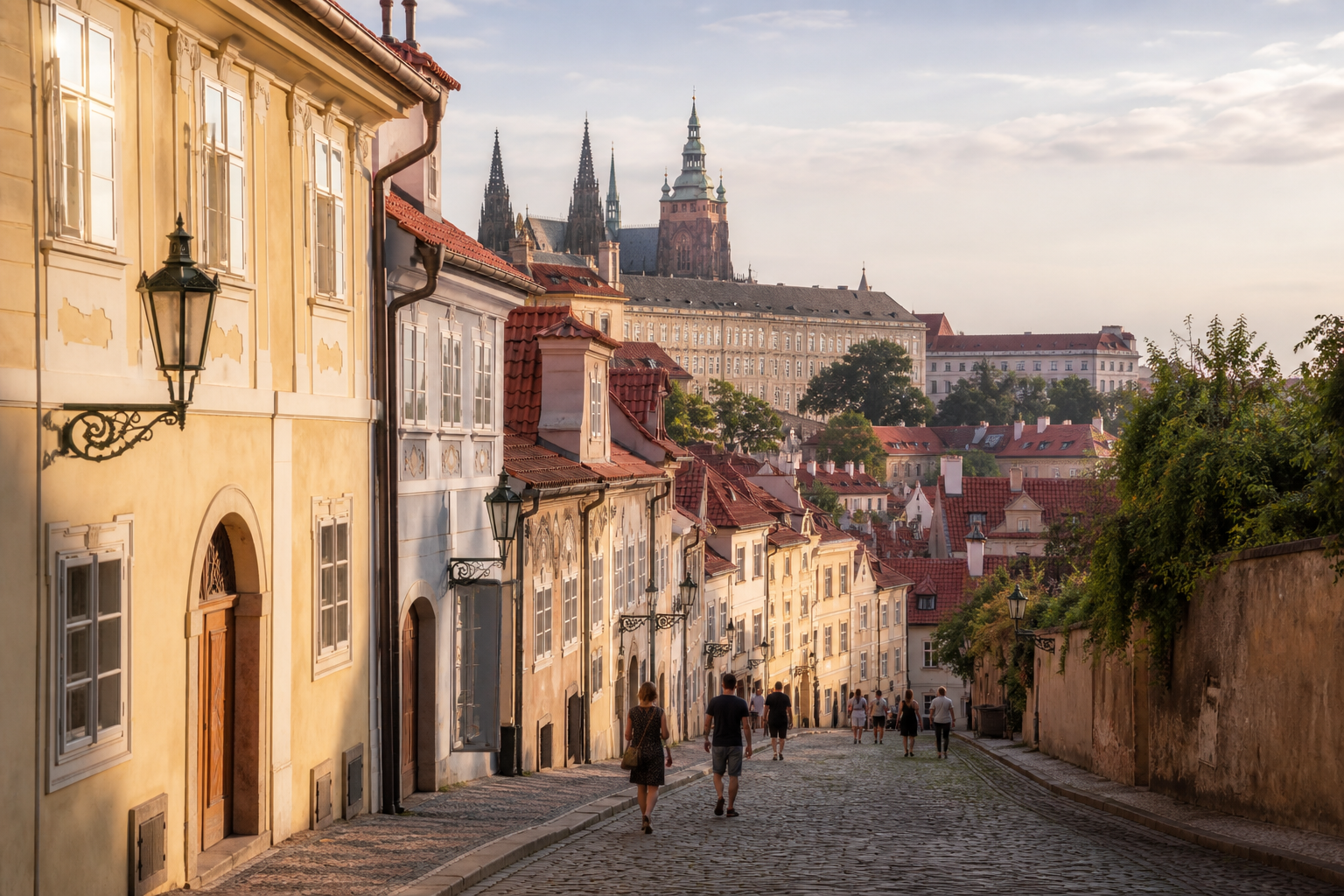
Malá Strana, the Lesser Town, lies below the castle in a network of Baroque streets, palace gardens and quiet passages. St Nicholas Church dominates its central square with a richly decorated interior and monumental dome. Nerudova Street provides the classic route uphill, though side streets are often more rewarding.
Kampa Island offers riverside paths, public art and views toward Charles Bridge. Nearby, the Lennon Wall continues to change through layers of messages and paint. Treat it as a contemporary civic symbol rather than simply a photo backdrop.
Petřín Hill provides gardens, wooded paths and city viewpoints. The observation tower is a smaller relative of the Eiffel Tower and requires a separate climb or lift. Funicular operations and ticket rules have changed during long-term works, so check official Prague transport information instead of assuming it is running.
Charles Bridge
Charles Bridge connects Malá Strana with the Old Town through a sequence of Baroque statues and Gothic bridge towers. It is one of Prague’s essential walks and one of its busiest spaces. At midday, dense crowds can obscure the architecture and river views.
Cross near sunrise for a calmer experience, then return after dark to see the illuminated castle. The statues on the bridge are mostly replicas, with originals protected elsewhere. Climbing the Old Town Bridge Tower gives an excellent elevated view when open.
Watch belongings during crowded periods and avoid blocking the center of the bridge. Musicians and artists contribute to the atmosphere, but the bridge remains a major pedestrian route for residents and visitors alike.
Old Town Square and the Astronomical Clock
Old Town Square gathers several architectural periods in one space. The Gothic Church of Our Lady before Týn, Baroque St Nicholas Church, Kinský Palace and colorful façades surround the Jan Hus Monument. Arrive early to appreciate the scale before tour groups fill the square.
The Astronomical Clock on the Old Town Hall performs hourly, but its historical mechanism and symbolism are more interesting than the brief spectacle alone. Tour the town hall or climb the tower for views across red roofs and church spires. Accessibility options may be available, so check current visitor information.
From the square, walk toward the Powder Gate and the Art Nouveau Municipal House, or follow the former Royal Route toward Charles Bridge. Shops and restaurants on the main corridors target visitors; parallel streets provide quieter architecture and often better value.
Josefov and Jewish Prague
Josefov preserves essential sites connected with Prague’s Jewish history. The Jewish Museum administers historic synagogues, the ceremonial hall and Old Jewish Cemetery through a combined visitor system. The Pinkas Synagogue’s memorial to Czech and Moravian victims of the Shoah is especially powerful.
The Old-New Synagogue remains an active place of worship as well as one of Europe’s oldest surviving synagogues. Dress and behave respectfully, follow photography rules and check closures for Jewish holidays. The cemetery’s dense layers of gravestones reflect centuries of restricted burial space.
Allow several hours rather than treating the quarter as a quick circuit. Its history extends far beyond legends and picturesque architecture. Thoughtful interpretation helps explain religious life, legal restrictions, emancipation, persecution and renewal.
New Town and Wenceslas Square
Prague’s New Town was founded in the fourteenth century, despite its name. Wenceslas Square functions more like a broad boulevard and has witnessed major events in modern Czech history. The National Museum anchors its upper end after extensive restoration.
Vyšehrad
Vyšehrad is a historic fortress above the Vltava south of the center. Its ramparts provide broad river views, while the Basilica of St Peter and St Paul and the national cemetery connect the site with Czech cultural memory. Paths and green space make it a calmer alternative to Prague Castle.
The complex is easy to reach by metro and a short walk. Allow time to follow the walls rather than visiting only the church. Morning or late afternoon light emphasizes the river bends and city skyline.
Neighborhoods Beyond the Center
Vinohrady combines tree-lined streets, parks, cafés and handsome late nineteenth-century buildings. Náměstí Míru and nearby residential blocks provide a polished but lived-in atmosphere. Žižkov feels denser and more informal, with pubs, galleries and elevated views from Vítkov Hill.
These districts are not tourist exhibits. Choose public venues, keep noise low near homes and use trams or metro rather than expecting every destination to be walkable from Old Town.
Czech Food and Beer Culture
Traditional Czech cooking is hearty, built around meat, sauces, dumplings, potatoes and cabbage. Try svíčková, roast beef with a creamy vegetable sauce, or guláš served with bread dumplings. Roast duck, schnitzel and fried cheese are common, while seasonal soups provide a lighter start.
Open-faced sandwiches called chlebíčky make a convenient snack. Sweet choices include fruit-filled dumplings, pastries and cakes from long-established cafés. Trdelník is widely marketed in the center but is not the best representation of everyday Czech baking.
Beer is part of Prague’s social culture, yet quality matters more than volume. Pilsner-style lagers dominate, while smaller breweries offer broader styles. Order responsibly, understand serving sizes and avoid pub crawls that disturb residential streets. Service may feel direct; rounding the bill for good service is customary.
Getting Around Prague
Prague’s metro, trams and buses form an efficient integrated network. Trams are particularly useful for castle approaches and neighborhoods beyond the center. Tickets are time-based and permit transfers within their validity, with 24- and 72-hour options available for frequent travel.
Paper tickets without a printed start time must be validated once. Mobile tickets require correct activation and may include a short protective delay. Inspectors work throughout the network, so follow official PID guidance and carry proof of eligibility for any discount.
The airport is linked with the metro and city by public bus services, with additional transfer options available. Taxis should be booked through recognized channels or official ranks. Within the center, sturdy shoes matter because cobbles, slopes and tram tracks demand attention.
Best Time to Visit
April to June and September to October offer comfortable walking weather, but the center remains busy. Spring gardens and autumn color are especially attractive. Reserve accommodation early for Easter, major concerts and holiday weekends.
July and August bring long days, heat and the largest crowds. Winter is cold and daylight is limited, yet snow or fog can make the skyline atmospheric. December markets create festive energy but also high demand; January and February are generally quieter.
Where to Stay
Old Town is convenient but expensive and crowded. Malá Strana offers historic atmosphere and castle access, though slopes and limited transport on some streets matter. New Town provides broader hotel choice and easy connections.
Vinohrady suits travelers seeking restaurants and residential calm, while Karlín and Holešovice combine good transport with contemporary culture. Check street noise, air conditioning for summer and distance to a tram or metro stop before booking.
A Suggested Three-Day Itinerary
Spend day one at Prague Castle, Hradčany and Malá Strana, then cross Charles Bridge near evening. On day two, explore Old Town Square, Josefov, the Municipal House and riverside streets. Use day three for Vyšehrad, New Town and one outer neighborhood.
With an extra day, add more museums, Petřín Hill or a carefully planned trip to Kutná Hora. Prague is most memorable when its famous skyline is balanced with context and quieter streets. Begin early, respect residential areas and allow the city’s history to unfold beyond its postcard views.
Comments