
Vienna combines imperial grandeur with a remarkably livable modern city. Habsburg palaces, Baroque churches and formal boulevards frame world-class art collections, concert halls and coffeehouses where time seems deliberately unhurried. Beyond the historic center, markets, vineyards, parks and creative neighborhoods reveal a more contemporary capital.
Four days provide a balanced first visit. Three can cover the principal imperial sights and one major museum at a faster pace, while five or six allow for Schönbrunn gardens, outer districts and music. Reserve popular palace times and performances, but avoid packing every hour; Vienna rewards quiet observation as much as monumental sightseeing.
Why Visit Vienna?
Vienna’s cultural range is exceptional. The Hofburg traces centuries of Habsburg rule, Schönbrunn presents the imperial summer residence, and the Ringstrasse gathers grand civic buildings. Collections at the Kunsthistorisches Museum, Belvedere and MuseumsQuartier extend from ancient objects through Klimt and contemporary art.
The city also sustains traditions as part of daily life. Residents read newspapers over coffee, public transport runs efficiently, markets serve many communities and wine is produced within the city limits. Classical music remains important, but Vienna’s artistic identity also encompasses architecture, design, film and experimental culture.
St Stephen’s Cathedral and the Historic Center
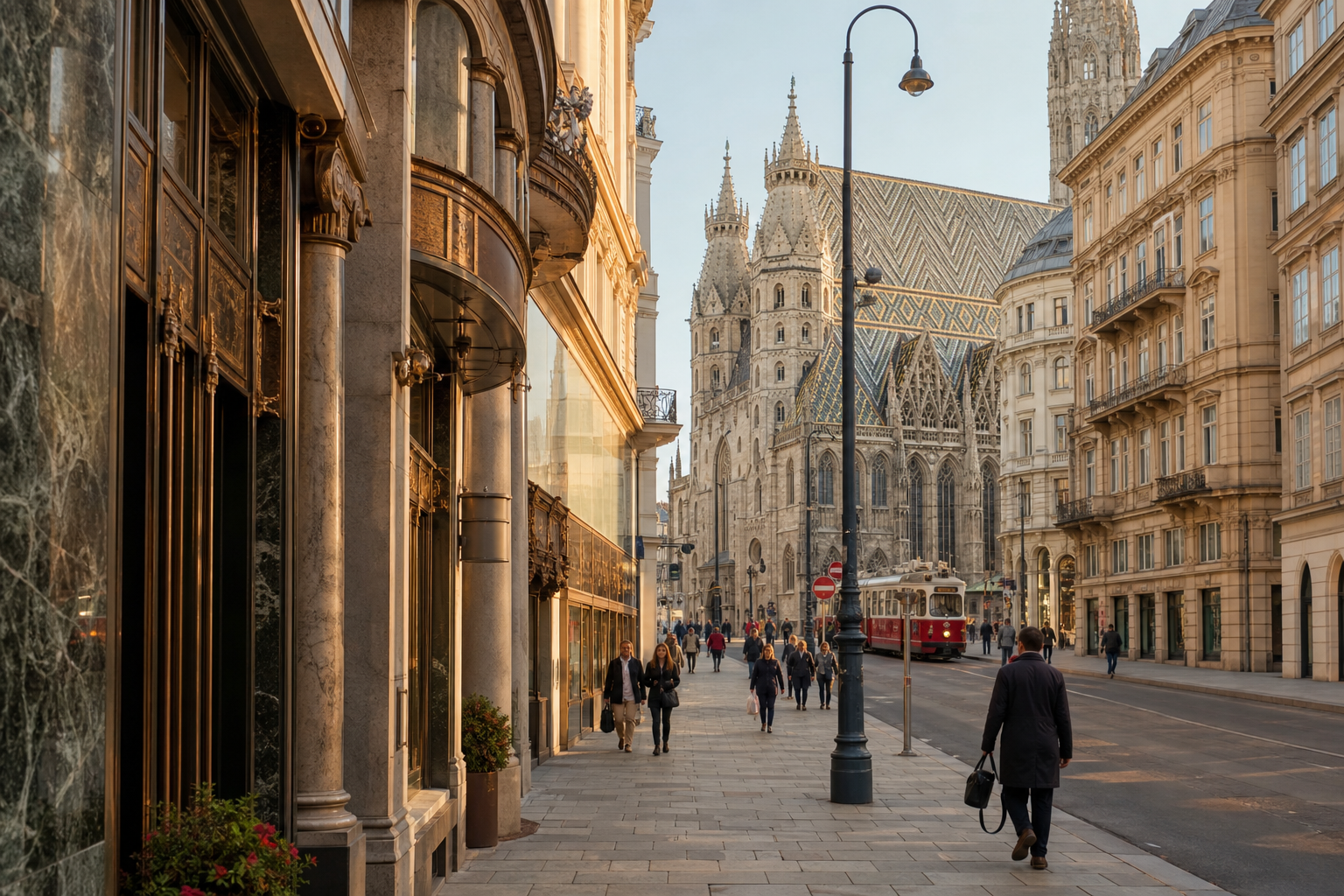
St Stephen’s Cathedral rises at Vienna’s geographic and symbolic heart. Its patterned roof, Gothic tower and layered interior reflect centuries of rebuilding and religious history. Parts of the church are freely accessible for worship, while towers, catacombs and designated areas require tickets or tours.
Check the official schedule because services and events affect tourist access. The south tower involves a long spiral stair, while the north tower may offer lift access under current conditions. Dress respectfully and avoid photographing worshippers.
From Stephansplatz, walk through narrow streets toward the former Jewish quarter, Hoher Markt and the Danube Canal. Graben and Kohlmarkt lead west through grander commercial streets. Look into courtyards and passages, where medieval street patterns survive behind later façades.
The Hofburg
The Hofburg is an enormous palace complex built and expanded over centuries. Its courtyards connect the old center with Heldenplatz and the Ring. Visitor attractions include imperial apartments, the Sisi Museum, treasury, Spanish Riding School, National Library and several specialized collections.
Choose one or two sections rather than treating the entire complex as a single attraction. The imperial apartments explore court life and Empress Elisabeth’s carefully shaped public image. The Imperial Treasury holds regalia and sacred objects, while the library’s State Hall offers a spectacular Baroque interior.
Spanish Riding School performances and morning exercises follow separate schedules and ticket systems. Buy through official channels and understand what type of access you are purchasing. Horses need rest and care, so programming varies across the year.
Schönbrunn Palace and Gardens
Schönbrunn served as the Habsburg summer residence and remains Vienna’s most expansive imperial experience. Palace tours move through state rooms and private apartments associated with Maria Theresa, Franz Joseph and Elisabeth. Different ticket products cover different routes, so compare them before booking.
Timed entry is strongly recommended. Arrive early, use the correct gate and expect security and walking between facilities. Photography rules protect interiors. An audio guide supplies useful context, but guided options can explain court ritual and architectural changes in greater depth.
The gardens deserve several hours independently of the palace. Formal parterres rise toward the Gloriette, where the terrace provides a broad view back over Schönbrunn and Vienna. Additional attractions, including the maze, orangery and zoo, require separate time and often separate tickets. Comfortable shoes are essential.
Belvedere and Gustav Klimt
The Belvedere consists of two Baroque palaces and landscaped gardens created for Prince Eugene of Savoy. Upper Belvedere contains the best-known art collection, centered on Gustav Klimt’s The Kiss and major Austrian works from several periods. The palace setting and city view are part of the experience.
Reserve a timed slot for Upper Belvedere, especially during weekends and holidays. Crowds gather around Klimt, but nearby galleries contain Schiele, Kokoschka and earlier Austrian art. Lower Belvedere hosts changing exhibitions and should be considered separately.
Walking downhill through the gardens connects the two buildings naturally. Continue toward the Hauptbahnhof or Karlsplatz depending on the rest of your day. Do not attempt to combine Schönbrunn, Belvedere and the Hofburg in one itinerary.
Kunsthistorisches Museum and MuseumsQuartier
The Kunsthistorisches Museum occupies a monumental Ringstrasse building and contains imperial collections of painting, antiquities and decorative art. Bruegel, Velázquez, Vermeer, Raphael, Titian and Caravaggio are among the highlights. The Egyptian and Greek collections broaden the visit far beyond European painting.
Select a few galleries and allow time for the building itself. Its grand staircase, dome and café embody the theatrical museum culture of late imperial Vienna. Across Maria-Theresien-Platz, the Natural History Museum mirrors its architecture.
MuseumsQuartier fills former imperial stables with modern institutions and public courtyards. The Leopold Museum is especially strong in Schiele and Austrian modernism, while mumok focuses on modern and contemporary art. Courtyard seating makes the complex useful even without entering every museum.
Ringstrasse and Civic Vienna
The Ringstrasse replaced the old city walls with a grand boulevard lined by institutions intended to express imperial and civic confidence. The State Opera, parliament, city hall, Burgtheater and university create an open-air survey of nineteenth-century architecture.
Karlsplatz, Naschmarkt and Freihausviertel
Karlskirche dominates Karlsplatz with its Baroque dome and monumental columns. Nearby, the renovated Wien Museum presents the city’s history from early settlement to the present. Permanent-collection access and temporary exhibitions may follow different ticket arrangements.
Southwest of the square, Naschmarkt mixes produce, specialty foods, restaurants and flea-market activity. It is popular with visitors but remains useful for observing Vienna’s international food culture. Compare prices, order clearly and avoid assuming every tasting is free.
The adjacent Freihausviertel contains independent shops, cafés, galleries and the colorful Secession building. Its famous Beethoven Frieze has specific viewing conditions. This area makes a good transition from monumental central Vienna into lived-in residential streets.
Prater, Danube Canal and Modern Vienna
The Prater includes both a large green landscape and the Wurstelprater amusement area. The historic Giant Ferris Wheel provides a slow-moving city view, while paths farther into the park suit walking and cycling. Attractions operate independently and some are seasonal.
Viennese Coffeehouse Culture
A traditional coffeehouse is not simply a place to drink coffee. It functions as a social room where guests may read, write or talk without being hurried. Historic interiors range from grand and formal to worn and intimate. Famous addresses can have long queues, while neighborhood cafés often preserve the atmosphere with less waiting.
Coffee names require a little decoding: a Melange resembles a milky espresso drink, while an Einspänner is topped with whipped cream. Order cake according to preference rather than chasing a single “best” version. Sachertorte, apple strudel and seasonal pastries are classic choices.
Service can feel reserved but professional. A glass of water commonly accompanies coffee, and rounding up is normal. Do not occupy the busiest table for hours during a queue without ordering appropriately.
Viennese Food and Wine
Wiener schnitzel, traditionally made with veal, is thin, breaded and fried. Tafelspitz is simmered beef served with accompaniments, while goulash, sausages and dumpling dishes reflect Central European connections. Vegetarian and international choices are now widespread.
Heurige are wine taverns associated with local producers, particularly in districts such as Grinzing, Nussdorf and Stammersdorf. Look for signs indicating current opening and new wine. Some well-known taverns cater heavily to groups, while smaller places offer a quieter experience.
Markets and Beisl taverns provide alternatives to formal restaurants. Check whether bread or cover items are charged, reserve popular dinners and expect payment customs to vary. State the total, including tip, when paying rather than leaving money silently on the table.
Getting Around Vienna
Vienna’s U-Bahn, trams, buses and suburban trains make car-free travel easy. Wiener Linien sells single tickets and time-based passes, while regional and airport services may follow different rules. Check official conditions before choosing a visitor card or transport pass.
Validate paper tickets when required and keep them for inspection. Trams are particularly useful around the Ring and outer neighborhoods. Cycling infrastructure is good in many areas, but pedestrians should still watch marked lanes before stepping off pavements.
The airport connects by regular rail, express train, bus and taxi. The fastest branded option is not always the most convenient or economical, so compare destination and schedule. Wien Hauptbahnhof provides extensive domestic and international rail links.
Best Time to Visit
April to June and September to October offer comfortable walking conditions. Spring gardens and autumn cultural programs are appealing, though major conferences can raise hotel prices. Summer is warm and lively, with outdoor events and bathing areas.
Winter is cold but atmospheric. Christmas markets draw large crowds from mid-November, while January and February are quieter outside balls and major events. Museums and coffeehouses make poor weather manageable year-round.
Where to Stay
Innere Stadt maximizes convenience but is expensive. Neubau and Mariahilf provide museums, shopping and restaurants close to the center. Wieden suits access to Karlsplatz and Belvedere, while Leopoldstadt offers Prater and canal connections.
Josefstadt feels calm and elegant, and outer districts can provide better value near U-Bahn stations. Check air conditioning for summer, tram noise and the precise nighttime route before booking.
A Suggested Four-Day Itinerary
Spend day one at St Stephen’s Cathedral, the Hofburg and central streets. On day two, devote the morning to Schönbrunn, then return for Naschmarkt or a coffeehouse. Use day three for the Kunsthistorisches Museum, MuseumsQuartier and Ringstrasse.
On day four, visit Belvedere, Karlsplatz and either Prater or the Danube Canal. With an extra day, explore outer neighborhoods, a Heuriger district or nearby Bratislava.
Vienna is best approached selectively. Choose the imperial rooms and art collections that genuinely interest you, then make space for parks, trams and a long coffee. Its reputation for formality softens quickly once monumental history and ordinary neighborhood life are experienced together.
Comments