
Venice is unlike any other city: a dense network of islands, canals, bridges and stone lanes built within a vulnerable lagoon. Palaces rise directly from the water, churches hold extraordinary art and ordinary deliveries still arrive by boat. Its beauty is immediate, but the city becomes far more meaningful when understood as a living community rather than a decorative backdrop.
Three days provide a strong first visit, while four or five allow time for quieter districts and lagoon islands. Stay overnight if possible, reserve St Mark’s Basilica and the Doge’s Palace, and begin each day early. Venice feels most magical before day-trip crowds arrive and after they leave.
Why Visit Venice?
Venice preserves the physical form of a powerful maritime republic. The Grand Canal displays centuries of palaces, St Mark’s Square presents the political and religious center, and shipbuilding history survives at the Arsenale. Byzantine, Gothic, Renaissance and Baroque influences overlap within a remarkably compact landscape.
The city’s scale encourages discovery. A busy route can turn into a silent canal within minutes, and each of the six sestieri has a different rhythm. Art exists not only in famous museums but inside parish churches, confraternity buildings and modest façades. Moving slowly reveals details that hurried visits miss.
St Mark’s Square
Piazza San Marco is Venice’s grand civic stage, framed by arcades, the basilica, bell tower and historic government buildings. Arrive shortly after sunrise to understand its proportions without dense crowds. Later, musicians and café terraces create a different, more theatrical atmosphere.
St Mark’s Basilica combines Byzantine form, golden mosaics and objects connected with Venice’s eastern trade and conquest. Its visual richness reflects both religious devotion and the republic’s power. Modest clothing is required, luggage restrictions apply and interior photography rules must be followed.
Book official timed admission and compare options for the museum, loggia and Pala d’Oro. The museum provides access to the original bronze horses and elevated square views. High tides and religious services can change routes or hours, so verify conditions close to your visit.
The Campanile offers a broad panorama across rooftops, lagoon and islands. Lift access makes it easier than most Venetian towers, but weather can affect opening. Schedule it separately from the basilica rather than assuming one ticket covers both.
Doge’s Palace
The Doge’s Palace served as residence, government headquarters and court of the Venetian Republic. Its delicate Gothic exterior contrasts with monumental council chambers inside. Paintings by Tintoretto, Veronese and other Venetian masters reinforce the relationship between art and state power.
The standard route passes grand staircases, institutional rooms, the Bridge of Sighs and prison cells. Allow at least two hours and use an audio guide or reputable tour for political context. Secret Itineraries and other special visits require separate reservations and may involve confined stairs.
Buy through official channels and arrive before the timed entry. The palace is extensive, so combine it with the basilica only if you leave a break. Museo Correr and other St Mark’s Square museums may be included in broader ticket products.
The Grand Canal
The Grand Canal is Venice’s principal waterway and one of its greatest architectural experiences. Palaces, warehouses and churches line a reverse-S route crossed by four bridges. Their water-facing façades were designed to impress arriving guests and merchants.
Ride vaporetto Line 1 for a slow public-transport journey along the canal, ideally early or near evening. Board at an end point if you want a better chance of a seat, keep luggage out of aisles and allow commuters to move freely. This is public transport rather than a narrated cruise.
Rialto Bridge provides the most famous crossing and becomes intensely crowded. Visit early, then explore the produce and fish-market area when vendors are active. Do not treat working stalls as props; ask before photographing and avoid blocking deliveries.
San Polo and Santa Croce
San Polo contains the Rialto market, small squares and major churches. The Basilica dei Frari holds important works by Titian and Bellini within a vast Gothic interior. Nearby, the Scuola Grande di San Rocco is covered with dramatic paintings by Tintoretto and rewards an unhurried visit.
Dorsoduro
Dorsoduro combines art, student life and long waterfront walks. The Gallerie dell’Accademia presents the essential collection of Venetian painting, including Bellini, Carpaccio, Giorgione, Titian, Tintoretto and Veronese. Reserve during busy periods and allow several hours.
Walk along Zattere for broad lagoon views and afternoon light, then turn inland toward Campo Santa Margherita. The square remains part of local and university life, so keep late-night noise reasonable. Dorsoduro is an excellent base for travelers seeking atmosphere without staying beside St Mark’s.
Cannaregio and the Jewish Ghetto
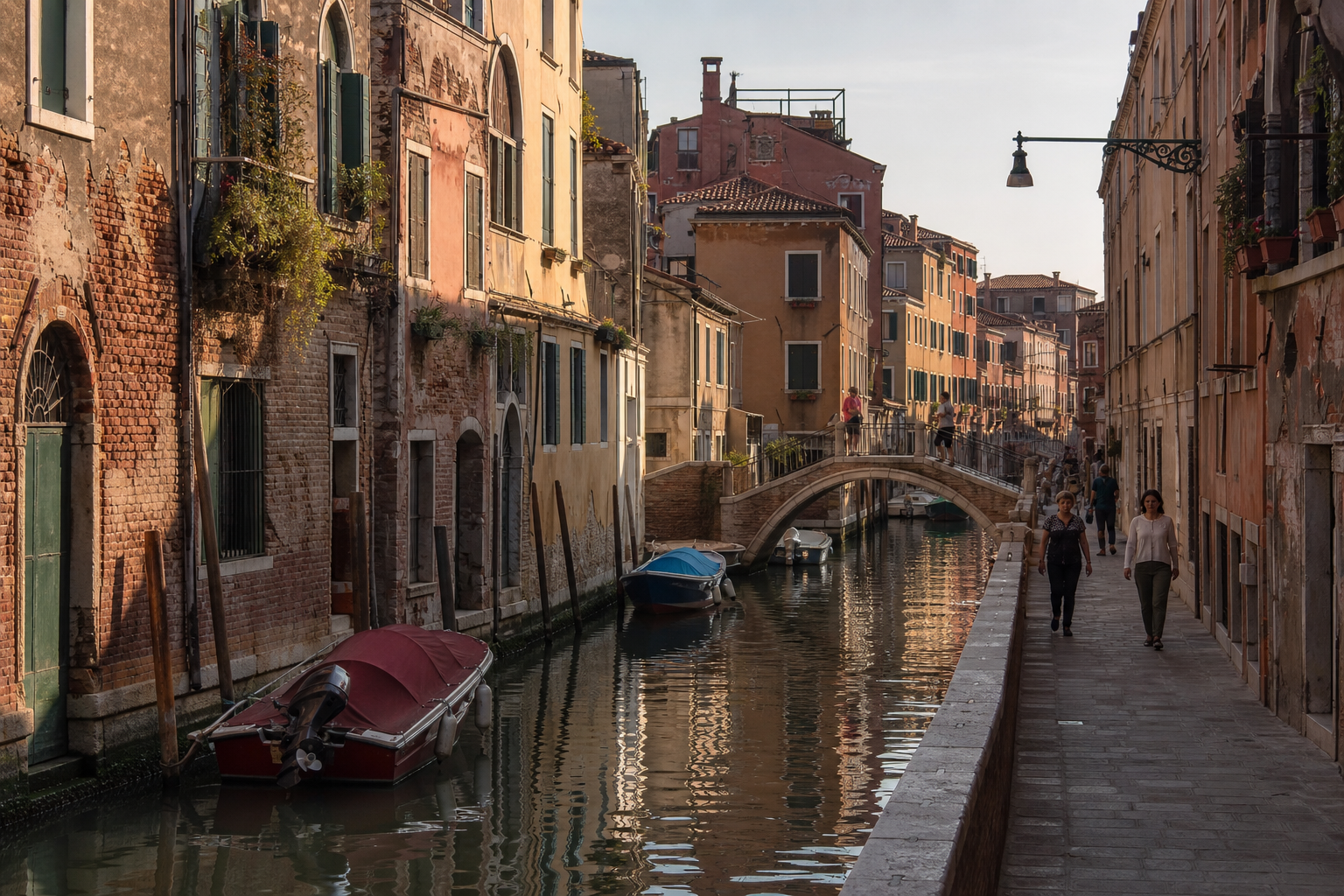
Cannaregio stretches from the train station toward the northern lagoon. Its main canals are lined with restaurants and bars, but residential lanes and smaller waterways remain calmer than the San Marco core. Fondamenta della Misericordia is particularly lively around aperitivo.
The Venetian Ghetto was established in the sixteenth century and gave the word “ghetto” its international meaning. The area contains synagogues, memorials and a Jewish museum within an active community. Guided access and institutional arrangements can change, so consult official sources and observe religious holidays.
Explore with historical sensitivity rather than reducing the district to architecture. The tall buildings reflect restricted space, while plaques and artworks remember deported Venetian Jews. Nearby Madonna dell’Orto contains significant Tintoretto paintings and sees fewer visitors.
Castello and the Arsenale
Castello extends east from St Mark’s into increasingly residential streets. The monumental Arsenale entrance recalls the shipyard that enabled Venetian naval power. Portions of the complex open during Biennale events, while other areas remain restricted.
Murano, Burano and Torcello
Murano is known for glassmaking, with workshops, galleries and a dedicated museum. Choose demonstrations carefully: quality and sales pressure vary. Reputable studios explain techniques without pretending every inexpensive souvenir was made locally.
Burano’s brightly painted houses create a striking landscape, but the island is also a fishing and lace-making community. Walk beyond the busiest central canals, respect homes and avoid staged doorways. Torcello is quieter, with early lagoon history centered on its cathedral complex.
Gondolas and Other Boats
A gondola ride is expensive but provides access to narrow canals and a unique low perspective. Official rates are standardized by time and rise in the evening, while singing or special routes cost extra. Confirm duration, route and total price before boarding.
Venetian Food and Cicchetti
Venetian cooking reflects lagoon seafood, rice, polenta and trade connections. Try sarde in saor, sweet-and-sour sardines with onions, baccalà mantecato, cuttlefish with ink or risotto according to season. Moeche, soft-shell crabs, are a prized seasonal specialty.
Cicchetti are small snacks served in bacari wine bars. Order one or two with an ombra of local wine, then continue elsewhere rather than turning a tiny bar into a long meal. Quality is often best where food moves quickly and the selection is not excessively large.
Responsible Visiting and Acqua Alta
Venice faces population decline, housing pressure, erosion and environmental risk. Stay in licensed local accommodation, support independent businesses and carry a refillable bottle. Never swim in canals, attach locks to bridges or leave rubbish beside bins.
High water can temporarily flood low areas, especially around St Mark’s. Follow official forecasts and municipal instructions. Raised walkways may be installed, but waterproof footwear and flexible timing remain useful. Flooding does not affect every district equally.
Day visitors may face access-fee rules on designated dates. Requirements change by calendar and exemption status, so check the official Venezia Unica access-fee website shortly before travel rather than relying on old advice.
Getting Around Venice
Walking is the default within the historic city, but routes include steps, bridges and dead ends. Digital maps can lag among narrow lanes, so use signs toward major landmarks and accept occasional detours. Accessible routes exist but require advance planning.
ACTV vaporetti connect the historic center, Lido and lagoon islands. Single water tickets are costly, making time-based passes worthwhile for multiple journeys. Validate every ticket correctly, including digital products, and keep it available for inspection.
Marco Polo Airport connects by bus, water service and private taxi; Treviso Airport commonly uses bus connections. Rail arrives directly at Venezia Santa Lucia. If staying on the mainland, account for evening schedules and the loss of Venice’s quietest hours.
Best Time to Visit
April to June and September to October offer pleasant conditions but heavy demand. Summer brings heat, humidity and dense crowds. Winter is colder, with shorter days and potential high water, yet quiet mornings can be extraordinary.
Carnival transforms the city and requires early booking. Biennale exhibitions, festivals and cruise patterns also affect availability. Shoulder-season weekdays generally provide the best balance, though Venice is busy throughout much of the year.
Where to Stay
San Marco is convenient but expensive and crowded. Dorsoduro balances art and evening calm, while Cannaregio offers transport access and neighborhood life. Castello becomes quieter toward the east, and San Polo provides central walking routes.
Check bridges between the station or vaporetto stop and the property, especially with luggage or mobility needs. Historic buildings may lack lifts and have steep stairs. Staying within the lagoon costs more than Mestre but allows early and late exploration.
A Suggested Three-Day Itinerary
Spend day one at St Mark’s Basilica, the Doge’s Palace and the Grand Canal. On day two, visit Rialto, San Polo, the Frari and Dorsoduro. Use day three for Cannaregio, the Jewish Ghetto and Castello, or choose one lagoon island.
With an extra day, add the Accademia, more churches or a slow island excursion. Venice should never be treated as a race between landmarks. Begin early, move respectfully and allow the waterways, changing light and ordinary neighborhood life to guide part of every day.
Comments