
Lisbon unfolds across steep hills above the Tagus, combining tiled façades, yellow trams, grand riverfront squares and neighborhoods shaped by centuries of maritime history. Atlantic light gives the city a distinctive glow, while viewpoints reveal red roofs, church domes and the broad estuary from constantly changing angles.
Four days provide a balanced first visit. Three can cover Alfama, Baixa and Belém at a faster pace, while five or six allow for museums, outer districts and a day trip. Lisbon’s hills make short distances tiring, so group sights geographically, start early and use public transport strategically rather than treating every route as a walk.
Why Visit Lisbon?
Lisbon offers architectural beauty without feeling like a preserved museum. Alfama’s irregular lanes survived the devastating 1755 earthquake, while the reconstructed Baixa follows a rational grid. Belém’s monuments reflect Portugal’s maritime expansion, and contemporary cultural spaces reinterpret industrial waterfronts.
The city is equally memorable for everyday pleasures: a strong espresso at a counter, grilled fish, patterned calçada pavements and evening conversation outside neighborhood cafés. Fado, azulejo tiles and local markets are living cultural forms, not simply decorations for visitors.
Alfama and Lisbon Cathedral
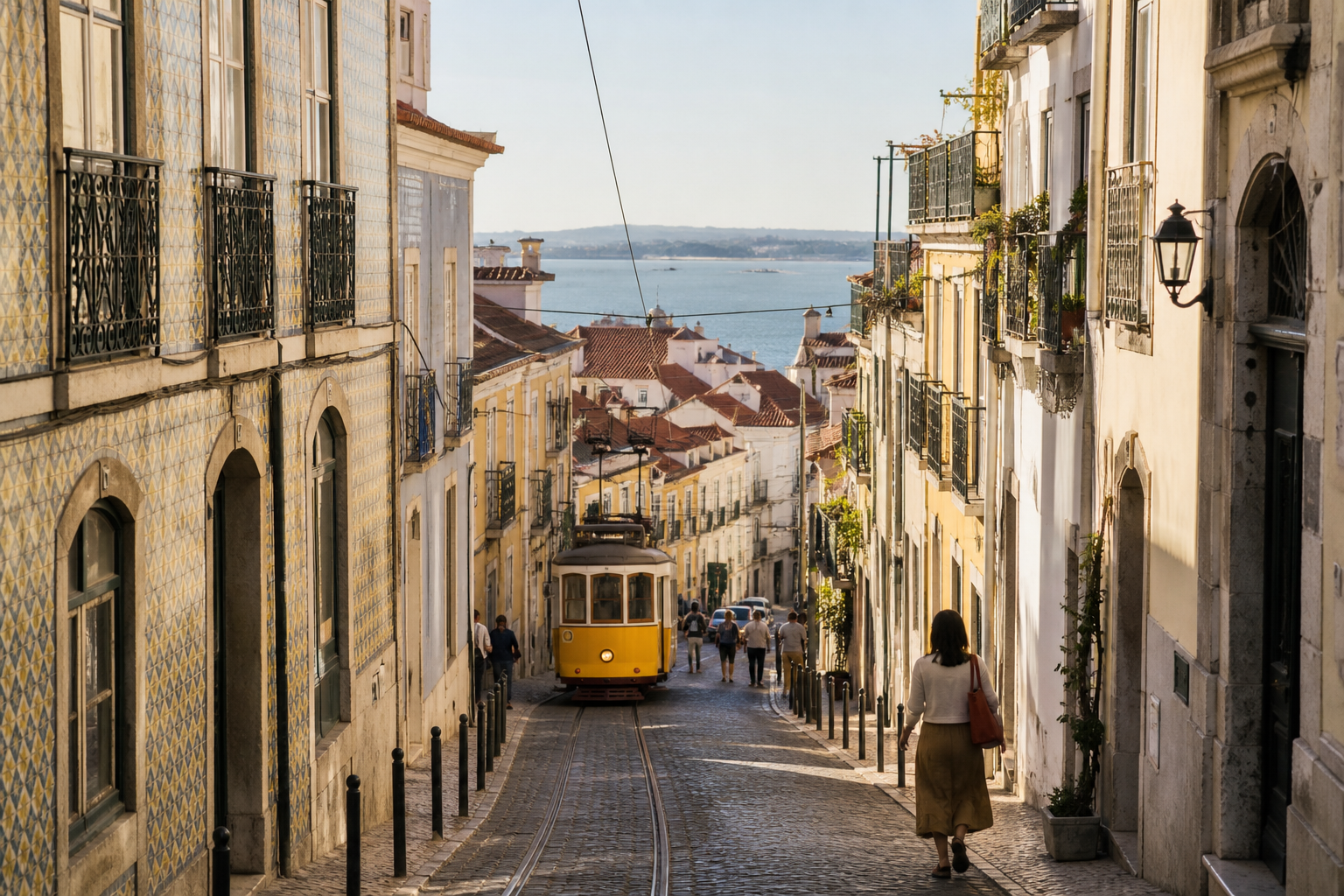
Alfama is Lisbon’s oldest and most atmospheric district, climbing from the river toward the castle. Narrow lanes, stairways and small squares create a maze that rewards slow exploration. Begin near Lisbon Cathedral, whose fortress-like exterior reflects repeated rebuilding after earthquakes.
Walk uphill through streets around São Miguel and Santo Estêvão, pausing at Miradouro de Santa Luzia and Portas do Sol. These viewpoints are beautiful but crowded. Continue onto parallel residential lanes for quieter perspectives, always keeping voices low and doorways clear.
Alfama is not an open-air stage. Laundry, deliveries and family life continue around visitors, while short-term rentals have transformed parts of the district. Choose licensed accommodation, avoid intrusive photography and attend fado in a venue that treats the music with respect.
The National Pantheon and São Vicente de Fora lie on the eastern edge. On flea-market days, Feira da Ladra fills nearby streets with antiques, clothing and household objects. Keep valuables secure and confirm market schedules before planning around it.
Castelo de São Jorge and Graça
São Jorge Castle occupies one of Lisbon’s strongest viewpoints. Fortifications, archaeological remains and shaded courtyards explain the strategic importance of the hill. The panorama over Baixa, the Tagus and the western city is the primary attraction for many visitors.
Book ahead during busy periods and arrive near opening time. Stone paths are uneven, and exposed walls can become hot in summer. The site has limited shade beyond its interior areas, so carry water and sun protection.
Continue north toward Graça for a more residential hilltop atmosphere. Miradouro da Senhora do Monte offers one of the widest city views, while the viewpoint near the Graça church has terraces and sunset light. Walk downhill or use buses and trams to protect tired knees.
Baixa, Rossio and Praça do Comércio
Baixa was rebuilt in an orderly grid after the 1755 earthquake. Praça do Comércio opens dramatically toward the river, framed by yellow arcades and the Rua Augusta Arch. Climbing the arch, when open, gives a compact view over the grid and waterfront.
Rua Augusta leads north through shops and cafés toward Rossio and Praça da Figueira. The main pedestrian street is busy and commercial, so explore parallel routes for historic shops and architectural details. Black-and-white mosaic pavements can become slippery in rain.
The Santa Justa Lift is a remarkable iron structure but often develops long queues. Similar elevated views are available from nearby streets and terraces without waiting. If riding, confirm what your transport ticket covers and enter through the official queue.
Chiado, Bairro Alto and Príncipe Real
Chiado combines theaters, bookshops, historic cafés and elegant shopping streets. The district connects Baixa with higher ground, making escalators, lifts and transit useful. The ruins and archaeological museum of Carmo Convent provide a powerful reminder of the earthquake.
Bairro Alto is quiet in the morning and crowded with bars after dark. Explore its grid during the day for small shops and street art, then return selectively for nightlife. Keep noise low when moving between venues because residents live directly above narrow streets.
Belém Monuments
Belém concentrates several of Lisbon’s most important monuments along the Tagus. Jerónimos Monastery is a masterpiece of Manueline architecture, with elaborate stonework celebrating religious and maritime themes. Its church and cloister follow different access arrangements, so check official opening and ticket information.
Belém Tower once defended the river approach and became a symbol of Portuguese exploration. Interior capacity is limited and narrow stairs can create long waits. The exterior and riverside setting are rewarding even if you decide not to enter.
The Monument to the Discoveries presents a monumental twentieth-century interpretation of Portuguese maritime history. Approach the subject critically, considering exploration alongside colonialism, slavery and their enduring consequences. Cultural institutions in the area increasingly provide broader context.
Allow most of a day for Belém rather than squeezing it into a quick tram ride. The riverside paths, gardens, National Coach Museum, Centro Cultural de Belém and contemporary museums each add potential stops. Choose two major interiors to avoid fatigue.
Museums and Contemporary Culture
The Calouste Gulbenkian Museum presents European, Middle Eastern and Asian art in a peaceful garden setting north of the center. Its founder’s collection and modern holdings reward several hours. Check which buildings and galleries are open during ongoing institutional projects.
The National Tile Museum occupies a former convent and explains azulejo production through historic examples and a panoramic tile view of pre-earthquake Lisbon. It is outside the central walking circuit, so plan transport carefully.
Viewpoints and the River
Lisbon’s miradouros are public social spaces as well as scenic stops. São Pedro de Alcântara overlooks the castle, Santa Catarina faces the river and Senhora do Monte offers a broad panorama. Visit at different times rather than chasing every viewpoint in one afternoon.
Portuguese Food to Try
Lisbon’s food draws heavily on seafood, olive oil, bread and regional produce. Bacalhau appears in numerous preparations, while grilled sardines are strongly seasonal. Try polvo à lagareiro, clams, fish soup or a simple grilled catch after confirming price by portion or weight.
Bifana is a pork sandwich suited to a quick meal, and prego commonly features beef. Petiscos are small dishes for sharing but are not identical to Spanish tapas. Ask for recommendations and order gradually rather than filling the table immediately.
Pastel de nata should be eaten warm with cinnamon if desired. Belém has the most famous historic bakery, but excellent versions appear throughout the city. Other sweets reflect convent traditions rich in egg yolk and sugar.
Bread, olives or cheese placed on the table may be charged if consumed. Decline politely if unwanted. Dinner begins later than in northern Europe, though Lisbon accommodates visitors more easily than some Iberian cities. Reserve respected restaurants and fado houses.
Fado
Fado combines voice, Portuguese guitar and poetry in an intimate performance tradition. Alfama and Mouraria are closely associated with its history, while dedicated venues range from informal taverns to formal dinner houses. The Fado Museum provides context before an evening performance.
Choose a venue based on musical reputation, format and transparent minimum spend. Remain silent during songs and avoid flash or intrusive recording. Fado is not background entertainment; respectful attention is central to the experience.
Getting Around Lisbon
Metro, buses, trams, funiculars, lifts and suburban trains form Lisbon’s transport system. A reusable card can hold individual fares, stored value or time-based products. Operators and regional routes differ, so confirm exactly what each ticket covers.
Historic Tram 28 is scenic but frequently overcrowded and targeted by pickpockets. Ride early, use an alternative section or choose ordinary trams and buses when queues are long. Never block doors, and give priority seats to passengers who need them.
The airport connects directly to the metro and city buses, with taxis and app-based services also available. Cobblestones and steep pavements make wheeled luggage difficult, so verify the final walk to accommodation. Comfortable shoes with grip are essential.
Best Time to Visit
March to June and September to October offer warm weather suited to walking. Spring can be breezy, while early autumn often remains hot. Festivals and major events raise prices, particularly around June celebrations.
July and August are hot, bright and crowded. Begin hill walks early and use museums during peak afternoon heat. Winter is mild compared with northern Europe but can be wet and windy; shorter queues make it appealing for cultural visits.
Where to Stay
Baixa and Chiado maximize central access but command high prices. Alfama offers atmosphere with steep streets and access challenges. Bairro Alto suits nightlife only if you accept significant noise.
Príncipe Real and Estrela feel calmer, while Avenida da Liberdade provides transport and polished hotels. Graça offers views and residential character. Wherever you stay, confirm licensing, air conditioning, soundproofing and the hill between the nearest station and the door.
A Suggested Four-Day Itinerary
Spend day one in Alfama, at the castle and around Graça. On day two, explore Baixa, Chiado, Bairro Alto and Príncipe Real. Devote day three to Jerónimos, Belém Tower and one museum along the river.
Use day four for the Gulbenkian or Tile Museum, a ferry across the Tagus and an evening fado performance. With extra time, visit Sintra, Cascais or additional neighborhoods at a slower pace.
Lisbon is most rewarding when its hills determine the rhythm. Plan the difficult climbs and major reservations, then leave room for a viewpoint, a neighborhood lunch and the changing river light. Respecting residential streets and engaging thoughtfully with maritime history make the city far richer than its postcard image.
Comments