
Berlin is a city shaped by dramatic reinvention. Imperial monuments, traces of dictatorship, Cold War infrastructure and contemporary architecture coexist across an unusually spacious capital. It can feel fragmented at first, yet that decentralization is central to its appeal: every neighborhood has its own streets, parks, nightlife and cultural institutions.
Four days provide a balanced introduction, while five or six allow time for more museums and local districts. Distances are larger than a map suggests, so organize days geographically and use public transport. Reserve the Reichstag dome and popular exhibitions, then leave space for parks, courtyards and the city’s constantly changing creative life.
Why Visit Berlin?
Berlin offers one of Europe’s most layered encounters with modern history. The Brandenburg Gate, Reichstag, Berlin Wall Memorial and sites of Nazi persecution demand context rather than quick photographs. Museums and memorials often occupy the locations where events unfolded, giving the city an unusually direct relationship with the past.
At the same time, Berlin remains experimental. Former industrial spaces host art and music, international communities shape food culture and broad green areas soften the dense urban fabric. The city rarely tries to appear polished everywhere, which makes exploration feel open-ended.
Brandenburg Gate and the Government Quarter
The Brandenburg Gate is Berlin’s defining landmark and a symbol whose meaning has changed repeatedly. Built as a royal city gate, it later stood beside the Berlin Wall and became associated with reunification. Visit early to experience Pariser Platz before tour groups and events fill the space.
Walk through the gate toward the Reichstag, home of the German parliament. The glass dome provides city views and an architectural statement about democratic transparency. Visits are generally free but require advance registration and identification through the official Bundestag system.
Allow time for security and arrive exactly as instructed. An audio guide explains surrounding landmarks while visitors follow the spiral ramps. Parliamentary sessions, state events or maintenance can alter access.
Continue along the Spree through the government district, where contemporary buildings cross the former line of division. Tiergarten begins just west of the gate and provides long paths toward the Victory Column and western Berlin.
Holocaust Memorial and Nazi History
The Memorial to the Murdered Jews of Europe occupies a field of concrete stelae near the Brandenburg Gate. Its abstract design creates shifting perspectives and physical unease. The underground information center names victims and places individual stories within the history of the Holocaust.
Treat the memorial as a place of remembrance: do not climb, run or pose playfully on the blocks. Entry to the information center may involve security and queues. Nearby, additional memorials recognize other groups persecuted under National Socialism.
The Topography of Terror documents the institutions of Nazi repression on the former site of SS and Gestapo headquarters. Its exhibitions are detailed and emotionally demanding. Do not schedule too many major memorial sites in immediate succession; time to process what you see matters.
Berlin Wall Memorial
The Berlin Wall Memorial on Bernauer Strasse offers the clearest understanding of the divided city. A preserved border strip, documentation center, observation platform and outdoor exhibits explain how the wall functioned and how it transformed everyday life.
Walk a substantial section rather than visiting only one marker. Personal stories describe escape attempts, forced removals and families separated by the border. The Chapel of Reconciliation adds another layer to the site.
The East Side Gallery preserves a longer wall section covered with murals painted after the opening of the border. It is visually striking but different in purpose from Bernauer Strasse. Visit both if possible, while remembering that recent graffiti and crowd pressure threaten the artworks.
Museum Island and the Historic Center
Museum Island gathers major collections in a UNESCO-listed ensemble beside the Spree. Building access changes as extensive renovation projects continue, and the Pergamon Museum is affected by long-term closure phases. Check the official museum pages before building an itinerary around a specific object.
The Neues Museum is known for Egyptian and prehistoric collections, while the Alte Nationalgalerie focuses on nineteenth-century art. The Bode Museum combines sculpture and Byzantine material. Select one or two institutions rather than rushing through the entire island.
Nearby Berlin Cathedral offers a monumental Protestant interior and, when open, a dome climb. The reconstructed Berlin Palace now houses the Humboldt Forum, which presents culture, art and contested collections within a new architectural shell. Its exhibitions should be approached with awareness of colonial provenance debates.
Walk toward the Nikolaiviertel for traces and reconstructions of the medieval core, then continue to Alexanderplatz. The Television Tower provides a high city view but requires timed admission and can be expensive. Street-level exploration often reveals more of Berlin’s texture.
Jewish Museum and Kreuzberg
The Jewish Museum combines a Baroque building with Daniel Libeskind’s angular modern architecture. Its permanent presentation explores Jewish life in Germany across centuries, not only persecution. Voids, axes and installations create a powerful spatial experience.
Reserve enough time for the collection and architecture. The museum differs from the Holocaust Memorial by presenting cultural continuity, belief, family life and intellectual history alongside exclusion and violence.
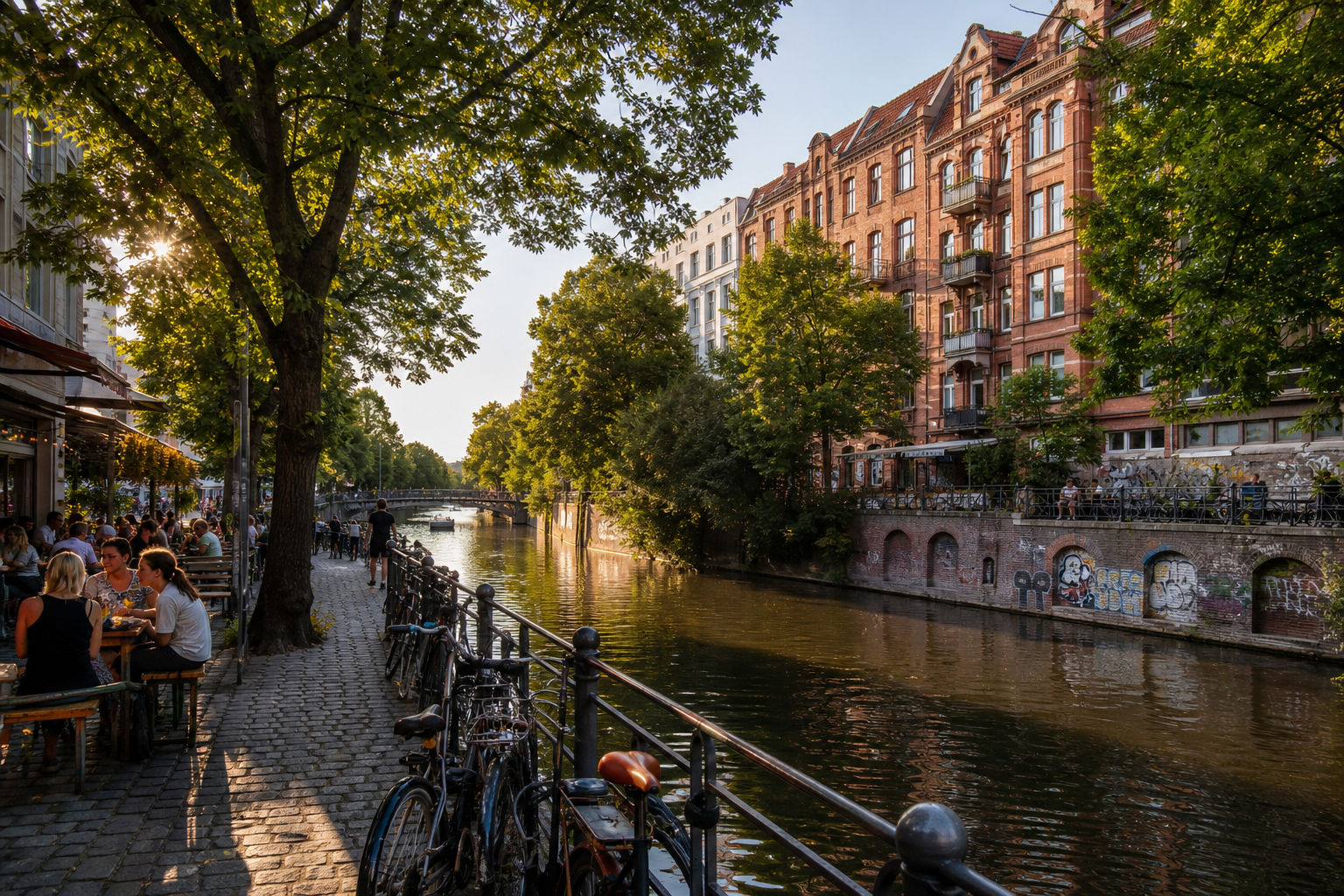
Continue into Kreuzberg, one of Berlin’s most diverse and mythologized districts. Turkish migration, squatting movements, punk culture and gentrification have all shaped its identity. Around Kottbusser Tor, the Landwehr Canal and Bergmannkiez, the atmosphere changes quickly.
Use public venues respectfully and avoid treating street art or housing struggles as scenery. Markthalle Neun hosts food events within a restored market hall, while the canal provides popular walking routes. Nightlife noise is a serious local issue, so keep voices low near homes.
Friedrichshain and East Berlin
Friedrichshain combines broad socialist-era avenues, nightlife and residential streets. Karl-Marx-Allee reveals monumental postwar planning, with tiled façades and generous public space. Reading its history helps distinguish political symbolism from later everyday use.
Charlottenburg and Western Berlin
Charlottenburg preserves a more traditional western-city atmosphere. Charlottenburg Palace combines Baroque interiors with extensive gardens, while Kurfürstendamm remains a major shopping boulevard. The Kaiser Wilhelm Memorial Church preserves a bomb-damaged tower beside a modern church.
The area around Savignyplatz contains restaurants, bookshops and elegant residential streets. Museum enthusiasts can visit photography and art institutions near Bahnhof Zoo. Western Berlin deserves at least half a day rather than a quick stop between central landmarks.
Berlin Food and Markets
Berlin’s food reflects migration, affordability and rapid change. Currywurst remains an iconic snack, while döner kebab in its Berlin form is central to everyday street food. Try both without assuming one stand represents a single definitive version.
German traditions appear in schnitzel, sausages, potato dishes and seasonal cooking, but contemporary Berlin is far broader. Turkish bakeries, Vietnamese restaurants, Syrian kitchens and modern plant-based food are integral to the city. Market halls and weekly markets make comparison easy.
Popular venues can require cash, though card acceptance continues to improve. Check before ordering. Tipping is customary but moderate; state the total you wish to pay when the server handles the transaction.
Parks and Outdoor Berlin
Tiergarten is the central green space, connecting government landmarks with the Victory Column and western districts. Tempelhofer Feld occupies a former airport and offers enormous open areas for walking, cycling and community gardens.
Treptower Park combines riverside paths with the monumental Soviet War Memorial. Its scale and political context deserve thoughtful attention. In summer, lakes and outdoor swimming areas become central to Berlin life, but only use designated and safe locations.
Getting Around Berlin
Berlin’s U-Bahn, S-Bahn, trams, buses and regional trains share an integrated zone system. Most central travel falls within zones A and B, while Berlin Brandenburg Airport lies in zone C. Choose tickets according to your exact destinations.
Validate paper tickets when required and keep them for inspection. Digital tickets need correct activation before boarding. Berlin has no entrance gates across much of the network, but plain-clothes inspectors conduct checks and issue substantial fines.
Trams operate mainly in the east, while buses fill important gaps. Cycling can be efficient, though construction and traffic require confidence. From the airport, regional and S-Bahn services reach several hubs; the best route depends on accommodation rather than a single central station.
Best Time to Visit
May to June and September offer long days and comfortable weather. Summer brings outdoor culture, lakes and busy parks, but heat and hotel demand can rise. Large fairs, festivals and sporting events affect prices throughout the year.
Autumn becomes cooler and wetter but suits museums. Winter is dark and cold, yet cultural venues, Christmas markets and indoor nightlife remain active. Bring layers because weather can change quickly in every season.
Where to Stay
Mitte provides access to major historic sights but varies from lively to quiet by street. Kreuzberg and Friedrichshain suit nightlife and food, with noise as the tradeoff. Prenzlauer Berg feels residential and well connected.
Charlottenburg offers polished western surroundings, while Neukölln has diverse restaurants and active nightlife. Moabit and Wedding can provide value near transit. Check the exact walking route, late-night connections and construction notices before booking.
A Suggested Four-Day Itinerary
Spend day one at the Brandenburg Gate, Reichstag, Holocaust Memorial and government quarter. On day two, visit the Berlin Wall Memorial, Museum Island and central East Berlin. Use day three for the Jewish Museum, Kreuzberg and the East Side Gallery.
On day four, explore Charlottenburg, Tiergarten and one neighborhood chosen by interest. With extra time, add Potsdam, more museums or Tempelhofer Feld.
Berlin cannot be understood through a checklist alone. Give its difficult history proper time, then experience the parks, food and neighborhoods that define the present. The city’s openness emerges most clearly when monumental sites and ordinary local life are allowed to inform each other.
Comments