
Budapest is defined by the Danube and the contrast between hilly Buda and energetic Pest. Castle walls, Ottoman-era baths, grand boulevards and Art Nouveau façades reveal centuries of political and cultural change. At night, bridges and public buildings illuminate the river, creating one of Europe’s most memorable city panoramas.
Four days provide a balanced introduction. Three can cover the headline sights at a faster pace, while five or six allow time for baths, markets and neighborhoods beyond the center. Group days by riverbank, reserve Parliament and popular thermal baths, and use public transport for longer distances.
Why Visit Budapest?
Budapest combines monumental beauty with distinctive everyday culture. The Parliament dominates the Pest riverbank, Buda Castle and Fisherman’s Bastion rise opposite, and Andrássy Avenue links the center with Heroes’ Square. Jewish heritage, Communist history and contemporary arts add essential depth.
Thermal water shapes the city in an unusual way. Historic bathhouses remain social institutions rather than decorative relics, while cafés, markets and wine bars express a strong Hungarian identity. Budapest is affordable by many Western European standards, but quality and price vary sharply around the busiest landmarks.
The Hungarian Parliament
The Hungarian Parliament Building is Budapest’s defining landmark, with a vast Neo-Gothic façade facing the Danube. Its interior includes ceremonial staircases, ornate halls and the Hungarian Holy Crown. Guided visits explain both the architecture and the building’s role in national political life.
Tours are timed and often sell out. Buy through the official visitor channel, select the correct language and bring the identification specified on the booking. Parliamentary business and state events can change access, so recheck instructions shortly before arrival.
Allow time for security and arrive early. Afterward, walk around Kossuth Lajos Square and the riverside. The Shoes on the Danube Bank memorial nearby commemorates Jews murdered by members of the Arrow Cross during the Second World War. Approach it quietly and never rearrange or use the shoes as props.
The best full exterior view comes from the Buda side, particularly around Batthyány Square. Morning and evening light each produce different reflections, while illuminated night views are especially dramatic.
Buda Castle District
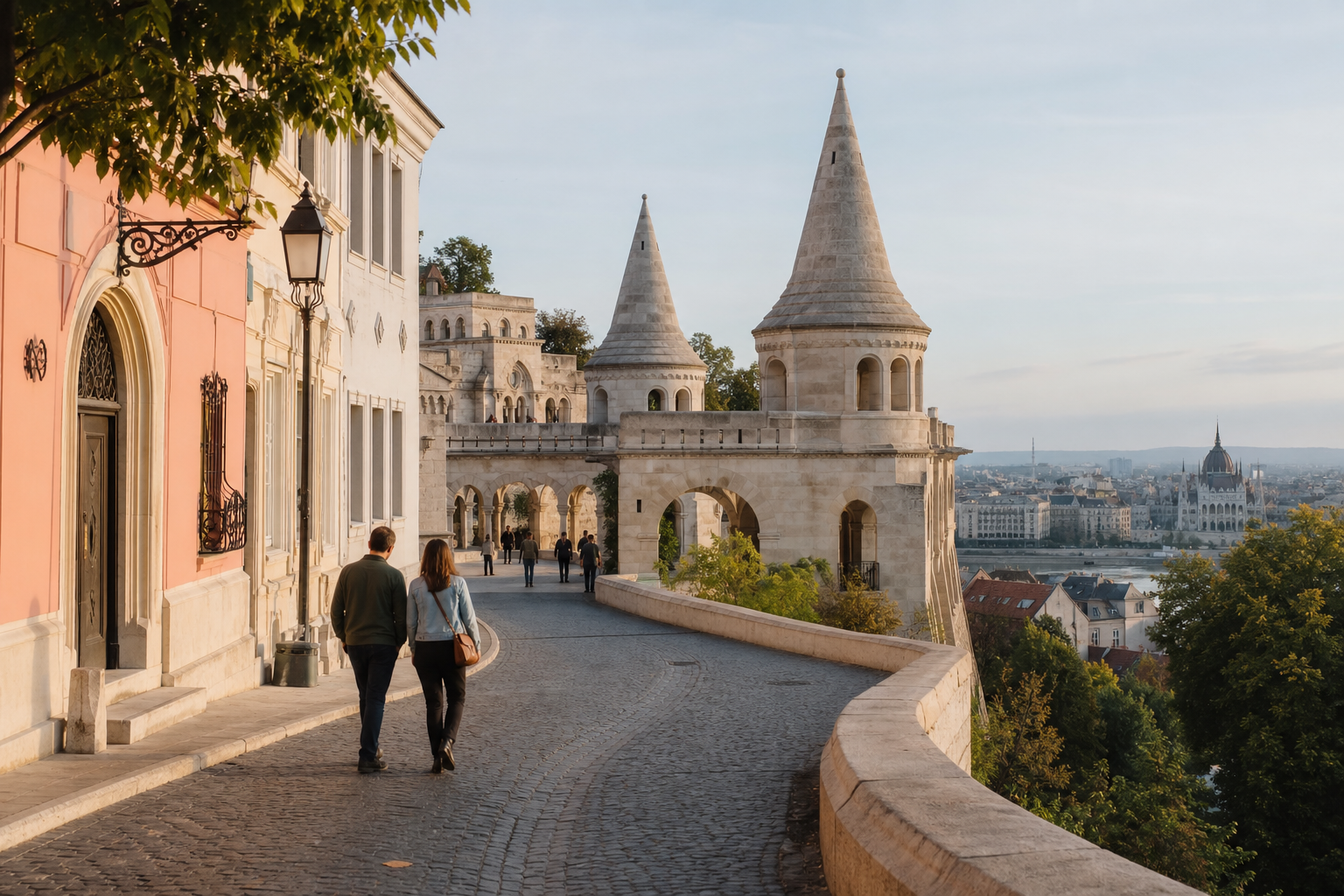
Castle Hill contains the former royal palace, Matthias Church, Fisherman’s Bastion and a network of historic streets. It is a district rather than a single attraction, and several museums occupy palace buildings. Arrive early or stay into evening to experience the lanes outside peak tour hours.
The Hungarian National Gallery presents Hungarian art from medieval works through modern movements. The Budapest History Museum explains the palace and city, while underground remains and courtyards show repeated destruction and reconstruction. Major building projects can alter entrances and walking routes.
Matthias Church is known for its patterned roof, Gothic elements and richly decorated interior. Fisherman’s Bastion wraps the hill edge with arcades and towers overlooking Pest. Some terraces are freely accessible while others require admission at certain times.
Reach the district by bus, walking paths or funicular. The funicular is scenic but often crowded and follows separate ticketing. Walking down through quiet stairways and residential streets can be more rewarding than returning by the same route.
Chain Bridge and the Danube
The Chain Bridge links central Pest with the base of Castle Hill and symbolizes the unification of Buda and Pest. Cross on foot for shifting views of the riverbanks, Parliament and palace. Wind can be strong, especially in winter.
The Danube promenade on the Pest side connects major hotels, public art and riverboat piers. On the Buda side, longer paths provide a calmer perspective. Evening cruises are popular, but operators differ in route, commentary, vessel size and environmental practice.
St Stephen’s Basilica and Central Pest
St Stephen’s Basilica anchors the central Pest district with a monumental dome. The interior combines religious art, marble and national symbolism, while the panoramic terrace offers broad city views. Worship schedules and concerts can affect tourist access.
Walk toward Vörösmarty Square and the Danube, then explore side streets around the historic center. Váci Street is heavily commercial; nearby parallel routes and squares often feel more relaxed. The Great Synagogue and Jewish Quarter lie a short walk east.
Jewish Quarter and Dohány Street Synagogue
Dohány Street Synagogue is among Europe’s largest synagogues and forms part of a complex with a museum, cemetery and Holocaust memorial. Guided visits provide important context about Jewish life in Hungary before, during and after the Holocaust.
Check religious holidays, modest-dress expectations and security requirements. The cemetery exists because wartime conditions forced burials within the ghetto, making it a place of particular gravity. The Tree of Life memorial names victims and invites quiet reflection.
The surrounding seventh district now contains restaurants, bars, independent shops and so-called ruin pubs. This nightlife identity sits beside residential streets and sites of persecution. Explore both histories, keep voices low near homes and avoid treating the neighborhood only as an entertainment zone.
Andrássy Avenue, Opera and Heroes’ Square
Andrássy Avenue is a grand nineteenth-century boulevard lined with townhouses, cultural institutions and embassies. The Hungarian State Opera offers performances and guided visits inside its restored Neo-Renaissance building. Book through official channels and verify the format.
The House of Terror occupies a former headquarters used by fascist and Communist security organizations. Its presentation is emotionally and politically charged; visitors benefit from wider historical reading and enough time to consider the interpretation.
At the avenue’s northeastern end, Heroes’ Square opens toward City Park. The Millennium Monument presents a national historical narrative, while the Museum of Fine Arts and Hall of Art frame the space. Nearby park paths connect museums, the zoo and Széchenyi Baths.
Thermal Baths
Budapest’s thermal baths range from Ottoman-era domes to grand nineteenth- and twentieth-century complexes. Széchenyi is the largest and most famous, with outdoor pools in City Park. Gellért is celebrated for Art Nouveau design but operating conditions and renovation schedules should be checked carefully. Rudas combines historic Turkish architecture with later facilities.
Bath rules differ by venue and sometimes by day. Buy the correct entry, bring or rent required items and shower before entering pools. Swim caps may be compulsory in swimming lanes even when unnecessary in thermal pools. Follow health warnings on temperature and time.
Weekday mornings are generally calmer. Keep valuables in a secure locker, wear sandals and drink water. Thermal bathing is relaxing but can be physically demanding; anyone with relevant health conditions should seek medical advice and avoid excessive heat.
Great Market Hall and Hungarian Food
The Great Market Hall occupies a striking iron-and-brick building near Liberty Bridge. Ground-floor stalls sell produce, meat, paprika and packaged goods, while upper areas serve prepared food and souvenirs. It is photogenic but heavily visited, so explore respectfully and compare prices.
Hungarian cooking is richer than the single idea of goulash. Gulyás is traditionally a soup, while pörkölt is a thick stew. Try paprikás csirke, stuffed cabbage, fisherman’s soup or seasonal vegetable dishes. Lángos is fried dough commonly topped with sour cream and cheese.
Desserts include dobos torta, chimney cake and layered pastries. Coffeehouse culture survives in both grand historic rooms and modern specialty cafés. Famous interiors can have queues and premium prices; neighborhood bakeries often provide a simpler experience.
Getting Around Budapest
BKK operates metro, trams, buses and trolleybuses within an integrated system. Single tickets, time-based tickets and travelcards follow different validation rules. The BudapestGO app supports journey planning and digital tickets, but activation requirements must be followed exactly.
Paper single tickets generally need validation before metro travel or immediately after boarding surface transport. A single ticket does not automatically permit every transfer, while certain timed tickets do. Inspectors conduct checks, so retain proof throughout the journey.
Tram 2 follows the Pest riverbank and provides excellent Parliament views as part of ordinary public transport. Airport bus services use specific tickets and routes. Official taxis operate under regulated conditions; use recognized booking channels and avoid unsolicited drivers.
Best Time to Visit
April to June and September to October offer comfortable walking weather. Spring parks and autumn light suit river views, though rain is possible. Festivals, races and major events can raise accommodation prices.
July and August are hot and crowded, making baths and shaded museums valuable during the afternoon. Winter is cold but atmospheric, with thermal pools, cafés and festive markets. Snow and ice can make Buda’s slopes slippery.
Where to Stay
District V places visitors near Parliament and the river but is expensive. District VI around Andrássy Avenue provides culture and transport, while District VII suits nightlife only if noise is acceptable. District IX offers contemporary culture and river access farther south.
On the Buda side, the Castle District is quiet at night but hilly and less convenient for late dining. Areas around Bartók Béla Boulevard balance neighborhood life with connections. Verify air conditioning, street noise and the nearest transit stop before booking.
A Suggested Four-Day Itinerary
Spend day one at Parliament, the Danube memorial, St Stephen’s Basilica and central Pest. On day two, explore Castle Hill, Matthias Church and the Buda riverbank. Use day three for the Jewish Quarter, Andrássy Avenue, Heroes’ Square and a thermal bath.
On day four, visit the Great Market Hall, a museum or outer neighborhood and Margaret Island. With extra time, take a trip to Szentendre, Gödöllő or the Danube Bend.
Budapest is most rewarding when both sides of the river receive equal attention. Reserve its headline interiors, but leave room for trams, cafés and quieter streets. Understanding the city’s layered political history makes its architecture, baths and contemporary energy much more meaningful.
Comments