
Athens is both an ancient city and a restless modern capital. The Acropolis rises above dense neighborhoods, while archaeological sites appear beside markets, apartment blocks and lively cafés. Its streets can feel chaotic, but that friction between past and present gives Athens an energy unlike more polished museum cities.
Three days provide a strong introduction, while four or five allow time for additional museums, hills and the coast. Reserve the Acropolis, begin outdoor sightseeing early and plan around summer heat. The historic center is walkable, though steep slopes, marble surfaces and traffic require attention.
Why Visit Athens?
Athens offers direct access to monuments that shaped architecture, politics and philosophy across the Mediterranean and beyond. The Parthenon, Ancient Agora and Acropolis Museum form the essential classical story, while Roman, Byzantine, Ottoman and modern layers complicate any simple image of the city.
Contemporary Athens matters equally. Neighborhoods such as Pangrati, Exarchia and Kypseli have strong cultural identities, and food ranges from traditional tavernas to kitchens influenced by newer communities. Rooftops, markets and open-air cinemas make evenings especially memorable.
The Acropolis
The Acropolis is Athens’ defining site, crowned by the Parthenon and surrounded by monuments including the Erechtheion, Temple of Athena Nike and Propylaia. These structures were religious, civic and political expressions, not isolated works of art. Reading some context before arrival greatly improves the visit.
Purchase an official timed ticket and check current entry rules. Access arrangements, combined products and seasonal hours can change. Arrive near opening time or later in the afternoon to avoid peak heat and the largest groups, but never assume sunset entry remains available without checking.
The ascent involves polished marble, uneven ground and limited shade. Wear shoes with grip, carry water and use only designated paths. Visitors with mobility needs should review official accessibility information and contact the site when required, as lift operation can depend on conditions.
On the plateau, move patiently and avoid crowding narrow viewpoints. The Parthenon remains an active conservation site, while the Erechtheion’s visible caryatids are replicas protecting the originals. Views extend toward Lycabettus Hill, the sea and the dense modern city.
Acropolis Museum
The Acropolis Museum sits below the hill in a modern building aligned with the Parthenon. Glass floors reveal archaeological remains, while galleries display sculptures and objects from the slopes and temples. The upper Parthenon Gallery recreates the monument’s orientation and frieze sequence.
Visit before the Acropolis for historical preparation or afterward to understand details seen on the hill. Either order works. Allow at least two hours and consult current photography rules, as they can differ between galleries.
The museum explains the separation of surviving Parthenon sculptures among Athens and overseas collections. Its presentation also traces changes to the Acropolis across antiquity, Christianity, Ottoman rule and modern excavation, resisting the idea that the site belongs to only one frozen period.
Ancient Agora and Roman Athens
The Ancient Agora was the civic, commercial and political center of classical Athens. Paths lead through foundations, monuments and the exceptionally preserved Temple of Hephaestus. The reconstructed Stoa of Attalos contains the site museum and helps visitors imagine the scale of ancient public space.
Allow around two hours and use a map or audio guide because many remains sit low to the ground. The elevated temple provides views back toward the Acropolis, while shaded paths offer relief on hot days.
East of the Agora, the Roman Agora and Tower of the Winds reflect later periods of the city. Hadrian’s Library stands nearby, and the monumental Temple of Olympian Zeus lies beyond Plaka. Combined ticket arrangements change, so compare official options with your actual interests.
Plaka and Anafiotika
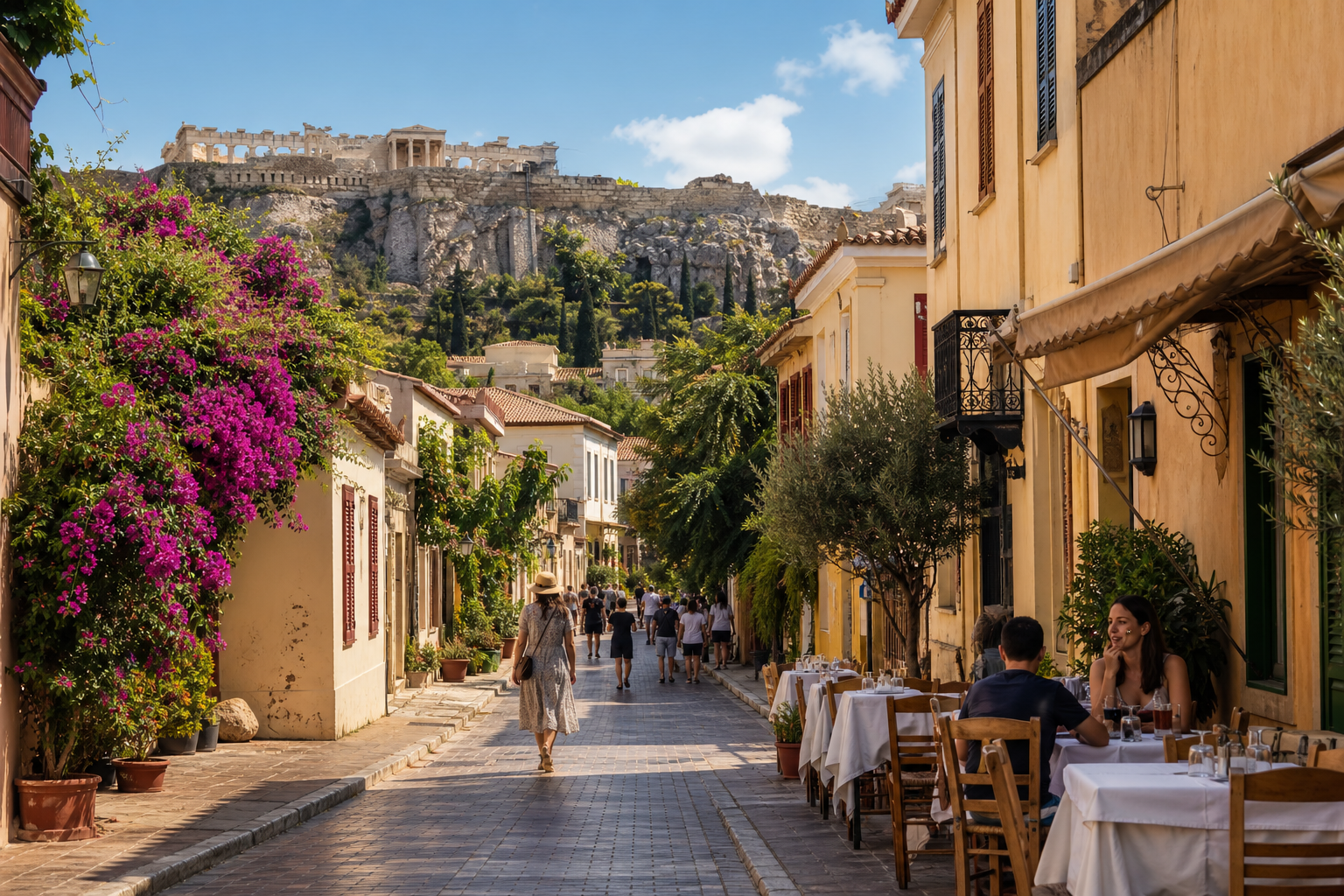
Plaka spreads beneath the Acropolis through neoclassical streets, Byzantine churches, shops and restaurants. Its busiest lanes cater heavily to visitors, but quieter routes still reveal small courtyards and residential life. Walk early in the morning when deliveries and local routines are more visible.
Anafiotika occupies a small upper section built by workers from the Cycladic island of Anafi during the nineteenth century. Whitewashed houses and narrow passages resemble an island settlement. The area remains residential: keep voices low, avoid doorways and do not climb onto roofs or walls for photographs.
The pedestrian route around the Acropolis connects Plaka with the museum, Theatre of Dionysus and Odeon of Herodes Atticus. Performance schedules at the Odeon vary by season, and access differs outside events.
Monastiraki, Psyrri and the Markets
Monastiraki Square is a major meeting point framed by the Acropolis, mosque, church and station. Flea-market streets sell souvenirs, clothing, antiques and everyday goods. Sunday brings additional market activity, though the area is busy throughout the week.
Keep valuables secure and compare prices. Avissinias Square and specialist shops are more interesting than generic souvenir rows. From the square, walk toward the Central Market on Athinas Street for a working view of meat, fish, produce and spices.
Psyrri changes from workshops and daytime cafés to dense evening entertainment. Murals, bars and restaurants draw crowds, but residents still occupy upper floors. Choose venues thoughtfully and keep noise low when leaving.
Syntagma and the National Garden
Syntagma Square faces the Greek Parliament and functions as a central transport and civic hub. The changing of the guard at the Tomb of the Unknown Soldier follows a regular ceremony, with a more elaborate version on selected days. Watch respectfully and keep clear of the guards’ route.
Behind Parliament, the National Garden provides shaded paths, plants and a cooler transition toward the Zappeion and Panathenaic Stadium. The stadium, rebuilt in marble for the first modern Olympic Games, offers an impressive view and a compact museum.
Continue toward Kolonaki for galleries, cafés and shops on rising streets below Lycabettus Hill. The district is polished and expensive, but its museums include strong collections of Cycladic and Greek culture.
National Archaeological Museum
The National Archaeological Museum holds Greece’s most important collection of antiquities, including sculpture, pottery, metalwork, frescoes and objects from Mycenaean sites. Highlights range from the Mask of Agamemnon to the Antikythera mechanism.
The scale can be exhausting. Choose a chronological route or a few themes and allow at least three hours. Building projects, gallery closures and temporary exhibitions may affect what is visible, so check the official site.
The surrounding Exarchia district has a strong political, student and cultural identity. Explore with awareness of demonstrations and current conditions, and avoid reducing the neighborhood to graffiti or stereotypes.
Hills and City Views
Philopappos Hill rises southwest of the Acropolis with wooded paths and classic Parthenon views. The route passes the monument of Philopappos and connects with Pnyx, associated with the Athenian assembly. Visit in daylight and follow marked paths.
Lycabettus is the city’s highest central viewpoint. Walk, use a taxi or check the funicular’s current operation. Sunset is popular, but the summit can feel crowded. Bring water and remain for the city lights if transport plans allow.
Greek Food to Try
Athenian food includes both familiar classics and regional dishes from across Greece. Begin with mezze such as fava, dolmades, grilled vegetables, cheeses and dips. Souvlaki and gyros offer quick meals, while tavernas serve slow-cooked dishes, grilled fish and seasonal specials.
Ask about fish prices because whole catches may be sold by weight. Horiatiki salad traditionally combines tomato, cucumber, onion, olives and feta without lettuce. Spanakopita, cheese pies and koulouri sesame bread make useful snacks.
Try loukoumades with honey, yogurt-based desserts or pastries influenced by the eastern Mediterranean. Coffee ranges from traditional Greek preparations to modern specialty cafés. Ouzo, tsipouro and local wines should be enjoyed with food and moderation.
Getting Around Athens
Athens’ metro, buses, trolleybuses and trams share integrated urban tickets for defined periods. Airport routes use special fares and conditions. OASA publishes current products, and contactless payment is available under specific rules.
Validate correctly at gates or readers and keep proof through the journey. Pickpocketing occurs on crowded metro lines and buses, particularly between the airport, Syntagma and major sights. Close bags and ignore distractions.
The airport connects by metro, express bus and taxi. Piraeus is reached by metro and rail services, depending on origin. Central walking is often fastest, but uneven pavements, heat and steep slopes justify short transit trips.
Best Time to Visit
March to May and late September to November offer the best walking conditions. Spring brings wildflowers around archaeological sites, while autumn often retains warm evenings. Easter and major events change opening hours and transport.
June through August can be extremely hot. Begin the Acropolis at opening, rest indoors during peak afternoon temperatures and follow heat-related site closures. Winter is mild but variable, with rain and shorter daylight; museums remain appealing and crowds are lower.
Where to Stay
Plaka and Monastiraki maximize access but can be crowded and noisy. Koukaki balances Acropolis proximity with residential streets, while Syntagma provides convenient transport. Psyrri suits nightlife if soundproofing is good.
Pangrati and Kolonaki offer a neighborhood base east of the center. Areas around Omonia vary significantly by block, so inspect recent reviews and the exact nighttime route. Air conditioning is essential for summer.
A Suggested Three-Day Itinerary
Spend day one at the Acropolis, Acropolis Museum, Plaka and Ancient Agora. On day two, explore Syntagma, the National Garden, Panathenaic Stadium and either the National Archaeological Museum or Kolonaki.
Use day three for Monastiraki, the markets, a hill viewpoint and one outer neighborhood. With extra time, add Piraeus, the Riviera, Cape Sounion or an island trip with realistic transport margins.
Athens becomes most compelling when ancient monuments and contemporary streets receive equal attention. Reserve the Acropolis, protect yourself from heat and leave time for markets, cafés and evening walks. The city’s rough edges are part of a complex urban life that no classical postcard can contain.
Comments