
Edinburgh is a city of dramatic first impressions. A fortress crowns an ancient volcanic rock, medieval lanes tumble down a steep ridge, and elegant Georgian streets open toward green hills and the sea. Scotland’s capital is compact enough for a rewarding weekend, yet layered enough to fill a longer stay with history, food, museums and neighbourhood walks. This Edinburgh travel guide brings the essentials together: what to see, where to wander, what to eat and how to plan your days without rushing from one landmark to another.
Why Visit Edinburgh?
Few European capitals combine landscape and architecture so naturally. Edinburgh Castle appears above the centre from almost every angle, while Arthur’s Seat and Calton Hill put wild-looking scenery within walking distance of cafés and galleries. The Old Town preserves a maze of closes, courtyards and tall stone tenements. Across Princes Street Gardens, the New Town offers broad Georgian terraces, handsome squares and polished shopping streets. Together, the Old and New Towns form a UNESCO World Heritage Site.
Edinburgh Castle and Castle Rock
Begin with Edinburgh Castle, the city’s defining landmark. The fortress occupies Castle Rock, a volcanic crag used as a stronghold for centuries. Inside are the Honours of Scotland, the Stone of Destiny, the Great Hall, St Margaret’s Chapel and military museums. The ramparts also provide sweeping views over the New Town and the Firth of Forth.
Reserve a timed ticket before travelling, particularly during summer and holiday periods, because popular slots can sell out. The official visitor information recommends allowing at least two hours. Arriving near opening time usually means quieter courtyards and more space around the principal displays. Surfaces are steep and cobbled, so supportive footwear is useful. The One o’Clock Gun normally fires at 1 p.m. on most days except Sunday and certain holidays, creating a memorable punctuation to a castle visit.
Walking the Royal Mile
The Royal Mile follows the spine of the Old Town from the castle esplanade to the Palace of Holyroodhouse. It is approximately one old Scots mile long and connects two royal residences. Although souvenir shops occupy the busiest stretches, the route rewards anyone who looks beyond the main pavement. Peek into narrow closes, descend unexpected stairways and pause in small courtyards where the noise quickly disappears.
St Giles’ Cathedral is the architectural centrepiece of the street, recognised by its crown-shaped spire. Nearby, the Writers’ Museum celebrates Robert Burns, Sir Walter Scott and Robert Louis Stevenson from a peaceful courtyard. Farther downhill, the Canongate becomes calmer and more residential before reaching the Scottish Parliament and Holyrood Palace. Check palace opening arrangements before visiting, as access may change when royal or official events take place.
Old Town Lanes, Grassmarket and Greyfriars
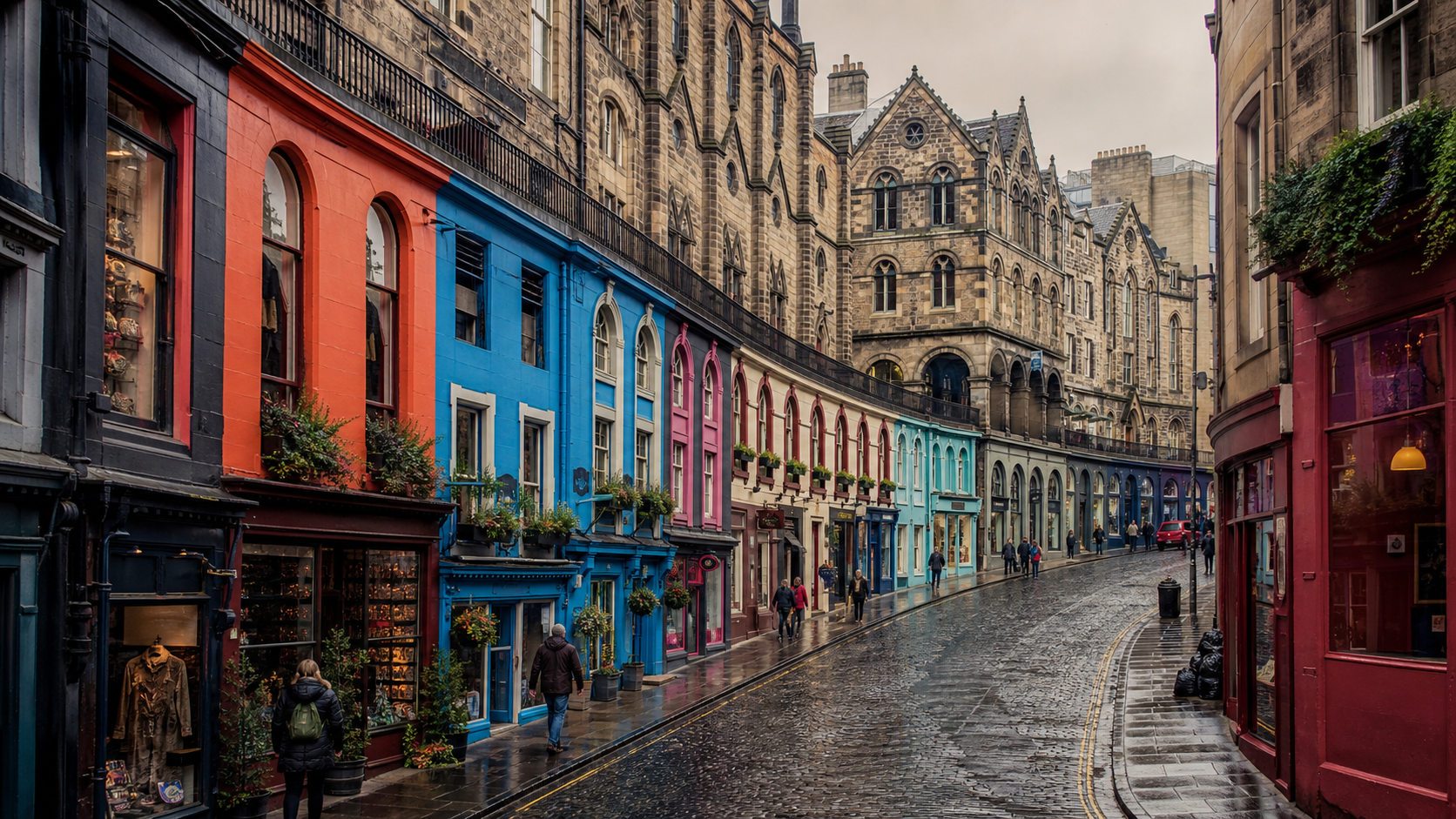
Leave the Royal Mile to experience the Old Town at its most atmospheric. Victoria Street curves downhill between colourful shopfronts and high stone buildings, leading toward the Grassmarket. Once a market and place of public execution, the square is now filled with pubs, casual restaurants and independent businesses. The castle rising above the rooftops makes this one of the city’s classic viewpoints.
Walk from the Grassmarket to Greyfriars Kirkyard, an old cemetery with elaborate monuments and compelling local stories. The nearby National Museum of Scotland is one of Edinburgh’s best free attractions. Its vast collections cover Scottish history, science, nature, technology and world cultures, and the rooftop terrace offers another excellent city panorama. Give the museum at least two hours, or choose several galleries rather than attempting everything at once.
Georgian Edinburgh and Stockbridge
Cross Princes Street Gardens to find a completely different urban landscape. Edinburgh’s New Town was planned from the late eighteenth century, with orderly streets, crescents and squares contrasting sharply with the medieval ridge. George Street is lined with restaurants and shops, while the quieter residential terraces around Moray Place showcase the area’s architectural confidence.
Continue downhill to Stockbridge, a village-like neighbourhood beside the Water of Leith. It is a pleasant place for brunch, bakeries, delicatessens and small boutiques. From here, follow the riverside walkway to Dean Village, where historic mill buildings cluster beside the water. The path feels secluded despite being close to the centre. Return through the West End or continue toward the Scottish National Gallery of Modern Art if time allows.
Arthur’s Seat, Holyrood Park and Calton Hill
For the city’s most expansive natural setting, climb Arthur’s Seat in Holyrood Park. The extinct volcano rises behind the palace and provides views across Edinburgh, the coast and surrounding hills. Several paths reach the summit, varying in steepness. Conditions can be windy and slippery, so wear practical shoes and avoid exposed routes in poor weather. A full outing generally takes two to three hours, depending on the chosen path and number of stops.
Calton Hill is the easier alternative. A short ascent from the east end of Princes Street leads to monuments and an iconic skyline view that includes the castle, Old Town and Arthur’s Seat. It is especially attractive around sunrise or sunset. Even travellers with only one day in Edinburgh can fit Calton Hill into an evening walk.
Leith and Edinburgh’s Waterfront
Leith adds a maritime chapter to the trip. Once a separate port, it combines old warehouses, traditional pubs and ambitious dining. The Shore is ideal for a waterside stroll. The Royal Yacht Britannia, moored at Ocean Terminal, explores royal life at sea.
Trams connect central Edinburgh with Leith and Newhaven, making the waterfront easy to reach without a car. Visit in the late afternoon, walk around the Shore and remain for dinner. This gives the district enough time to feel like more than a quick detour.
What to Eat and Drink
Scottish cooking extends well beyond the stereotypes. Try haggis with neeps and tatties for the classic experience, or look for modern versions served in small plates and breakfast dishes. Cullen skink is a comforting smoked-haddock soup, while excellent local seafood may include salmon, mussels, scallops and langoustines. Steak pie, venison and seasonal game appear frequently in traditional restaurants.
For something sweet, order cranachan, shortbread or a warm pudding. Edinburgh also has strong bakery and coffee scenes, and vegetarian dining is easy to find. Whisky bars range from friendly neighbourhood pubs to specialist rooms with hundreds of bottles. Staff can usually build a tasting flight by region or flavour, so newcomers need not arrive with expert knowledge. Edinburgh gin and local craft beer offer good alternatives.
Book important dinners in advance during weekends and festival season. For value, consider lunch menus at higher-end restaurants, then choose a relaxed pub meal in the evening.
Best Time to Visit
May, June and September offer a useful balance of daylight, manageable crowds and relatively mild weather. July is lively and busy. August transforms the city with the Edinburgh International Festival, Festival Fringe and Royal Edinburgh Military Tattoo; the atmosphere is extraordinary, but accommodation costs rise sharply and central streets become crowded. Reserve many months ahead if the festivals are your purpose.
Autumn brings dramatic colour and cosy evenings, while winter suits museums, pubs and seasonal events. December markets attract visitors, and Hogmanay makes New Year especially popular. January and February are quieter and often cheaper, although days are short. Rain and wind are possible in every month. Pack layers and a waterproof outer shell rather than relying on an umbrella alone.
Getting Around Edinburgh
The historic centre is best explored on foot, but expect hills, steps and uneven paving. Buses cover the wider city, while the tram links Edinburgh Airport with the centre, Leith and Newhaven. Contactless payment is widely available, though visitors should check current ticket and fare rules before boarding. Airport buses also run frequently and can be convenient for stops not close to the tram line.
A car is unnecessary because parking is limited and central streets are restricted. Use public transport for Leith, the airport and outer neighbourhoods, then walk within each district.
Where to Stay
Old Town accommodation puts the castle, Royal Mile and museums close at hand. It delivers atmosphere, but rooms near nightlife or busy visitor routes may be noisy. New Town is central and polished, with easy access to shopping, galleries and transport. The West End offers elegant streets and a somewhat calmer base.
Stockbridge suits travellers seeking cafés and a residential mood, while Leith appeals to food lovers and repeat visitors. Haymarket is practical for rail and airport connections and often provides better value than the most central streets. Wherever you stay, check whether the route involves steep hills or stairs, especially when travelling with heavy luggage.
A Three-Day Edinburgh Itinerary
On day one, visit Edinburgh Castle early, then walk down the Royal Mile. Explore St Giles’, hidden closes and the Canongate before ending at Calton Hill around sunset. On day two, wander through Greyfriars, spend time at the National Museum of Scotland and have lunch near the Grassmarket. Cross into New Town, then walk through Stockbridge and Dean Village.
Use day three for Arthur’s Seat in good weather. After the climb, tour Holyrood Palace if open or explore the Scottish Parliament area. Take the tram to Leith for the Royal Yacht Britannia or a waterfront stroll, followed by dinner at the Shore. If the weather is poor, substitute the Scottish National Gallery, the National Portrait Gallery or more time at the museum.
Practical Tips for a Better Visit
Reserve Edinburgh Castle, festival performances and popular restaurants ahead. Start sightseeing early in August and explore lanes away from the Royal Mile when crowds build. Free museums are useful between outdoor activities. Keep a light waterproof layer close even when the morning looks clear.
Finally, leave room for discoveries in quiet closes, neighbourhood pubs and unexpected riverside paths. The landmarks provide structure, but the spaces between them make Edinburgh unforgettable.
Comments