
Porto rewards travellers who enjoy cities with texture. Granite churches rise above lanes, blue-and-white tiles brighten buildings, and the Douro reflects terracotta roofs and iron bridges. Portugal’s second-largest city feels historic without becoming a museum: residents shop in traditional markets and meet over coffee while visitors discover wine cellars and ambitious restaurants. This Porto travel guide explains how to experience the landmarks, neighbourhoods, food and practical details at a comfortable pace.
Why Visit Porto?
Porto offers a strong sense of place in a compact centre. Its historic district, including Ribeira and the riverfront, is recognised by UNESCO, yet the city’s appeal extends beyond postcard views. Baroque towers, tiled railway halls and medieval streets sit alongside contemporary architecture and a lively arts scene. The Atlantic coast is reachable by tram or bus, giving a city break an easy seaside dimension.
Ribeira and the Douro River
Begin in Ribeira, Porto’s oldest and most photographed riverside quarter. Narrow lanes descend to Praça da Ribeira, a historic square framed by colourful façades, cafés and arcades. The waterfront promenade is busiest in the afternoon, so an early morning walk reveals quieter details: old doorways, tiny chapels, fishing boats and houses stacked dramatically against the hillside.
Continue east or west along the Cais da Ribeira for changing bridge views. Traditional rabelo boats, once used to carry wine barrels downriver, now form part of the scenery and support sightseeing cruises. A typical six-bridge cruise provides an enjoyable introduction to the city’s geography, but simply sitting beside the water with a coffee can be equally satisfying.
Crossing the Dom Luís I Bridge
The Dom Luís I Bridge is both a transport link and one of Porto’s essential experiences. The upper deck carries metro trains and pedestrians high above the river, while the lower deck connects the two waterfronts. Walk across the top for the broadest views, keeping within the pedestrian area and watching for approaching trams. Travellers uncomfortable with heights may prefer the lower crossing.
From the upper deck, continue to the viewpoint near the Monastery of Serra do Pilar. Late afternoon light falls beautifully across Porto’s north bank. Descend toward Gaia by cable car, road or steep lanes, then return over the lower deck after visiting the wine lodges. This creates a rewarding loop without retracing the same route.
Port Wine in Vila Nova de Gaia
Port wine takes its name from Porto, but the famous ageing lodges stand across the river in Vila Nova de Gaia. Producers offer guided visits explaining how grapes from the Douro Valley become ruby, tawny, white and vintage ports. Tours usually finish with a tasting and range from concise introductions to detailed sessions featuring older wines.
Reserve a preferred lodge and time in advance, particularly on weekends and in summer. One well-chosen tour is enough for most first-time visitors; additional tasting rooms can then be explored independently. Eat beforehand, drink water and remember that fortified wine is stronger than table wine. The riverside terrace is attractive, but walking uphill reveals quieter lodges and excellent views back toward Ribeira.
São Bento, Sé Cathedral and Historic Streets
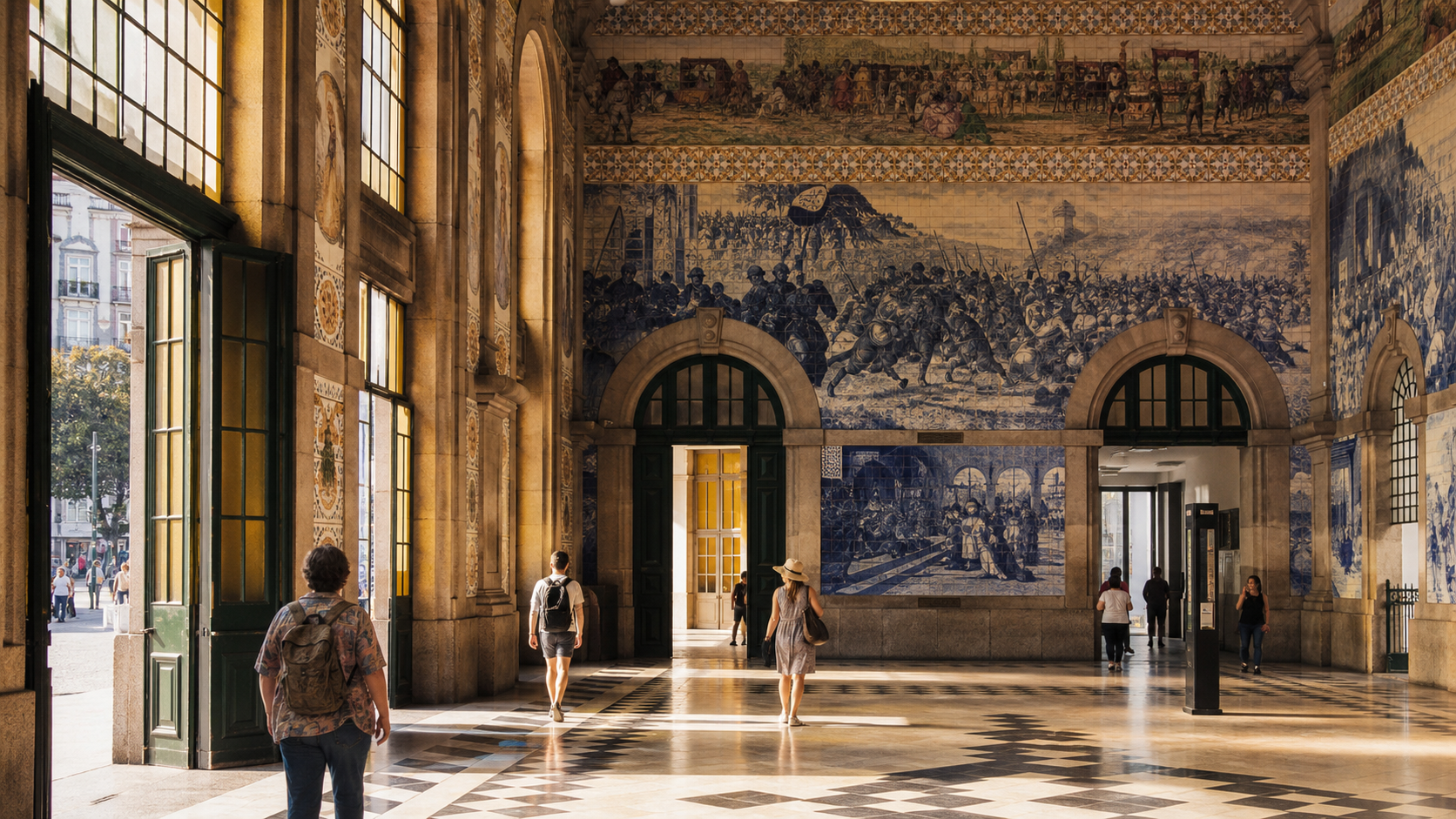
São Bento railway station is a functioning transport hub and one of Porto’s finest interiors. Its entrance hall is covered with elaborate azulejo panels illustrating scenes from Portuguese history and regional life. Visit early, step away from the centre of the hall and allow commuters to move freely. The station is a useful starting point for exploring the upper city.
Walk uphill to Porto Cathedral, or Sé, whose fortress-like exterior reflects its long history. The terrace overlooks the roofs descending toward the Douro. From here, take the lanes and stairways toward Ribeira rather than following only the broadest road. Porto’s charm lies in these irregular routes, though polished stones can become slippery after rain.
Nearby Rua das Flores combines restored façades, street performers, cafés and independent shops. It links São Bento with the river district and is especially pleasant in the morning before tour groups arrive.
Clérigos, Livraria Lello and the Tiled Churches
Clérigos Tower rises above central Porto and provides a panoramic reward after a climb of more than two hundred steps. The staircase is narrow in places, so visit early if confined spaces or crowds are uncomfortable. Even without climbing, the adjoining baroque church and surrounding streets deserve attention.
A short walk away, Livraria Lello is celebrated for its ornate interior and dramatic staircase. Entry is ticketed and extremely popular. Book a timed slot and decide whether the experience justifies the crowds for you; book lovers may appreciate it most at the first available time. Nearby, the twin Carmo and Carmelitas churches display striking architecture, while Carmo’s side wall is covered in blue tiles.
Palácio da Bolsa and São Francisco
The nineteenth-century Palácio da Bolsa, formerly Porto’s stock exchange, is known for the richly decorated Arabian Hall and the glass-roofed Courtyard of Nations. Access is generally by guided tour, and language-specific places can fill. Check current schedules and reserve if this is a priority.
Bolhão, Baixa and Local Life
Mercado do Bolhão is an ideal place to understand Porto through food. The restored market houses vendors selling produce, fish, meat, flowers, cheese and prepared snacks. Visit in the morning when trade is active, sample rather than treating the market only as a photo stop, and make space for residents doing everyday shopping.
Rua de Santa Catarina is the main pedestrian shopping street. Historic cafés and pastry counters sit among familiar international stores. West of Avenida dos Aliados, streets around Cedofeita and Miguel Bombarda offer galleries, vintage shops and independent businesses. These areas feel less monumental than Ribeira but show Porto’s creative, contemporary side.
Foz, the Atlantic and City Parks
Follow the Douro west to Foz do Douro, where the river meets the Atlantic. The promenade passes gardens, old fortifications and beaches exposed to powerful waves. A heritage tram provides a scenic journey on part of the route, though services can be crowded; local buses are often more practical.
What to Eat in Porto
Porto’s signature sandwich is the francesinha: bread layered with meats, covered in melted cheese and a rich beer-and-tomato sauce, often served with fries. Portions are substantial, so sharing can make sense. Tripas à moda do Porto, a traditional tripe stew, connects to the city’s history, while bacalhau appears in numerous salt-cod preparations.
Look for grilled sardines in season, octopus, shellfish and simple fresh fish. Matosinhos is particularly known for seafood restaurants. For quick meals, try bifanas, pork sandwiches, or a bowl of caldo verde. Bakeries provide inexpensive breakfasts and snacks; pastel de nata is ubiquitous, but regional sweets and fresh bread deserve attention too.
Best Time to Visit Porto
April to June and September to October usually combine pleasant temperatures with manageable visitor numbers. Summer brings long, sunny days, festivals and busy riverfronts. June is particularly lively around São João, when street celebrations fill the city, but accommodation should be reserved early.
Winter is mild compared with much of Europe but can be wet and windy. It suits travellers interested in food, wine lodges and indoor attractions, and rates may be lower. Porto’s weather changes quickly in any season, so carry a light waterproof layer and wear shoes with reliable grip for the hills and stone paving.
Getting Around Porto
Francisco Sá Carneiro Airport connects with central Porto by metro, and the journey is straightforward for most visitors. The metro also serves Gaia and several outer districts, while buses fill gaps in the network. Historic trams are scenic but should be considered attractions rather than the fastest everyday transport.
Central Porto is walkable, although elevation matters more than distance. Use the metro, buses, funiculars and lifts strategically to avoid exhausting climbs. A car is unnecessary within the city and creates parking challenges. Contactless or rechargeable transport options may change, so check official fare information when you arrive.
Where to Stay
Ribeira provides maximum atmosphere and river views but can be noisy, steep and crowded. Baixa, around Aliados and Bolhão, is central to restaurants, transport and shopping. Cedofeita suits travellers seeking galleries, cafés and a more neighbourhood-oriented evening scene.
Vila Nova de Gaia is excellent for wine lovers and skyline views, though some hotels involve a steep return from the waterfront. Boavista offers modern accommodation, cultural venues and easier road access, while Foz appeals to visitors prioritising the sea. Check the precise walking route before booking because two nearby addresses can differ greatly in elevation.
A Three-Day Porto Itinerary
On day one, start at São Bento, visit the cathedral and descend through historic lanes to Ribeira. Cross the lower bridge to Gaia for a port lodge tour, then return at sunset over the upper deck. On day two, explore Bolhão, tiled churches, Clérigos and the area around Livraria Lello. Tour Palácio da Bolsa and São Francisco before dinner in Baixa or Cedofeita.
On day three, browse a museum or the Miguel Bombarda galleries, then travel beside the Douro to Foz. Walk the Atlantic promenade and continue to Matosinhos for seafood if time allows. With an extra day, take a guided or independent trip into the Douro Valley, or slow the schedule and spend longer in Porto’s markets and viewpoints.
Practical Tips
Book wine tours, Livraria Lello and Palácio da Bolsa ahead. Begin sights early and build downhill routes where possible. Keep valuables secure in crowds, respect residents when photographing streets, and remember that stations, markets and churches remain working places.
Most importantly, allow Porto to unfold gradually. Its best moments may be a tiled doorway, evening light on the Douro or a simple meal far from the main promenade. The famous views are memorable, but the city’s warmth and lived-in character are what invite travellers back.
Comments