
Split is a Mediterranean city built inside and around a Roman emperor’s palace. Ancient columns support later houses, cafés occupy vaulted chambers, and everyday life passes through gates first opened seventeen centuries ago. Beyond this remarkable historic core, a palm-lined waterfront faces the Adriatic, Marjan Hill offers pine-shaded trails, and ferries leave for some of Croatia’s best-known islands.
Two days provide a strong introduction; three allow time for beaches and a day trip. This guide covers the essential sights, food and practical choices for experiencing the city without rushing.
Why Visit Split?
Split differs from a museum city because Diocletian’s Palace never stopped evolving. The imperial complex became a neighbourhood, absorbing medieval churches, residences and businesses.
Diocletian’s Palace
Roman emperor Diocletian built his fortified retirement residence around the turn of the fourth century. Roughly rectangular in plan, it combined an imperial villa with the organisation of a military camp. Later inhabitants adapted its walls and rooms rather than abandoning them, creating the layered historic centre recognised by UNESCO.
Enter through the Brass Gate from the Riva or the Golden Gate to the north. The central streets still reflect the Roman cardo and decumanus. Wandering is essential, but a knowledgeable walking tour helps distinguish original masonry from later additions and explains how the palace functioned.
The subterranean halls once supported the imperial apartments and preserve their layout. Part of the passage is free; ticketed chambers reveal massive vaults and centuries of changing use. Visit early.
Peristyle and the Cathedral of Saint Domnius
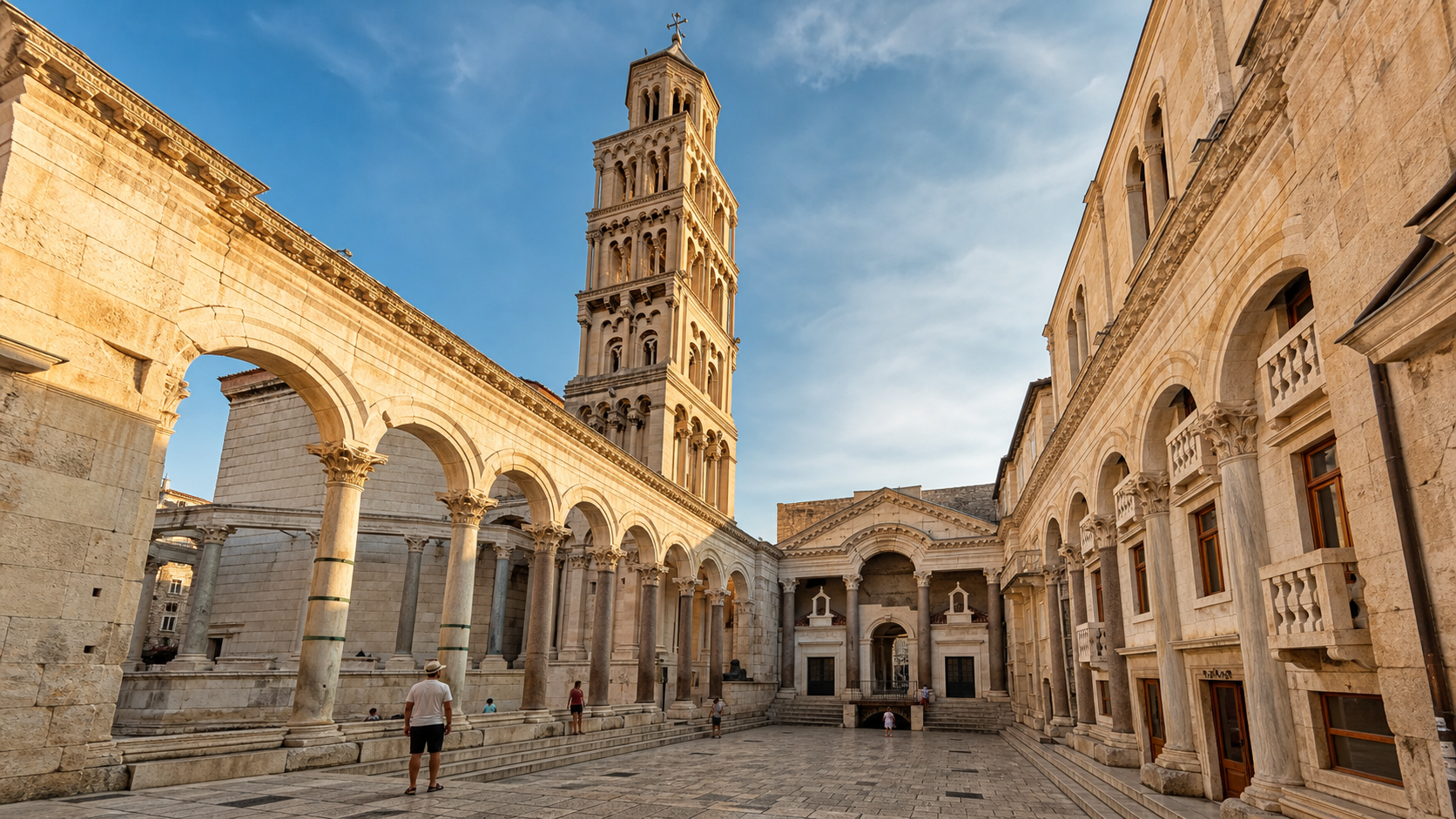
Peristyle was the palace’s ceremonial centre, framed by red granite columns and watched by an ancient Egyptian sphinx. Today its steps serve as informal seating and a stage for music and public life. Arrive near sunrise to appreciate its proportions in quiet, then return after dark when lighting transforms the stone.
The Cathedral of Saint Domnius occupies Diocletian’s former mausoleum, an extraordinary reversal because the emperor persecuted Christians. Its octagonal structure preserves Roman elements alongside medieval liturgical art. The adjacent bell tower rewards visitors with broad views over palace roofs, the harbour and Marjan, though the climb is steep and exposed.
Nearby, the Temple of Jupiter became a baptistery. Its coffered vault and carved doorway make it a compact highlight.
Gates, Squares and Hidden Lanes
The Golden Gate was the emperor’s ceremonial northern entrance and now faces Ivan Mestrovic’s enormous statue of Gregory of Nin. Visitors traditionally touch the statue’s polished toe for good luck. The Iron Gate opens toward Pjaca, or People’s Square, where Roman fabric gives way to Gothic, Renaissance and later civic architecture.
Fruit Square is another attractive space, bordered by historic buildings and a statue of Marko Marulic, often called the father of Croatian literature. From each square, follow narrow passages without a fixed route. Small courtyards, worn staircases and fragments of columns demonstrate how completely the ancient palace has been incorporated into the city.
The Riva and Matejuska
The Riva is Split’s waterfront living room. Palms, café terraces and benches stretch along the palace’s southern facade, with ferries and islands beyond. Locals come here for coffee, conversation and the ritual evening stroll. Prices at front-row cafés reflect the location, but one drink can buy time to watch the city pass.
Walk west to Matejuska, a small harbour historically used by fishermen. Traditional boats remain beside informal gathering places, and the view back toward the waterfront is especially attractive at sunset. Continue into the Varos district, where stone houses and steep lanes climb toward Marjan Hill.
Marjan Forest Park
Marjan is Split’s green counterweight to the dense centre. Stairs from Varos lead toward the first viewpoint, giving an excellent panorama after a relatively short climb. Beyond it, pine forest, chapels, trails and higher lookouts extend across the peninsula.
Walk only as far as your time and the temperature allow. Early morning is best in summer, when shade and sea breeze make the ascent more comfortable. Carry water and check current access notices because conservation work, fire danger or maintenance can affect particular roads and paths.
Beaches in Split
Bacvice is the closest famous beach, an easy walk east of the harbour. Its shallow sandy water suits families and hosts picigin, a traditional game in which players keep a small ball airborne with acrobatic touches. The beach becomes extremely busy in summer, so arrive early.
Firule and Trstenik continue east, while the renewed Znjan waterfront provides broad recreational areas and facilities. On the Marjan side, Kasjuni offers a pebble bay beneath green slopes. Beach shoes help on stone and pebbles, and natural shade is limited.
Use marked swimming areas, watch for boats and do not leave valuables unattended. Check signs distinguishing free space from paid facilities.
Museums and Roman History Beyond the Palace
The Split City Museum provides historical context in a Gothic palace near Peristyle. The Archaeological Museum holds Roman, early Christian and medieval material, making it a useful companion to the ancient centre. The Ethnographic Museum explores Dalmatian clothing, crafts and domestic traditions.
For a half-day excursion, travel to Salona near modern Solin. Once the capital of Roman Dalmatia, the archaeological area includes remains of an amphitheatre, basilicas, walls and cemeteries. The site is spread out and offers limited shade, so bring water and research transport in advance. Combining Salona with the fortress of Klis creates a history-focused day beyond central Split.
What to Eat in Split
Dalmatian cooking emphasises seafood, olive oil, seasonal vegetables and simple preparation. Try grilled fish, octopus salad, black risotto, mussels, fish stew and pasta with local ingredients. Pasticada is slow-cooked beef in a sweet-savoury sauce, traditionally served with gnocchi. Soparnik, a thin pie filled with Swiss chard and onion, comes from the nearby Poljica region.
The fish market near Marmontova is liveliest in the morning, while the Pazar green market beside the palace displays fruit, vegetables, cheese and household goods. Both offer a glimpse of daily food culture. Bakeries and casual konobas help keep budgets under control.
For dessert, look for fritule, small fried pastries, or local cakes. Dalmatian wines include varieties such as Plavac Mali and Posip. Restaurants inside the palace range from excellent to highly tourist-oriented, so read recent menus and explore Varos, Bacvice or neighbourhood streets for alternatives. Tipping around ten percent is appreciated for good service but not mandatory.
Island and Coastal Day Trips
Split’s ferry port connects the mainland with Brac, Hvar, Solta, Vis and other islands. Each requires realistic planning: ferry frequency varies by season, and a port arrival does not necessarily place you near the island’s main attraction. Check official timetables and decide whether a day trip leaves enough time before booking.
Trogir is an easier cultural excursion. Its compact UNESCO-listed centre sits on a small island and is reachable by bus or boat services in season. Omis combines a dramatic river gorge, fortress views and beaches southeast of Split. Krka National Park is another popular outing, though entry rules and transport require advance research.
Wind can produce rough conditions and cancellations. A slower ferry trip to one well-chosen destination often feels more rewarding.
Getting Around Split
The palace, Riva, Varos and main transport terminals are walkable. Promet operates local buses serving beaches, residential districts, Solin and surrounding areas. Consult official routes and current ticket methods; tickets may cost more when purchased onboard.
Split Airport lies near Trogir, west of the city. Airport buses, public buses, taxis and transfers connect it with Split, but summer traffic can substantially lengthen the journey. The intercity bus station, railway station and ferry port cluster beside the harbour, making transfers convenient but crowded.
A car is unnecessary in central Split. Parking is limited, and palace streets are pedestrian-only. Rent a vehicle only for inland or coastal trips that cannot be handled efficiently by bus or ferry.
Best Time to Visit
May, June, September and early October offer warm conditions with fewer crowds than peak summer. The sea may be comfortable for swimming from late spring into autumn. July and August bring festivals, nightlife and frequent ferries, along with intense heat, high prices and crowded palace lanes.
Winter can be wet and windy, and some island services reduce operations. Pack shoes with grip because ancient limestone becomes slippery after rain.
Where to Stay
Inside Diocletian’s Palace offers remarkable atmosphere but also stairs, bells and nightlife noise. Varos places you between the historic centre and Marjan, often in characterful stone buildings. Bacvice suits beach access and remains close to the transport hub.
Lapad and residential districts farther from the centre may provide better value, but verify bus connections. If catching an early ferry, accommodation near the harbour is convenient. Confirm lift access and luggage arrangements because many historic properties have narrow staircases.
A Three-Day Split Itinerary
On day one, enter Diocletian’s Palace early, explore the substructures, Peristyle, cathedral, Temple of Jupiter and gates. Walk the Riva and Matejuska before an evening meal in Varos.
On day two, climb Marjan in the morning and swim at Kasjuni or another nearby beach. Return for the Archaeological Museum or more palace lanes, then experience Peristyle after dark.
Use day three for Trogir, Salona and Klis, or a carefully planned island trip. Travellers preferring a slower city day can visit Bacvice, browse both markets and enjoy a long waterfront lunch.
Practical Tips
Croatia uses the euro, and cards are common, although cash remains helpful for markets and small purchases. Dress respectfully in churches, carry refillable water and avoid strenuous climbs during the hottest hours.
Check ferry schedules, museum hours and Marjan access shortly before visiting. Split is not merely an archaeological attraction or island gateway. Give its public spaces time, observe how modern life inhabits Roman stone, and the city’s distinctive blend of history and easy Dalmatian rhythm becomes clear.
Comments