
Zagreb is a capital that rewards curiosity more than speed. Its centre unfolds through medieval hilltop lanes, grand nineteenth-century boulevards, leafy parks and tram-lined streets where café tables remain occupied for hours. Croatia’s largest city feels distinctly Central European, yet its relaxed outdoor life and food reveal Mediterranean and Balkan influences as well.
Two days cover the historic centre and key museums; three or four allow time for neighbourhoods, Mount Medvednica or a nearby town. This Zagreb travel guide brings together the essential sights, food, transport and practical details for a first visit.
Why Visit Zagreb?
Zagreb receives fewer visitors than Croatia’s Adriatic cities, which is part of its appeal. The centre is compact, prices are generally lower than on the coast, and daily life remains visible around markets, parks and tram stops. Architecture ranges from Gothic churches to Austro-Hungarian institutions and confident modernism.
Ban Jelacic Square
Begin at Ban Josip Jelacic Square, the city’s central meeting point. Trams cross its edge, streets radiate toward the Lower Town and a statue of the nineteenth-century governor stands at its centre. The square is busy throughout the day and hosts seasonal markets and public events.
Dolac Market lies uphill, Ilica runs west, and pedestrian streets lead south toward the Lower Town parks.
Dolac Market and Kaptol
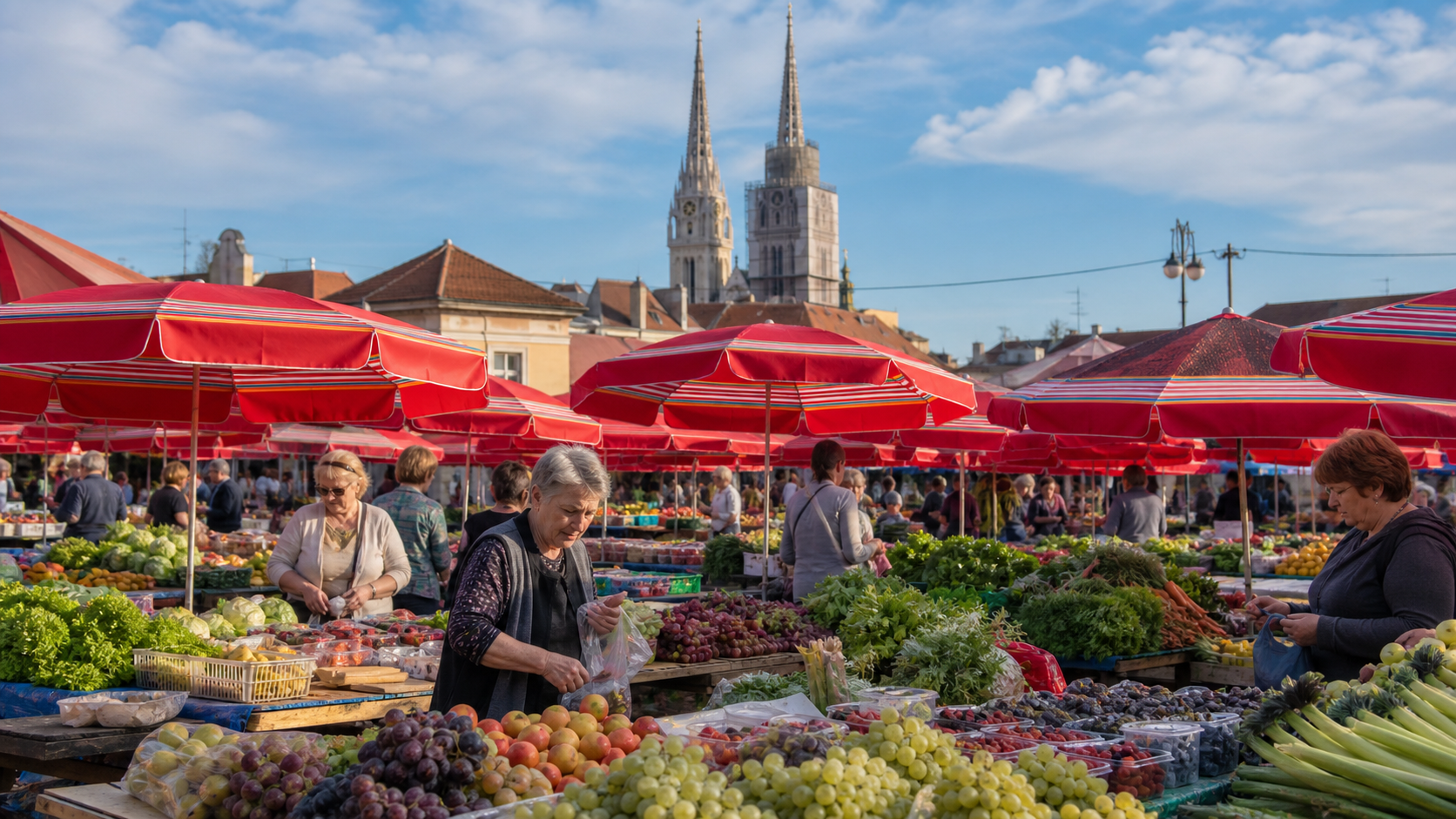
Dolac is known as the “belly of Zagreb.” Beneath rows of red umbrellas, farmers sell seasonal fruit, vegetables, flowers and regional products. The lower covered section includes meat, fish, cheese and other provisions. Visit in the morning, ideally before lunchtime, when selection and atmosphere are strongest.
Browse respectfully and ask before photographing vendors closely. Try fresh cheese and cream, fruit or a bakery snack.
Nearby Kaptol developed as the ecclesiastical counterpart to neighbouring Gradec. Zagreb Cathedral dominates the area, although earthquake restoration can affect access and appearance. Walk around the exterior and check current visitor information rather than relying on older photographs or schedules.
Tkalciceva and the Old Dividing Stream
Tkalciceva Street curves north from the centre, lined with cafés, restaurants and colourful facades. A stream once ran here, separating the historic settlements of Kaptol and Gradec. Today the pedestrian street is a popular place for lunch and evening drinks.
It becomes crowded, so explore side passages and nearby Opatovina as well. Treat the district as a walk rather than the only place to eat.
Upper Town and St Mark’s Church
Climb through the Stone Gate, a surviving medieval entrance containing a shrine to the Virgin Mary. Visitors often pause quietly to light candles, so pass through respectfully. The lanes above lead into Gradec, now called the Upper Town.
St Mark’s Church is instantly recognisable by its colourful tiled roof displaying coats of arms. Government and parliamentary buildings frame the square, and security restrictions may influence where pedestrians can stand. Check whether the church interior is accessible, as opening is limited.
Continue toward the Museum of Broken Relationships, built around personal objects and stories of ended relationships. It can be moving, funny and surprisingly universal.
Lotrscak Tower and the Funicular
Lotrscak Tower once guarded the southern gate of medieval Gradec. Its upper level provides a wide view across red roofs toward the cathedral and newer city. A cannon is traditionally fired at noon, producing a powerful sound that surprises anyone standing nearby.
Beside the tower, the short Zagreb Funicular connects the Upper and Lower Town. The ride lasts less than a minute and is valued as much for tradition as transport. It returned to service after extensive renovation in 2026, but verify current operations before planning around it. Walking the adjacent stairs is an easy alternative.
The Lower Town and Green Horseshoe
South of the main square, the Lower Town presents a more formal urban plan. Its Green Horseshoe links parks and squares containing museums, galleries, monuments and public institutions. Zrinjevac is especially attractive, with plane trees, fountains and a music pavilion.
Continue past Strossmayer Square and King Tomislav Square toward Zagreb Central Station. The yellow Art Pavilion provides a focal point along the route. Westward, the Croatian National Theatre stands in a landscaped square surrounded by university and cultural buildings.
Look up at decorated facades and notice how public green space softens the monumental scale. Advent markets transform several squares in December.
Museums and Culture
Zagreb has an unusually varied museum scene. The Archaeological Museum holds material from prehistoric, Egyptian, Greek, Roman and medieval periods, while the Zagreb City Museum explains urban development and everyday life. Always confirm locations and reopening dates because earthquake restoration has temporarily displaced or closed some collections.
The Museum of Contemporary Art lies across the Sava in Novi Zagreb and occupies a large modern building. Its location makes it useful for visitors interested in twentieth-century urban planning as well as art. The Technical Museum Nikola Tesla offers engines, transport and scientific displays that appeal to families.
Maksimir, Jarun and Mount Medvednica
Maksimir is the city’s great landscaped park, accessible by tram. Woodland paths, meadows and lakes provide an easy break from sightseeing; Zagreb Zoo occupies part of the grounds. It is especially pleasant for a morning walk or family afternoon.
For a larger nature escape, Mount Medvednica rises north of the city. Trails climb through forest toward Sljeme, and a cable car provides access from Gracansko dolje. Weather at elevation can differ considerably from central Zagreb. Wear suitable shoes, verify cable-car service and select a route appropriate to your experience.
What to Eat in Zagreb
Zagreb cuisine combines Austrian, Hungarian, Czech, Mediterranean, Balkan and local rural influences. Strukli—pastry filled with fresh cheese and baked or boiled—is the signature comfort food. Zagrebacki odrezak is breaded veal filled with ham and cheese, while turkey with mlinci flatbread is associated with family celebrations.
Other options include bean stew, sausages, schnitzels and seasonal soups. Bakeries sell burek, pastries and quick breakfasts. For dessert, try strudel or kremsnita, the custard slice strongly associated with nearby Samobor.
Dolac provides ingredients from across Croatia, including Adriatic fish, Istrian products, Slavonian cured meat and cheeses from surrounding farms. Traditional taverns sit alongside modern bistros, wine bars and international kitchens. Weekday lunch menus can offer excellent value.
Croatian wine deserves attention, from aromatic whites of the continental regions to reds from the coast. Craft beer is also well established. Tap water is safe, and tipping around ten percent is appreciated for good table service but not mandatory.
Café Culture and Nightlife
Coffee in Zagreb is a social event. On Saturday around midday, the ritual known as spica fills central terraces with people meeting friends and observing the street.
Bogoviceva, Cvjetni Square and Tkalciceva offer central terraces. Marticeva attracts design shops and contemporary cafés, while Tresnjevka has a more residential feel. Nightlife ranges from wine and craft-beer bars to clubs and live music venues; check current programmes and keep noise low near homes.
Getting Around Zagreb
Most central attractions are walkable, though the Upper Town includes slopes and cobbles. ZET operates the extensive blue-tram network, buses and the funicular. Tickets have different validity periods and are usually cheaper when purchased before boarding than from a driver. Validate paper tickets as required and consult official information for current fares.
Zagreb Airport lies southeast of the centre. Airport buses and public transport connections serve the city, with taxis and transfers also available. The main railway station is in the Lower Town, while the intercity bus station is several tram stops east.
Best Time to Visit
April through June and September through October usually bring comfortable walking weather and lively terraces. Summer can be hot, although parks provide shade and crowds are lighter when residents travel to the coast. Some cultural venues reduce programmes in August.
December is popular for Advent lights, markets and seasonal food, with higher accommodation demand. Winter can be grey, cold and occasionally snowy, but museums and cafés suit the weather. Pack layers and an umbrella in any season.
Where to Stay
The Lower Town between the main square and station is convenient for first visits, offering walkability and tram access. Upper Town accommodation has atmosphere but may involve steep approaches and limited vehicle access. Around Britanski trg, visitors find a neighbourhood feeling within reach of the centre.
Marticeva and Vlaska provide cafés, restaurants and a more contemporary local base. Novi Zagreb often offers space and value but requires regular tram or bus journeys. Check noise, lift access and parking arrangements before booking.
A Three-Day Zagreb Itinerary
On day one, visit Dolac, Kaptol and Tkalciceva before climbing through the Stone Gate to St Mark’s Church, Lotrscak Tower and the Upper Town museums. Descend by funicular or stairs and finish with coffee in the centre.
On day two, walk the Green Horseshoe, choose an archaeological or art museum and explore the streets around Marticeva. Spend the evening with traditional Zagreb food and Croatian wine.
On day three, choose Maksimir and the zoo, the Museum of Contemporary Art in Novi Zagreb or an excursion to Sljeme. Alternatively, take a day trip to Samobor for its compact old centre and famous custard cake.
Practical Tips
Croatia uses the euro, and cards are widely accepted, although cash is useful at markets. Churches require respectful clothing and quiet behaviour. Watch for trams when crossing streets, as tracks often share space with pedestrians and cars.
Check museum openings and restoration notices shortly before visiting. Leave room for unplanned coffee and market stops: Zagreb’s greatest appeal is not a single landmark but the comfortable rhythm connecting its historic hills, green squares and hospitable tables.
Comments