
Belgrade is a city shaped by two great rivers and an unusually turbulent history. The Serbian capital rises above the meeting of the Sava and Danube, where a fortress has been rebuilt repeatedly by Roman, Byzantine, Ottoman and Habsburg powers. Beyond its historic core, Belgrade is known for energetic nightlife, long café conversations, generous food and neighbourhoods that reveal very different architectural worlds.
Two days cover the central highlights; three or four allow time for Zemun, museums and riverside relaxation. This Belgrade travel guide explains the essential sights, transport, food and practical choices for a rewarding first visit.
Why Visit Belgrade?
Belgrade feels lived-in rather than arranged for visitors. Monumental government buildings share streets with weathered facades, independent bars and creative cultural spaces. Its attractions are affordable by European capital standards, and public transport has been free for all passengers since January 2025.
Belgrade Fortress and Kalemegdan
Belgrade Fortress occupies the city’s most strategic position, high above the confluence of the Sava and Danube. Fortifications developed from antiquity through the eighteenth century, creating layers of walls, gates, towers and military structures. Much of the outdoor complex and adjoining Kalemegdan Park can be explored freely.
Enter from Knez Mihailova and walk toward the Upper Town. The Victor Monument, or Pobednik, stands above the rivers and forms Belgrade’s most recognisable viewpoint. From here you can distinguish the Sava approaching from the west, the wider Danube flowing east and the flat expanses of New Belgrade and Zemun beyond.
Allow at least two hours. Additional attractions such as the Military Museum, Roman Well, Clock Tower and underground spaces have separate schedules or tickets. Wear shoes with grip because stone paths and steps can be uneven. Sunset is beautiful, although the park becomes busy; early morning offers quieter walls and softer light.
Knez Mihailova and Republic Square
Knez Mihailova is Belgrade’s principal pedestrian avenue, connecting Republic Square with Kalemegdan. Nineteenth-century buildings house shops, cafés, galleries and cultural institutions above the remains of Roman Singidunum. Street musicians and constant foot traffic make it the city’s main promenade.
Republic Square is a convenient meeting point bordered by the National Museum and National Theatre. The equestrian statue of Prince Mihailo is so familiar that locals often arrange to meet “by the horse.” The National Museum’s collections span archaeology, Serbian medieval art and European painting; check opening days before planning a visit.
Skadarlija
Skadarlija is Belgrade’s historic bohemian quarter, centred on a short cobbled street of traditional restaurants, galleries and flower-covered facades. Artists, writers and actors gathered here during the late nineteenth and early twentieth centuries, and the district still trades strongly on that identity.
Visit in the morning to appreciate the architecture without restaurant crowds, then return for dinner if traditional music interests you. Many venues offer live starogradska music, grilled meat and Serbian classics. The setting can feel tourist-oriented, so inspect menus and prices first. Uneven cobbles make comfortable footwear essential.
Nearby Cetinjska occupies a former brewery complex and contains alternative bars and music venues. Check current programmes and respect surrounding residents.
Church of Saint Sava
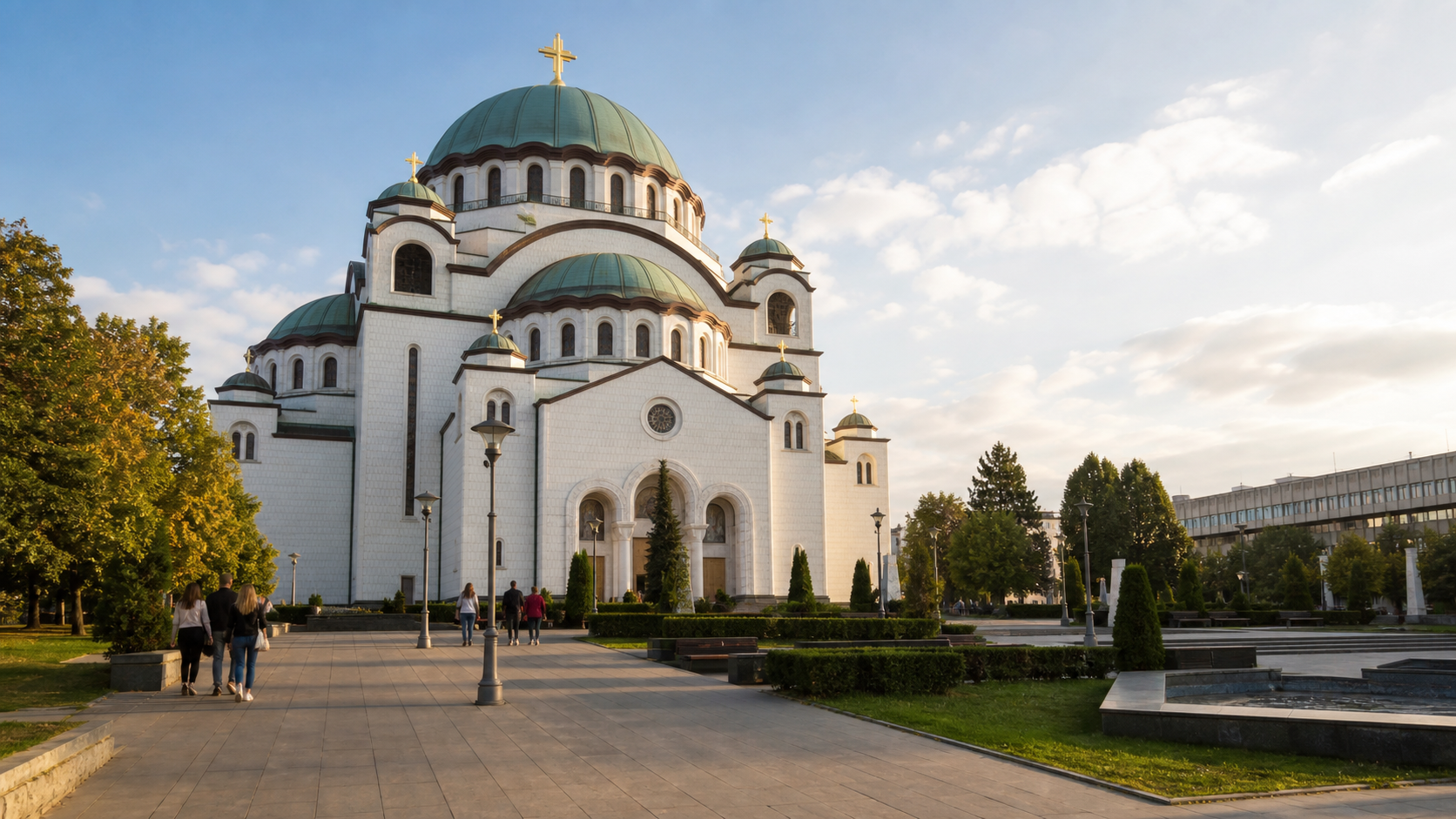
The monumental Church of Saint Sava stands on Vracar Hill and is among the world’s largest Orthodox churches. Construction and decoration continued across generations, and its vast interior is now covered with elaborate mosaics and marble. The illuminated dome and crypt create a powerful visual experience.
Entry is generally free, though donations are welcome and rules can change during services. Dress respectfully and avoid flash photography. The broad plateau also contains the National Library of Serbia and a monument to Karadjordje, leader of the First Serbian Uprising.
Walk from Slavija Square or use public transport. The surrounding Vracar neighbourhood rewards further exploration with cafés, bakeries, small restaurants and residential streets.
Nikola Tesla Museum and Other Collections
The Nikola Tesla Museum occupies a villa in central Vracar and presents documents, personal objects and working demonstrations connected with the Serbian-American inventor. Guided entry is often organised at set times and capacity is limited, so check current ticket procedures and arrive early.
The Museum of Yugoslavia provides essential context for the multinational state that shaped twentieth-century Belgrade. Its complex includes exhibitions and the House of Flowers, the burial place of Josip Broz Tito. Displays cover political history, diplomacy, everyday life and contested memory.
The Museum of Contemporary Art stands in a park near the Sava-Danube confluence in New Belgrade. Its modernist building and regional collections make a useful combination with a walk across Branko’s Bridge or riverside journey. Verify temporary exhibitions and weekly closing days.
Zemun
Zemun feels like a separate town because it developed for long periods under Habsburg rule across the Sava frontier. Narrow streets and low houses climb from the Danube promenade toward Gardos Hill. The Millennium Tower provides the district’s classic panorama, subject to current opening arrangements.
Walk along the quay, where restaurants specialise in river fish and terraces face passing boats. Zemun is popular at weekends, so weekday mornings are calmer. Buses connect it with central Belgrade, and cycling along flatter river routes can be enjoyable in good weather.
Ada Ciganlija and the Rivers
Ada Ciganlija is a former Sava island connected to the bank, creating a recreational lake known as Belgrade’s sea. In warm months, residents swim, cycle, skate, play sports and fill waterside cafés. The circuit is extensive, so renting a bicycle can be useful.
Use designated swimming areas and follow water-quality and safety notices. Summer weekends become crowded. Boat cruises on the Sava and Danube offer a different perspective on the fortress, bridges and New Belgrade, but routes and departure points vary.
What to Eat in Belgrade
Serbian food is generous, strongly seasoned and designed for sharing. Start with kajmak, a rich dairy spread, ajvar made from roasted peppers and fresh salads such as shopska. Grilled dishes include cevapi, pljeskavica and sausages, often served with onions and flatbread.
Try sarma cabbage rolls, prebranac baked beans, Karadjordjeva schnitzel or slow-cooked dishes from a clay pot. Bakeries sell burek filled with meat, cheese or greens, commonly eaten with yogurt. River fish appears frequently in Zemun and along the Danube.
For dessert, look for walnut cakes, baklava, palačinke pancakes or seasonal fruit sweets. Rakija fruit brandy is offered as an aperitif and can be deceptively strong; sip slowly. Serbian wine, especially from regions such as Fruška Gora and Šumadija, is increasingly visible on city menus.
Portions are large, so ask staff before overordering. A service charge is not always included, and a tip of roughly ten percent is customary for good table service. Tap water is generally safe, though bottled water is widely available.
Getting Around Belgrade
Central Belgrade is walkable but hilly, with uneven pavements. City buses, trams and trolleybuses cover the metropolitan area. Since January 1, 2025, scheduled public transport within Belgrade’s integrated system has been free for all passengers, according to the city transport authority. Check for any updated rules before travel.
There is no metro yet. Traffic can slow surface vehicles, so allow extra time at peak periods and check official notices.
Belgrade Nikola Tesla Airport lies west of the centre. Airport buses, public routes, taxis and transfers connect it with town. Use the official taxi voucher or desk system where available, or a reputable app, and avoid unsolicited drivers. A car is unnecessary for central sightseeing.
Best Time to Visit
April through June and September through October usually offer comfortable temperatures and active outdoor life. July and August can be hot, but the rivers, parks and evening culture remain lively. Spring weather changes quickly, and heavy showers are possible.
Winter is cold, sometimes snowy and affected by poor air quality during stagnant conditions. Museums, restaurants and nightlife still make the city appealing. Pack layers and shoes suitable for wet stone in every cooler season.
Where to Stay
Stari Grad is the most convenient base for first-time visitors, placing the fortress, Knez Mihailova and Skadarlija within walking distance. Dorcol suits travellers seeking cafés and nightlife with a neighbourhood feel. Vracar is attractive for restaurants and access to Saint Sava.
Savamala and the waterfront have modern hotels and late-night venues, but construction and noise can vary. Zemun offers a quieter riverside stay, though reaching central sights takes longer. Check recent reviews for street noise, smoking policies and air conditioning.
A Three-Day Belgrade Itinerary
On day one, explore Republic Square, Knez Mihailova, Belgrade Fortress and Kalemegdan. Continue through Kosancicev Venac and finish with dinner in Skadarlija or Dorcol.
On day two, visit Saint Sava, the Nikola Tesla Museum and the Museum of Yugoslavia. Spend the evening around Vracar or explore contemporary venues in Cetinjska.
On day three, travel to Zemun for Gardos Hill and the Danube promenade. Alternatively, combine New Belgrade modernism with Ada Ciganlija in warm weather. An extra day allows an excursion to Novi Sad and Fruška Gora.
Practical Tips
Serbia uses the dinar. Cards are common, but cash remains useful in bakeries, markets and smaller venues. Exchange money at reputable offices and check rates before completing a transaction. English is widely spoken among younger residents and tourism workers.
Smoking remains common and may be permitted indoors, so confirm non-smoking seating if important. Historical and political topics can be sensitive; approach them with curiosity rather than assumptions. Belgrade rewards the same openness it displays: energetic, contradictory and most memorable when you allow its rivers, history and social life to unfold slowly.
Comments