
Tallinn combines one of Europe’s best-preserved medieval centres with a confident digital culture and a distinctly Nordic relationship with nature. Gothic spires rise above red roofs, stone walls enclose steep cobbled lanes, and ferries move across the Baltic only minutes from contemporary galleries, wooden neighbourhoods and innovative restaurants.
Two days cover the Old Town and a contrasting district; three or four allow time for Kadriorg, museums and the coast. This Tallinn travel guide explains the essential sights, food, transport and practical details for a memorable first visit to Estonia’s capital.
Why Visit Tallinn?
Tallinn’s UNESCO-listed Old Town is not a collection of isolated monuments but a remarkably intact urban environment. Merchant houses, guild halls, churches and defensive towers preserve the form of a prosperous Hanseatic city. Early mornings and winter evenings can still create a powerful sense of historical atmosphere.
Town Hall Square
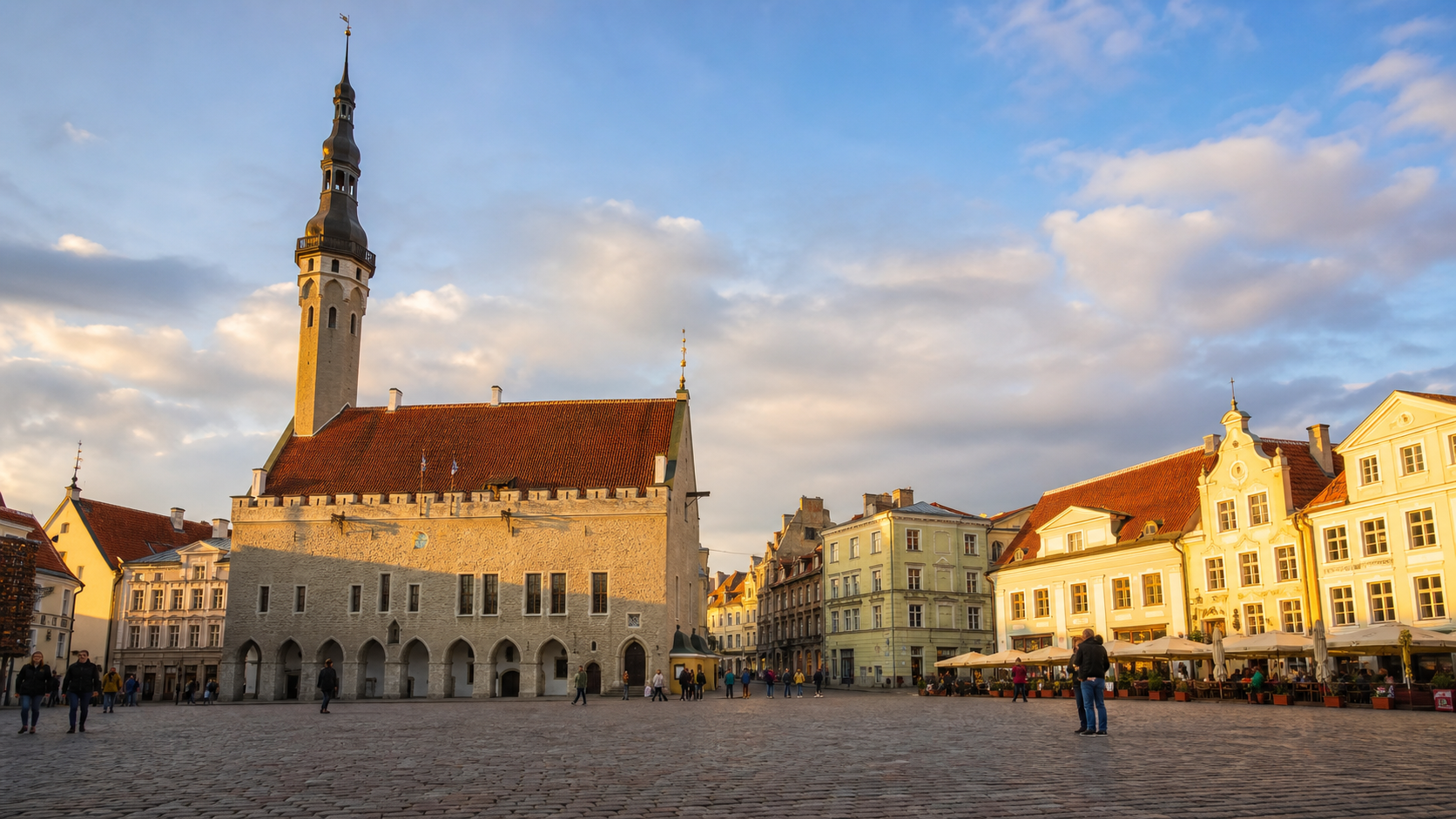
Raekoja plats is the heart of the Lower Old Town. Colourful merchant houses frame the Gothic Tallinn Town Hall, completed in the early fifteenth century and recognised as Northern Europe’s oldest surviving town hall. Outdoor cafés occupy the square in warm months, while a celebrated Christmas market transforms it in winter.
Visit before breakfast to appreciate the architecture without tour groups. The Town Hall interior and tower have seasonal opening arrangements; the tower climb is steep but provides excellent roof and spire views. Check official hours rather than assuming both are open.
Across the square, Raeapteek remains one of Europe’s oldest continuously functioning pharmacies. Enter respectfully because it remains a working business.
Toompea Hill
Toompea formed the political and aristocratic Upper Town, separated historically from the merchant city below. Climb via Pikk jalg, the “Long Leg,” or the steeper Lühike jalg. At the summit, Toompea Castle houses Estonia’s parliament, the Riigikogu, behind a pink Baroque facade and the medieval Tall Hermann tower.
Opposite stands Alexander Nevsky Cathedral, an ornate Russian Orthodox building completed around 1900. Its onion domes contrast with the surrounding medieval and Estonian state architecture. Services are active, so dress modestly, remain quiet and follow photography rules.
The Kohtuotsa and Patkuli viewing platforms provide panoramas over walls, towers and the Baltic. Sunrise is peaceful, while sunset can be crowded.
Medieval Walls and Towers
Tallinn retains a substantial section of its medieval defensive system. Towers with memorable names punctuate the walls, including Fat Margaret near the harbour and Kiek in de Kök on Toompea’s edge. Short wall sections can be walked, subject to seasonal access.
Kiek in de Kök Fortification Museum links several towers and explains the city’s military history. Its bastion passages extend beneath Toompea, offering a different view of defence and later wartime use. Guided or timed access may apply, so reserve during busy periods.
Fat Margaret houses the Estonian Maritime Museum, connecting Tallinn with seafaring, trade and shipbuilding.
Churches and Medieval Art
St Olaf’s Church has long defined Tallinn’s skyline. Its tower may open seasonally for a demanding climb and wide views, but narrow stairs require care. The church itself reflects centuries of religious change and merchant-city ambition.
Niguliste Museum occupies the former St Nicholas’ Church and contains important medieval art, including a fragment of Bernt Notke’s Danse Macabre. A modern lift now reaches its steeple viewpoint, making it a useful alternative for visitors unable or unwilling to tackle steep tower stairs.
The Lutheran Cathedral of Saint Mary on Toompea displays coats of arms associated with Baltic German nobility. Verify service and concert schedules before entering any church, and remember that sightseeing may pause during worship.
Hidden Lanes and Courtyards
Tallinn is best experienced without following only the main route. St Catherine’s Passage preserves workshops where artisans make ceramics, glass, textiles and leather goods. The nearby Masters’ Courtyard hides cafés and craft businesses behind Vene Street.
Walk along Pikk Street to see former guild houses, merchants’ residences and the Great Coastal Gate. The Three Sisters form a striking group of medieval buildings, while the House of the Black Heads has an ornate Renaissance facade connected with unmarried merchants.
Kalamaja and Telliskivi
Northwest of Old Town, Kalamaja developed as a working-class district and retains streets of colourful wooden houses. Its name means “fish house,” reflecting connections with the coast. Gentrification has brought cafés and renovated apartments, but traces of industrial and railway history remain.
Telliskivi Creative City occupies a former industrial complex beside the railway. Studios, restaurants, design shops, murals and event spaces draw residents throughout the week. Fotografiska Tallinn presents international photography exhibitions and has a rooftop restaurant with city views.
Nearby Balti Jaam Market combines produce, street food, antiques and everyday shopping. It is convenient for an inexpensive lunch.
Kadriorg Park and Kumu
Kadriorg provides an elegant contrast to the Old Town. Peter the Great established the palace and park for Catherine I in the early eighteenth century. The Baroque palace now displays foreign art from the Estonian Art Museum collection, while formal gardens, ponds and wooded paths are free to explore.
Walk beyond the palace to Kumu, Estonia’s principal art museum. Its building is embedded into the limestone landscape and presents Estonian art from earlier traditions through the Soviet period and contemporary practice. Allow several hours if art is a priority.
The neighbourhood’s wooden villas and former summer houses reward a slow walk. Continue toward the Russalka Memorial and Pirita promenade for Baltic views, or visit the Song Festival Grounds, closely connected with Estonian national identity and the Singing Revolution.
What to Eat in Tallinn
Estonian food reflects forests, farms, the Baltic Sea and long winters. Dark rye bread is fundamental and often served with butter. Look for smoked or marinated fish, pork, potatoes, barley, mushrooms, cabbage and seasonal berries. Kama, a flour mixture of roasted grains and peas, is commonly combined with kefir or yogurt for breakfast or dessert.
Kiluvõileib is an open sandwich topped with spiced sprat, egg and herbs. Verivorst blood sausage appears especially at Christmas, usually with sauerkraut and lingonberry. Vastlakukkel, a cream-filled bun, is associated with late winter, while kohuke is a popular chocolate-coated curd snack.
Modern Estonian restaurants reinterpret local ingredients with Nordic techniques, foraging and fermentation. Old Town has good options but also tourist menus, so compare recent offerings and explore Kalamaja or Kadriorg. Balti Jaam Market works well for casual meals.
Estonian craft beer is varied, and local berry wines or liqueurs appear on menus. Tap water is safe. Service is usually included, but rounding up or leaving about ten percent for excellent table service is appreciated rather than obligatory.
Getting Around Tallinn
Old Town is compact and pedestrianised, but cobbles, slopes and stairs require supportive shoes. Trams and buses connect the centre with Kadriorg, Kalamaja, Pirita, the airport and other districts. Non-residents need a valid ticket even though registered Tallinn residents may travel free.
One-hour tickets can be purchased with contactless bank cards at front-door validators, and QR tickets or the green Ühiskaart provide alternatives. Drivers do not sell tickets and cash is not accepted onboard. Validate every required entry and consult official information for current fares.
Tallinn Airport is unusually close to the centre and served by public transport. The ferry port connects Tallinn with Helsinki and Stockholm; allow sufficient check-in time and confirm the exact terminal. Taxis and app-based rides are available, but central journeys rarely require them.
The Tallinn Card combines transport with many museums. Calculate likely visits before buying.
Best Time to Visit
May through September brings long daylight, green parks and the fullest attraction schedules. June evenings remain bright late, while July and August attract cruise groups and weekend visitors. Temperatures are mild rather than reliably hot, and rain remains possible.
December is atmospheric because of lights and the Town Hall Square market, but daylight is short and conditions can be icy. January and February may bring snow and severe cold. Spring and autumn are quieter, with rapidly changing weather and reduced tower hours.
Pack layers, a windproof waterproof jacket and shoes with good grip in every season. Baltic wind can make the harbour and viewpoints feel considerably colder than sheltered lanes.
Where to Stay
Old Town offers maximum atmosphere and walkability, but cobbles complicate luggage and weekend nightlife can be noisy. The modern city centre around Rotermann provides smooth access to the harbour, shops and transport while remaining close to medieval streets.
Kalamaja suits travellers who value cafés, design and neighbourhood character. Kadriorg is quieter and greener, with easy tram connections. Confirm lift access in historic buildings and check whether cruise-port or nightlife noise affects the chosen location.
A Three-Day Tallinn Itinerary
On day one, explore Town Hall Square, Toompea, the viewing platforms, walls and churches. Visit Niguliste or Kiek in de Kök, then return to the lanes after day groups depart.
On day two, walk through Kalamaja, Telliskivi and Balti Jaam Market. Choose Seaplane Harbour or Fotografiska, then enjoy dinner outside the Old Town.
On day three, take a tram to Kadriorg Palace and Kumu. Continue to the seafront and Song Festival Grounds if weather allows. With extra time, visit Vabamu, Pirita or make a carefully timed ferry trip to Helsinki.
Practical Tips
Estonia uses the euro, and contactless card payment is almost universal. Carry a small amount of cash for occasional stalls. English is widely understood, while a few Estonian greetings are appreciated.
Check museum and tower schedules shortly before visiting, as seasonal hours and Monday closures are common. Respect residential courtyards, worship and memorial sites. Tallinn reveals its full character when medieval heritage is placed beside modern Estonia: digitally confident, culturally reflective and closely connected to the Baltic landscape.
Comments