
Three days in Barcelona are enough to experience Gaudí’s architecture, the medieval centre, neighbourhood food and the Mediterranean waterfront—provided the route is planned geographically. The mistake is trying to visit every famous building. Long queues, uphill streets and late meals quickly turn an ambitious list into a tiring race.
This itinerary balances essential reservations with unscheduled walking. It assumes three full days and a central base, but each day can stand alone. Book Sagrada Família and Park Güell first, then build other tickets around them. Opening hours change, so confirm official information shortly before travelling.
Before You Arrive
Reserve Sagrada Família for the first morning and Park Güell for the third. Choose either Casa Batlló or La Pedrera unless architecture is your main interest. Timed entry reduces uncertainty but still requires security and travel buffers.
Use the metro for longer journeys and walk within each district. A stored-journey ticket can suit moderate use, while an unlimited visitor pass may work if you expect frequent trips. Airport metro stations have specific fare rules. Compare current products on the official TMB website rather than buying automatically.
Wear supportive shoes, carry water and keep valuables in a closed bag. Barcelona is generally straightforward to explore, but pickpocketing is common in crowded transport, La Rambla and tourist zones.
Day One Morning: Sagrada Família
Begin at Sagrada Família near opening time. Arrive before the ticket slot, download any required official audio guide and bring headphones. The basilica interior is the essential experience: branching columns, coloured glass and carefully controlled daylight create a space unlike the exterior photographs.
Walk around both the Nativity and Passion facades. Their contrasting sculpture reflects different periods and artistic approaches. The museum explains Gaudí’s geometry and the building’s continuing construction. Allow around ninety minutes, or longer with a tower ticket.
Tower access adds stairs, costs more and may close because of weather. It is not required for a satisfying visit. If you choose it, check mobility and age restrictions before purchase.
Day One Late Morning: Sant Pau
Walk along Avinguda de Gaudí to the Recinte Modernista de Sant Pau. Designed by Lluís Domènech i Montaner, this former hospital complex provides a valuable counterpoint to Gaudí. Decorative pavilions connect through gardens and underground passages, showing how beauty, hygiene and urban planning were combined.
Allow at least an hour. If two major interiors before lunch feel excessive, admire the entrance and continue toward Eixample. A coffee on the pedestrian avenue creates a useful pause.
Day One Afternoon: Passeig de Gràcia
After lunch, travel to Passeig de Gràcia. Begin around La Pedrera and walk downhill toward Casa Batlló. Modernista buildings line the avenue and nearby streets, so look above shopfront level for carved balconies, stained glass and ironwork.
Visit one major house. Casa Batlló is colourful and theatrical, with an extraordinary light well and roof. La Pedrera is stronger for structural ideas, a period apartment and sculptural chimneys. Each needs roughly seventy-five to ninety minutes.
Continue to Plaça de Catalunya, but avoid filling the evening with another attraction. Eat in Eixample, Sant Antoni or Gràcia. Dinner commonly begins after 8:30 pm; a vermouth bar and small plates can bridge the gap.
Day Two Morning: Gothic Quarter
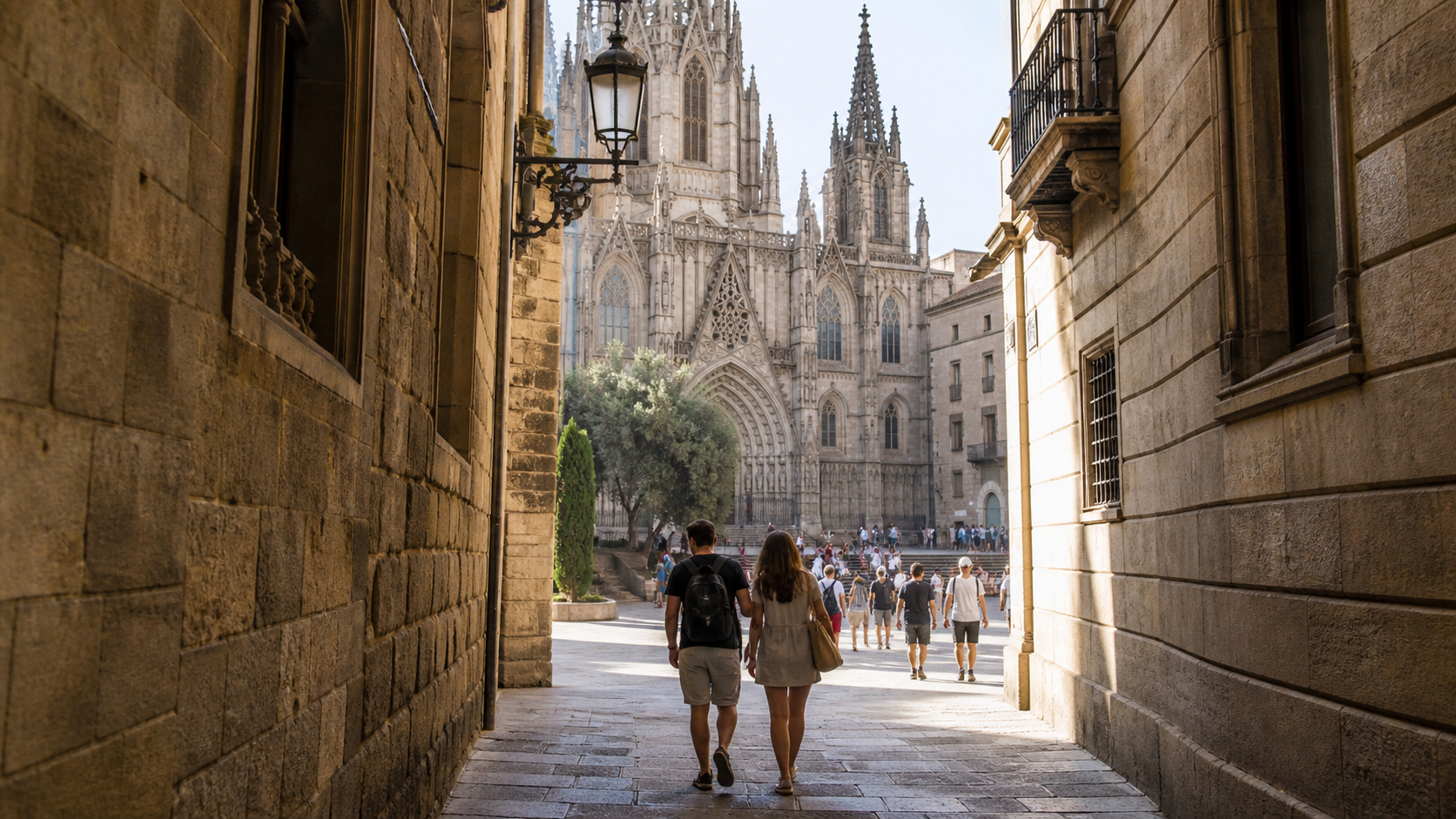
Start near Barcelona Cathedral before the lanes become crowded. Explore Plaça del Rei, the Roman wall and the surviving columns of the Temple of Augustus. The city history museum is worthwhile if archaeology interests you, but its underground route takes significant time.
Walk slowly rather than following a rigid line. Small courtyards, covered passages and changes in street level reveal the city’s layers. Some apparently medieval details were restored later, yet the district retains the pattern of old Barcelona.
Cross La Rambla briefly and enter La Boqueria early if you want to see the market. Move beyond the snack stalls near the entrance, keep aisles clear and ask before photographing vendors. For a calmer market experience, substitute Santa Caterina or Sant Antoni.
Day Two Midday: El Born
Continue east into El Born. Santa Maria del Mar is a powerful example of Catalan Gothic architecture, with an unusually unified interior. The surrounding lanes contain bakeries, small shops and restaurants suitable for lunch.
The Picasso Museum requires advance booking and deserves about two hours. Choose it if the artist’s early development is a priority; otherwise visit El Born Centre de Cultura i Memòria or simply explore. Avoid adding the museum only because it is famous.
Order pa amb tomàquet, escalivada, croquettes or seasonal seafood for lunch. Menú del día offers good weekday value. Restaurants directly beside major sights vary widely, so look for short menus and local lunch traffic.
Day Two Afternoon: Ciutadella and the Waterfront
Walk through Parc de la Ciutadella, passing the monumental fountain and broad lawns. The park provides a transition from dense historic streets to the open waterfront. Continue toward Port Olímpic or Barceloneta according to energy.
Barceloneta beach is convenient and lively rather than secluded. Walk the promenade, swim only when conditions allow and never leave belongings unattended. Bogatell, farther northeast, generally offers more space. Away from the sand, wear normal street clothing and respect residential lanes.
For sunset, choose the waterfront or return to the old port. A short harbour cruise can be pleasant, but it is optional. Dinner in Barceloneta works best with a carefully selected seafood restaurant; El Born provides more variety.
Day Three Morning: Park Güell
Book Park Güell early, particularly in warm months. The monumental zone sits uphill and approaches from metro stations require walking, escalators or a bus. Follow current official directions to the correct entrance.
Explore the monumental staircase, Hypostyle Room, mosaic terrace and stone viaducts. Notice how the infrastructure follows the slope and manages water rather than treating the park as a collection of photo sets. Allow about two hours.
Gaudí’s former house operates separately. Add it only if you want biographical context. Bring water, sun protection and shoes with grip; shade is uneven and mosaic surfaces can become hot.
Day Three Midday: Gràcia
Descend into Gràcia for lunch. Once an independent town, the neighbourhood retains compact streets and lively squares. Plaça de la Virreina, Plaça del Sol and Plaça de la Vila de Gràcia each offer a different atmosphere.
Choose a neighbourhood restaurant or market-area café instead of returning immediately to the centre. Casa Vicens, Gaudí’s early residential work, is nearby and usually calmer than the Passeig de Gràcia houses. Visit only if you still want another detailed interior.
Gràcia rewards unplanned time. Browse independent shops, pause for coffee and observe how residential streets differ from the tourist core. Keep voices low in squares late at night because apartments surround them.
Day Three Afternoon: Montjuïc
Travel to Plaça d’Espanya and climb toward Montjuïc. The hill contains gardens, museums, Olympic facilities and viewpoints, so select a focus. The Museu Nacional d’Art de Catalunya is especially strong for Romanesque mural paintings and Catalan art.
Architecture visitors can see the Mies van der Rohe Pavilion, while sports fans may continue toward the Olympic stadium. The cable car provides views but costs extra and may close in high winds or for maintenance. Public buses and walking paths offer alternatives.
End at a viewpoint over the port or descend toward Poble-sec for dinner. Carrer de Blai is known for casual pintxos, although exploring neighbouring streets often produces a calmer meal.
If the Weather Changes
On heavy-rain days, prioritise Sagrada Família, a Gaudí house, museums and markets. Move Park Güell to the clearest available slot if tickets permit changes. The Picasso Museum, MNAC, MACBA and Maritime Museum offer different indoor options.
During extreme heat, schedule outdoor hills before 11 am, take a long lunch and resume after 5 pm. Beaches provide airflow but little protection from strong sun. In winter, shorter daylight makes early starts important, while central attractions are often less crowded.
What to Skip on a Three-Day Visit
Montserrat, Girona and Sitges are excellent excursions, but each removes most of a day from Barcelona. Save them for a fourth day. Likewise, touring every Gaudí interior creates high costs and repetition.
Camp Nou access depends on current stadium operations and should be checked independently. Do not cross the city for a single viewpoint when Montjuïc, Park Güell and central rooftops already fit the route.
Where to Stay for This Itinerary
Eixample provides the easiest balance of transport, restaurants and access to Gaudí sites. El Born and the Gothic Quarter place day two outside the door but can be noisy. Gràcia suits visitors who prefer neighbourhood evenings and do not mind travelling to the waterfront.
Check the exact metro station, lift access and recent noise reviews before booking. Historic buildings may have stairs and small rooms, while major avenues require good soundproofing.
Final Planning Tips
Make one essential reservation per half-day at most. Leave thirty to forty-five minutes between distant bookings and avoid restaurant reservations immediately after a major attraction. Barcelona’s most enjoyable moments often happen between scheduled sights.
This three-day plan works because each day has a clear geography: Gaudí and Eixample, the old city and sea, then Park Güell, Gràcia and Montjuïc. Protect the sequence but adapt the details. A slower lunch, unexpected church or neighbourhood square may be more memorable than squeezing in one final ticket.
Comments