
Barcelona can overwhelm a short-break traveller with architecture, beaches, markets, museums and late-night dining. A successful 48-hour visit is not about seeing everything. It is about linking a few essential neighbourhoods in a sensible order, reserving the attractions that sell out and leaving enough space for a long lunch or an unexpected square.
This weekend itinerary combines the Gothic Quarter, Gaudí, the Eixample, Barceloneta and Montjuïc without turning the city into a race. If you want an evening by the marina, our Barcelona casino and city guide explains the waterfront setting, entry practicalities and responsible entertainment planning.
Before the Weekend
Book timed tickets for the Sagrada Família and Park Güell through their official websites. Popular slots can disappear, especially on weekends and holidays. Choose one major Gaudí interior for each day rather than buying every ticket. Casa Batlló and La Pedrera are both excellent, but two expensive interiors in one afternoon can feel repetitive.
Barcelona-El Prat Airport connects with the city by Metro L9 Sud, train, bus and taxi. The airport metro does not run directly to the central old town, so most travellers change lines. Not every ordinary city ticket covers the airport stations; check the current TMB conditions before choosing a pass.
Stay around Eixample for transport and architecture, the Gothic Quarter for atmosphere, Gràcia for neighbourhood evenings or Poblenou for more space near the sea. Verify noise reviews and air conditioning rather than judging a room only by its map position.
Friday Evening: Arrive and Find Your Bearings
After checking in, resist the temptation to begin with a major attraction. Walk a simple orientation route from Plaça de Catalunya down the edge of the old city. Enter the Gothic Quarter through streets around the cathedral, then follow the lanes toward Plaça Reial and the lower Rambla.
La Rambla is useful as a geographic spine but rarely the best place for dinner. Side streets in the Gothic Quarter, El Born and Sant Antoni offer more character. Check recent menus and avoid restaurants where staff pressure passers-by or display implausibly broad photo menus.
Eat on local time if possible, but do not force a late dinner after a tiring flight. A plate of tapas, bread with tomato and a walk through illuminated streets are enough. Keep bags zipped and phones controlled in crowded areas.
Saturday Morning: Sagrada Família
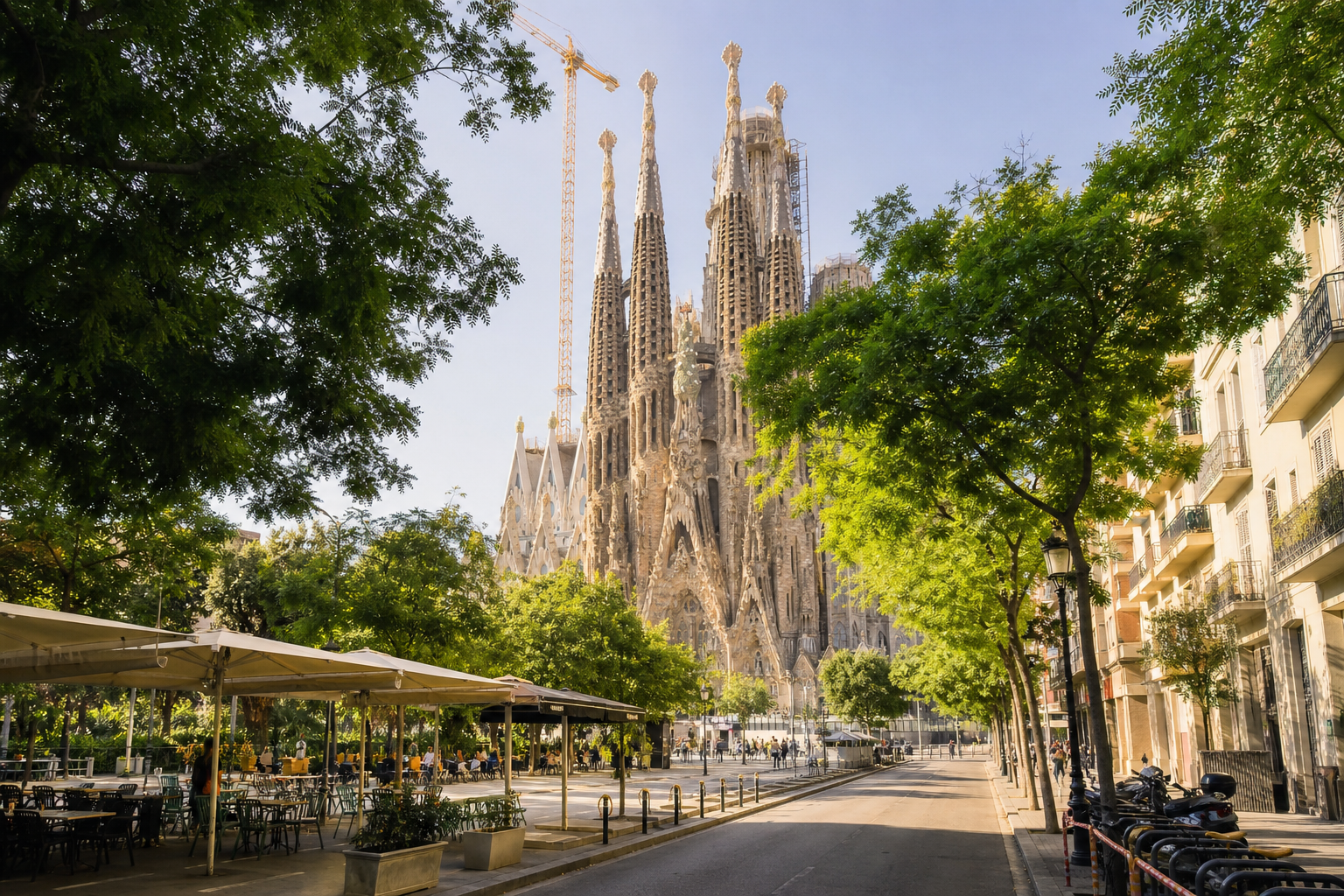
Begin with the Sagrada Família at your reserved time. Arrive early enough for security, bring the same identification used for any reduced ticket and follow current bag rules. The basilica’s exterior is dense with symbolism, while the interior uses columns and coloured light to create a very different experience.
Do not schedule Park Güell immediately afterward. Give the basilica at least ninety minutes, then walk along Avinguda de Gaudí toward the Sant Pau modernist complex. Even if you do not enter, the avenue creates a good architectural connection and a relaxed place for coffee.
For breakfast, use a neighbourhood bakery rather than eating beside the attraction. A light meal leaves room for lunch and reduces the risk of missing a timed entrance.
Saturday Lunch: Gràcia
Continue to Gràcia, once a separate town and still defined by compact squares and active neighbourhood streets. Plaça de la Virreina, Plaça del Sol and surrounding lanes provide cafés, shops and lunch options away from the most concentrated visitor routes.
Choose a restaurant with a short seasonal menu and clear prices. Reserve if a particular place matters; otherwise arrive before the peak lunch period. Gràcia rewards exploration, but remember that residents live directly above the squares. Keep voices down when leaving at night.
After lunch, walk uphill or use public transport toward Park Güell. The climb is more demanding than a flat map suggests, so conserve energy in warm weather.
Saturday Afternoon: Park Güell
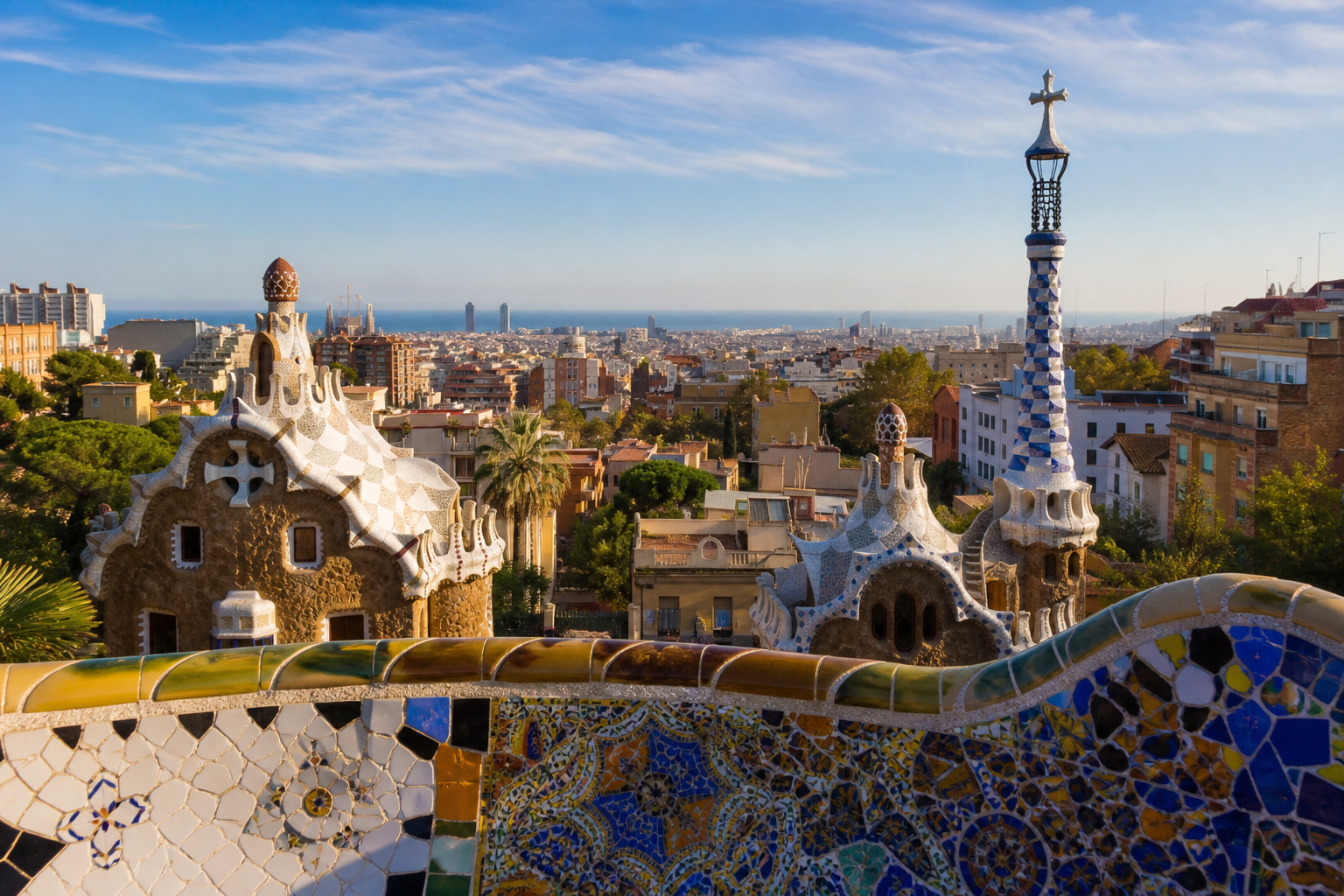
Park Güell mixes landscaped paths, city views and Gaudí’s imaginative architecture. The regulated monumental zone requires an official ticket and time slot. Arrive at the correct entrance because the park covers a large hillside.
Allow at least ninety minutes. Look beyond the famous mosaic terrace to the viaducts, columns and relationship between architecture and terrain. Stay on marked paths and do not climb decorative surfaces for photographs.
If tickets are unavailable, replace the visit with the Sant Pau complex, a walk through Gràcia and a viewpoint at Bunkers del Carmel where access is permitted. Never buy unofficial resold tickets from strangers.
Saturday Evening: Passeig de Gràcia
Descend toward Passeig de Gràcia, Barcelona’s showcase avenue for Catalan Modernisme. Casa Milà, Casa Batlló and neighbouring façades demonstrate how different architects responded to the same urban grid.
Choose one interior if you still have energy. Evening admission can be atmospheric, but compare what the ticket includes. Otherwise, admire the façades, explore the Eixample side streets and stop for a drink away from the avenue’s premium addresses.
For dinner, book in Eixample, Sant Antoni or El Born. Travellers interested in the marina’s nightlife can continue toward Port Olímpic and consult our Barcelona casino travel guide. Casino spending should remain optional, fixed and separate from the accommodation and return-transport budget.
Sunday Morning: Gothic Barcelona
Start early in the Gothic Quarter, before the narrow lanes become busy. See the exterior of Barcelona Cathedral, Plaça del Rei, the Roman wall remnants and quieter courtyards. Opening times for churches and museums vary on Sundays, so check the specific venue rather than relying on an old itinerary.
Cross toward El Born and Santa Maria del Mar. This basilica reflects a different medieval Barcelona from the cathedral quarter. Nearby streets contain design shops, cafés and the Born cultural area.
Keep valuables secure, particularly around transit hubs, La Rambla and crowded viewpoints. Barcelona is enjoyable on foot, but distraction is an opportunity for pickpockets.
Sunday Lunch: Market Strategy
La Boqueria is famous and visually impressive, yet it can be extremely crowded. Visit early for atmosphere, not necessarily for your main meal. Santa Caterina Market offers another central option, while Sant Antoni Market suits travellers exploring its surrounding neighbourhood.
Market opening days and stall hours differ. Sunday is not the best day to assume every food market is operating, so confirm in advance and maintain a restaurant alternative. Never build the entire itinerary around a specific stall without checking.
For lunch, order a few dishes to share and ask about portion sizes. Barcelona’s food culture rewards pacing; a long lunch is part of the weekend rather than time lost from sightseeing.
Sunday Afternoon: Barceloneta and the Sea
Walk from El Born toward Port Vell and Barceloneta. The waterfront opens the city after a morning of dense lanes. Follow public promenades, watch boats in the harbour and continue toward the beach.
Barceloneta is a residential neighbourhood as well as a visitor destination. Avoid walking through streets in swimwear, keep noise down and choose businesses that respect the community. On the beach, watch belongings and follow swimming warnings.
If weather is poor, substitute the Picasso Museum with a reservation, the Maritime Museum or another indoor cultural site. Do not queue for hours when a timed alternative can protect the final afternoon.
Optional Sunday Sunset: Montjuïc
If your departure is late, finish on Montjuïc. Metro, funicular, bus and cable-car options serve different parts of the hill, but tickets are not interchangeable in every case. Check TMB information before travelling.
Choose one area: the castle and harbour views, the Olympic sites, or the museums around Plaça d’Espanya. Attempting all three creates unnecessary climbing. Sunset timing changes sharply by season, and fountains or venues may close for maintenance.
Leave a generous airport margin. Weekend service changes and crowded stations can add time, while airport security is outside the city’s control.
How to Move Around
Walk within each district and use metro or bus between clusters. A 48-hour unlimited travel product may suit visitors taking many journeys, while a multi-journey ticket can be better for confident walkers. Compare the current rules, airport validity and activation period.
The L9 Sud airport metro serves both terminals but requires connections for many central areas. Airport bus and rail may be more convenient depending on the hotel. There is no single best choice for every address.
Taxis are regulated, but confirm the official rank and approximate supplement. Never accept an unsolicited ride from inside a terminal.
What to Book and What to Leave Flexible
Reserve the Sagrada Família, Park Güell, one special dinner and any must-see museum. Leave ordinary meals, neighbourhood walks and the beach flexible. This protects the weekend from rain, transport delays and travel fatigue.
Download tickets and maps offline. Verify attraction rules shortly before visiting, because construction, worship and local events can change access. Carry water, supportive shoes and one smart-casual outfit for an evening venue.
The ideal Barcelona weekend is built around contrast: sacred architecture and market noise, medieval lanes and the Eixample grid, crowded icons and a quiet sea view. Two days are enough to understand the city’s rhythm if you group sights intelligently and allow Barcelona’s meals and streets to be experiences in their own right.
Comments