
Monte Carlo is often reduced to roulette wheels and supercars, yet the district and surrounding principality offer far more: Mediterranean gardens, modern art, seaside swimming, royal history, a legendary street circuit and neighbourhood markets. Travellers who never place a bet can still fill several days with architecture, food, culture and coastal walks.
This guide concentrates on experiences beyond gaming while recognising that Casino Square remains an essential urban landmark. For entry rules and responsible play, use our separate Monte Carlo casino travel guide. Travellers planning a longer stay can follow our three-day Monaco itinerary, while cost-conscious visitors should open the Monaco budget guide.
Admire Casino Square Without Gambling
Casino Square is a public stage framed by Casino de Monte-Carlo, the Hôtel de Paris and Belle Époque façades. Visit in the morning for architectural details, then return near sunset when the lighting changes and evening guests arrive.
Walk the terraces and look toward the sea. Follow security instructions and private-event barriers. The exterior and theatrical setting require no gaming ticket.
When cultural morning visits are offered, architecture enthusiasts may be able to see selected interiors before normal gaming operations. Conditions change, so consult the official casino site. A visit should never require betting.
Explore Monaco-Ville
Monaco-Ville, also called Le Rocher, occupies the rocky old-town promontory west of Monte Carlo. Its narrow lanes, pastel buildings and viewpoints create a striking contrast with the towers below. Reach it on foot, by bus or via public lifts depending on your starting level.
Palace Square offers broad views over Port Hercule and Fontvieille. The Prince’s Palace State Apartments open seasonally and can close for official events, but the square remains worthwhile. Check the guard ceremony timing if that tradition interests you, without structuring the entire day around a crowded few minutes.
Explore early or late, when day-trip groups thin, and remember that this is also a residential neighbourhood.
Visit Monaco Cathedral
The Cathedral of Our Lady Immaculate is a Romanesque-Byzantine building associated with Monaco’s princes and the marriage of Prince Rainier III and Grace Kelly. Its pale stone interior provides a cool, quiet pause during a summer walk.
Entry is generally free outside services. Dress with covered shoulders, silence phones and avoid photographing worshippers. Opening arrangements can change for ceremonies, so treat access as a privilege rather than a guaranteed attraction.
Combine the cathedral with Palace Square and Saint-Martin Gardens. All sit within comfortable walking distance on Le Rocher, making an efficient half-day.
Spend Hours at the Oceanographic Museum
The Oceanographic Museum is one of Monaco’s most substantial attractions. Built into the cliff, it combines historic oceanographic collections, aquariums, marine conservation displays and a rooftop panorama.
Allow two to three hours rather than squeezing it between photographs. Families can spend longer, especially when activities or temporary exhibitions are running. Buy through official channels and check the last admission time.
The museum also makes a sensible bad-weather choice. Even visitors mainly interested in views should give the exhibits attention; the institution’s identity rests on marine science, not just its dramatic architecture.
Walk Saint-Martin Gardens
Saint-Martin Gardens stretch along the cliff near the museum. Shaded paths, Mediterranean planting and sculptures turn the route into a free open-air gallery. Gaps in the vegetation reveal the sea far below.
Walk slowly and use benches rather than treating the garden as a shortcut. In hot weather, it is one of the more comfortable places on Le Rocher. Respect planted areas and keep children away from cliff barriers.
The garden pairs naturally with the cathedral, museum and old town.
Discover Port Hercule
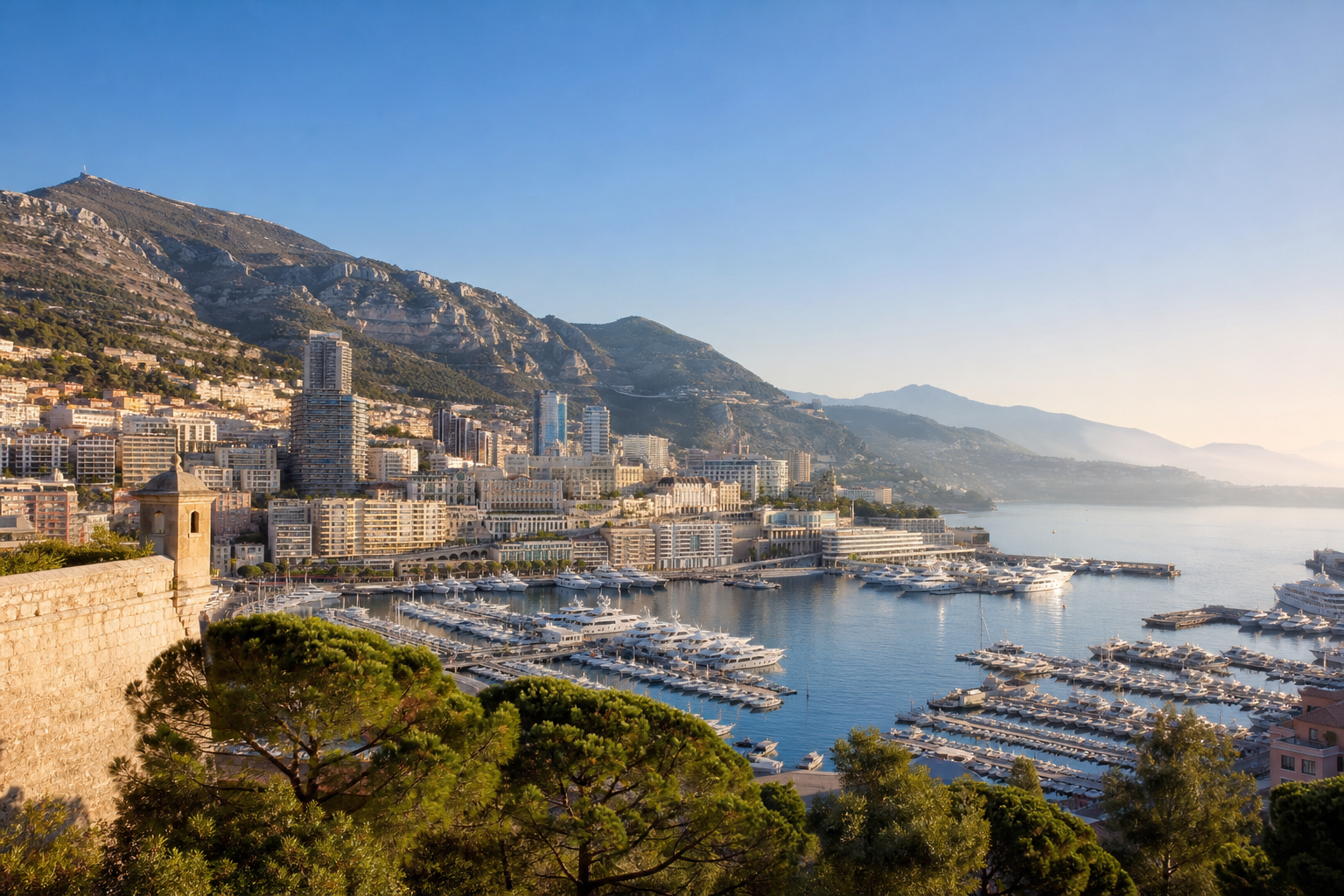
Port Hercule lies between Monaco-Ville and Monte Carlo. Public waterfront paths provide classic perspectives of yachts, apartments and the palace above. Morning light, evening reflections and event preparations each produce a different atmosphere.
Walk sections of the Formula One route around the harbour where pavements permit. Roads remain active outside race closures, so use crossings and never step into traffic for a photograph. Pontoons and vessels are private unless clearly opened to visitors.
The port hosts seasonal events that can alter access. Check the official Monaco calendar and accept diversions rather than trying to bypass barriers.
Trace the Formula One Circuit
Monaco’s Grand Prix circuit uses ordinary streets for most of the year. Begin near Sainte-Dévote, climb toward Casino Square, find the famous hairpin and continue toward the tunnel and harbour. A complete lap is longer and hillier than it appears on television.
The walk reveals the engineering challenge of staging a race inside a dense city-state. It also provides a practical introduction to neighbourhoods. Motorsport fans should avoid touching equipment or entering work zones when barriers are being installed.
If mobility or traffic makes the full route uncomfortable, choose two safe viewing areas and use a bus between them. Event dates change transport patterns dramatically.
Relax in the Japanese Garden
The Japanese Garden near the Grimaldi Forum uses water, rocks, bridges and carefully shaped planting to create calm beside busy streets. Admission is free, and a short visit can reset the pace between Monte Carlo and Larvotto.
Follow the one-way or access instructions displayed, keep voices low and avoid climbing on stones. The garden is designed for contemplation, not active recreation.
Combine it with a temporary exhibition at the Grimaldi Forum or a seafront walk. It is particularly attractive in softer morning or late-afternoon light.
Swim or Walk at Larvotto
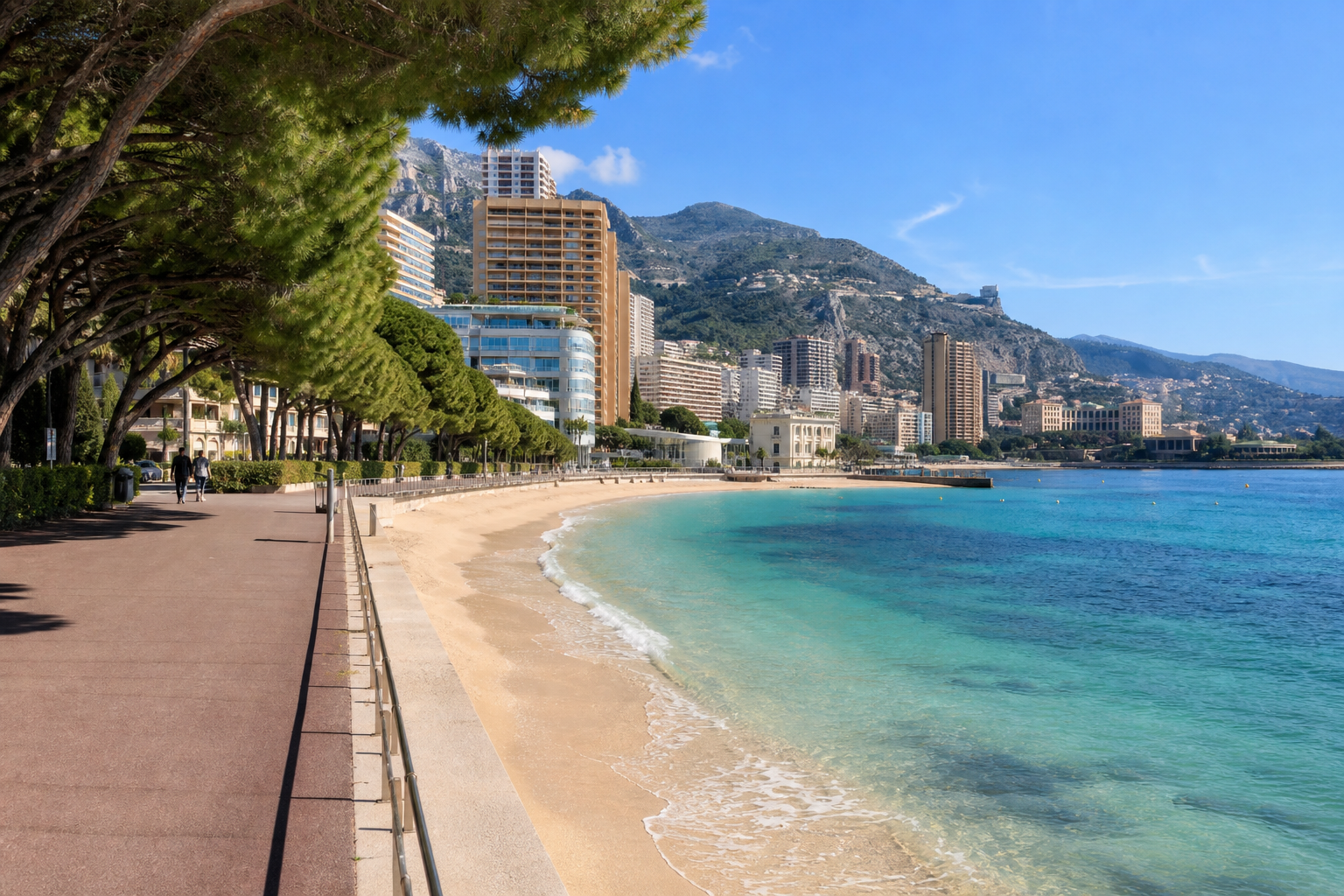
Larvotto is Monaco’s main public beach district. The redeveloped shoreline includes a shaded promenade, restaurants and access to the Mediterranean. In warm months it provides an easy counterpoint to museums and formal squares.
Bring water shoes for pebbly surfaces, use reef-conscious sun protection and obey lifeguard or weather instructions. Keep valuables with you and supervise children closely. Restaurants make the area convenient but can be expensive; the budget Monaco guide suggests cheaper meal strategies.
Outside swimming season, Larvotto remains worthwhile for a level coastal walk. Wind and waves can be stronger than conditions higher in the city suggest.
Explore Fontvieille
Fontvieille occupies reclaimed land west of the Rock and feels more residential than Monte Carlo. Its harbour promenade, gardens and sports facilities show a different side of the principality.
Visit the Princess Grace Rose Garden, where thousands of roses create a free public memorial. Flowering depends on season, but the landscaped space remains pleasant year-round. Continue toward the exterior of Stade Louis II or check opening times for the car, stamp and coin collections.
Fontvieille rewards unhurried exploration. Have coffee, watch local life and notice how Monaco integrates schools, offices and parks into limited space.
Eat at La Condamine Market
La Condamine sits between the Rock and Monte Carlo. Its market and surrounding streets offer a more everyday atmosphere than luxury hotel dining. Look for local snacks such as barbajuan, seasonal produce and casual lunch counters.
Opening patterns differ between market stalls and restaurants, so arrive with flexibility. Greet vendors, wait your turn and ask before photographing displays. Prices may still exceed those in nearby French towns, but the market can deliver better value and more local character than Casino Square.
After lunch, use nearby lifts or buses to choose your next vertical level. La Condamine is a useful transport and dining hub, not just a stop between attractions.
Follow Monaco’s Public Art
Sculptures appear throughout Monaco’s gardens, squares and waterfront districts. The official Rainier III sculpture trail connects works in places including Monaco-Ville and other emblematic areas, turning a city walk into a free cultural route.
Do not try to find every piece. Choose a section that fits your itinerary and read the accompanying information where available. Public art often reveals quieter paths that visitors overlook.
Art enthusiasts should check current exhibitions at Villa Sauber and Villa Paloma before choosing a venue.
Attend a Performance or Exhibition
Monte Carlo’s cultural life includes opera, ballet, concerts, conferences and major exhibitions. The Salle Garnier forms part of the casino complex but functions as a cultural venue in its own right. The Grimaldi Forum hosts exhibitions and performances near Larvotto.
Study the official programme before travelling. Ticket prices and dress expectations vary, and some productions sell out. A performance can be a more meaningful evening splurge than gaming, especially for visitors who want to experience the district’s formal atmosphere.
Allow time for security and finding the correct entrance. Do not assume a casino entrance ticket includes access to a performance, or vice versa.
Find the Best Views
For harbour panoramas, Palace Square and paths around Le Rocher are hard to beat. The Oceanographic Museum rooftop adds a high sea-facing perspective, while the UNESCO Garden looks toward Fontvieille harbour. Port-level walks provide the reverse view upward.
Early morning gives clearer streets, late afternoon softens façades and blue hour makes the harbour glow.
Avoid drones unless you have confirmed every applicable restriction. Monaco’s dense airspace, security and privacy considerations make casual flying inappropriate.
Plan a Non-Casino Two-Day Visit
On day one, explore Monaco-Ville, the cathedral, Saint-Martin Gardens and the Oceanographic Museum, then descend to Port Hercule for dinner. On day two, walk part of the Formula One circuit, visit the Japanese Garden and spend the afternoon at Larvotto or in Fontvieille.
Return to Casino Square at dusk purely for architecture, then choose a concert, restaurant or harbour walk. The longer Monaco weekend itinerary adds neighbourhood detail and pacing.
Monaco’s fame may begin with its casino, but the destination becomes richer when gaming is optional. Gardens, museums, markets and the sea reveal a compact country shaped by geography as much as glamour. Plan by district, verify current opening information and leave time to enjoy the views between landmarks.
Comments