
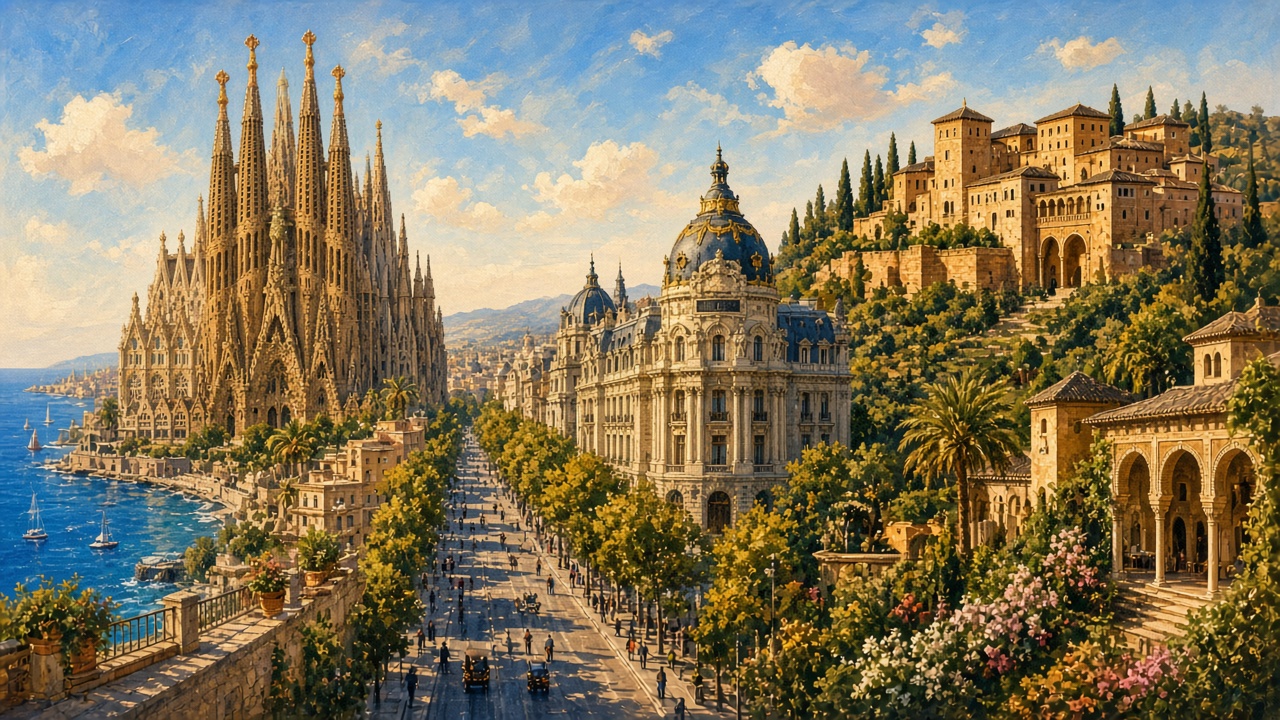
Spain packs an astonishing amount of variety into one country. In a single trip you can admire Gaudí’s architecture in Barcelona, spend a day among Old Masters in Madrid, wander the Moorish palaces of Andalusia and finish with tapas on a sunny plaza. For a first-time visitor, the hardest part is not finding great places but choosing between them.
This guide walks you through the best places to visit in Spain for first-time travellers: what makes each one special, who it suits, and how the destinations fit together into a realistic route. If you are still working out the overall shape of your trip, it pairs well with our 10-day Spain itinerary for first-time visitors.
How to Choose Where to Go on Your First Trip
Before diving into individual destinations, it helps to think about three things: how long you have, what kind of traveller you are, and when you are going.
- Trip length: with a week, two or three bases are plenty. With ten days to two weeks you can comfortably add a region such as Andalusia or a coastal stop.
- Travel style: art and history lovers gravitate to Madrid, Seville and Granada; beach and nightlife fans to Barcelona, Valencia and the islands; food lovers to San Sebastián and the Basque Country.
- Season: southern Spain can be very hot in midsummer, while the north is greener and milder. Our guide to the best time to visit Spain by region explains the differences in detail.
A good rule for a first visit is to travel slower than you think you need to. Spanish life runs late, meals are long and the best moments often come from wandering rather than ticking off sights.
Barcelona: Architecture, Beaches and Neighbourhood Life
Barcelona is many travellers’ first taste of Spain, and it is easy to see why. The Catalan capital combines a compact medieval core with wide, elegant avenues, a city beach and some of the most distinctive architecture in Europe.
What not to miss
- Sagrada Família: Antoni Gaudí’s basilica is the city’s signature sight. Tickets are timed and popular slots sell out, so book ahead through the official website.
- Park Güell and Casa Batlló: two more Gaudí landmarks that show off his playful use of colour, curves and mosaic.
- The Gothic Quarter and El Born: narrow lanes, hidden squares and the cathedral make this the best area for aimless wandering.
- The waterfront: Barceloneta’s beach and promenade are a good place to slow down at the end of a day of sightseeing.
Who it suits
Barcelona works for almost everyone, but it is especially rewarding if you like design, food markets and a lively evening scene. Plan at least three full days. Be alert to pickpockets in crowded areas such as La Rambla and the metro, as in any major tourist city.
Madrid: Art, Parks and Spain’s Best Food Scene
Spain’s capital sits right in the middle of the country and is the hub of the high-speed rail network, which makes it a natural base. Madrid is less about single headline monuments and more about atmosphere: grand boulevards, buzzing tapas bars and a remarkable concentration of world-class art.
What not to miss
- The Golden Triangle of Art: the Prado, the Reina Sofía (home to Picasso’s Guernica) and the Thyssen-Bornemisza sit within walking distance of each other. Pick one or two rather than trying all three in a day.
- Retiro Park: the city’s green heart, ideal for a stroll or a rowing boat on the lake.
- Royal Palace and Plaza Mayor: a good introduction to the historic centre.
- Neighbourhood evenings: La Latina, Malasaña and Lavapiés are great for tapas and people-watching.
Easy day trips
Madrid’s location makes day trips simple. Toledo, with its hilltop old town shaped by Christian, Jewish and Muslim heritage, and Segovia, famous for its Roman aqueduct and fairytale Alcázar, are both reachable by train. Both are popular, so consider going early in the day.
Seville: The Heart of Andalusia
If there is one city that matches the romantic image many people have of Spain, it is Seville. Orange trees line the streets, flamenco drifts out of bars and the historic centre is one of the largest in Europe.
What not to miss
- Real Alcázar: a royal palace complex with intricate Mudéjar decoration and beautiful gardens. Advance booking is strongly recommended.
- Seville Cathedral and the Giralda: one of the largest Gothic cathedrals in the world, with a bell tower that began life as a minaret.
- Plaza de España: a sweeping, tiled semicircle in María Luisa Park, best seen in the softer light of late afternoon.
- Barrio Santa Cruz and Triana: the old Jewish quarter for winding lanes, and Triana across the river for ceramics and traditional bars.
Seville gets extremely hot in July and August, so spring and autumn are the most comfortable times for sightseeing. Spring also brings Semana Santa (Holy Week) and the April Fair, which are spectacular but busy.
Granada: The Alhambra and Mountain Views
Granada sits at the foot of the Sierra Nevada mountains and is home to the Alhambra, a hilltop fortress and palace complex that is one of Spain’s most visited monuments. The Nasrid Palaces inside are the highlight, with extraordinary carved stucco, tiled walls and courtyards.
Alhambra tickets are limited and timed, and they regularly sell out well in advance, so this is the one booking to make as soon as your dates are fixed. Use the official ticket channel to avoid inflated resale prices.
Beyond the Alhambra, wander the Albaicín, the old Moorish quarter, and head to the Mirador de San Nicolás for a classic view of the palace with the mountains behind. Granada is also known for its tapas culture, where many bars traditionally serve a small free tapa with each drink.
Córdoba and Málaga: Two More Andalusian Gems
Córdoba
Córdoba is smaller than Seville and Granada but no less memorable. Its Mosque-Cathedral (the Mezquita), with its forest of red-and-white striped arches, is one of the most striking buildings in Spain. The surrounding old Jewish quarter is a maze of whitewashed lanes, and in spring the city’s flower-filled patios are celebrated with a dedicated festival. Córdoba sits on the high-speed line between Madrid and Seville, so it is easy to visit for a day or a night.
Málaga
Málaga is the gateway to the Costa del Sol and has a busy international airport, making it a practical entry or exit point for a southern Spain trip. The city itself has reinvented itself as a cultural destination, with the Picasso Museum (Picasso was born here), the Alcazaba fortress and a lively port area. It is a good choice if you want to combine city sightseeing with time on the beach.
Valencia: Paella, Beaches and Futuristic Architecture
Spain’s third-largest city is often overlooked by first-timers, which is part of its appeal. Valencia offers a relaxed pace, a long sandy beach and a fascinating mix of old and new.
- City of Arts and Sciences: a cluster of striking modern buildings housing a science museum, an aquarium and an opera house.
- Turia Gardens: a former riverbed turned into a long green park, perfect for walking or cycling across the city.
- Central Market and the old town: one of Europe’s great food markets, close to the cathedral and the Gothic silk exchange (La Lonja).
- Paella: Valencia is the home of paella, and the surrounding Albufera wetlands are where rice is grown. Traditional Valencian paella is usually eaten at lunchtime.
Valencia is roughly halfway down the Mediterranean coast between Barcelona and Andalusia and is connected to Madrid by high-speed train, so it slots neatly into many routes.
San Sebastián and the Basque Country: A Food Lover’s Dream
In the green north of Spain, San Sebastián (Donostia in Basque) is famous for its beautiful La Concha bay and one of the world’s most celebrated food scenes. The old town is packed with bars serving pintxos, small bites often displayed on the counter, and the city also has a high concentration of acclaimed restaurants.
Nearby Bilbao is home to the Guggenheim Museum, Frank Gehry’s titanium-clad landmark that helped transform the city. Together they make an excellent few days for travellers who care more about food and scenery than ticking off monuments. The north also tends to be milder in summer, which makes it a good alternative when the south is very hot.
The Islands: Mallorca and the Canaries
If your idea of a first trip to Spain involves more beach than city, the islands deserve a look. Mallorca, the largest of the Balearic Islands, combines coves and beaches with the dramatic Serra de Tramuntana mountains and the historic capital, Palma. The Canary Islands, off the coast of north-west Africa, have a mild climate year-round, which makes them a popular winter-sun destination with volcanic landscapes to explore.
For a first visit focused on culture, the islands are usually best as an add-on rather than the main event, as getting there typically means a flight or ferry.
Sample Routes for First-Time Visitors
One week: the classic cities
Spend three nights in Barcelona and three or four in Madrid, connected by high-speed train, with a day trip to Toledo or Segovia. This gives you two very different cities without feeling rushed.
Ten days: cities and Andalusia
Start in Barcelona, take the train to Madrid, then continue south to Seville, with a stop or day trip to Córdoba. Finish in Granada for the Alhambra, or fly home from Málaga or Seville.
Two weeks: a wider loop
Add Valencia between Barcelona and Madrid, spend more time in Andalusia, and either finish with a few beach days on the Costa del Sol or head north to San Sebastián and Bilbao.
Whichever route you choose, book long-distance trains and accommodation early for the best choice, especially in spring and summer.
Practical Tips for Your First Trip to Spain
- Book the big sights early: the Alhambra, Sagrada Família and Real Alcázar all use timed tickets that can sell out.
- Adjust to Spanish hours: lunch is often eaten from around 2pm and dinner rarely before 9pm. Many smaller shops close in the afternoon.
- Use trains between cities: high-speed trains link most major destinations city centre to city centre.
- Stay central: in the main cities, staying in or near the historic centre saves time and lets you walk to most sights.
- Learn a few words: a simple hola, por favor and gracias goes a long way. In Catalonia and the Basque Country you will also see the regional languages on signs.
- Check opening days: many museums close one day a week, so confirm schedules on official websites before you go.
Conclusion
For most first-time visitors, the best places to visit in Spain are Barcelona, Madrid and the great cities of Andalusia: Seville, Granada and Córdoba. Add Valencia for a relaxed coastal city, San Sebastián for food, or an island for beach time, depending on your interests and the length of your trip. Choose two to four bases, book the major monuments early and leave room for long lunches and evening strolls, because that is where Spain really shines.
Looking for more ideas for your next trip? Explore more travel guides on Jettripper.
Comments
[…] There is no single “best” destination for families; it depends on your children’s ages and what you all enjoy. These are the places that most consistently work well. For a broader overview of the country’s highlights, see our guide to the best places to visit in Spain for first-time travelers. […]