
Ask ten travellers when the best time to visit Spain is and you will hear ten different answers, and most of them will be right. Spain is a big, varied country: snowy mountain ranges, a green Atlantic north, a sun-baked south, a long Mediterranean coast and islands that stay mild even in winter. The “right” month depends on where you are going and what you want from the trip, whether that is city sightseeing, beach time, hiking, food festivals or simply avoiding crowds.
This guide breaks Spain down by region and by travel style, so you can match your dates to your plans instead of the other way around. We focus on patterns that hold year after year (seasons, crowd levels and the major festivals) rather than numbers that change. Always check a current forecast and official event dates before you book.
The Short Answer: Spring and Autumn Win for Most Trips
If you want one recommendation that works for most first-time visitors, aim for April to June or September to October. These shoulder months usually bring pleasant temperatures for walking around cities, long daylight hours, outdoor dining weather and noticeably thinner crowds than July and August. Accommodation prices also tend to be gentler than in peak summer, especially once the school holidays end.
That said, there are excellent reasons to visit in every season:
- Spring (March–May): blossoms, comfortable sightseeing weather and some of Spain’s most famous festivals, including Holy Week and Seville’s April Fair.
- Summer (June–August): peak beach season, late sunsets and lively town fiestas, but also the hottest weather inland and the biggest crowds on the coast.
- Autumn (September–November): warm sea temperatures early in the season, grape harvests, fewer tourists and great hiking conditions.
- Winter (December–February): quiet museums, lower prices in many cities, skiing in the mountains and mild sunshine in the Canary Islands.
Best Time to Visit Spain by Region
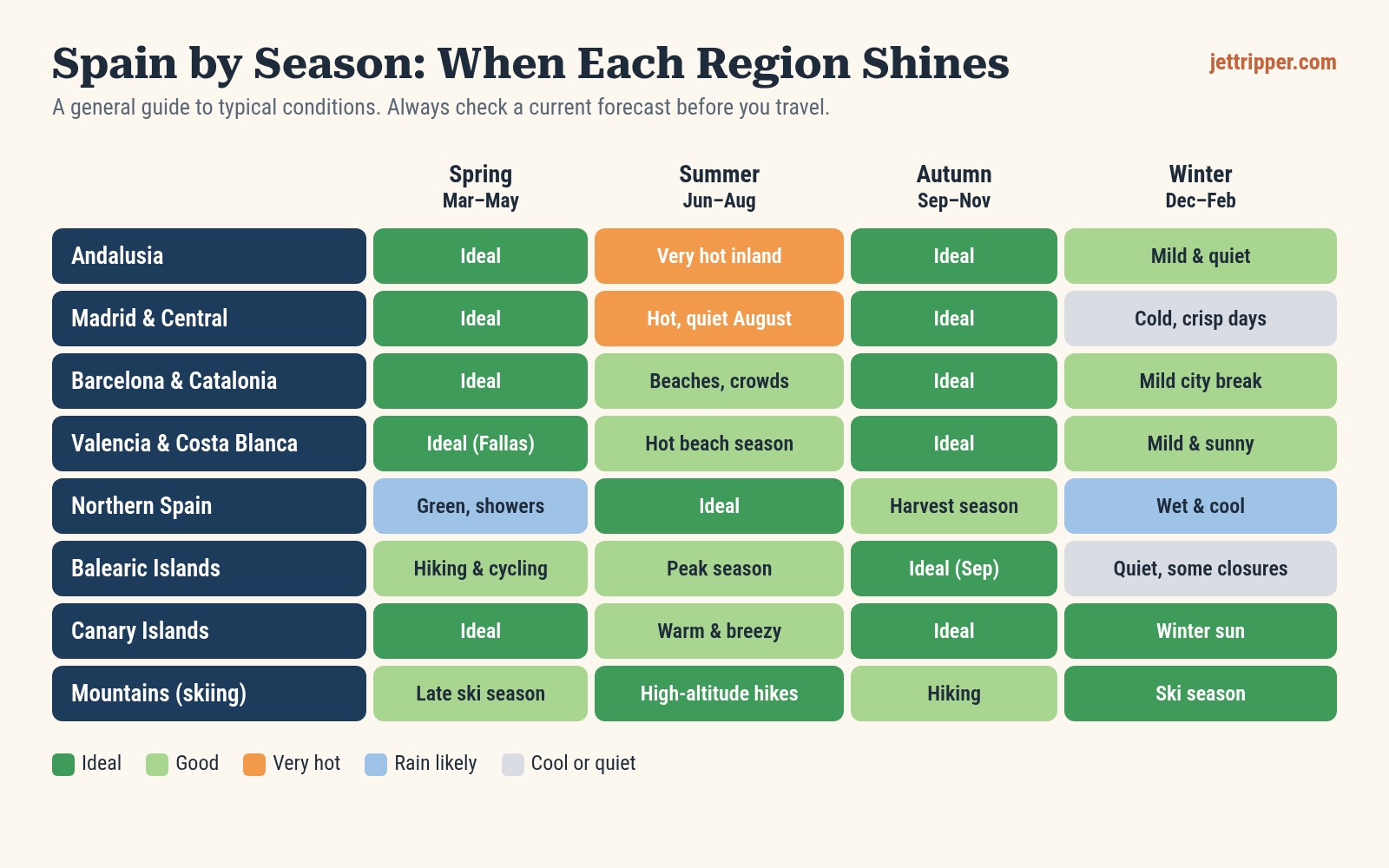
Spain’s regions have very different climates, so the best month for Seville is not necessarily the best month for Bilbao. Here is how the main areas compare.
Andalusia (Seville, Granada, Córdoba, Málaga)
Andalusia is Spain’s hottest mainland region, and inland cities such as Seville and Córdoba are known for intense summer heat, often among the highest temperatures in Europe. July and August can make midday sightseeing genuinely uncomfortable, which is why locals shift their day towards early mornings and late evenings.
Best time: March to May and late September to early November. Spring is especially beautiful, with orange blossom scenting the streets of Seville and courtyards in full bloom in Córdoba. Winter is mild and sunny enough for sightseeing, though evenings can feel chilly, and many older buildings are not well heated.
If you are planning a city break, our Seville travel guide covers the Real Alcázar, the cathedral and the best neighbourhoods for tapas, all of which are at their best in spring and autumn.
Madrid and Central Spain
Madrid sits on a high plateau, which gives it a more continental climate than the coast: hot, dry summers and cold winters, with crisp, bright days in between. August is famously quiet in the capital, as many residents leave for the coast and some family-run restaurants and shops close for holidays.
Best time: April to June and September to October. Winter is a good choice if you mainly want museums such as the Prado and the Reina SofÃa, since visitor numbers drop and the city’s cafés and markets are cosy places to warm up. Day trips to Toledo and Segovia are more comfortable outside the peak of summer.
Barcelona and Catalonia
Barcelona has a Mediterranean climate with warm summers and mild winters. It is also one of Europe’s most visited cities, and summer brings heavy crowds at landmarks such as the Sagrada FamÃlia and Park Güell, plus busy beaches.
Best time: May, June, September and early October offer warm weather, swimmable sea in late spring and early autumn, and a more relaxed atmosphere. Winter is quieter and mild, which suits a culture-focused city break. Book timed-entry tickets for major sights in advance whatever the season.
Valencia and the Costa Blanca
The eastern coast enjoys plenty of sunshine and generally mild winters, making it one of Spain’s most reliable year-round destinations. Summers are hot and humid, and the beaches fill up with domestic and international holidaymakers.
Best time: spring and autumn for a balance of beach and city. March is a special case: Valencia’s Las Fallas festival runs with events from 1 March, culminating between 15 and 19 March, when giant satirical sculptures fill the streets before being burned on the final night. It is spectacular, noisy and crowded, so book accommodation well ahead if you want to be there.
Northern Spain (Basque Country, Cantabria, Asturias, Galicia)
The north is “Green Spain” for a reason. Atlantic weather brings more rain and cooler temperatures than the south, along with lush valleys, dramatic coastline and a food scene that many travellers rank among the best in the country. Summer here is pleasant rather than scorching, which makes the region a smart escape when Andalusia is overheating.
Best time: June to September for the most stable weather, beach days and hiking in the Picos de Europa. Early autumn is lovely too, with harvest season and fewer visitors. Pack a light rain jacket in any month. Pilgrims walking the Camino de Santiago tend to favour late spring and early autumn to avoid both summer crowds and winter rain.
The Balearic Islands (Mallorca, Menorca, Ibiza)
The Balearics are classic summer destinations, and July and August are the busiest, priciest months. Ibiza’s nightlife season and many beach clubs are concentrated in the warmer months, while some hotels and restaurants on the islands close or reduce hours in winter.
Best time: May, June and September for warm water without peak-season crowds. Spring and autumn are also excellent for cycling and hiking in Mallorca’s Serra de Tramuntana, and Palma is a pleasant winter city break if you are happy with fewer open beach venues.
The Canary Islands
Located off the coast of Africa, the Canary Islands have a mild climate year-round, which is why they are so popular with Northern Europeans escaping winter. Temperatures vary less between seasons than on the mainland, though conditions differ between islands and even between the north and south of the same island.
Best time: genuinely any time. Winter (November to March) is high season for sun-seekers, so book early for school holidays and Christmas. Summer is warm and often breezy, and is popular with Spanish families.
Best Time to Visit Spain by Travel Style
For City Breaks and Sightseeing
Spring and autumn are ideal for walking-heavy itineraries in Madrid, Barcelona, Seville and Granada. If you are combining several cities, as in our 10-day Spain itinerary for first-time visitors, these months make it easier to enjoy both inland and coastal stops without extreme heat. Winter can also work well for city breaks, especially if museums and food are your priority.
For Beach Holidays
June to September is beach season on the Mediterranean coast and the Balearics, with July and August the hottest and busiest. For warm water with more space on the sand, try June or September. The Canary Islands are your best option for winter sun.
For Festivals and Culture
Spain’s festival calendar is a reason to visit in itself. A few of the big ones:
- Semana Santa (Holy Week): solemn processions take place across the country, with Seville, Málaga and Valladolid among the best known. In 2027, Holy Week in Seville runs from 21 to 28 March.
- Feria de Abril, Seville: a week of flamenco dresses, horses, music and casetas (marquees) about two weeks after Easter. The 2027 edition runs from 13 to 18 April, starting with the traditional “pescaÃto” evening on 12 April.
- Las Fallas, Valencia: main days 15 to 19 March each year.
- San FermÃn, Pamplona: 6 to 14 July, famous for the running of the bulls and round-the-clock street celebrations.
- La Tomatina, Buñol: the giant tomato fight held on the last Wednesday of August.
Festivals bring unforgettable atmosphere but also higher prices and fully booked hotels. Reserve accommodation months in advance and confirm dates on official tourism websites, as schedules can change.
For Hiking and Outdoor Adventures
Spring and autumn are the sweet spots for hiking in most of Spain, from the Alpujarras in Andalusia to Mallorca’s mountains. Summer is the time for high-altitude routes in the Pyrenees and the Picos de Europa, when snow has melted and mountain huts are open. Avoid strenuous lowland hikes in the south during summer heat.
For Skiing
Spain has more skiing than many people expect. The Pyrenees offer several resorts, and Sierra Nevada near Granada is one of Europe’s southernmost ski areas, with a season that typically runs from late November or December into spring, depending on snow. A winter trip can combine skiing in the morning with the Alhambra in the afternoon.
For Budget Travellers
For lower prices, look at January to March (excluding holiday weekends and Easter) and November. Flights and hotels in mainland cities are often cheaper then, and you will share major sights with fewer people. Avoid August on the coast and major festival weeks if keeping costs down is a priority.
Month-by-Month Quick Guide
- January–February: quiet, good-value city breaks; skiing; winter sun in the Canaries. Carnival is celebrated in February or March depending on the year, with big events in Cádiz and Santa Cruz de Tenerife.
- March: Las Fallas in Valencia; spring arrives in the south; Easter may fall in late March.
- April–May: arguably the best all-round months; Holy Week (depending on the year), Seville’s April Fair and Córdoba’s flower-filled courtyards.
- June: long days, beach season starts, and the night of San Juan (23 June) is celebrated with bonfires, especially on the coast.
- July–August: peak heat and peak crowds; great for northern Spain, mountains and beach holidays; many town fiestas.
- September–October: warm seas, harvest season, fewer tourists; excellent for cities and coasts alike.
- November–December: cooler and quieter; Christmas markets and lights in cities; the Canaries come into their own.
Practical Tips for Timing Your Trip
- Adapt to the Spanish schedule. Lunch is often eaten from around 2 pm and dinner from 9 pm or later. In hot months, plan sightseeing for morning and evening and rest in the afternoon.
- Watch for public holidays. National and regional holidays can close shops and some attractions, while also making hotels busier. Check the regional calendar for your destination.
- Book popular sights early. The Alhambra, the Sagrada FamÃlia and the Real Alcázar often sell out in high season. Buy tickets through official websites as soon as your dates are fixed.
- Pack for the region, not the country. A summer trip may still need a jacket in the mountains or the north, and a winter trip to Andalusia can be sunny by day and cold at night.
- Consider combining regions. In summer, pair a few days in a hot southern city with the cooler north or the coast. In winter, combine a mainland city with the Canary Islands.
Final Thoughts
There is no single best time to visit Spain, but there is almost certainly a best time for your trip. For most travellers, spring and autumn deliver the ideal mix of comfortable weather, manageable crowds and fair prices. Summer belongs to the beaches, the north and the mountains, while winter rewards city lovers, skiers and anyone chasing sunshine in the Canary Islands.
Decide what you want to experience first, choose the region that fits, and then pick your month. For more destination ideas, itineraries and city guides across Europe and beyond, explore the latest articles on JetTripper.