
Choosing where to stay in Barcelona shapes the entire trip. The city is compact enough to cross by metro, but each neighbourhood has a distinct pace. One visitor may want medieval lanes and late-night tapas outside the door; another needs quiet streets, a beach nearby or quick access to Gaudí’s architecture.
There is no single “best” district. The right base depends on your routine, noise tolerance and transport preferences. This guide compares Barcelona’s most useful neighbourhoods, explains their trade-offs and helps visitors make a confident choice.
Gothic Quarter: Best for Historic Atmosphere
The Barri Gòtic forms the oldest part of central Barcelona. Narrow lanes open onto stone squares, Roman remains appear between medieval buildings and the cathedral anchors a maze that rewards wandering. Staying here puts La Rambla, the waterfront, El Born and Plaça de Catalunya within easy walking distance.
The atmosphere is strongest early in the morning, before tour groups arrive. Hotels occupy historic buildings, so rooms can have irregular layouts, small windows or limited lifts. Streets near La Rambla, Plaça Reial and nightlife venues remain noisy long after midnight. Ask for an inward-facing room and check recent soundproofing reviews.
The Gothic Quarter suits first-time visitors with a short stay who want major sights close by. It is less suitable for travellers seeking everyday residential life, easy taxi access or peaceful evenings. Keep valuables secure in crowded lanes and do not assume every picturesque doorway belongs to a public building.
El Born: Best for Culture and Evening Dining
El Born combines historic streets with independent shops, cocktail bars and some of the centre’s most appealing restaurants. The Basilica of Santa Maria del Mar, Picasso Museum and El Born Centre de Cultura i Memòria provide cultural anchors, while Parc de la Ciutadella creates welcome green space at the district’s edge.
The neighbourhood works especially well for couples and travellers who enjoy walking out for dinner. It feels intimate but remains close to the Gothic Quarter and Barceloneta. Jaume I and Barceloneta metro stations serve different edges, so check the exact location of a hotel rather than relying on the neighbourhood label.
Evening energy is part of El Born’s appeal, yet bar noise, scooters and rubbish collection can disturb light sleepers. The narrowest streets also receive limited daylight. Choose accommodation nearer the park for a calmer atmosphere or toward Santa Maria del Mar for maximum character.
Eixample: Best All-Round Choice
Eixample is the safest recommendation for many first-time visitors. Its regular grid, broad avenues and chamfered street corners make navigation simple. Modernista architecture appears throughout the district, including Casa Batlló, La Pedrera and numerous less famous facades, shops and entrance halls.
The area is enormous and divided into several zones. Dreta de l’Eixample, to the right of Passeig de Gràcia when facing the mountains, is elegant and convenient for Gaudí sights. Esquerra de l’Eixample has a more residential feel, strong restaurant choices and lively LGBTQ+ nightlife around the area often called Gaixample.
Hotels range from practical chains to luxurious converted townhouses. Streets are usually brighter and easier for luggage than the old city, and multiple metro lines reduce travel time. Traffic noise can be significant on Gran Via, Aragó and other large roads, so side streets are preferable.
Eixample lacks the concentrated medieval atmosphere of the Gothic Quarter, but its comfort, transport and dining make it an excellent compromise. It suits architecture lovers, shoppers, business travellers and anyone planning several early timed reservations.
Gràcia: Best for Neighbourhood Life
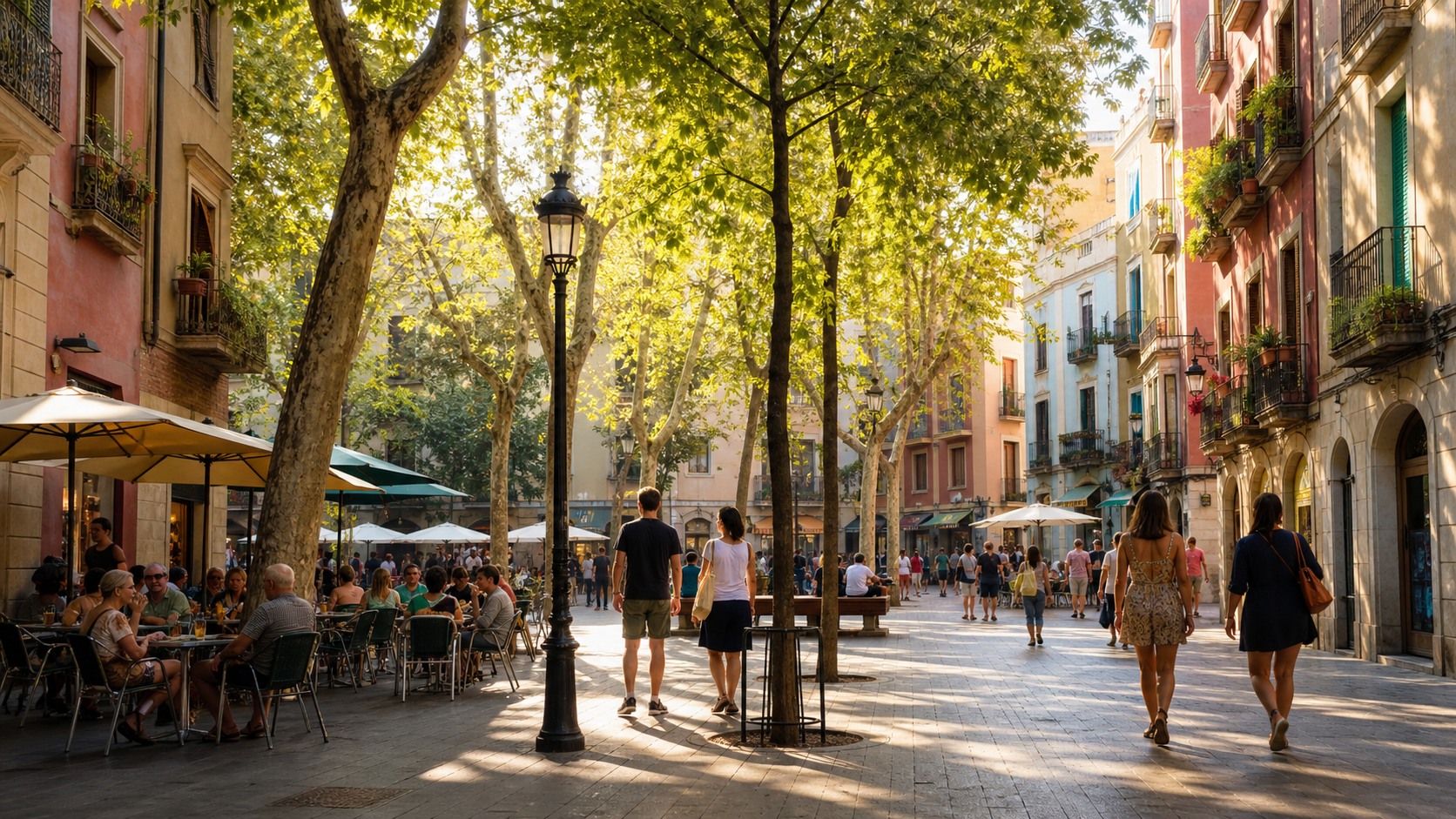
Gràcia was an independent town before Barcelona expanded around it, and its network of compact streets and squares still feels distinct. Plaça del Sol, Plaça de la Virreina and Plaça de la Vila de Gràcia fill with neighbours, children and evening conversations. Independent boutiques, bakeries and small restaurants outnumber major tourist attractions.
The district suits repeat visitors, longer stays and travellers who value local rhythm over being beside the cathedral. Park Güell lies uphill from central Gràcia, although the walk is steeper than many maps suggest. Metro stations on lines L3 and L4 connect the area to central sights.
Accommodation is generally smaller-scale, with apartments, guesthouses and boutique hotels. Verify that short-term rentals are legally licensed. Central squares can be surprisingly noisy at night, while streets toward the northern and western edges are calmer. Gràcia’s Festa Major in August brings spectacular decorations and crowds; book early if the festival is part of your plan.
Barceloneta: Best for Beach Access
Barceloneta occupies a triangular waterfront neighbourhood between the old port and the beach. Its narrow grid was built for fishing and maritime communities, and seafood restaurants, small bars and laundry-hung balconies still define many streets. The sand is minutes away, making early swims and sunset walks effortless.
This is the obvious choice for travellers who prioritise the sea, but it involves compromises. Summer brings crowds, beach noise and busy late-night streets. Apartments are often compact, and the nearest metro station can be farther from beachfront hotels than expected. The historic centre remains walkable, though Eixample and Gaudí sites require transport.
Choose Barceloneta for a warm-weather break that mixes sightseeing with beach time. For a quieter coast and newer accommodation, consider Bogatell or Poblenou instead. Never leave phones or bags unattended on the sand, even briefly.
Poblenou: Best for Space and a Quieter Beach
Poblenou blends industrial history, contemporary offices, residential blocks and wide beaches. Rambla del Poblenou provides a relaxed pedestrian spine lined with cafés and restaurants, while converted factories host design studios and cultural projects. Bogatell and Mar Bella beaches generally feel less compressed than Barceloneta.
Families and travellers staying for a week often appreciate the extra space and calmer evenings. Hotels around the 22@ business district can offer better room sizes, pools and modern facilities. The trade-off is distance: metro line L4 reaches the centre efficiently, but returning for an afternoon rest takes longer.
Check whether accommodation lies near the beach, Rambla del Poblenou or the more office-oriented western streets. The neighbourhood changes character block by block and some sections feel quiet after working hours.
Sant Antoni: Best for Food and a Local-Central Balance
Sant Antoni sits southwest of Eixample around its handsome restored market. The district has become known for brunch cafés, vermouth bars, bakeries and contemporary restaurants, yet it remains a functioning residential neighbourhood. Poble-sec, Raval and the city centre are all within reasonable walking distance.
It is a strong choice for food-focused visitors who want central convenience without sleeping in the oldest tourist zones. Metro lines L2 and L3 serve nearby stations, and the airport bus stops around Plaça d’Espanya and Gran Via. Sunday brings a specialist book and stamp market around Mercat de Sant Antoni.
The boundary with El Raval becomes busier and grittier, so inspect the exact street and recent reviews. Rooms overlooking major roads need good glazing. In return, Sant Antoni offers excellent access to both neighbourhood dining and central attractions.
Poble-sec: Best for Tapas and Montjuïc
Poble-sec lies beneath Montjuïc, with Carrer de Blai known for casual pintxo bars. The neighbourhood offers quick access to the hill’s museums, gardens, Olympic sites and viewpoints. Paral·lel metro station connects lines L2 and L3, making the centre easy to reach.
Prices can be more moderate than in the Gothic Quarter or Eixample. The area attracts theatre audiences and evening diners, and its steep upper streets feel increasingly residential. Carrer de Blai can be noisy, so choose accommodation a few blocks away if sleep matters.
Poble-sec suits budget-conscious couples, museum visitors and travellers attending events around Montjuïc. It is less convenient for daily beach trips or those who want polished surroundings immediately outside the hotel.
El Raval: Best for Edge and Cultural Variety
El Raval is central, diverse and complicated. The MACBA contemporary art museum, CCCB cultural centre, Filmoteca de Catalunya and La Boqueria sit within or along the district. South Asian, Middle Eastern, Filipino and other communities contribute restaurants and shops that broaden Barcelona’s food culture.
Street conditions vary sharply. Some blocks are energetic and welcoming; others can feel uncomfortable late at night, particularly for solo travellers unfamiliar with the city. Pickpocketing and opportunistic theft deserve caution, and bargain accommodation should be checked carefully for location, noise and security.
Experienced visitors may value Raval’s cultural mix and central position. First-time travellers seeking an easy, relaxed base will usually be happier in Eixample, Sant Antoni or El Born.
Sagrada Família and Fort Pienc: Best for Gaudí and Families
Staying near Sagrada Família allows you to see the basilica before and after the largest crowds. The surrounding streets are residential, practical and well connected by metro lines L2 and L5. Restaurants improve once you move several blocks from the monument.
Fort Pienc, closer to Arc de Triomf, offers parks, supermarkets and straightforward transport without heavy nightlife. Families often appreciate the wider pavements and everyday services. These areas lack the romance of the old city, but provide good value and predictable accommodation.
How to Choose Your Barcelona Base
For a first visit, choose Eixample if comfort and transport matter most, El Born for atmosphere and dining, or the Gothic Quarter for maximum historic immersion. Gràcia and Sant Antoni reward travellers who prefer neighbourhood life. Barceloneta and Poblenou suit beach priorities, while Poble-sec works well for Montjuïc and evening food.
Before booking, map the exact property, nearest metro entrance and walking route at night. Read recent comments about noise, construction, lifts and air conditioning. Barcelona’s blocks can change rapidly between a lively avenue and a quiet residential lane.
The best neighbourhood is ultimately the one that supports your daily rhythm. A convenient base leaves more energy for architecture, markets, beaches and long meals—and makes Barcelona feel like a city to inhabit rather than simply cross.
Comments