
Seville is built for memorable city breaks. Orange trees shade intimate plazas, horse-drawn carriages pass ornate façades, and flamenco rhythms emerge after dark. The Andalusian capital carries its history openly, from Roman fragments and Islamic courtyards to Gothic towers and buildings created for international exhibitions. Yet its greatest pleasure may be the rhythm of everyday life: a late lunch, an evening paseo and several tapas shared across different bars. This Seville travel guide covers the essential sights, neighbourhoods, food and practical planning for a rewarding first visit.
Why Visit Seville?
Seville combines world-famous monuments with streets that remain enjoyable between attractions. The cathedral, Giralda and Real Alcázar form an extraordinary historic core, while Santa Cruz offers shaded lanes and hidden courtyards. Across the river, Triana preserves strong ceramics and flamenco traditions. Plaza de España and María Luisa Park add spacious greenery and architectural theatre.
The Real Alcázar
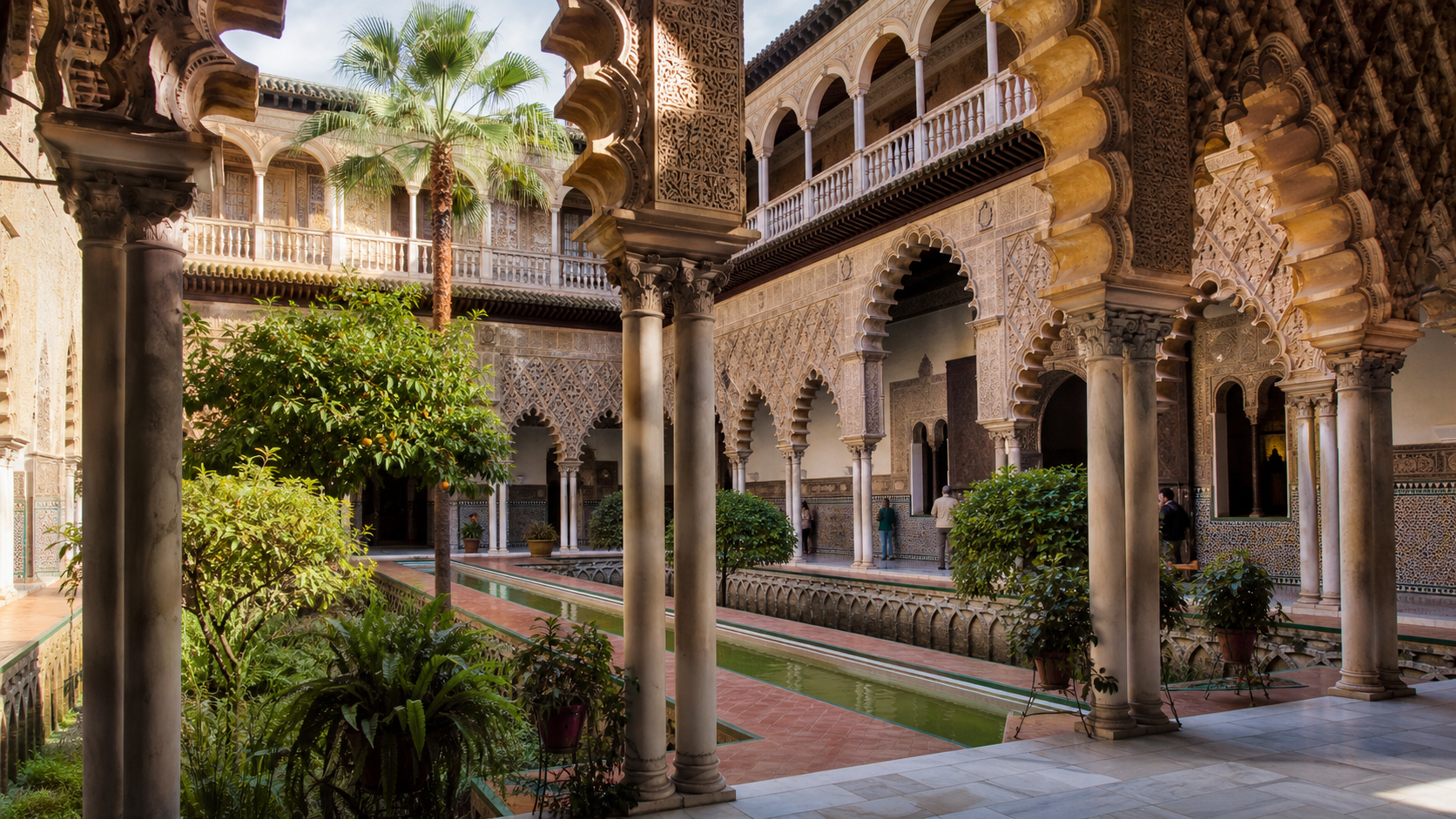
The Real Alcázar is Seville’s most captivating monument, a working royal palace shaped by successive cultures and rulers. Mudéjar halls feature carved plaster, patterned tiles and delicate arches, while later rooms introduce Gothic and Renaissance styles. Gardens extend through palms, fountains, pavilions and orange groves, rewarding visitors who do not rush after seeing the principal interiors.
Buy an official timed ticket ahead, particularly for weekends, spring and autumn. Opening arrangements vary by season, and identification may be checked against personalised tickets. Choose an early slot for cooler gardens and quieter rooms, then allow at least two hours. The Upper Royal Apartments may require a separate reservation. Avoid unofficial websites that imitate the monument’s ticket page or add unclear fees.
Inside, pause at the Courtyard of the Maidens and look closely at the craftsmanship rather than moving only between famous photo angles. The complex remains both historic and active, so occasional closures or altered routes are possible during official events.
Seville Cathedral and the Giralda
Beside the palace stands Seville Cathedral, one of the world’s largest Gothic churches. Its vast interior contains chapels, artworks, the monumental main altarpiece and the tomb traditionally identified with Christopher Columbus. The scale becomes clearest when you step away from the busiest central aisle and explore the quieter edges.
The Giralda began as the minaret of the mosque that previously occupied the site. A series of ramps rather than a conventional staircase leads toward the upper viewing level, where the rooftops, palace gardens and surrounding plains unfold below. The climb is steady but can feel crowded; early entry is again worthwhile. Dress respectfully and check worship-related access changes before visiting.
Santa Cruz and the Historic Centre
Santa Cruz, the former Jewish quarter, is a maze of whitewashed lanes, small squares and flower-filled balconies immediately east of the cathedral. Plaza de Doña Elvira and Plaza de Santa Cruz are attractive stops, but the pleasure lies in wandering without a rigid checklist. Go early or return after dinner when day visitors have left.
Continue toward Plaza del Salvador and the shopping streets around Sierpes and Tetuán. The Metropol Parasol, commonly called Las Setas, introduces bold contemporary design above Plaza de la Encarnación. Its elevated walkway provides broad city views, particularly around sunset. Below, the Antiquarium displays Roman remains discovered during construction.
Plaza de España and María Luisa Park
Plaza de España was created for the 1929 Ibero-American Exposition and is one of Seville’s most theatrical spaces. A sweeping semicircular building embraces a canal, bridges and tiled alcoves representing Spanish provinces. Visit early for softer light and more room to appreciate the ceramic details. Entry to the open plaza is normally free, though events can affect access.
Triana Across the Guadalquivir
Cross the Isabel II Bridge to Triana, a neighbourhood long associated with sailors, potters, bullfighters and flamenco. Mercado de Triana occupies the site of the former Castle of San Jorge and is useful for produce, snacks and a casual lunch. The ceramics centre nearby explains the craft that once defined local workshops.
Calle Betis lines the river with colourful buildings and bars facing the historic skyline. Walk here around golden hour, then explore streets around Calle San Jacinto and Calle Pureza. Triana is not an open-air museum; it is a residential area, so move respectfully and choose businesses serving local customers as well as visitors.
For a flamenco performance, research smaller venues and established tablaos rather than accepting the first street offer. Quality varies, but an intimate setting with skilled singers, guitarists and dancers can become a highlight of the trip. Book ahead during busy periods.
El Arenal, the River and Torre del Oro
El Arenal lies between the cathedral and the Guadalquivir. The district historically connected Seville with Atlantic trade and today contains tapas bars, theatres and the bullring. Even travellers uninterested in bullfighting may appreciate the architecture and the neighbourhood’s role in local history.
Torre del Oro, a medieval riverside watchtower, houses a small maritime museum and offers a compact viewpoint. From here, walk along the river toward San Telmo Palace or the Isabel II Bridge.
Alameda, Macarena and Local Neighbourhoods
North of the centre, Alameda de Hércules is a broad plaza surrounded by cafés, bars and creative businesses. It becomes especially lively at night and suits visitors seeking a less formal evening. Nearby streets mix traditional homes with contemporary studios and restaurants.
Continue toward Macarena for sections of the old city walls and the Basilica de la Macarena, home to an image central to Holy Week traditions. Dress modestly and behave quietly.
What to Eat in Seville
Tapas are not one particular food but a way of eating. Order one or two small dishes, then move to another bar if the evening invites it. Traditional choices include espinacas con garbanzos, spinach with chickpeas; salmorejo, a thick chilled tomato soup; carrillada, slow-cooked pork cheek; and solomillo al whisky, pork in a garlicky whisky sauce. Fried fish, grilled cuttlefish and salt cod also appear frequently.
Jamón ibérico is best ordered by the plate, while montaditos provide inexpensive small sandwiches. In warm weather, try gazpacho and seasonal tomatoes. For sweets, look for torrijas around Easter, convent pastries and tortas de aceite. Breakfast may be toast with tomato and olive oil alongside coffee.
Sevillanos eat later than visitors from many countries. Lunch commonly begins after 2 p.m., and dinner often starts after 9 p.m. Busy traditional bars may involve standing and ordering assertively but politely. Check the bill, tip modestly for good service and avoid expecting every venue to accept reservations.
Flamenco, Festivals and Nightlife
Flamenco developed through multiple Andalusian communities, and Seville remains one of its important centres. A serious performance focuses as much on singing and guitar as dancing. Tablaos offer dependable scheduled shows, while peñas can feel more local but may be less predictable for short visits.
Best Time to Visit
March to May brings mild-to-warm weather, orange blossom and major festivals, along with high demand. October and early November are excellent for comfortable sightseeing and outdoor dining. Winter is generally mild, quieter and well suited to monuments, though evenings can be cool and rain is possible.
July and August can be intensely hot, with afternoon temperatures sometimes making prolonged walking unsafe. If visiting then, sightsee early, rest indoors after lunch and return outside in the evening. Carry water, use sun protection and choose accommodation with reliable air conditioning. Heat should shape the itinerary rather than be treated as a minor inconvenience.
Getting Around Seville
The historic centre is walkable and many streets restrict cars. Buses, a tram and a limited metro network serve longer journeys, while public bicycles are useful on flatter routes. From Seville Airport, the EA airport bus connects with central stops and major transport hubs; taxis use regulated arrangements that may vary by date or time. Verify current fares on official sources.
Santa Justa station receives high-speed and regional trains and sits east of the centre. Local buses and taxis complete the journey to most hotels. A rental car is unnecessary unless Seville begins a road trip through rural Andalusia.
Where to Stay
Santa Cruz provides immediate access to the cathedral and Alcázar, but some lanes are noisy or difficult for vehicles. El Arenal is central, convenient for the river and rich in dining. Around Alameda, accommodation suits travellers interested in nightlife and independent restaurants.
Triana offers neighbourhood atmosphere and memorable views across the river, while the area near Plaza de España feels greener and calmer. Check walking time in the heat, not only distance on a map. Historic buildings may lack lifts or have small rooms, so confirm accessibility and air conditioning before booking.
A Three-Day Seville Itinerary
On day one, visit the Real Alcázar early, wander Santa Cruz and explore the cathedral and Giralda later. Finish with tapas in El Arenal. On day two, start at Plaza de España and walk through María Luisa Park. Follow the river to Torre del Oro, cross into Triana for its market and ceramics, then attend a flamenco performance.
On day three, visit Las Setas and the Antiquarium, browse the central shopping streets and continue to Alameda and Macarena. Return through local plazas for a final tapas evening. With another day, add the Museum of Fine Arts, contemporary art at Cartuja or a train excursion to Córdoba.
Practical Tips
Reserve the Alcázar, cathedral and preferred flamenco show before arrival. Organise summer days around heat, carry water and seek shade rather than forcing a midday schedule. Wear shoes that handle stone streets, keep valuables secure in crowds and respect worshippers inside churches.
Most importantly, follow Seville’s pace. Sit in a plaza, try a new dish and walk again when the evening cools. Its sociable street life turns a checklist into a genuine journey.
Comments