
Barcelona’s icons deserve their fame, but the city becomes more personal beyond the busiest routes. Roman fragments hide inside courtyards, gardens occupy former quarries and hilltop paths reveal views without a ticket queue. “Hidden” is relative: residents may know these places well, and several are protected spaces rather than secret photo sets.
This guide presents twenty rewarding alternatives to the standard checklist. Opening hours and access can change, especially at religious, academic and civic sites. Verify details, keep voices low in residential areas and never enter private property simply because a door is open.
1. Temple of Augustus
Four Roman columns stand inside a small courtyard in the Gothic Quarter, marking part of ancient Barcino’s principal temple. The scale is startling because the surrounding medieval fabric conceals them almost completely. Entry is usually free. Visit quietly, avoid peak walking-tour hours and explore nearby Roman wall fragments afterward.
2. Plaça de Sant Felip Neri
This enclosed square holds a Baroque church, a fountain and walls scarred by Civil War bombing. Its beauty and painful history should be understood together. Come early, read the interpretation and remember that a school uses the square. It is a memorial landscape, not merely a picturesque backdrop.
3. MUHBA Refugi 307
Refugi 307 is an air-raid shelter excavated beneath Montjuïc during the Spanish Civil War. Guided visits reveal narrow tunnels, basic facilities and the civilian experience of aerial bombardment. Tours are limited and often require advance reservation. Combine it with Poble-sec rather than expecting a casual walk-in attraction.
4. Jardins de Mossèn Costa i Llobera
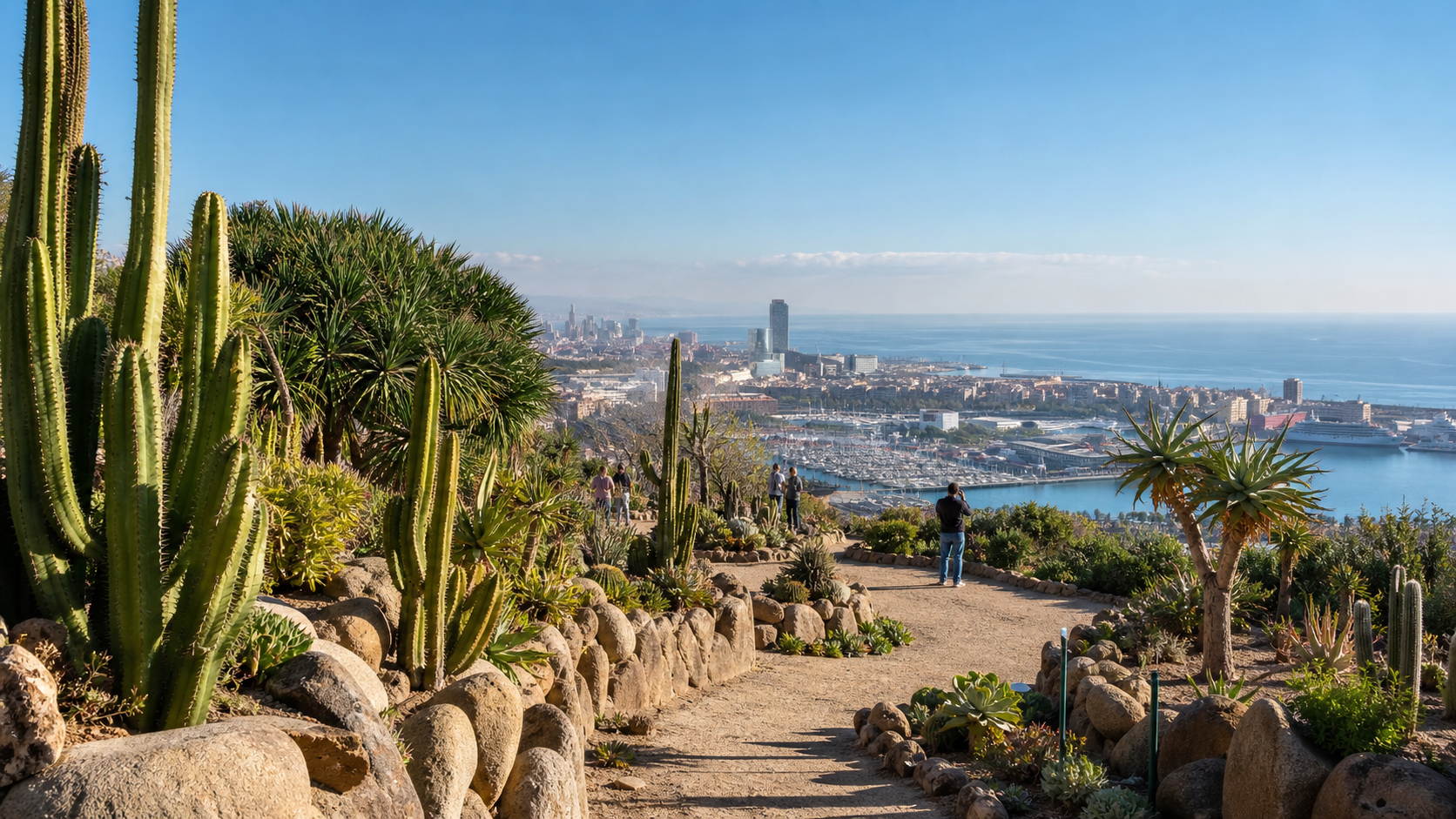
On Montjuïc’s sunny slope, this garden specialises in cacti and succulents from dry climates. Sculptural plants frame views toward the port, and the atmosphere differs completely from Barcelona’s formal parks. Paths can be steep and exposed; bring water, avoid midday summer heat and check entrances during maintenance.
5. Barcelona’s Botanical Garden
The Jardí Botànic de Barcelona organises landscapes from Mediterranean-climate regions around the world. Its spacious paths and contemporary design provide relief from crowded central sights. It lies on Montjuïc near Olympic facilities, so combine it with MNAC or the stadium area. Seasonal flowering changes the experience substantially.
6. Monastery of Pedralbes
The Reial Monestir de Santa Maria de Pedralbes preserves a serene Gothic cloister, monastic rooms and religious art in Barcelona’s upper districts. Its distance from the centre keeps visitor numbers moderate. Allow time for the cloister and herb garden, dress respectfully and confirm transport and weekly closure before travelling.
7. Parc del Laberint d’Horta
Barcelona’s oldest preserved garden includes a clipped-cypress maze, Neoclassical pavilions, ponds and wooded Romantic sections. Admission may be controlled to protect the site, and opening arrangements vary. The maze is playful, but historic sculptures and planting deserve equal attention. Reach it by metro plus a short uphill walk.
8. Turó de la Rovira
Often called the Bunkers del Carmel, this hilltop preserves anti-aircraft positions and later traces of informal housing. The panorama is exceptional, but popularity has created noise, litter and pressure on neighbours. Access regulations have changed, so check current hours. Visit in daylight, bring rubbish down and avoid parties.
9. Casa de les Punxes Exterior
This striking Modernista block by Josep Puig i Cadafalch resembles a medieval castle with pointed towers. Even when interiors are unavailable, a walk around the exterior reveals brickwork, ceramic panels and sculptural detail. Pair it with nearby Passeig de Sant Joan and compare its style with Gaudí’s more organic architecture.
10. Hospital de Sant Pau
The Recinte Modernista de Sant Pau is hardly unknown, yet many visitors see only its entrance after Sagrada Família. A full visit explores Domènech i Montaner’s pavilions, gardens and underground connections. The complex demonstrates that Barcelona’s Modernisme extends far beyond Gaudí. Book ahead during busy periods.
11. Casa Vicens
Gaudí’s early Casa Vicens in Gràcia combines geometric tiles, vivid colour and influences distinct from his mature work. It generally feels calmer than Casa Batlló or La Pedrera. The compact interior needs about an hour. Continue into Gràcia’s squares rather than returning immediately to the central avenues.
12. Palau Güell
Just off La Rambla, Palau Güell hides a dramatic central hall, former stables and a rooftop of colourful chimneys behind a relatively severe facade. Its vertical organisation reflects the constraints of the old city. Visitor numbers are limited, so reserve a slot and confirm closure days.
13. Santa Maria del Mar Rooftops
Many visitors enter the basilica and leave without considering its upper levels. When rooftop tours operate, they provide close views of Catalan Gothic construction and the dense roofs of El Born. Access involves stairs and scheduled guidance. The church remains active, so sightseeing arrangements yield to worship and events.
14. Biblioteca de Catalunya Courtyard
The former Hospital de la Santa Creu now houses the Library of Catalonia around a Gothic courtyard in El Raval. Public circulation areas reveal stone arcades and orange trees, but reading rooms have access rules. Enter respectfully, check exhibitions and do not disrupt library users. Nearby streets reward careful daytime exploration.
15. Antic Teatre Terrace
Behind an unassuming doorway near Palau de la Música, a leafy courtyard bar serves an independent performance venue. It offers an atmospheric pause rather than a formal attraction. Events, capacity and neighbourhood concerns affect opening. Buy something, respect staff and residents, and never assume social-media popularity guarantees a seat.
16. Plaça de la Concòrdia
In Les Corts, Plaça de la Concòrdia preserves a village-like centre with local cafés, a church and low-rise buildings. It shows how former settlements remain legible within modern Barcelona. Combine the square with nearby Modernista Can Deu or a walk through residential streets. Evenings are livelier than mornings.
17. Poblenou Cemetery
Cementiri del Poblenou contains elaborate nineteenth-century sculpture, family mausoleums and the celebrated “Kiss of Death” monument. It is a functioning cemetery and demands restraint. Follow designated routes, avoid photographing mourners and consult current opening hours. Interpretation helps connect funerary art with Barcelona’s industrial bourgeoisie.
18. Can Framis Museum
This contemporary Catalan art museum occupies converted industrial buildings in Poblenou, joined by restrained modern architecture and a quiet courtyard. Its collection offers context beyond the famous historical museums. Opening days can be limited. Combine it with a walk through the 22@ district and Rambla del Poblenou.
19. Besòs River Park
The restored banks of the Besòs provide long paths for walking and cycling on Barcelona’s northeastern edge. The landscape is metropolitan rather than monumental, showing environmental recovery beside dense neighbourhoods. Access rules respond to weather and river conditions, so obey closures. It suits active repeat visitors more than short first trips.
20. Collserola and Carretera de les Aigües
Behind the city, Collserola Natural Park offers forest trails and broad Mediterranean views. Carretera de les Aigües is a relatively level route popular with walkers and runners. Transport, heat and sunset timing require planning. Carry water, use marked paths and do not treat the park as an unprepared urban stroll.
Building a Hidden Barcelona Day
Do not attempt all twenty places. For a historic route, combine the Temple of Augustus, Sant Felip Neri, Palau Güell and the library courtyard. A Modernisme route can connect Sant Pau, Casa de les Punxes and Casa Vicens before ending in Gràcia.
For green space, choose the Horta labyrinth or Pedralbes in the morning and Montjuïc gardens later. Poblenou Cemetery and Can Framis form a thoughtful eastern route, followed by the beach or neighbourhood restaurants.
Responsible Exploration
The popularity of “secret” locations can harm the qualities that make them appealing. Avoid geotag-driven trespassing, amplified music and posed photography in doorways. Keep group sizes small and spend money at local businesses without blocking daily activity.
Check official sources for hours and reservations. Some sites close at lunchtime or on Mondays, while gardens may shut during severe weather. Carry a transit pass because several locations lie beyond the old city.
Hidden Barcelona is not about collecting places other tourists failed to find. It is about noticing the city’s deeper layers and moving with care. Choose a few sites that match your interests, give them time and let neighbourhood streets connect the discoveries.
Early mornings and ordinary weekdays usually provide the quietest experience. Stay curious, read local interpretation and accept that some doors will be closed.
Build flexibility into the route because small museums and gardens sometimes alter access for maintenance, ceremonies or local events. A closed site need not waste the journey: nearby markets, libraries, cafés and public squares often reveal just as much about everyday Barcelona. Travel outside rush hour when possible, validate the correct ticket and keep water with you for hill districts. Most importantly, let curiosity guide the walk without turning residential life into a spectacle.
Comments