
Istanbul is a city of water, hills and overlapping civilizations. Once known as Byzantium and Constantinople, it served as the capital of empires and still feels like a meeting point between continents. Ferries cross the Bosphorus beneath wheeling gulls, mosque domes rise above busy streets, and neighborhood bakeries sit a short walk from palaces filled with imperial treasures.
A first visit is intensely rewarding but requires a little planning. Istanbul is enormous, traffic can be slow, and the most famous sights attract long lines. Organize each day by district, use ferries and rail whenever possible, and leave time for tea, markets and aimless walks. Four days provide a strong introduction; five or six allow you to explore both the European and Asian sides at a comfortable pace.
Why Visit Istanbul?
Few cities offer such visible layers of history. Roman engineering, Byzantine mosaics, Ottoman mosques and contemporary art exist within the same urban landscape. The historic peninsula contains globally important monuments, yet Istanbul is more than an open-air museum. It is a living metropolis with energetic food markets, inventive restaurants, football culture, nightlife and deeply rooted neighborhood traditions.
Sultanahmet and the Historic Peninsula
Most first-time visitors begin in Sultanahmet, where several essential landmarks stand within walking distance. Hagia Sophia has served different religious and civic roles across nearly fifteen centuries. Today it is an active mosque and a major visitor site, so dress respectfully, expect access arrangements to change around prayer times, and check current official information before arrival.
Directly across the square, the Blue Mosque is known for its six minarets and luminous interior tiles. Entry is free outside prayer periods, but queues can be significant. The nearby Basilica Cistern reveals another side of imperial Constantinople: a vast underground reservoir supported by hundreds of columns. Its atmospheric lighting makes it memorable, though advance tickets can reduce waiting time.
Topkapı Palace deserves at least half a day. The complex served as the administrative and residential center of the Ottoman court, and its courtyards, treasury, tiled chambers and Bosphorus views reveal both ceremonial grandeur and daily palace life. The Harem usually requires a separate ticket but adds valuable context. Arrive near opening time before tour groups fill the most popular rooms.
Allow time simply to walk. The Hippodrome preserves reminders of the city’s Roman past, while Gülhane Park provides greenery below the palace walls. The Istanbul Archaeological Museums sit nearby and reward travelers who want a deeper understanding of the civilizations represented across the city.
The Grand Bazaar, Spice Bazaar and Eminönü
The Grand Bazaar is not a single shopping hall but a maze of covered lanes, courtyards and thousands of businesses. Its historic core dates to the Ottoman period, and visiting early gives you space to admire painted ceilings and arched passages before the busiest hours. Compare quality and prices, negotiate politely, and never feel pressured to buy. Fixed-price shops outside the most tourist-oriented lanes can provide useful comparisons.
Walk downhill through streets filled with textiles, household goods and local shoppers toward the Spice Bazaar. The compact covered market specializes in spices, sweets, tea, dried fruit and gifts, although many similar businesses extend into the surrounding streets. Sampling is common, but confirm prices and quantities before a seller begins packing an order.
Eminönü is chaotic, practical and unmistakably Istanbul. Ferries depart beside the Galata Bridge, anglers line the railings, and fast-moving crowds connect markets with transport. Try a fish sandwich, grilled corn, roasted chestnuts or simit, the sesame-coated bread ring sold across the city. For a calmer view, enter the courtyard of the New Mosque or continue uphill to the Süleymaniye Mosque, one of the finest works associated with architect Mimar Sinan.
Beyoğlu, Galata and Karaköy
Across the Golden Horn, the districts around Galata and Beyoğlu reveal Istanbul’s cosmopolitan nineteenth-century heritage and modern cultural life. Galata Tower provides a famous panorama, but timed entry and crowds can make the experience feel rushed. Excellent views also appear from rooftop terraces and steep streets around the neighborhood.
Walk from the tower toward İstiklal Avenue, a long pedestrian street lined with shops, passages, churches and historic buildings. The main avenue is busy at almost every hour, so explore side streets around Asmalımescit, Çukurcuma and Cihangir for cafes, antique shops and a more relaxed pace. Taksim Square anchors the northern end and connects to the metro.
Karaköy has evolved from a port and commercial district into a center for restaurants, design businesses and nightlife. Its waterfront location makes it convenient for ferries and trams. Visit the Istanbul Modern art museum, wander toward the Galataport promenade, or cross the Galata Bridge on foot for broad views of the old city.
Balat, Fener and the Golden Horn
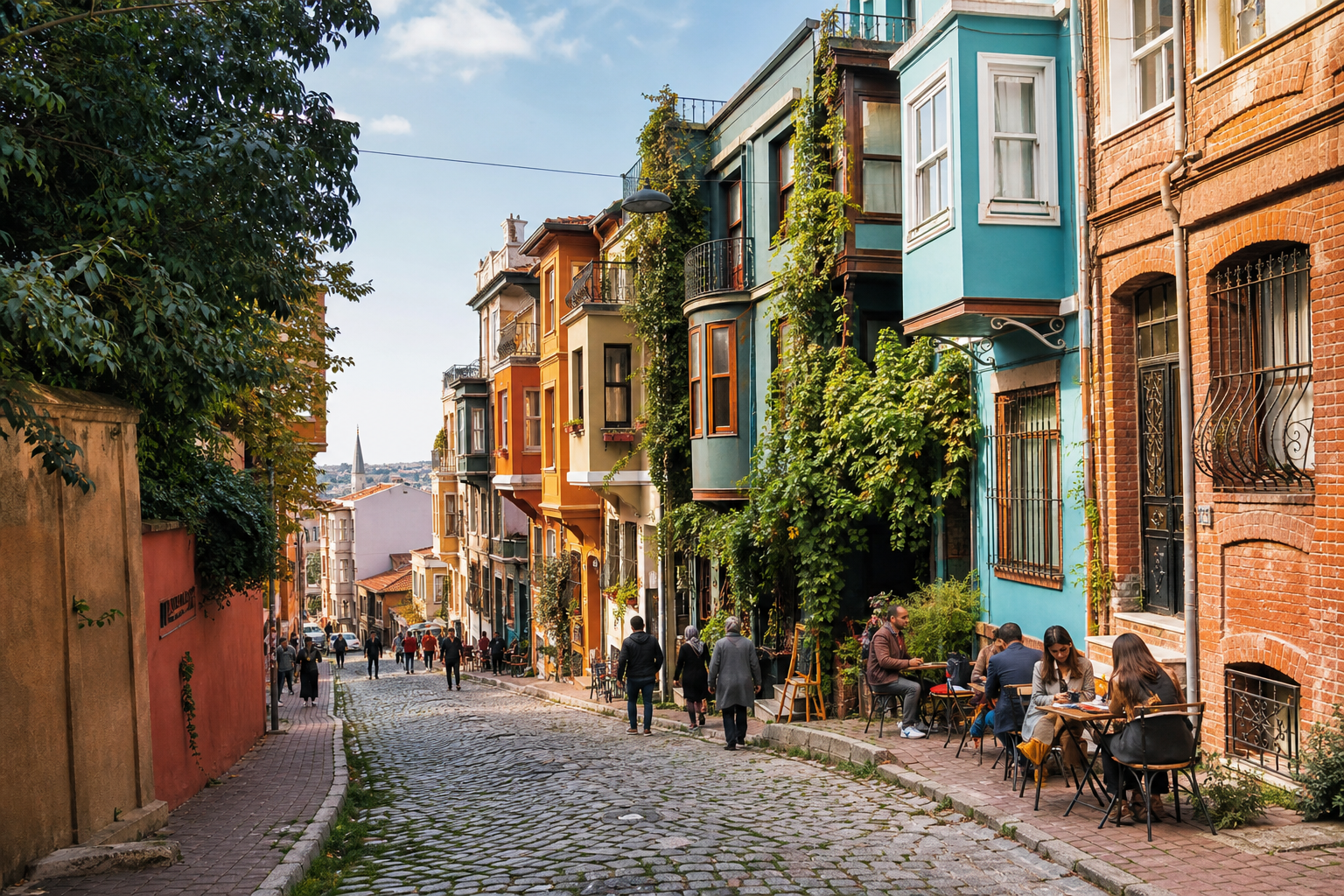
Balat and neighboring Fener are known for steep lanes, colorful facades and a complex multicultural history. Greek Orthodox, Jewish and Muslim heritage can be traced through churches, synagogues, mosques and schools. The neighborhoods are residential rather than staged attractions, so photograph thoughtfully and avoid blocking doorways or treating private homes as sets.
Highlights include the striking red-brick Fener Greek High School, the Bulgarian St Stephen Church beside the Golden Horn and streets of traditional bay-window houses. Cafes and small creative businesses have multiplied, but ordinary workshops and family shops remain part of the area’s character. Combine Balat with a walk along the waterfront or a ferry journey rather than rushing through for a few photographs.
Cross to the Asian Side
The simple act of taking a public ferry is one of Istanbul’s best experiences. Routes from Eminönü, Karaköy or Beşiktaş to Kadıköy offer skyline views for the price of local transport. Sit outside if the weather allows and watch palaces, mosques and neighborhoods shift across the horizon.
Kadıköy has a lively produce and food market, busy shopping streets and a strong cafe and restaurant scene. Continue by tram or on foot toward Moda for waterfront parks and a slower residential atmosphere. Üsküdar, farther north, offers classic views back toward the historic peninsula and the Maiden’s Tower. Sunset is especially beautiful, but arrive early if you want a waterfront seat.
Food You Should Try
Turkish breakfast can be an event: bread, cheese, olives, tomatoes, eggs, preserves and tea arrive as a table of shared dishes. Choose a neighborhood cafe rather than assuming the largest spread is the best. At lunch, look for lokanta-style restaurants serving prepared vegetable dishes, soups and slow-cooked meats.
Street foods include simit, roasted chestnuts, stuffed mussels, dürüm wraps and balık ekmek. Try lahmacun, pide and different styles of kebab, but leave room for regional dishes from across Türkiye. Desserts extend beyond baklava to sütlaç rice pudding, künefe and lokum. Turkish coffee is strong and unfiltered; tea is the everyday drink and appears in small tulip-shaped glasses.
A Bosphorus Journey
A Bosphorus cruise shows why geography has shaped Istanbul’s history. Public ferries provide the most authentic experience, while shorter tour boats offer narrated loops and convenient schedules. Longer routes travel toward villages near the Black Sea and can occupy much of a day.
Getting Around Istanbul
The city’s transport network includes metro, tram, Marmaray rail, buses, funiculars and ferries. The T1 tram is useful for Sultanahmet, Eminönü and Karaköy, while Marmaray passes beneath the Bosphorus between continents. Metro lines are valuable for longer distances and airport connections.
Istanbulkart is a rechargeable payment card accepted across public transport. Contactless bank-card payment and visitor passes may also be available, but fees and conditions can change. Use official machines, keep enough balance for transfers and check the current transport guidance. Taxis can be useful with luggage, though congestion and route disputes make rail or ferries preferable when practical.
Best Time to Visit
April to May and September to October usually provide the best balance of comfortable weather and outdoor sightseeing. Spring brings flowers and longer days; autumn often remains warm without midsummer intensity. June through August can be hot, humid and crowded, although long evenings suit Bosphorus trips and rooftop dining.
Winter is cooler, wetter and occasionally snowy, but hotel value can improve and major attractions may be less crowded. Religious holidays can affect opening hours and the daily rhythm. Ramadan creates atmospheric evenings, while some businesses may adjust schedules, so confirm details close to your trip.
Where to Stay
Sultanahmet is convenient for early access to historic sights but becomes quieter at night. Sirkeci offers similar convenience with stronger transport links. Karaköy and Galata balance restaurants, ferries and nightlife, although steep streets and evening noise vary by location. Cihangir feels more residential while remaining close to Beyoğlu.
Kadıköy is excellent for food, local atmosphere and Asian-side exploration, but reaching early morning sights in Sultanahmet takes longer. Beşiktaş suits Bosphorus access and lively everyday city life. Wherever you stay, prioritize a short walk to reliable rail or ferry transport.
A Suggested Four-Day Itinerary
Spend day one in Sultanahmet at Hagia Sophia, the Blue Mosque, Basilica Cistern and nearby streets. On day two, visit Topkapı Palace, then continue through Gülhane Park to the bazaars and Süleymaniye Mosque. End with sunset near the Galata Bridge.
On day three, explore Karaköy, Galata and Beyoğlu before taking an evening ferry. Use day four for Balat and Fener, followed by Kadıköy and Moda on the Asian side. Add a full Bosphorus journey or Dolmabahçe Palace if you have a fifth day.
Istanbul cannot be reduced to monuments alone. Its defining moments often happen between planned stops: tea offered by a shopkeeper, the call to prayer moving across the water, a ferry deck at sunset or a meal discovered on a side street. Plan the essentials carefully, then give the city enough time to reveal its everyday life.
Comments