
Palma de Mallorca is far more than an arrival point for the beaches of Mallorca. The Balearic capital combines a monumental Gothic cathedral, one of the Mediterranean’s most atmospheric old towns, energetic food markets and a broad waterfront. It works equally well as a cultural city break or as the urban base for a longer island holiday.
Three days cover Palma’s principal sights at a comfortable pace. Four or five allow time for museums, beaches and an excursion by historic train or public bus. The center is compact, but summer heat and crowded streets reward early starts. Reserve the cathedral and major museums when necessary, then leave room to wander through courtyards and neighborhood markets.
Why Visit Palma de Mallorca?
Palma offers an unusual blend of city culture and easy access to the sea. La Seu cathedral dominates the skyline, medieval lanes preserve traces of Christian, Jewish and Islamic history, and Modernisme façades reveal links with Barcelona’s architectural movement. Contemporary galleries and converted fortifications add another layer.
The city’s everyday appeal is just as strong. Bakers sell ensaïmadas, market counters display local seafood, and residents gather in shaded squares after the heat subsides. Beaches begin close to the historic center, while the Serra de Tramuntana and picturesque towns lie within day-trip distance. Palma can therefore suit travelers who want architecture, food and swimming without changing hotels.
Palma Cathedral and Parc de la Mar
The Cathedral of Santa Maria, commonly called La Seu, is Palma’s defining monument. Its vast sandstone exterior rises above the former city walls and reflects in the lake at Parc de la Mar. Inside, slender columns support a lofty nave illuminated by an enormous rose window. Later interventions by Antoni Gaudí and contemporary artist Miquel Barceló make the building especially rewarding for visitors interested in evolving sacred architecture.
Check the official cathedral website for current opening times, worship schedules and ticket options. Tourist visits may pause during services, and rooftop or terrace access can be seasonal. Modest clothing and quiet behavior are appropriate. Arriving near opening time generally provides the calmest interior and cooler conditions.
Walk around Parc de la Mar before or after the visit for the classic view. The waterfront side reveals the cathedral’s powerful setting, while the streets behind it lead directly into the upper old town. Sunset is beautiful, but morning light often offers a clearer view and fewer large groups.
Royal Palace of La Almudaina
Beside the cathedral stands the Royal Palace of La Almudaina, a fortified residence whose history reflects Mallorca’s changing rulers. Its present form combines Islamic foundations with Gothic royal architecture. Stone halls, tapestries, courtyards and views toward the bay help explain Palma’s strategic importance.
Exploring Palma’s Old Town
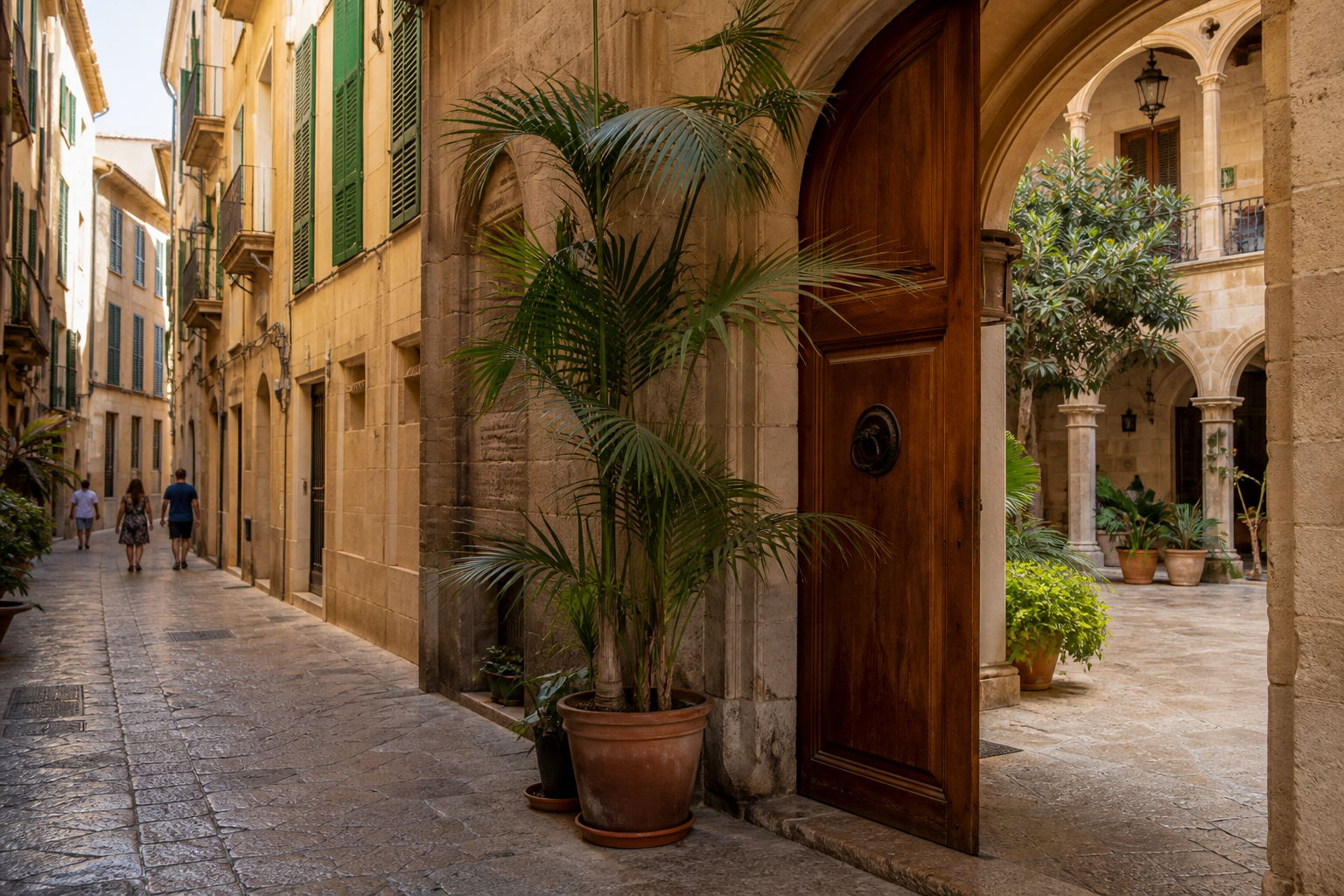
Palma Alta, the upper old town, contains some of the city’s quietest and most historic streets. Wander behind the cathedral through Carrer de la Portella and the former Jewish quarter, known as the Call. The route passes noble houses, small museums, churches and glimpses of private patios. Open doorways sometimes reveal elegant stone courtyards, but remember that many remain residential.
The Banys Àrabs, or Arab Baths, preserve a rare fragment of Palma’s Islamic-era architecture. Their compact domed chamber and peaceful garden make a worthwhile short stop. Nearby, the Museum of Mallorca occupies a historic mansion and provides context for the island’s archaeology and art.
Lower Palma becomes busier around Plaça Major, Passeig del Born and the shopping streets. Look for Modernisme buildings such as Can Forteza Rey and the colorful façade of El Águila. The architecture rewards looking above storefront level, where ceramics, ironwork and carved details are easiest to appreciate.
La Lonja and Es Baluard
La Lonja is a masterpiece of Mallorcan Gothic civic architecture. Built for the merchants’ guild, its interior resembles a stone palm grove as spiral columns rise into the vaulted ceiling. Access and exhibition arrangements vary, but the exterior alone makes the waterfront district worth exploring.
Continue west to Es Baluard Museum of Modern and Contemporary Art. The museum integrates galleries into Renaissance fortifications, creating terraces with views across rooftops, harbor and cathedral. Its collection connects Balearic artists with broader Spanish and international movements. Even travelers with limited museum time can enjoy the architecture and ramparts.
Santa Catalina and Palma’s Markets
Santa Catalina developed beyond the old walls and has become one of Palma’s most popular dining areas. Low-rise streets surround Mercat de Santa Catalina, the city’s oldest market hall. Visit in the morning when fish, produce and specialty counters are active, then stay for a simple breakfast or early lunch.
Mercat de l’Olivar, near Plaça d’Espanya, is larger and more central. It combines fresh produce, meat, seafood and prepared-food counters. Markets are working spaces rather than free tasting rooms: ask before photographing vendors, order clearly and avoid blocking aisles during busy hours.
Bellver Castle
Bellver Castle crowns a wooded hill west of the center. Its circular Gothic plan is unusual, and the central courtyard, towers and arcades create a memorable architectural experience. The city history displays are useful, but the panoramic view over Palma, harbor and surrounding hills is the primary attraction for many visitors.
Reaching the castle involves a substantial uphill walk, public bus plus walking, taxi or sightseeing bus. Check the municipal site for the current route and opening schedule. Bring water in warm weather and allow time for the pine-covered paths surrounding the monument.
Beaches and the Waterfront
Can Pere Antoni is the nearest practical urban beach, reached by walking or cycling east along the promenade. It provides sand, sea views and a striking perspective back toward the cathedral. Farther east, Ciutat Jardí and the long Playa de Palma offer more beach facilities and greater space.
Palma’s urban beaches are convenient, but they are not the island’s most secluded coves. Watch belongings, follow swimming flags and use reef-safe sun protection. In high summer, arrive early or late to avoid the strongest sun. Public buses connect the city with additional coastal areas, though journey times increase with traffic.
Mallorcan Food to Try
Mallorcan cuisine draws on pork, vegetables, olive oil, almonds and Mediterranean seafood. Begin with pa amb oli, bread dressed with tomato and oil and accompanied by cheese, cured meat or vegetables. Tumbet layers fried potato, aubergine and pepper with tomato, while frito mallorquín is a deeply savory preparation with several traditional variations.
Sobrassada, a soft paprika-seasoned sausage, appears on bread and in cooked dishes. Coca de trampó combines flatbread with a fresh vegetable topping. For something sweet, try an ensaïmada, the spiral pastry associated with the island, or almond-based gató served with ice cream.
Getting Around Palma
Most old-town sights are within walking distance, although stone paving and slopes can be tiring. EMT operates Palma’s city buses, including useful routes toward the beaches, port and airport. Check official information for fares and payment rules, as airport services may have different conditions from ordinary urban routes.
Plaça d’Espanya is the main interchange for city and regional travel. From the nearby transport hub, buses connect Palma with towns and beaches across Mallorca. The historic wooden train to Sóller departs from its own station close by; it is a scenic experience rather than the fastest route and can sell out in popular periods.
Best Time to Visit
April to June and September to October offer warm weather well suited to walking and outdoor dining. Sea temperatures are usually more inviting later in this range. July and August are hot, crowded and expensive; organize cathedral and old-town visits early, then rest or swim during the afternoon.
Winter is mild and quieter, though rain, wind and reduced hours are possible. Palma remains a functioning year-round city, making it a better off-season choice than purely seasonal resorts. Easter processions, summer festivals and major sporting events can alter availability and street access.
Where to Stay
The old town provides atmosphere and easy walking access, but historic buildings may have small rooms, steps and limited vehicle access. La Lonja is central for restaurants and nightlife. Santa Catalina suits food-focused travelers, provided they choose a quieter side street.
The area around Plaça d’Espanya is practical for regional transport, while Portixol and El Molinar offer a more residential waterfront setting east of the center. Playa de Palma works for travelers prioritizing the beach over historic ambience. Verify legal registration, air conditioning and recent noise reviews before booking.
A Suggested Three-Day Itinerary
Spend day one at La Seu, La Almudaina and Parc de la Mar, then wander through Palma Alta, the Arab Baths and lower old-town streets. On day two, visit La Lonja and Es Baluard before lunch at Santa Catalina Market; continue along the waterfront or relax at Can Pere Antoni.
Use day three for Bellver Castle, Mercat de l’Olivar and any missed galleries or Modernisme buildings. With an extra day, take the train to Sóller, explore another Mallorcan town or devote more time to the coast.
Palma succeeds because it never feels like only a gateway. Its cathedral and palace provide grandeur, while markets, courtyards and nearby beaches make the city easy to enjoy at a human pace. Plan the headline visits, respect residential streets and allow the island’s food and light to shape the rest of your stay.
Comments