
Rome is a city where daily life unfolds beside nearly three thousand years of visible history. Imperial ruins rise between busy roads, Renaissance fountains animate elegant squares, and neighborhood trattorias continue traditions that feel inseparable from the city itself. The scale can be overwhelming, but a carefully planned visit reveals a remarkably walkable collection of distinct districts.
Four days provide a strong introduction, while five or six allow time for museums, parks and slower meals. Book the Colosseum and Vatican Museums well ahead, group sights by neighborhood and avoid trying to cross the historic center repeatedly. Rome rewards preparation, yet its most memorable moments often arrive while wandering between reservations.
Why Visit Rome?
Rome offers an extraordinary concentration of archaeology, art and architecture. The Colosseum, Roman Forum and Pantheon tell different chapters of the ancient city. St Peter’s Basilica, the Vatican Museums and countless churches hold works by Michelangelo, Raphael, Caravaggio and Bernini. Baroque piazzas then transform this history into theatrical public space.
The city is equally compelling at street level. Espresso is taken quickly at a counter, markets open early, fountains provide drinking water and evening promenades fill cobbled lanes. Neighborhoods such as Testaccio, Monti and Trastevere add character beyond the monuments. The best trip balances famous landmarks with ordinary Roman rhythms.
Colosseum, Roman Forum and Palatine Hill
The Colosseum Archaeological Park is Rome’s essential ancient site. The amphitheater remains impressive for both its scale and its sophisticated movement of spectators through entrances, corridors and seating levels. Standard admission options generally connect it with the Roman Forum and Palatine Hill, although access areas and ticket conditions vary by product.
Buy through the official ticketing channel and read the entry rules carefully. Tickets are timed, names may be checked, and some underground or arena experiences require specific reservations. Arrive early with identification and minimal luggage. Unauthorized sellers around the monument can be persistent, so keep confirmation details available on your phone.
Allow at least three hours for the complete archaeological area. The Forum makes more sense with an audio guide or a well-structured tour because temples, basilicas and political spaces overlap. Climb the Palatine for quieter paths and views across the Forum and Circus Maximus. Water, sun protection and shoes with grip are important on uneven stone.
Pantheon, Piazza Navona and the Historic Center
The Pantheon preserves one of antiquity’s great interiors. Its concrete dome and central oculus create a space that changes constantly with daylight and weather. The building later became a church, helping it survive in exceptional condition. Visitor arrangements can change, so confirm current admission and opening details before arrival.
From the Pantheon, walk to Piazza Navona, shaped by the stadium that once occupied the site. Bernini’s Fountain of the Four Rivers forms its centerpiece, framed by Baroque façades and street life. Continue toward Campo de’ Fiori in the morning or the Jewish Ghetto, where ancient ruins, layered religious history and Roman-Jewish cooking deserve thoughtful attention.
Trevi Fountain and the Spanish Steps lie farther east. Both are beautiful and intensely popular. Visit early in the morning, follow local access rules and never enter the water. The surrounding streets connect naturally to Via del Corso and the landscaped paths of Villa Borghese.
Vatican Museums and St Peter’s Basilica
Vatican City requires most of a day if you plan to see both the museums and basilica. The Vatican Museums contain enormous collections extending far beyond the Sistine Chapel, including classical sculpture, Renaissance rooms and extensive galleries. Reserve an official timed ticket and expect security screening, long walking distances and dense crowds.
Choose a few priorities rather than attempting to absorb every room. Modest clothing is required in sacred areas, and comfortable shoes are essential. The Sistine Chapel is a place of worship as well as an artistic landmark; respect instructions on silence and photography.
St Peter’s Basilica has separate access and may involve a substantial security line. Entry to the basilica itself is normally free, while the dome has its own ticket. The climb combines an elevator option with narrow stairs and rewards visitors with sweeping views. Religious services can affect access, so check the official calendar.
Trastevere and the Janiculum
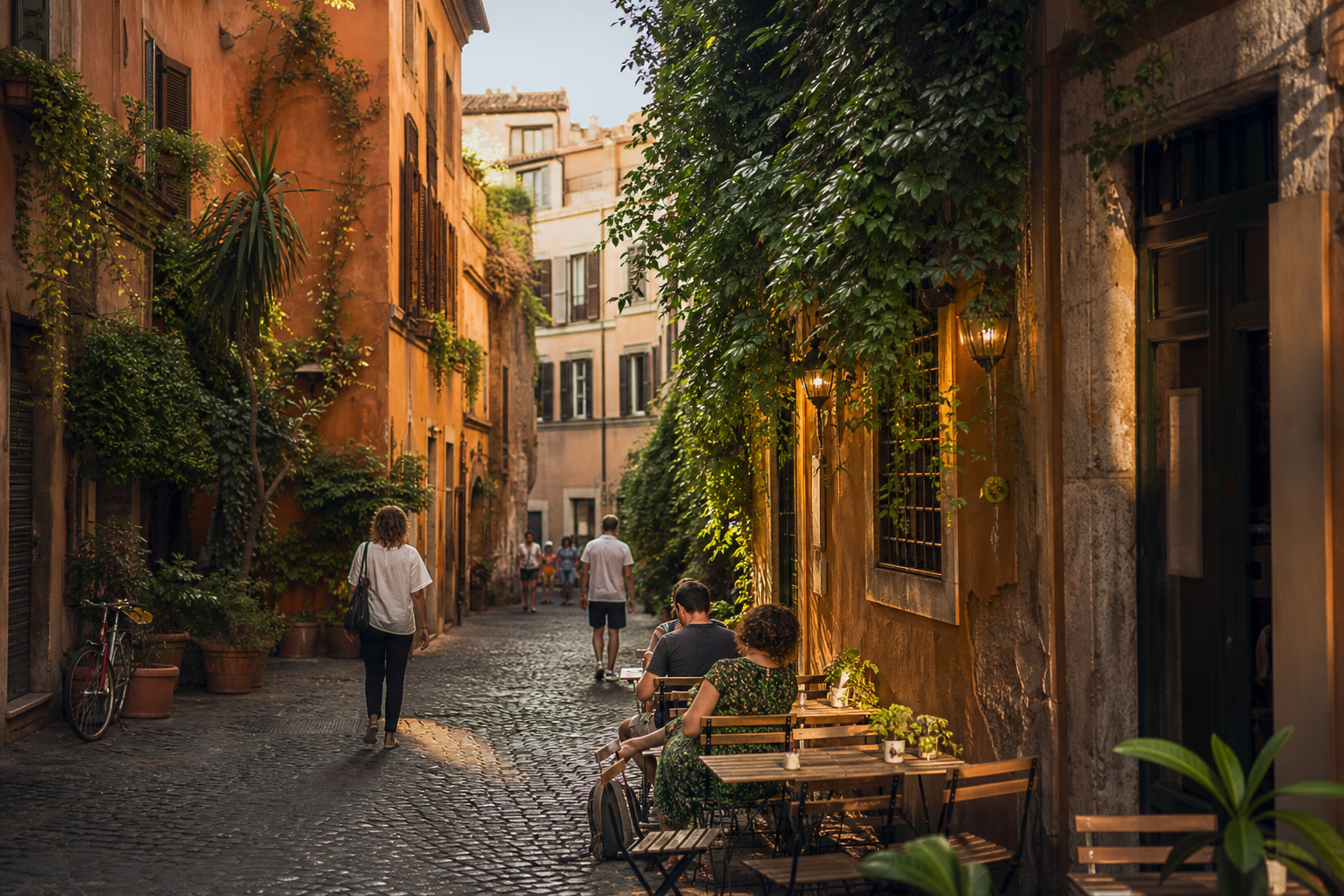
Across the Tiber, Trastevere is known for ochre façades, ivy-covered lanes and lively evenings. Santa Maria in Trastevere anchors the main square, while Santa Cecilia, Villa Farnesina and the botanical garden offer quieter cultural stops. Explore in the morning to experience residential streets before restaurants and bars become busy.
The district is not uniformly hidden or local; its central lanes are among Rome’s most visited nightlife areas. Look beyond the busiest menus, keep noise low near homes and cross toward less congested streets. A walk up the Janiculum provides broad city views and a welcome change of pace.
Monti, Testaccio and Other Neighborhoods
Monti sits near the Colosseum but feels distinct from the monumental zone. Small squares, vintage shops and wine bars occupy a compact web of streets around Via Urbana and Via del Boschetto. It is convenient for an evening after touring the Forum, although popularity has raised prices.
Testaccio has deeper connections to Rome’s food traditions. The neighborhood grew around an artificial hill made from ancient pottery fragments and later became associated with the former slaughterhouse. Its market, traditional restaurants and contemporary cultural spaces make it an excellent place to understand cucina romana.
Prati offers orderly streets near the Vatican, while Flaminio combines modern architecture with cultural venues north of Piazza del Popolo. Garbatella is admired for garden-city planning and communal courtyards, but it should be visited respectfully rather than treated as a staged attraction.
Roman Food to Try
Roman cooking is direct, seasonal and deeply rooted in recognizable ingredients. Four classic pasta dishes appear throughout the city: cacio e pepe, gricia, carbonara and amatriciana. Their short ingredient lists make technique important. Try more than one, but avoid judging every restaurant by an invented idea of a single definitive recipe.
Other specialties include saltimbocca, artichokes prepared alla romana or alla giudia, supplì rice croquettes and thin Roman-style pizza. In Testaccio, traditional offal dishes reflect the historic quinto quarto tradition. Bakeries sell pizza bianca by weight, while gelaterias provide a reliable afternoon pause.
Stand at the bar for a quick espresso unless you want table service, which may cost more in prominent locations. Check menus and prices before ordering near major squares. Restaurants with short seasonal lists and a visible local clientele are often more rewarding than places displaying photographs of dozens of dishes.
Churches, Art and Museums
Many of Rome’s churches function as free art museums, but they remain active places of worship. San Luigi dei Francesi displays major Caravaggio paintings, Santa Maria del Popolo contains important Renaissance and Baroque works, and San Pietro in Vincoli houses Michelangelo’s Moses. Opening hours can include long midday closures.
The Capitoline Museums bring together ancient sculpture, city history and views over the Forum. Galleria Borghese offers an exceptional, tightly curated experience with Bernini and Caravaggio, but timed reservations are essential. Palazzo Barberini and Palazzo Corsini form the National Galleries of Ancient Art and often feel calmer than the Vatican.
Getting Around Rome
Central Rome is best explored mainly on foot, though distances accumulate quickly. Metro lines are useful for the Colosseum, Vatican area and major stations; buses and trams fill gaps but can be affected by traffic. The official ATAC app and website provide current information, tickets and passes.
Validate tickets when required and retain them for inspection. Contactless payment is available on parts of the network, but understand transfer rules before relying on it. Taxis should be licensed and taken from official ranks or booked through recognized channels. From Fiumicino Airport, rail and bus options serve the center; Ciampino connections generally combine bus or coach services.
Rome’s cobbles, steps and uneven pavements can be challenging. Build extra time into routes, use marked crossings and remain alert around scooters. Public drinking fountains known as nasoni are useful for refilling a bottle unless a sign states the water is not drinkable.
Best Time to Visit
April to June and September to October usually offer pleasant walking weather, but these periods are highly popular. Reserve accommodation and headline attractions early. Summer brings intense heat and crowds; begin outdoors soon after sunrise, seek shade at midday and carry water.
Winter is cooler and can be rainy, yet major sights are often easier to enjoy. Christmas, Easter, religious events and large public celebrations change crowd patterns regardless of season. Check both Italian and Vatican calendars when choosing dates.
Where to Stay
The historic center is ideal for first-time visitors who value walking access, though rooms can be expensive and street noise significant. Monti combines central location with evening atmosphere. Prati suits Vatican-focused plans and generally feels calmer after dark.
Trastevere provides charm and nightlife but varies considerably by street. Testaccio offers food culture and transport links away from the densest tourist corridors. Near Termini, convenience and value differ block by block, so read recent reviews and check the exact route from the station.
A Suggested Four-Day Itinerary
Spend day one at the Colosseum, Forum and Palatine, then dine in Monti. On day two, explore the Pantheon, Piazza Navona, Campo de’ Fiori, the Jewish Ghetto and Trevi Fountain. Begin day three at the Vatican Museums, continue to St Peter’s Basilica and finish in Prati or Trastevere.
Use day four for Galleria Borghese or the Capitoline Museums, then explore Testaccio and the Aventine. With an extra day, visit the Appian Way, Ostia Antica or additional churches and galleries at a slower pace.
Rome cannot be completed like a checklist. Secure the few reservations that matter, organize each day geographically and leave space for a quiet church, a shaded fountain or an unplanned meal. Its layers become clearest when monumental history and contemporary neighborhood life are allowed to coexist.
Comments