
Brussels is more intriguing than its reputation as an administrative capital suggests. Behind the European institutions lies a city of gilded guild houses, surrealist art, comic murals, ambitious contemporary cooking and neighborhood squares that change character from one street to the next. French and Dutch share public space, while international communities give the dining scene remarkable breadth.
This Brussels travel guide covers the historic center, major museums, Art Nouveau architecture, the European Quarter, Belgian food and practical transport. Three days suit the essentials; a fourth leaves time for the Atomium, residential districts or a day trip by train.
Why Visit Brussels?
Brussels rewards travelers who look beyond a short Grand-Place stop. Its architecture moves from medieval fragments and Baroque façades to elegant nineteenth-century arcades, Victor Horta’s organic Art Nouveau and bold EU-era buildings. Art collections range from Flemish masters to René Magritte, while comics appear in a dedicated museum and across exterior walls.
Food is just as compelling. Chocolate, waffles, beer and fries are famous, but the city also excels at seafood, natural wine, North African cooking and modern Belgian cuisine. Because the center is compact and rail connections are excellent, Brussels works both as a weekend destination and a base for exploring Belgium.
Grand-Place and the Historic Center
Begin at Grand-Place early, when deliveries and commuters replace the midday crowds. The Gothic Town Hall dominates one side, while richly decorated guild houses create a theatrical enclosure. Much of the square was rebuilt after bombardment in 1695, yet the result feels remarkably coherent. Return after dark, when illumination reveals details missed during the day.
The Brussels City Museum occupies the neo-Gothic King’s House opposite the Town Hall and explains the city’s development. It also displays part of the wardrobe created for Manneken-Pis. The small bronze fountain stands a few streets away and is deliberately modest; treat it as a humorous symbol rather than a major monument.
Walk through the Royal Saint-Hubert Galleries, a glass-roofed nineteenth-century arcade lined with shops, cafés and chocolate makers. Nearby lanes lead to the Bourse, Sainte-Catherine and the old fish-market district. The center is best explored by wandering, but cobbles can be slippery after rain.
Mont des Arts and the Royal Quarter
Climb from Central Station toward Mont des Arts for one of the city’s classic views. The formal garden frames the lower town, with the Town Hall tower visible beyond. At the top, the Royal Quarter gathers museums, government buildings, Brussels Park and the Royal Palace, whose seasonal public access should be checked in advance.
The Royal Museums of Fine Arts comprise several collections rather than one simple route. The Old Masters Museum emphasizes painting from the fifteenth to eighteenth centuries, while the Magritte Museum follows Belgium’s best-known surrealist. Opening arrangements can vary, so decide which collection matters most and consult the official timetable.
The Musical Instruments Museum occupies the striking former Old England department store. Its instruments and audio guides appeal beyond music specialists, and the Art Nouveau exterior is worth seeing even without entering. Nearby Place du Grand Sablon is attractive for antiques, galleries, chocolate shops and café terraces.
Belgian Comics and Street Art
Brussels helped shape European comics, including Tintin, the Smurfs and Lucky Luke. The Belgian Comic Strip Center presents this tradition inside a beautiful building designed by Victor Horta. Exhibitions cover both familiar characters and the craft of sequential art, making it enjoyable for adults as well as families.
Across the city, large comic murals transform blank walls into an informal open-air route. The official tourism map helps locate them, but discovering one unexpectedly is part of the fun. Many cluster in the historic center and Marolles, so they fit naturally into a walking day.
Art Nouveau in Saint-Gilles and Ixelles
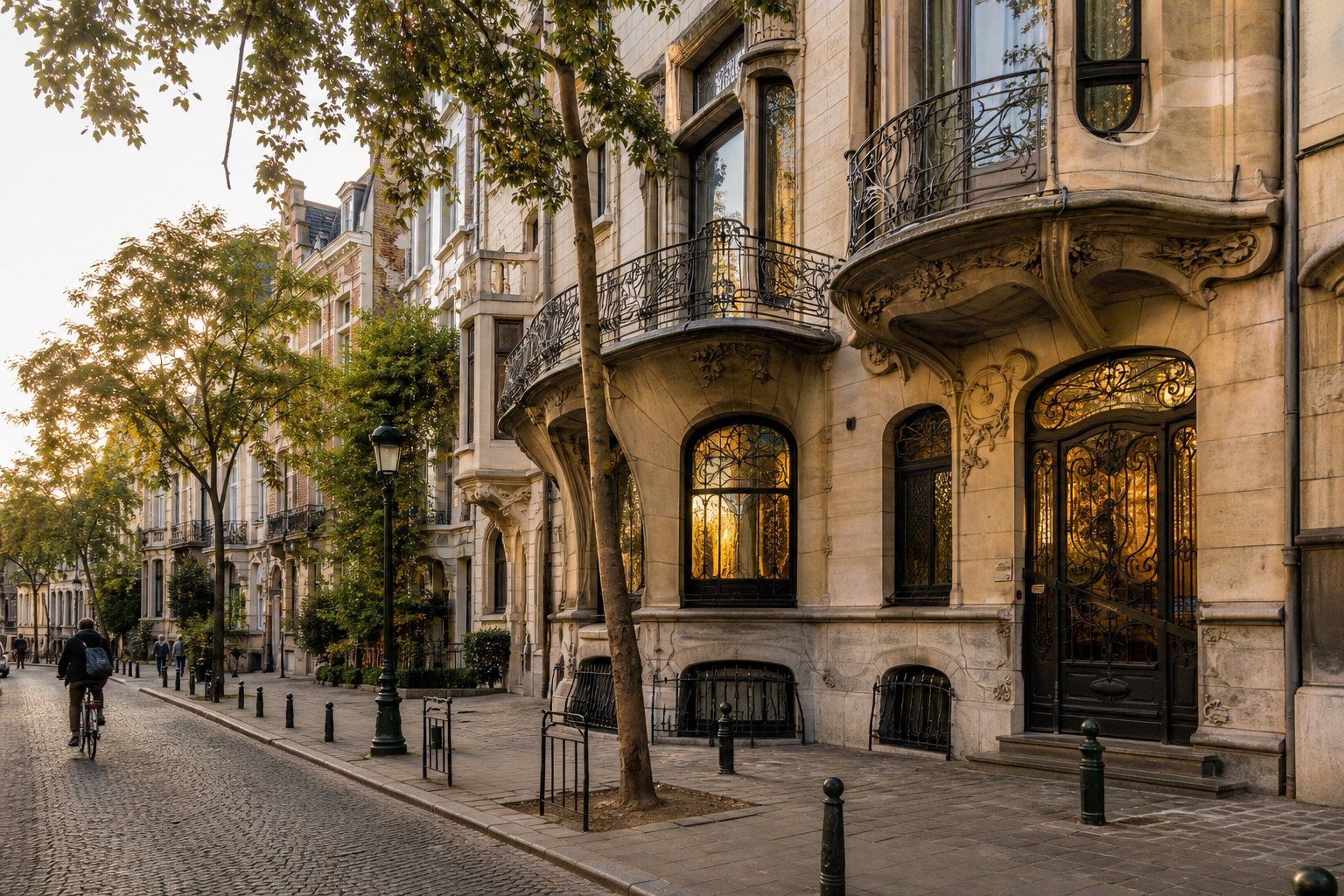
Brussels is one of Europe’s essential Art Nouveau cities. Victor Horta and his contemporaries replaced rigid historicism with flowing ironwork, stained glass, mosaics and interiors designed as complete works of art. The Horta Museum, located in the architect’s former home and studio in Saint-Gilles, provides the most focused introduction.
Timed entry is strongly recommended because the house has limited capacity. Afterward, walk residential streets around Châtelain, Bailli and the ponds of Ixelles. Notable façades appear among ordinary apartment buildings, rewarding slow observation. Remember that most remain private homes.
An Art Nouveau pass can be useful when several participating interiors are open. Check current inclusions because heritage houses often have restricted schedules.
Marolles and the Sablon
The Marolles district feels more informal than the museum quarter above it. Place du Jeu de Balle hosts a famous flea market, most atmospheric in the morning. Surrounding streets contain vintage furniture, secondhand clothing, cafés and working-class traces, although the neighborhood is also changing rapidly.
The monumental Palace of Justice rises above the district. A public lift connects the upper and lower city near Place Poelaert, providing a useful shortcut and broad view. From there, walk into the polished Sablon, where antique dealers and pastry shops surround attractive squares.
Notre-Dame du Sablon has an elegant Brabantine Gothic interior and free entry when no service is taking place. Combining the church, Marolles and Mont des Arts makes an excellent half-day based more on atmosphere than ticketed attractions.
The European Quarter
The European Quarter is worth visiting even if politics is not your primary interest. The Parlamentarium explains the European Parliament and EU decision-making through multimedia displays in all official EU languages. Entry procedures and security requirements should be checked before arrival, and identity documents may be needed for institutional visits.
Nearby House of European History places European integration within a broader and sometimes difficult twentieth-century story. Both museums are generally free, but reservations may be advisable. The architecture around Place du Luxembourg contrasts sharply with the historic center.
Finish in Parc du Cinquantenaire, where a monumental triumphal arch anchors formal gardens. The surrounding museums cover art and history, military history and automobiles. Select one rather than rushing through several, or simply enjoy the park with locals.
Atomium and Northern Brussels
The Atomium was created for the 1958 World’s Fair and represents an iron crystal magnified on a monumental scale. Escalators and lifts connect exhibition spheres, with a panorama from the upper level. Timed tickets reduce uncertainty during weekends and holidays.
Belgian Food to Try
Belgian fries should be crisp outside and fluffy within, usually served from a friterie with a wide choice of sauces. Waffles come in different traditions: Brussels waffles are light and rectangular, while Liège waffles are denser and caramelized. Choose a shop cooking them fresh instead of buying a heavily topped version kept waiting in a tourist display.
Classic dishes include moules-frites, carbonnade flamande beef stew, shrimp croquettes and stoemp, mashed potato mixed with vegetables. Portions can be generous, so sharing starters leaves room for dessert.
Chocolate ranges from historic houses to experimental small makers. A tasting can be worthwhile, but quality matters more than collecting famous names.
Understanding Belgian Beer
Brussels bars may offer lambic, gueuze, Trappist ales, saisons, witbier and strong dark ales. Ask staff for a recommendation based on flavor. Many are significantly stronger than standard lager, so drink slowly and order water; alcohol-free Belgian options are increasingly common.
Neighborhoods for Evenings
Sainte-Catherine combines seafood traditions with restaurants, bars and a lively square. Dansaert attracts design shops and contemporary dining, while central Saint-Jacques has an inclusive nightlife scene. South of the center, Saint-Gilles feels creative and residential, especially around Parvis de Saint-Gilles.
Getting Around Brussels
Most central attractions are walkable, though the city’s hills are noticeable. STIB-MIVB operates metro, tram and bus services. Contactless payment is available on much of the network, while reloadable cards and day products may suit heavier use. Always check current fares and validate correctly when entering or changing services.
Brussels has several main railway stations: Central is closest to Grand-Place, Midi/Zuid handles Eurostar and many international trains, and Nord serves the northern center. Confirm the station printed on your ticket. Trains from Brussels Airport connect directly with central stations; a specific airport supplement may be included in the fare.
Best Time to Visit
April through June and September through October generally offer comfortable walking weather. Summer brings festivals and long evenings, while December adds Christmas markets and seasonal illumination. Rain is possible year-round, so pack a compact waterproof layer.
The European Quarter is active on weekdays and quieter on weekends. Museums commonly close one day per week, so verify schedules before arranging a culture-heavy itinerary.
Where to Stay
The historic center is convenient but can be noisy. Sablon suits museum visits, Sainte-Catherine combines restaurants with central access, and Saint-Gilles or Ixelles provide neighborhood character. The European Quarter is quieter on weekends.
A Four-Day Brussels Itinerary
On day one, see Grand-Place early, explore the City Museum, Royal Galleries and central comic murals, then return to the square after dinner.
Use day two for Mont des Arts, one Fine Arts collection and the Musical Instruments Museum or Sablon. Continue through Marolles and its flea-market streets.
On day three, tour the Horta Museum and walk through Saint-Gilles and Ixelles. Spend the evening around Flagey or Parvis de Saint-Gilles.
Visit the European Quarter and Cinquantenaire on day four, or substitute the Atomium. Finish with Belgian food and a carefully chosen beer café.
Final Tips for Brussels
French and Dutch place names can look very different, so learn both versions of your station when relevant. Carry a payment card and a little cash, reserve small museums with timed access, and watch for bicycles and trams when crossing.
Brussels becomes most rewarding when its contrasts are allowed to coexist: gilded history and irreverent comics, EU institutions and flea markets, formal museums and experimental cooking. Give each neighborhood time to establish its own rhythm, and the city will feel far richer than a quick capital stop.
Comments