
Valencia balances two very different cityscapes with unusual ease. Medieval towers, market halls and narrow lanes fill the historic centre, while the City of Arts and Sciences rises like a futuristic sculpture beside turquoise pools. Between them, the former Turia riverbed has become a long green park used by cyclists, runners and families. Add Mediterranean beaches, sunny terraces and the birthplace of paella, and Spain’s third-largest city becomes an exceptionally varied destination. This Valencia travel guide covers the sights, neighbourhoods, food and planning essentials for a first visit.
Why Visit Valencia?
Valencia delivers many pleasures associated with Barcelona or Madrid at a gentler pace. Its centre is walkable, public transport reaches the coast, and cycling is practical across much of the city. Architecture spans Roman remains, Valencian Gothic landmarks, Modernist markets and bold twenty-first-century forms. Food traditions remain closely connected to the surrounding farms, lagoon and sea.
The Historic Centre
Start at Plaza de la Virgen, where the cathedral, Basilica of the Virgin and regional government buildings frame a lively pedestrian square. Beneath this area, the Almoina Archaeological Centre reveals layers of Roman and medieval Valencia. Nearby Plaza de la Reina provides one of the best views toward the cathedral and its bell tower.
Valencia Cathedral combines architectural periods accumulated over centuries. A chapel houses a chalice traditionally associated with the Holy Grail. Climb the Miguelete, or Micalet, bell tower for broad views, but expect a long spiral staircase. Visit early when the lanes are cooler and major interiors are quieter.
Continue north through El Carmen, a historic neighbourhood mixing old convents, street art, cafés and nightlife. The Serranos and Quart towers survive from the medieval walls and provide strong visual anchors for exploring without a fixed route.
La Lonja and Central Market
La Lonja de la Seda, the Silk Exchange, is Valencia’s great civil Gothic monument and a UNESCO World Heritage Site. Its main trading hall has slender twisting columns that spread into a vaulted ceiling like stone palms. The adjoining courtyard and chambers recall the city’s commercial importance during the late Middle Ages. Allow time to notice carvings and architectural details rather than treating it as a brief photo stop.
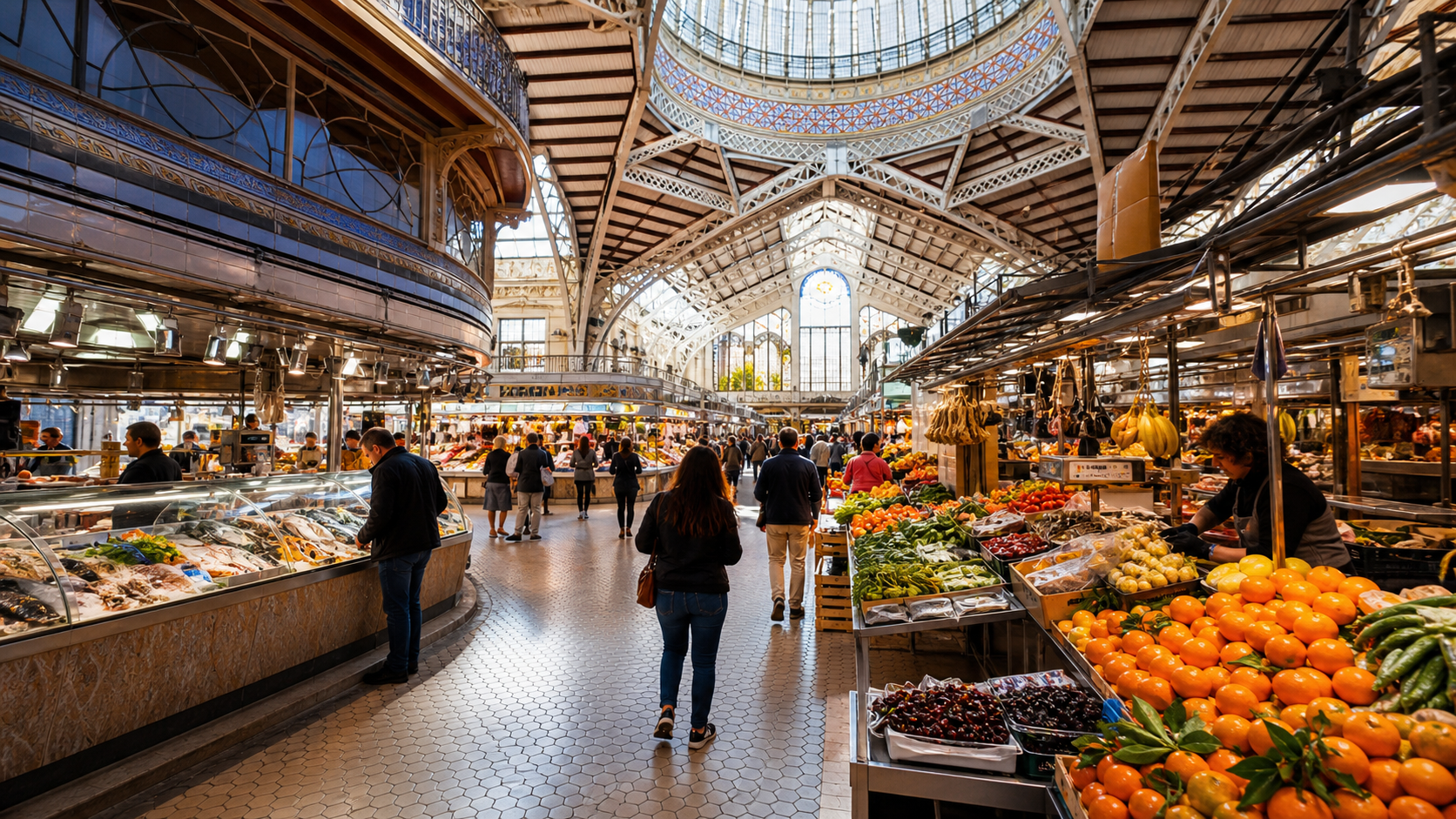
Across the street, Central Market fills an extraordinary iron, glass and ceramic building. Stalls display fruit, vegetables, cheeses, cured meats, spices and seafood. Go in the morning while trade is fully active. Small counters make it an excellent place for breakfast or an early lunch.
City of Arts and Sciences
The City of Arts and Sciences is Valencia’s contemporary icon. Designed primarily by Valencian architect Santiago Calatrava, the complex stretches for roughly two kilometres near the eastern end of the Turia Garden. Its white structures, reflecting pools and sculptural bridges are impressive even without entering an attraction.
Inside are the interactive Science Museum, the Hemisfèric projection venue, the Palau de les Arts opera house, CaixaForum and Oceanogràfic. The aquarium is vast and can take at least four hours; seeing the full complex properly can occupy an entire day. Choose attractions according to your interests rather than buying entry to everything by default. Combined tickets may offer value, and advance booking helps during weekends and school holidays.
The open-air Umbracle garden and exterior walkways are enjoyable near sunset, when lower light brings out the shapes and reflections. Cycling from the centre through Turia Garden is one of the most rewarding ways to arrive.
Turia Garden by Bike or Foot
After severe flooding, the Turia River was diverted and its former channel transformed into a park crossing the city. Turia Garden now extends for about nine kilometres, linking sports fields, playgrounds, gardens, museums and bridges. Because it sits below street level, it feels separate from traffic while remaining easy to access.
Rent a bicycle for the route between the historic centre and City of Arts and Sciences. Dedicated paths make the journey straightforward, though pedestrians and families share many areas, so ride considerately. Gulliver Park, with its enormous climbable sculpture, is especially popular with children. The garden also provides a pleasant morning run or shaded afternoon walk.
Ruzafa and Ensanche
South of the centre, Ruzafa has become one of Valencia’s most popular dining and nightlife districts. Colourful façades, independent shops, bakeries and restaurants surround its traditional market. The neighbourhood feels creative and international while retaining busy everyday streets.
Adjacent Ensanche contains broad avenues and excellent examples of Valencian Modernism. Mercado de Colón has been converted into an elegant gathering place with cafés and food businesses. Visit Ruzafa for lunch, browse its side streets and return for dinner or drinks. Noise can continue late, which is worth considering when choosing accommodation.
Valencia’s Beaches and Marina
The city meets the Mediterranean at long, broad beaches. Malvarrosa is the best-known, while Cabanyal and Patacona extend the coastal experience northward. A promenade supports restaurants, cycling and evening walks. The water is most appealing in warmer months, but winter sunshine still makes the beach worthwhile.
El Cabanyal, once a fishing district, preserves distinctive tiled houses on a grid of streets behind the shore. It has experienced rapid change, so seek out long-established bakeries, markets and neighbourhood restaurants alongside newer venues. The marina south of the beach offers modern architecture, wide open views and waterfront events.
Albufera Natural Park
Albufera lies south of Valencia and provides a landscape of lagoon, rice fields, wetlands and small settlements. It is closely tied to the origins of paella and offers a natural contrast to the city. Boat trips are particularly popular around sunset, when the shallow water reflects the sky.
Public buses reach communities near the lagoon and beaches, although schedules require planning. A guided excursion can simplify transport and explain the ecology and rice-growing traditions. Combine a lagoon visit with lunch in El Palmar, where restaurants specialise in rice dishes. Reserve ahead on weekends.
What to Eat in Valencia
Valencia is the home of paella, traditionally prepared with short-grain rice, chicken, rabbit, green beans and local garrofó beans. Seafood versions are common, but they are separate variations rather than the original paella valenciana. Good paella is cooked to order and commonly eaten at lunch. Expect a wait, order for the required number of diners and avoid restaurants displaying pans of cooked rice for long periods.
Other rice dishes include arroz a banda, baked arroz al horno and creamy preparations. Try all i pebre, an eel stew associated with Albufera, or fresh Mediterranean seafood. Esgarraet combines roasted pepper, salt cod, garlic and olive oil.
For a refreshing break, order horchata, a sweet drink made from tiger nuts, with elongated fartons pastries. Agua de Valencia is a potent cocktail containing orange juice, cava and spirits. Local oranges, market produce and simple tapas are pleasures in their own right.
Fallas and Cultural Events
Las Fallas transforms Valencia each March with enormous artistic monuments, fireworks, marching bands, flowers and neighbourhood celebrations. The main figures are ultimately burned during La Cremà. It is a remarkable expression of local culture, but also brings noise, crowds, street closures and high accommodation prices. Book far ahead and bring ear protection if you attend.
Best Time to Visit
April to June and September to October generally provide warm weather without the strongest summer heat. Spring is colourful and lively after Fallas, while autumn keeps the sea relatively warm. July and August suit beach-focused trips but bring heat, humidity and larger coastal crowds. Plan outdoor sightseeing early or late.
Winter is mild, quieter and often bright, though evenings can be cool and occasional rain arrives. February and early March become busier as Fallas preparations build. Whatever the month, pack sun protection and a light layer for coastal breezes.
Getting Around Valencia
Valencia Airport is only about eight kilometres from the city and connects with central districts by metro. Buses and taxis provide alternatives. Confirm current fares and operating hours through official services, especially for early or late flights.
Metro, tram and city buses form an effective network, while flat terrain and cycling infrastructure make bicycles practical. The historic core is best explored on foot. A tourist transport card may save money for travellers making frequent journeys, but compare its inclusions with your actual itinerary. A rental car is unnecessary within the city.
Where to Stay
Ciutat Vella puts historic attractions and evening plazas close by. El Carmen is atmospheric and lively but can be noisy. Ruzafa suits food lovers and visitors interested in nightlife, while Ensanche offers elegant streets and a central position.
Accommodation near the City of Arts and Sciences is modern and convenient for families visiting the complex, though less intimate after dark. Cabanyal and Malvarrosa serve beach-oriented trips, with public transport required for central sights. Check proximity to a metro or bus stop and confirm air conditioning for summer stays.
A Three-Day Valencia Itinerary
On day one, explore Central Market, La Lonja, the cathedral and El Carmen. Climb a tower for views and dine in the old centre. On day two, cycle through Turia Garden to the City of Arts and Sciences. Choose the aquarium or science museum, then enjoy the exterior at sunset.
On day three, visit Ruzafa’s market before travelling to Cabanyal and Malvarrosa. Walk the promenade and have a rice lunch near the sea. Alternatively, devote the afternoon and sunset to Albufera. With another day, add the Fine Arts Museum, IVAM or more time in neighbourhood markets.
Practical Tips
Reserve important paella lunches and major City of Arts and Sciences attractions ahead. Visit markets in the morning, protect yourself from midday sun and use the Turia Garden to connect districts pleasantly. Watch belongings in crowded areas and respect residents when photographing Cabanyal or historic lanes.
Leave space for Valencia’s contrasts. The transitions between markets, futuristic buildings and medieval squares make the city distinctive and easy to revisit.
Comments