
Oslo is one of Europe’s easiest capitals to enjoy at a human pace. Norway’s largest city sits at the head of a fjord, framed by forested hills and threaded with waterfront paths, trams and compact neighbourhoods. Its appeal comes from contrasts: medieval walls stand near bold contemporary architecture, world-class museums share space with swimming piers, and a morning of art can become an afternoon hike without leaving the public transport network. Oslo is expensive, but thoughtful planning, free outdoor sights and efficient travel make a rewarding city break entirely possible.
This guide brings together the landmarks, neighbourhoods, food and practical details that matter on a first visit. Three days gives you a strong introduction; four allows time for Bygdøy, the islands or the forest.
Why Visit Oslo?
Oslo feels spacious, calm and unusually close to nature. The harbour has been transformed into a long cultural corridor, with the Opera House, MUNCH, the Deichman library, Akershus Fortress, City Hall, the National Museum and lively Aker Brygge all within a pleasant walk. Yet the city is more than polished waterfront architecture. Grünerløkka offers cafés, vintage shops and independent restaurants, Frogner has elegant streets and sculpture-filled parkland, while Grønland adds markets and flavours from around the world.
Oslo Opera House and Bjørvika
Begin in Bjørvika, the modern waterfront district beside Oslo Central Station. The Oslo Opera House appears to rise directly from the fjord, and its sloping white roof is designed for walking. Climb gradually for broad views over the harbour, islands and hills. Early morning offers softer light and fewer people, while sunset gives the marble and water a dramatic glow.
Nearby, the MUNCH museum explores the work of Edvard Munch alongside changing exhibitions, and the striking Deichman Bjørvika library is worth entering even if you are not borrowing a book. Continue along the water past floating saunas and the Barcode towers. This area captures Oslo’s modern identity: ambitious architecture that remains connected to everyday public life.
Akershus Fortress and the Historic Centre
Follow the harbour west to Akershus Fortress, founded at the end of the thirteenth century and later developed into a Renaissance complex. The grounds offer cobbled lanes, stone walls and excellent views across the water. Walking the exterior areas is one of the city’s best free experiences. If the castle interiors are open, you can see royal rooms, ceremonial halls and the church; check current hours before visiting because access varies seasonally.
From the fortress, explore Kvadraturen, Oslo’s seventeenth-century grid of historic streets. Then walk toward Karl Johans gate, the main axis linking the central station with the Royal Palace. Along or near it stand the cathedral, Parliament, National Theatre and university buildings. The palace park is a restful place to pause, especially in summer.
The National Museum and Aker Brygge
Art lovers should reserve several hours for the National Museum near City Hall. Its enormous collection spans Norwegian and international art, architecture, craft and design. Edvard Munch’s famous imagery is a highlight, but the broader story of Nordic visual culture makes the museum particularly valuable. Trying to see every gallery can be exhausting, so choose the sections that interest you most and leave time for the rooftop terrace.
Afterward, continue to Aker Brygge and Tjuvholmen, where former industrial land has become a waterside district of restaurants, promenades and galleries. The Astrup Fearnley Museum focuses on contemporary art, while surrounding paths are perfect for people-watching.
Vigeland Sculpture Park
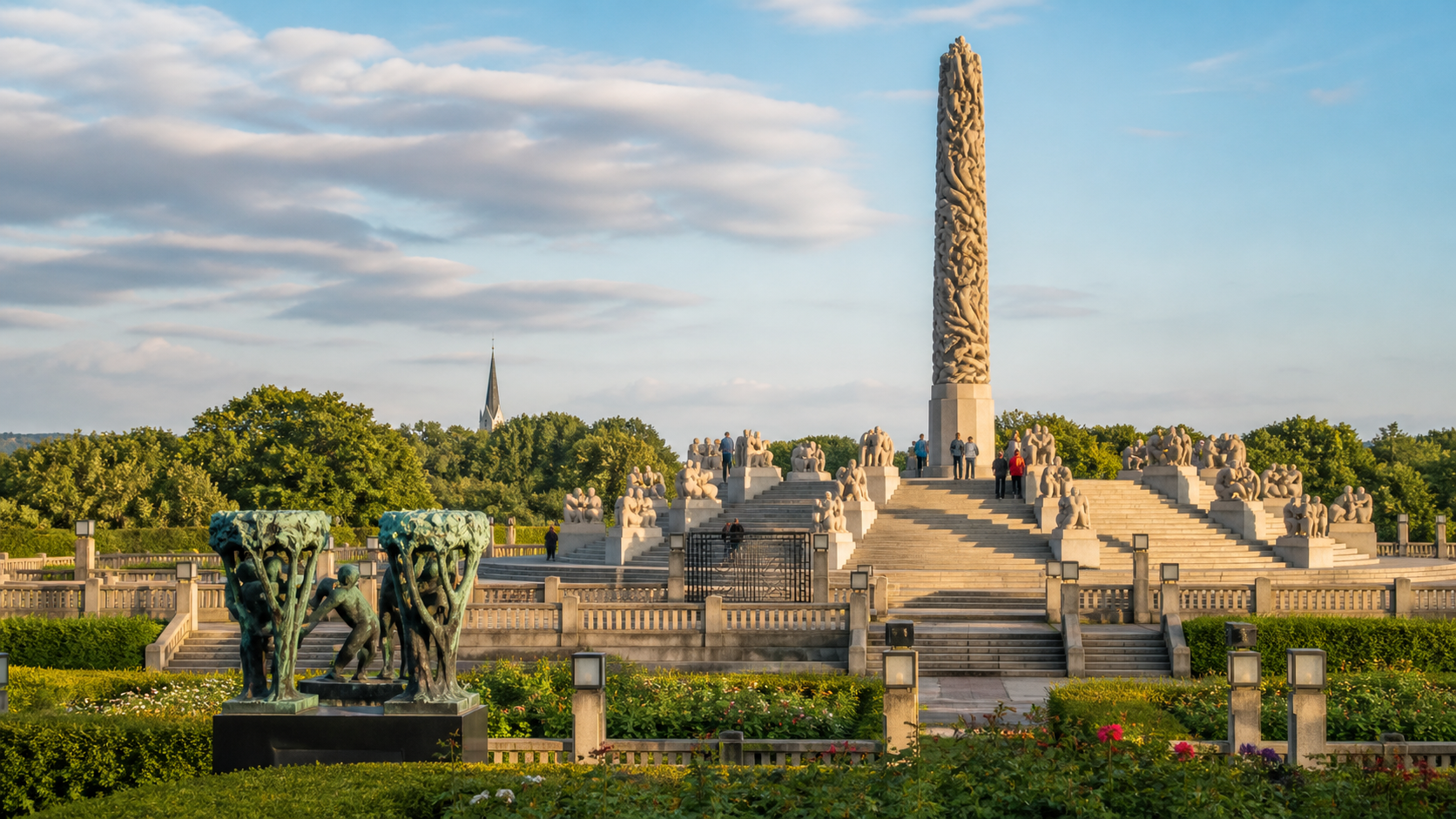
Vigeland Sculpture Park, set within Frogner Park, is one of Oslo’s signature sights and is free to enter. More than 200 works by Gustav Vigeland form a monumental sequence of bronze, granite and iron figures. The bridge, fountain, Monolith and Wheel of Life examine relationships, age, struggle and affection through expressive human forms.
Arrive early for a quieter experience and observe how the figures interact. The nearby Vigeland Museum, housed in the artist’s former studio and home, provides deeper context for his methods and designs.
Bygdøy’s Maritime Museums
The Bygdøy peninsula is the best half-day excursion for visitors interested in exploration and Norwegian cultural history. The Fram Museum centres on the remarkably preserved polar ship Fram and the expeditions associated with it. The Kon-Tiki Museum tells the story of Thor Heyerdahl’s ocean voyages, while the Norwegian Museum of Cultural History presents historic buildings and traditions in an open-air setting.
In summer, reaching Bygdøy by passenger ferry makes the journey part of the experience. Buses operate throughout the year. Avoid squeezing every museum into one visit; two carefully chosen institutions usually provide a richer afternoon than racing between all of them.
Grünerløkka, Vulkan and the River
For a more local atmosphere, head to Grünerløkka. Brick buildings, street art, small boutiques, coffee shops and casual bars give the neighbourhood an easy creative energy. Markveien and Thorvald Meyers gate are useful starting points, but the quieter side streets reward wandering.
Walk beside the Akerselva river, once central to Oslo’s industry and now bordered by paths, parks, waterfalls and converted factories. At Vulkan, Mathallen food hall gathers Norwegian produce and international kitchens under one roof. It is convenient for groups with different tastes and offers an approachable place to sample cheese, cured meat, seafood or baked goods.
Fjord Islands and Forest Escapes
Oslo’s public transport extends beyond streets and rails. Local ferries connect the centre with small fjord islands where you can walk, picnic and swim in warmer months. Hovedøya is popular for its beaches, woodland and medieval monastery ruins. Bring water and an extra layer, as conditions on the fjord can change quickly.
The forest is equally accessible. Metro lines climb toward Nordmarka, a vast recreation area of lakes and trails. Sognsvann provides an easy waterside circuit, while Frognerseteren offers elevated views and connections to longer walks. In winter these landscapes become cross-country skiing territory. Even a short excursion shows why outdoor life is fundamental to Oslo rather than an activity reserved for weekends away.
What to Eat in Oslo
Norwegian food is shaped by the sea, short growing seasons and preservation traditions. Look for salmon, cod, shrimp, fish soup, lamb, reindeer, brown cheese and seasonal berries. Open sandwiches and cinnamon buns suit a lighter lunch, and good bakeries can help control costs. Modern Oslo chefs often reinterpret Nordic ingredients with a clean, seasonal approach.
For variety, explore Grønland, Torggata and Grünerløkka, where you will find affordable international restaurants alongside contemporary Norwegian cooking. Tap water is excellent and free when dining. Alcohol is costly, so travellers on a budget often focus on coffee culture, food halls and one memorable dinner rather than drinks every evening.
Getting Around Oslo
Central Oslo is highly walkable, particularly along the harbour and Karl Johans gate. Ruter coordinates the metro, trams, buses and local ferries, and the same ticket system covers the main urban network. Buy or activate the correct ticket before boarding and use the official journey planner for current routes. Airport trains and regional trains have separate fare arrangements, so check which service suits your budget and arrival time.
A day pass can be worthwhile if you plan several rides or a ferry trip. The Oslo Pass may offer value for a museum-heavy itinerary because it combines admission to many attractions with public transport, but compare its current inclusions and validity with your actual plan before buying.
Best Time to Visit Oslo
May through September brings long daylight, green parks, island ferries and the best conditions for outdoor dining. June evenings seem to stretch indefinitely, but summer is also the busiest period and accommodation should be booked early. Spring and autumn are cooler and less crowded, with changing weather that rewards layered clothing.
Winter has short days, festive lights and easy access to snow activities when conditions cooperate. Museums, cafés and saunas make the city appealing even in cold weather. Pack waterproof outerwear in any season; sunshine, wind and rain can arrive within the same day.
Where to Stay
Sentrum and Bjørvika are ideal for a first trip because they place major sights and transport within walking distance. Aker Brygge offers polished waterfront surroundings, while Frogner is quieter and more residential. Grünerløkka suits travellers who prioritise cafés, nightlife and neighbourhood character. Grønland often has convenient transport and somewhat better-value options close to the centre.
A Three-Day Oslo Itinerary
On day one, explore the Opera House roof, Bjørvika, Akershus Fortress and Kvadraturen. Continue along Karl Johans gate to the Royal Palace, then spend the evening around Aker Brygge.
On day two, visit the National Museum in the morning and Vigeland Sculpture Park after lunch. Return through Frogner or Grünerløkka for dinner and a relaxed neighbourhood walk.
On day three, choose Bygdøy’s museums if culture and exploration interest you most. In fine summer weather, substitute an island-hopping trip; in any season, consider a metro ride to Sognsvann or Frognerseteren for a taste of Oslo’s forest landscape. Add MUNCH if it was not included on your first day.
Practical Tips for a Better Trip
Norway uses the Norwegian krone, although you may barely see cash because contactless payment is accepted almost everywhere. Prices shown include tax, and tipping is appreciated for good table service but is not obligatory at the levels common in some countries. Bring a refillable bottle, comfortable shoes and a compact waterproof layer.
Check official attraction pages shortly before visiting because opening days and ferry schedules change. Book major exhibitions and performances ahead, and swim only in designated areas.
Oslo rewards travellers who leave space in the schedule. Its greatest pleasure is the transition between culture and landscape: stepping from a museum into harbour light, riding a tram from urban streets to a vast park, or taking the metro until the city becomes forest. Approach it slowly, choose a few excellent museums, and let the waterfront connect the rest.
Comments