
Helsinki is a compact maritime capital where neoclassical squares, functional modernism and everyday nature fit comfortably into one city break. The Baltic Sea appears at the end of streets, trams curve past elegant stone buildings, and ferries carry commuters and visitors into an archipelago of low islands. Finland’s capital is orderly without feeling stiff, creative without shouting for attention and easy to explore even on a short visit.
Three days is enough for the historic centre, major museums, a sauna and Suomenlinna. Add a fourth day for neighbourhood cafés, more islands or a trip into the surrounding forest. This Helsinki travel guide covers the essential sights, food, transport and practical choices for a memorable first stay.
Why Visit Helsinki?
Helsinki combines urban culture with unusual access to water and green space. You can study Finnish design, eat salmon soup beside the harbour, wander through an eighteenth-century sea fortress and finish in a wood-fired sauna.
Senate Square and Helsinki Cathedral
Begin at Senate Square, Helsinki’s grand neoclassical centre. Architect Carl Ludvig Engel shaped the harmonious ensemble in the nineteenth century, including the Government Palace, University of Helsinki, National Library and Helsinki Cathedral. The white cathedral and its green domes rise above a broad flight of steps, creating the city’s most recognisable view.
Climb the steps for a perspective across the square, then visit the restrained Lutheran interior if it is open. Around the corner, the free Helsinki City Museum introduces the capital’s history.
Market Square and the Waterfront
One block south, Market Square sits directly beside the harbour. Outdoor stalls sell berries, vegetables, handicrafts and seasonal snacks, while boats depart for Suomenlinna and other islands. Prices in this prime location can be higher, but the atmosphere makes it an excellent place to begin a waterfront walk.
Visit the nearby Old Market Hall for food counters and sheltered seating. Continue along the Esplanade, a green promenade framed by handsome buildings and shops, or follow the shore toward Katajanokka. The red-brick Uspenski Cathedral stands on a rocky rise there, reflecting Finland’s Orthodox heritage and offering another striking city panorama.
Suomenlinna Sea Fortress
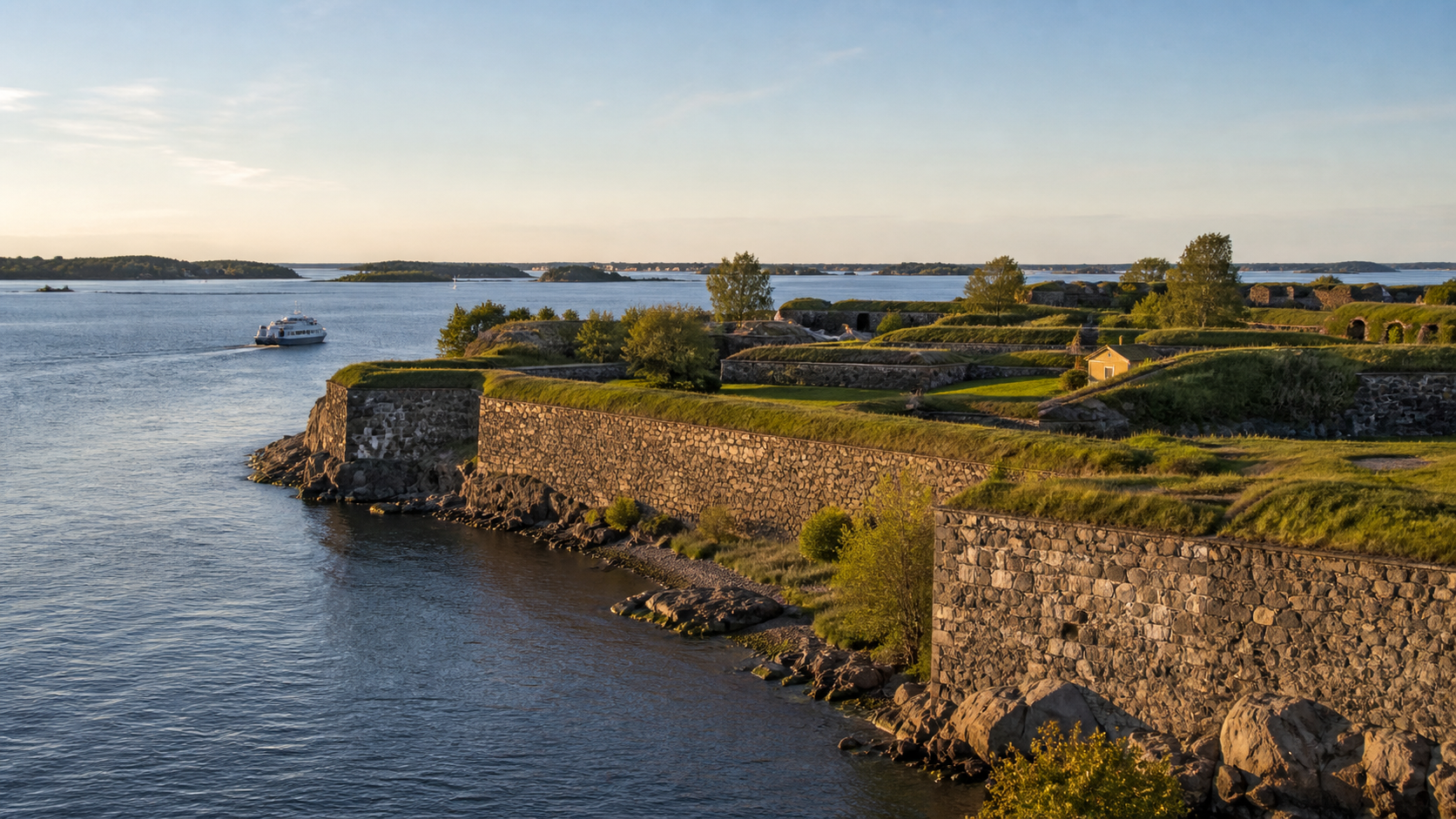
Suomenlinna is Helsinki’s essential half-day excursion. Spread across connected islands, this UNESCO-listed sea fortress developed under Swedish rule in the eighteenth century and later passed through Russian and Finnish periods. Its bastions, tunnels, museums, homes and coastal paths create a layered landscape rather than a single enclosed attraction.
The HSL ferry from Market Square takes about fifteen minutes and operates throughout the year. A standard AB ticket covers the journey, but it must be valid before entering the ferry area. On arrival, follow the marked Blue Route past the church, dry dock and defensive walls toward King’s Gate. Wear sturdy shoes because cobbles and uneven paths are common.
Allow at least three hours, more if you plan to visit museums or eat on the islands. Bring a windproof layer even in summer. Suomenlinna is also a living neighbourhood, so stay on public paths and respect residents. The return ferry gives beautiful views of Helsinki’s skyline.
Finnish Design and Architecture
Design is not merely a museum subject in Helsinki; it shapes tableware, furniture, transport and public services. The Design Museum presents Finnish and international design history, while the surrounding Design District gathers studios, galleries, vintage stores and well-known brands across Punavuori and neighbouring streets.
The curved wooden interior of Oodi Central Library shows contemporary Finnish civic design at its best. Nearby, Finlandia Hall and Kiasma form part of a cultural zone around Töölönlahti Bay.
The Temppeliaukio Church offers a dramatic contrast. Excavated into solid rock, its rough stone walls and copper dome create remarkable acoustics and a calm atmosphere. Check visiting hours because ceremonies and events can temporarily restrict tourist entry.
Essential Museums
The Ateneum, opposite the central station, is Finland’s principal collection of national art. Its galleries help visitors understand Finnish identity through nineteenth- and twentieth-century painting, including works connected to the country’s landscapes and mythology. Kiasma focuses on contemporary art in a distinctive building designed by Steven Holl.
Always check official websites before travelling, as Helsinki museums frequently close on Mondays and seasonal hours vary.
Experience Finnish Sauna Culture
Sauna is one of the most meaningful Finnish experiences, but it is an ordinary part of life rather than a staged attraction. Helsinki offers traditional neighbourhood saunas, modern waterfront complexes and public facilities with sea access. Löyly is architecturally striking and easy for first-time visitors, while older public saunas offer a more local atmosphere.
Procedures vary, so read the venue’s instructions. Shower before entering, sit on a towel, speak quietly and ask before adding water to the stove. Swimwear rules differ between mixed and single-gender spaces. Alternate heat with cooling breaks, hydrate and never feel pressured to stay longer than is comfortable. Booking ahead is wise for popular waterfront sessions.
Neighbourhoods Beyond the Centre
Punavuori appeals to design lovers with independent shops, cafés and attractive residential streets. Kallio, north of the centre, has a livelier mix of bars, bakeries, vintage stores and modest restaurants. Its personality is best discovered by wandering around Hakaniemi Market Hall and the streets near Karhupuisto.
Töölö offers calmer avenues, parks and waterside paths. Walk around Töölönlahti Bay, continue to the Winter Garden or visit the Sibelius Monument, an abstract arrangement of steel pipes honouring composer Jean Sibelius. The colourful wooden houses of Vallila provide another architectural change of mood, though they are homes rather than a tourist display.
Islands, Parks and Nature
In summer, Helsinki’s archipelago becomes an extension of the city. Ferries reach recreational islands for picnics, swimming and coastal walks. Seurasaari, connected by a bridge, combines woodland paths with an open-air museum of historic Finnish buildings. Pihlajasaari is popular for beaches, while Lonna offers a compact island escape near the centre.
Kaivopuisto is the classic urban park for sea views. Follow the shoreline past cafés, rocks and small harbours, watching ferries move between islands. For a larger nature excursion, Nuuksio National Park has forest, lakes and marked routes northwest of Helsinki, though it requires more planning than the city’s coastal walks.
What to Eat in Helsinki
Finnish cooking reflects forests, lakes, the Baltic Sea and pronounced seasons. Try creamy salmon soup, rye bread, Baltic herring, freshwater fish, Karelian pies and cinnamon buns. Summer brings strawberries, peas and new potatoes; autumn highlights mushrooms and wild berries. Salmiakki, salty liquorice, is a divisive but memorable Finnish flavour.
Market halls are practical places to sample local ingredients without committing to a formal meal. Helsinki also has ambitious modern Nordic restaurants and an increasingly diverse vegan scene. Weekday lunch offers can provide better value than dinner. Coffee matters deeply here, so pause at an independent café and order a korvapuusti, the Finnish cinnamon roll, alongside it.
Tap water is excellent, and tipping is optional rather than expected.
Getting Around Helsinki
The centre is walkable, and trams are both useful and scenic. HSL operates trams, buses, the Metro, commuter trains and selected ferries under an integrated zone system. Most central attractions, including Suomenlinna, use zones AB. Helsinki Airport lies in zone C, so journeys between the airport and centre generally require an ABC ticket.
Buy and activate the correct ticket before boarding or entering a payment area. The HSL app provides tickets, routes and live information; contactless payment and ticket machines are also available in many situations. Day tickets can be good value when combining several rides with the Suomenlinna ferry. Check current prices because fares change.
Best Time to Visit
June through August brings very long days, active terraces, island services and comfortable conditions for coastal exploration. It is the easiest season for a first trip, although accommodation prices rise and popular ferries become busy. May and September can be quieter, with cool air and rapidly changing weather.
Winter is dark but atmospheric. Christmas lights, museums, cafés and saunas make the city inviting, while snow can transform the waterfront. Daylight is limited, so place outdoor sightseeing around midday. Spring arrives gradually and coastal wind remains cold even when the sun looks strong. Pack layers and a waterproof outer shell in every season.
Where to Stay
Kluuvi and the central station area offer maximum convenience for transport and sightseeing. The streets around Esplanadi and Kaartinkaupunki suit travellers seeking an elegant central base. Punavuori has design-led character and good dining, while Kallio provides nightlife and often more affordable accommodation. Töölö is peaceful yet well connected by tram.
Book early for midsummer weekends, major events and December. A hotel with breakfast can represent good value in an expensive city, especially when the buffet includes substantial Finnish options.
A Three-Day Helsinki Itinerary
On day one, explore Senate Square, Helsinki Cathedral, Market Square, Uspenski Cathedral and the Esplanade. Spend the afternoon at the Ateneum or Design Museum, then book an evening sauna.
On day two, take an early ferry to Suomenlinna and follow the main route through the fortress. Return after lunch, visit Oodi and Kiasma, then walk around Töölönlahti Bay.
On day three, explore Temppeliaukio Church, Töölö and the Sibelius Monument. Continue to Punavuori or Kallio for cafés, shops and dinner. In summer, replace part of the day with Seurasaari or another island; in poor weather, choose an additional museum and market hall.
Practical Tips
Finland uses the euro, and cards are accepted almost everywhere. Helsinki is safe, but ordinary awareness around transport hubs is sensible. Respect quiet residential spaces, queue calmly and leave room for passengers to exit trams before boarding.
Verify opening hours shortly before each visit, especially on Mondays, public holidays and outside summer. Reserve popular saunas and special restaurants ahead. Most importantly, avoid overplanning. Helsinki’s character emerges in the pauses between sights: a ferry deck in cold sunlight, coffee beside a market window or a slow evening walk along the Baltic shore.
Comments