
Geneva occupies a remarkable position where the Rhône leaves one of Europe’s largest lakes and Alpine peaks rise beyond the water. The city is known internationally for diplomacy, humanitarian work, science and watchmaking, yet its everyday pleasures are equally compelling: swimming beside the Jet d’Eau, wandering cobbled old-town streets, tasting chocolate and crossing the harbour on a small yellow boat. Compact dimensions and excellent transport make Geneva easy to explore. This Geneva travel guide covers the essential sights, neighbourhoods, food and practical planning for a first visit.
Why Visit Geneva?
Geneva combines natural beauty with global significance. The headquarters of international organisations explain modern cooperation and conflict, while Reformation landmarks reveal the city’s influence on European religious history. Museums range from humanitarian action to watchmaking, science and fine art.
Jet d’Eau and the Lakefront
The Jet d’Eau is Geneva’s most visible symbol, sending a column of water up to 140 metres above the lake. It began as a pressure-release feature for hydraulic machinery before being relocated and transformed into a civic landmark. Wind, maintenance and freezing conditions can stop the fountain, so its operation is never guaranteed.
Walk from Jardin Anglais along Quai Gustave-Ador toward the narrow pier that approaches the jet. Expect spray near the end and avoid the walkway when conditions are rough. The opposite shore around Quai du Mont-Blanc provides the classic skyline view with the Alps behind the fountain.
Geneva Old Town
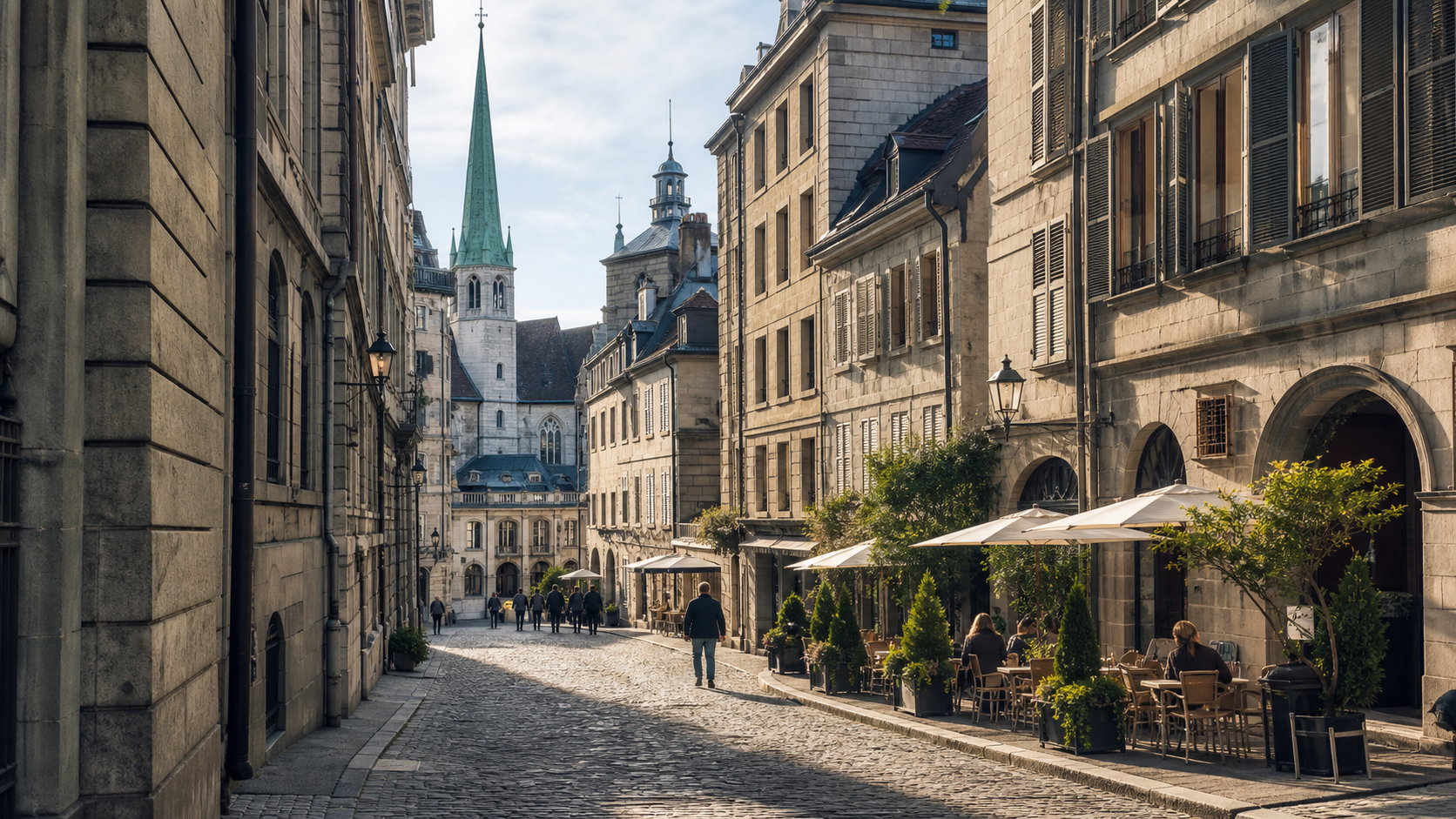
The Old Town rises above the commercial centre in a compact maze of stone lanes, passages and small squares. Place du Bourg-de-Four, once a market, now supports cafés and provides a natural meeting point. Grand-Rue passes historic houses and leads toward quieter courtyards.
Maison Tavel, the city’s oldest private residence, presents Geneva’s urban history. The Museum of Art and History nearby ranges from archaeology to fine art. Promenade de la Treille offers a long bench, chestnut trees and views toward the surrounding city.
St Peter’s Cathedral
St Peter’s Cathedral dominates the Old Town and became a central site of the Protestant Reformation under John Calvin. Its exterior and interior combine Romanesque, Gothic and later elements, while the restrained nave reflects Reformed worship.
Climb the towers for views over tiled roofs, Lake Geneva and distant mountains. Official visitor information notes 157 steps, and stairways can be narrow. The archaeological site beneath the cathedral reveals earlier religious structures and is worth adding for travellers interested in the city’s deep history.
Access and tickets for the towers and archaeology may differ from the main church. Services take priority, so check schedules and enter quietly.
Reformation Wall and Bastions Park
Parc des Bastions lies below the old town and contains the monumental Reformation Wall. Large stone figures of Calvin, Farel, Beza and Knox stand within a broader sequence marking the international reach of Protestant reform. Read the surrounding inscriptions to understand the monument beyond its scale.
The park is used by students, families and players at oversized chessboards. It creates a pleasant walking route between the university, old town and Plainpalais. In autumn, the tree-lined promenade is especially attractive.
International Geneva
Geneva’s international district centres on the Palais des Nations, the European headquarters of the United Nations. Guided visits can include assembly spaces, art and explanations of multilateral work, but security requirements are strict. Reserve through official channels, bring the specified identification and arrive well before the entry time.
The Broken Chair sculpture opposite the main entrance symbolises opposition to landmines and cluster munitions. Nearby organisations and diplomatic missions make the district feel unlike any ordinary tourist quarter.
The International Red Cross and Red Crescent Museum uses multimedia and personal testimony to explore humanitarian action, human dignity and family links disrupted by conflict. It pairs naturally with a UN visit, though both together form an emotionally and intellectually substantial day.
CERN and Science Gateway
CERN lies near the French border and represents one of Geneva’s most fascinating institutions. Science Gateway exhibitions introduce particle physics, accelerators and the questions studied by international research teams. Some exhibitions are accessible without a full laboratory tour, while guided activities require advance arrangements.
Reserve only through official CERN systems and check identification, age and access requirements. Research operations and safety needs mean that underground facilities are not guaranteed on standard visits. Trams connect central Geneva with the site, making a half-day trip straightforward.
Bains des Pâquis
Bains des Pâquis occupies a pier on the right bank and functions as a city beach, swimming facility, sauna, restaurant and community gathering place. It offers one of the best close-range views of the Jet d’Eau and old-town skyline.
In summer, arrive early for swimming and a simple breakfast. Water temperatures remain cool outside peak season, and lake conditions deserve respect. In colder months, sauna and fondue create a completely different experience. Opening arrangements vary by activity, so check current information.
The setting is informal and local. Bring a towel, coins or suitable payment for lockers and only photograph people with permission.
Eaux-Vives and Lakeside Parks
East of the jet, Eaux-Vives combines residential streets, restaurants and excellent lake access. The public Eaux-Vives beach stretches along a landscaped shoreline with lawns and water views. Parc La Grange behind it contains mature trees, rose gardens and generous picnic space.
Walk from the centre along Quai Gustave-Ador, swim in warm weather and remain for sunset. The district provides a relaxed counterpart to the formal international quarter and old town. Respect posted bathing rules and keep clear of boats.
Carouge
Carouge sits south of central Geneva and was planned under the Kingdom of Sardinia. Its low-rise streets, shaded courtyards and colourful façades feel distinctly Mediterranean. Independent designers, antique shops, cafés and a lively market make it one of the best neighbourhoods for unstructured wandering.
Take a tram, explore around Place du Marché and look inside courtyards only when publicly accessible. Carouge becomes animated in the evening and is an excellent dinner destination. It feels separate from central Geneva while remaining only a short journey away.
Plainpalais and the Bains District
Plainpalais is a broad open square used for flea markets, food stalls, fairs and public events. Market days vary, so check before visiting. The surrounding streets have student life, bars, record shops and international restaurants.
Watchmaking and Museums
The Patek Philippe Museum traces watchmaking through historical timepieces, enamel work and technical innovation. It appeals beyond collectors because displays connect craft, science and decorative art. Photography restrictions and opening hours should be checked before visiting.
What to Eat in Geneva
Geneva’s cuisine draws from Switzerland, Savoy and international communities. Fondue moitié-moitié combines Gruyère and Vacherin Fribourgeois cheeses, while raclette, rösti and lake fish appear widely. Longeole is a strongly seasoned Geneva pork sausage traditionally served with potatoes.
For something lighter, try perch fillets, seasonal vegetables and bakery meals. Geneva’s global population supports excellent Middle Eastern, African, Asian and Mediterranean restaurants, particularly beyond the old town.
Chocolate is a serious local craft. The marmite en chocolat recalls the Escalade festival, while pralines and single-origin bars make practical gifts. Geneva vineyards produce Chasselas, Gamay and other wines rarely exported in volume. Ask for local bottles rather than defaulting to better-known Swiss regions.
Best Time to Visit
May to September offers warm lakeside weather, long evenings and outdoor events. July and August can be hot and busy, but swimming brings relief. Spring and early autumn provide comfortable walking conditions with fewer crowds and occasional clear mountain views.
Winter is quieter and often grey at lake level, while nearby mountains may be snowy. December’s Escalade celebrations express local history through costumes, processions and chocolate cauldrons. International conferences can raise hotel demand in any season.
Getting Around Geneva
TPG operates trams, buses and local boats within an integrated fare system. The small Mouettes Genevoises crossing the harbour function as useful public transport and a scenic experience. Buy correct zones and validate tickets under current rules.
Geneva Airport has a direct rail connection to Genève-Cornavin station taking only minutes, with buses serving other districts. Many accommodations provide or arrange a guest transport benefit; confirm current eligibility. The centre is highly walkable, and a car is unnecessary.
Managing Costs
Geneva is expensive, but lakefront parks, old-town walks, the Reformation Wall and many public spaces are free. Use bakeries and supermarkets for some meals, refill water at marked fountains and consider lunch menus at better restaurants.
Where to Stay
The Old Town offers historic atmosphere but includes hills, cobbles and limited vehicle access. Around Cornavin station, transport is exceptional and accommodation spans many price levels. Pâquis provides lake access, international food and nightlife, with street atmosphere varying by block.
Eaux-Vives is polished and relaxed near parks, while Carouge suits travellers seeking neighbourhood character. Confirm whether city tax, breakfast, air conditioning and public transport benefits are included before comparing rates.
A Three-Day Geneva Itinerary
On day one, walk the lakefront and Jet d’Eau, explore the Old Town, climb St Peter’s tower and continue through Bastions Park. On day two, tour the Palais des Nations and Red Cross Museum, then swim or eat at Bains des Pâquis.
On day three, choose CERN, Carouge or the museums around Plainpalais. Finish with a harbour boat and sunset in Eaux-Vives. With another day, take a lake cruise, visit nearby vineyards or travel to a mountain viewpoint.
Practical Tips
Reserve UN and CERN visits early, carry official identification and allow time for security. Check whether the Jet d’Eau is operating, observe lake safety rules and buy correct transport zones. Book accommodation ahead during major conferences.
Geneva is most memorable when global institutions and lakeside life share one itinerary. Move between serious history, ambitious science and an evening swim; that balance reveals the city’s character.
Comments