
Why This 10-Day Spain Route Works for First-Timers
Spain rewards first-time visitors with a rare mix of big-city energy, layered history, and food culture that feels approachable even if you have never ordered tapas before. Ten days is enough to see three of the country’s most distinctive cities without rushing past every plaza, yet short enough that the trip still feels focused. The classic first-timer route — Barcelona, Madrid, and Seville — is connected by high-speed rail, so you spend more time exploring and less time in transit.
This itinerary suggests roughly three nights in Barcelona, three in Madrid, and three in Seville, with an optional day trip to Córdoba from Seville if your energy and schedule allow. You can fly into one city and out of another (an open-jaw ticket), which often works well for this loop and saves a backtrack.
Below you will find a clear day-by-day outline, what to book ahead, how trains and local transport fit together, and practical notes on food, seasons, and packing. Think of it as a warm handoff from a travel friend who has already sorted the logistics so you can enjoy the plazas, museums, and long evenings outdoors.
Overview of the 10-Day Plan
- Days 1–3: Barcelona — Gaudí landmarks, the Gothic Quarter, and Mediterranean evenings
- Days 4–6: Madrid — art museums, royal sights, and lively neighborhoods
- Days 7–9: Seville — palaces, cathedral views, and Andalusian atmosphere (optional Córdoba day trip)
- Day 10: Departure from Seville, or a flexible morning depending on your flight
Travel between cities is by Renfe AVE high-speed train: Barcelona Sants to Madrid Puerta de Atocha takes about 2 hours 30 minutes; Madrid Atocha to Seville Santa Justa takes roughly 2 hours 20 minutes to 2 hours 45 minutes. That means city changes are half-day moves, not full travel days.

What to Book Ahead
A few bookings make this trip smoother and less stressful:
- Renfe AVE tickets. Book ahead. Booking windows commonly open around 60 days before departure, and the cheapest early inventory often sells out. Aim for morning or midday trains so you still have afternoon and evening in the next city.
- Sagrada Família. Timed tickets sell out, especially in peak season — reserve your slot before you leave home.
- Seville’s Real Alcázar. Timed entry is the norm; booking ahead avoids long queues and wasted morning hours.
- Flights. Open-jaw itineraries (for example into Barcelona and out of Seville, or the reverse) often suit this route better than a round trip to a single airport.
- Hotels or apartments. Stay near metro or walkable centers so you can move lightly between sights and dinners.
Everything else — neighborhood walks, markets, viewpoints, and most museums — can flex around your energy and the weather.
Days 1–3: Barcelona
Day 1 — Arrive and settle into the city
Arrive in Barcelona and keep the first afternoon gentle. Check in, drop bags, and take a short orientation walk: the Gothic Quarter’s narrow lanes, a harborside stroll near the old port, or a café terrace. Jet lag makes this a good evening for a simple meal — a few shared plates and an early night — rather than packing in landmark after landmark.
Day 2 — Gaudí and the Eixample
Make Sagrada Família your timed highlight. Arrive with your ticket ready, give yourself time inside, then walk or ride toward other Gaudí-linked stops if you still have energy — Casa Batlló or Casa Milà on Passeig de Gràcia are popular, and even a walk through the Eixample’s wide boulevards is worthwhile. Late afternoon suits Park Güell for hilltop views; check current entry rules for the monumental zone before you go. Evening: return toward the center for a slower dinner.
Day 3 — Old town, Montjuïc or the sea
Use your last full Barcelona day for contrast. Morning in the Gothic Quarter, then either Montjuïc (views, museums, gardens) or a coastal stretch toward Barceloneta. Leave room for a market visit or simply sitting in a plaza. In the evening, pack for tomorrow’s train to Madrid and keep luggage manageable — you will change cities twice more.
Days 4–6: Madrid
Madrid is Spain’s capital and a natural pivot between the Mediterranean coast and Andalusia. For a deeper dive beyond this itinerary’s highlights, see our Madrid travel guide.
Day 4 — Arrive by AVE and find your rhythm
Take the AVE from Barcelona Sants to Madrid Puerta de Atocha (about 2 hours 30 minutes). Settle into your neighborhood — the historic center, Malasaña, or Lavapiés each have a different feel — then take a light walk past Plaza Mayor and Puerta del Sol. Madrid rewards wandering; skip the packed checklist on arrival day. Dinner culture runs late; tapas bars and terrazas fill gradually, and joining that rhythm is part of the experience.
Day 5 — Art and the grand axis
Devote a solid block to at least one major museum. The Prado, Reina Sofía, and Thyssen-Bornemisza sit within an easy walk along the Paseo del Prado — choose based on your interests rather than trying to see everything. Pair museum time with Retiro Park if the weather is good. Evening neighborhood hopping is easy on foot or by metro; sample a few places if you prefer variety over one long meal.
Day 6 — Royal Madrid and neighborhoods
Visit the Royal Palace area and Almudena Cathedral exterior, then Plaza de Oriente or the Sabatini Gardens. Afternoon: Malasaña’s cafés or a market-hall lunch. A rooftop viewpoint at golden hour is a memorable close to Madrid. Pack again for tomorrow’s AVE south to Seville.
Days 7–9: Seville (and Optional Córdoba)
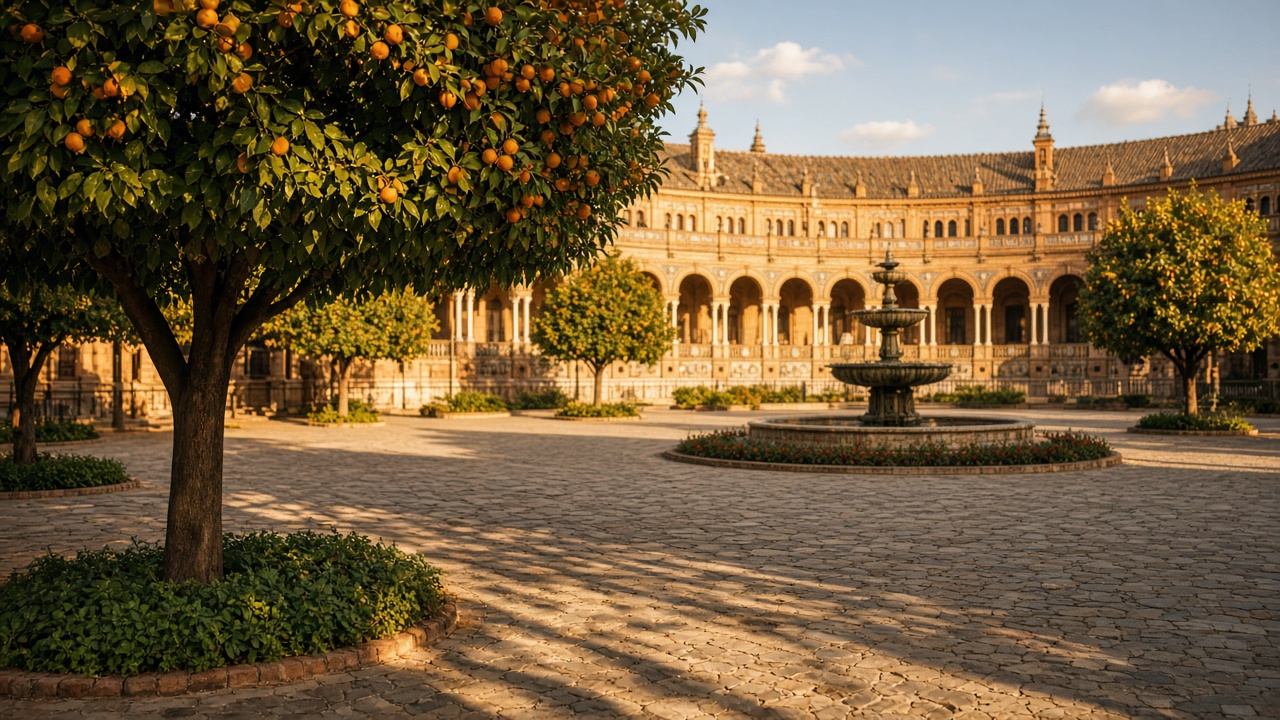
Seville brings orange trees, tiled courtyards, and a slower southern pace. For more detail, read our Seville travel guide.
Day 7 — Arrive and the historic core
Ride the AVE from Madrid Atocha to Seville Santa Justa (roughly 2 hours 20 minutes to 2 hours 45 minutes). From the station, reach the historic center by taxi, tram, or a longer walk depending on where you stay. Afternoon: orient yourself around the cathedral and Giralda area, then wander the Santa Cruz lanes without trying to see every courtyard on the first pass.
Seville evenings are made for outdoor seating when the weather cooperates. Keep plans flexible and enjoy the shift in light and temperature after sunset.
Day 8 — Real Alcázar and cathedral
Use your timed Real Alcázar ticket for a morning or early afternoon visit — gardens, halls, and Moorish-influenced design reward unhurried attention. Pair it with the cathedral and Giralda climb if heights and stairs suit you; the view over rooftops is one of Seville’s classics. Leave gaps between sights so you are not rushing in the heat, especially outside spring and autumn.
Day 9 — Triana, free time, or Córdoba day trip
Cross the river to Triana for ceramics shops, riverside views, and a different neighborhood character. Alternatively, take a day trip to Córdoba for the Mezquita-Cathedral and the old Jewish quarter — trains are frequent enough that a full day is realistic if you start early and return in the evening. If you prefer to stay put, use the day for a palace you skipped, a flamenco performance booking, or simply more time in plazas and parks.
Day 10 — Departure
Depending on your flight time, enjoy a final coffee and a short walk before heading to the airport or station. If your open-jaw ticket takes you out of Madrid or Barcelona instead, reverse the rail logic and leave buffer time for connections.
How to Get Around
Between cities: Renfe AVE is the backbone of this itinerary. Stations are central (Barcelona Sants, Madrid Puerta de Atocha, Seville Santa Justa), so you avoid long airport transfers on city-change days. Book early for better fares and preferred times.
Within cities: Walking covers a surprising amount in historic centers. Metro and buses fill the gaps in Barcelona and Madrid; Seville is more compact on foot, with tram and bus options when needed. Taxis and ride apps help with luggage on arrival and departure days.
Airports: Factor transfer time from Barcelona-El Prat, Madrid-Barajas, or Seville’s airport into your first and last days so you are not squeezed.
Food Tips (Keep It Simple)
Spanish meals often run later than in northern Europe or North America. Tapas and raciones let you share widely — order a few plates, then add more. Markets are excellent for casual bites. Look for busy local spots; a crowded counter often beats a long review thread. Stay hydrated in Andalusia’s warmer months, and remember olive oil–rich dishes fill you faster when you walk all day.
Seasons, Weather, and Packing
Spring and autumn are generally the most comfortable seasons for this Barcelona–Madrid–Seville loop. Summers, especially in Seville, can be extremely hot — July and August often bring temperatures of 40°C or higher. If you travel then, plan indoor museums and Alcázar visits for the heat of the day, rest in the early afternoon, and save long walks for morning and evening.
Pack light layers, comfortable walking shoes, sun protection, and a refillable water bottle. A compact umbrella or light rain jacket helps in spring. For churches and some historic sites, shoulders and knees covered are respectful defaults. One smart-casual outfit covers nicer dinners without overpacking.
Practical Pacing Tips
- Build one lighter half-day into each city so you can nap, do laundry, or wander without a checklist.
- Keep train days simple: morning rail, afternoon settle-in, evening food.
- Download offline maps and your ticket QR codes before you need them.
- Carry a bit of cash for small bars and markets; cards are widely accepted but not universal everywhere.
Conclusion: Your First Spain Trip, Done Right
Ten days in Barcelona, Madrid, and Seville give you coast, capital, and Andalusia without treating the country as a blur of checklists. High-speed trains stitch the route together; a handful of advance bookings (AVE seats, Sagrada Família, Real Alcázar) remove the biggest friction points; and open-jaw flights keep the geography honest.
Use this outline as a framework, then leave white space for the plaza you did not plan, the neighborhood dinner that ran late, and the viewpoint you found by accident. When you are ready for more city deep-dives and destination ideas, explore more guides on Jettripper and keep building the Spain trip that fits how you like to travel.