
Alicante combines a compact historic centre, an imposing hilltop fortress and beaches that begin beside the city. It is often treated merely as an airport gateway to the Costa Blanca, yet the provincial capital deserves several days of its own. Palm-lined promenades, archaeological museums, rice restaurants and an active marina create a relaxed city break with remarkably little travel time between experiences.
Two full days cover the essentials; three allow a trip to Tabarca Island or a longer beach afternoon. This Alicante travel guide explains the main sights, neighbourhoods, food, transport and practical choices for a rewarding first visit.
Why Visit Alicante?
Alicante is easy to understand on foot. The old quarter rises beneath Mount Benacantil, Postiguet Beach sits beside the centre and the harbour begins at the famous Explanada de España. Travellers can visit a medieval fortress in the morning, eat rice for lunch and swim before sunset.
The city also works throughout much of the year. Spring and autumn are ideal for walking, winter is generally mild and summer revolves around the coast and late evenings. Alicante feels more like a working Spanish city than a purpose-built resort, while still providing the infrastructure visitors expect.
Santa Bárbara Castle
Castillo de Santa Bárbara dominates Alicante from Mount Benacantil. Its origins reach back to the Muslim period, with later Christian fortifications, courtyards and defensive structures revealing centuries of strategic importance. The highest terraces offer sweeping views across the city, marina, Postiguet and surrounding mountains.
Entry to the castle grounds is generally free, while exhibitions, tours or events may have separate arrangements. Access changes because of maintenance and weather. Official information currently recommends pedestrian routes, a shuttle or the lift opposite Postiguet Beach; private vehicle access and parking are restricted.
The walk through La Ereta Park is the most atmospheric approach but includes sustained climbing and exposed sections. Begin early, carry water and wear shoes with grip. The seafront lift is easier, though it requires a ticket and can close temporarily. Strong winds occasionally shut the entire fortress for safety.
Allow at least ninety minutes inside. Explore beyond the first viewpoint, read the historical interpretation and look down toward the distinctive shape on the mountain known as the Moor’s Face. Sunset is beautiful, but confirm the last admission and descent options before committing to a late visit.
Barrio de Santa Cruz
Santa Cruz climbs the lower slope beneath the castle in a network of whitewashed houses, blue-painted details, flowerpots and steep stairways. It is Alicante’s most photographed neighbourhood, but it remains residential. Visit quietly, avoid blocking doors and never treat private terraces as public viewpoints.
The lanes are especially attractive in the morning and golden hour. Continue into La Ereta Park or descend toward the Basilica of Santa María. Footwear matters because polished steps can become slippery. During local festivals, decorations and processions change access and atmosphere.
Alicante Old Town
The historic centre contains two major churches. The Basilica of Santa María stands on the site of a former mosque and presents a sober Gothic exterior with later decorative elements. Nearby, the Contemporary Art Museum of Alicante occupies a historic building and provides an excellent cultural pairing.
The Co-Cathedral of San Nicolás has a restrained Renaissance facade and a striking blue dome visible from surrounding streets. Its cloister and chapels reward a respectful visit outside services. Alicante Town Hall is an eighteenth-century Baroque building whose staircase includes the reference point historically associated with measuring Spain’s elevation above sea level.
Explanada de España and the Marina
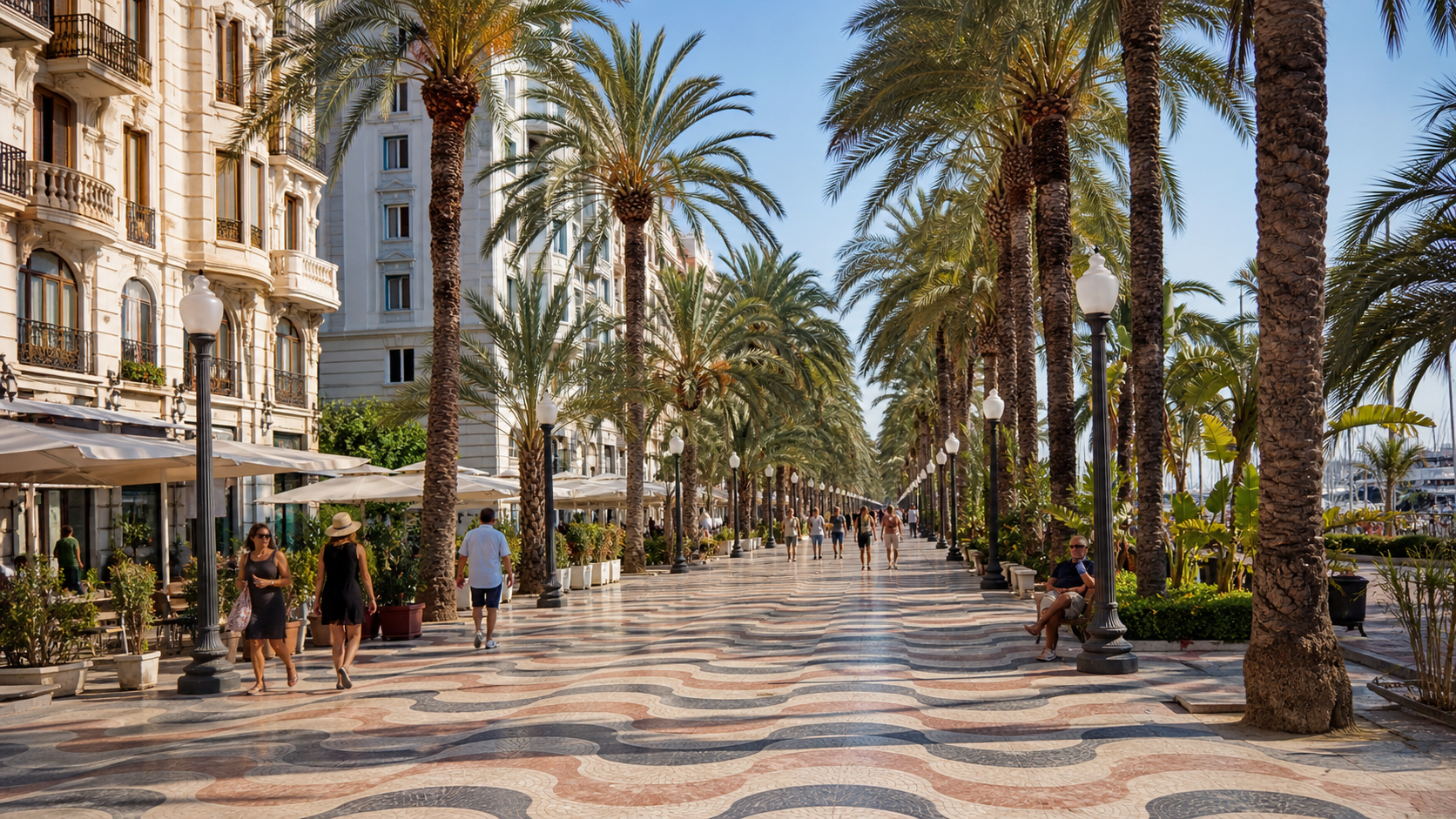
The Explanada de España is Alicante’s emblematic promenade. Millions of coloured marble tiles form a wave pattern beneath rows of palms, echoing the Mediterranean beside it. Early morning brings walkers and runners; evening brings families, performers and busy terraces.
At the eastern end, Casa Carbonell provides an elegant architectural landmark. Cross toward the marina for boat views and continue to the Ocean Race Museum, which explores the round-the-world sailing competition. Exhibition access and opening days should be confirmed in advance.
Restaurants a few streets inland often provide better value. Keep valuables secure when crowds form.
Postiguet Beach
Playa del Postiguet begins below the castle and is Alicante’s most convenient beach. Golden sand, a palm-lined promenade and central transport make it ideal for a short swim between sights. Its accessibility also means heavy summer crowds.
Lifeguards and services operate seasonally. Follow warning flags, protect yourself from intense sun and never leave belongings unattended while swimming. Accessible bathing assistance is available during specified summer periods, but reservations and operating details should be checked with the official beach service.
For more space, take the TRAM toward San Juan Beach. Its long shore supports walking, swimming and sports, with restaurants and residential areas behind it. Albufereta is smaller and calmer, while the coves of Cabo de la Huerta appeal to confident swimmers seeking rocky scenery.
MARQ Archaeological Museum
The Museo Arqueológico Provincial de Alicante, known as MARQ, presents regional history through archaeology and modern exhibition design. Galleries cover prehistory, Iberian culture, Roman life, the medieval period and archaeological methods. Temporary exhibitions can be significant and may require timed tickets.
MARQ is north of the centre beside its own TRAM stop. Allow two hours, particularly in hot or rainy weather. The museum adds depth to later visits at Lucentum, the Roman archaeological site near Albufereta.
What to Eat in Alicante
Rice is central to Alicante’s food identity. Local menus distinguish between dry, creamy and brothy preparations, using seafood, fish stock, vegetables, rabbit or other meats. Arroz a banda is cooked in fish stock and traditionally served separately from the fish; arroz del senyoret contains peeled seafood for easy eating.
Good rice is prepared to order and commonly priced per person with a minimum of two diners. Reserve lunch, ask which styles the kitchen specialises in and expect preparation to take time. “Paella” is not a catch-all label for every local rice dish.
Try salazones, salt-cured fish products, and coca amb tonyina, a tuna-filled pastry associated with festival traditions. Fresh prawns, cuttlefish, octopus and grilled fish reflect the coast.
For sweets, Alicante is famous for turrón, particularly products associated with nearby Jijona. Horchata and ice cream are welcome in warm weather. The region’s wines include distinctive reds, whites and sweet styles under the Alicante designation.
Mercado Central and Tapas Streets
Alicante’s Central Market is the best place to understand local produce. Meat, fish, vegetables, fruit, baked goods and prepared foods fill a handsome early twentieth-century building. Visit in the morning, keep aisles clear and ask permission before close photography.
Around Calle Castaños and the traditional centre, bars serve tapas, montaditos and drinks from lunch into late evening. Quality varies, so choose places with focused menus and regular local traffic. Meal times run later than in northern Europe; lunch after 1:30 pm and dinner after 8:30 pm feel natural.
Tabarca Island
Tabarca is the only inhabited island in the Valencian Community and a classic Alicante day trip. Boats from the city usually take about an hour, with frequency depending on season and weather. Services from Santa Pola offer another route.
The island combines a walled eighteenth-century settlement, small coves and a protected marine reserve. Snorkelling can be excellent when the sea is calm, but visitors should use a visibility buoy, avoid boat channels and never touch or feed wildlife. Summer is crowded; shoulder seasons provide a quieter historical walk but fewer sailings.
Reserve the return boat, carry sun protection and check sea conditions. Try caldero, the island’s traditional fish and rice dish, at a restaurant booked ahead.
Getting Around Alicante
Central Alicante is walkable. Urban buses cover outer districts, while TRAM d’Alacant connects the centre with MARQ, San Juan, coastal towns and destinations farther along the Costa Blanca. Fares depend on zones and products, so consult current official information.
Alicante–Elche Miguel Hernández Airport is southwest of the city. The airport bus connects with central stops and operates more frequently than many local routes, while taxis provide a straightforward option with luggage. There is no direct mainline train from the terminal.
The railway station serves Madrid, Valencia and other cities. A car is unnecessary for central sightseeing and complicates parking.
Best Time to Visit
March through June and September through November offer comfortable walking weather, beach possibilities and active city life. July and August are hot, bright and busy; schedule the castle early, rest during peak heat and reserve restaurants.
Winter is mild compared with northern Europe, though sea swimming is cool and storms occur. Major celebrations—especially Hogueras de San Juan around June—transform the city, increase prices and produce noise, fireworks and road closures.
Where to Stay
The old town provides atmosphere and immediate sightseeing, but steep streets and nightlife noise require careful hotel selection. The traditional centre around the market balances restaurants, transport and flatter access. Properties near Postiguet suit beach priorities, while the marina edge offers sea views at premium prices.
San Juan Beach works for a resort-style stay connected by TRAM, though travelling to central museums takes longer. Check recent reviews for soundproofing, air conditioning, lifts and exact distance from a transport stop.
A Three-Day Alicante Itinerary
On day one, climb or ride to Santa Bárbara Castle, descend through Santa Cruz and explore Santa María, MACA, Town Hall and the Explanada. Finish at Postiguet.
On day two, visit MARQ, travel to San Juan Beach and return for a rice lunch or dinner in the centre. Use day three for Tabarca when boats and weather permit. Alternatively, see Lucentum, Cabo de la Huerta and additional museums.
Alicante succeeds as a city break because its experiences connect naturally: fortress, old streets, promenade, market and beach lie within a compact landscape. Plan the castle and any boat journey carefully, then let Mediterranean meals and unhurried walks set the pace.
Comments