
Alicante makes beach time easy. The city’s central sand begins beneath Santa Bárbara Castle, while a modern TRAM reaches long shores, sheltered bays and rocky coves farther along the Costa Blanca. Visitors can swim before breakfast, explore museums during the hottest hours and return to the Mediterranean for sunset.
Not every beach suits every traveller. Postiguet offers convenience, San Juan provides space and sports, Albufereta has calmer water, and Cabo de la Huerta rewards confident swimmers seeking a more natural setting. This guide compares Alicante’s beaches, explains access and safety, and helps you plan a responsible day by the sea.
Postiguet Beach
Playa del Postiguet is Alicante’s signature urban beach. It stretches beside the centre at the foot of Mount Benacantil, with the castle rising directly behind the sand. The marina, Explanada de España, old town and restaurants are all within walking distance.
Choose Postiguet for a short swim between sights. Its convenience brings crowds, especially on summer weekends. Arrive before 10 am for more space, or return in early evening.
The waterfront promenade supports walking and jogging, while seasonal services may include lifeguards, toilets, foot showers and accessible bathing assistance. Availability changes, so consult official information rather than assuming full facilities outside summer.
Keep belongings within reach. Urban beaches attract opportunistic theft, and hiding a phone beneath a towel is not secure. Solo swimmers should carry minimal valuables in waterproof storage or use a trusted organised service.
San Juan Beach
Playa de San Juan is Alicante’s great open beach: a broad, long sweep of fine sand northeast of the centre. It has room for volleyball, running, family play and long walks, with residential streets and restaurants behind the promenade.
TRAM services connect central Alicante with several stops serving different sections. Check the exact beach access before boarding; the walk from the line varies. Buses provide additional options. A taxi is useful for families carrying equipment, but parking becomes difficult during peak season.
San Juan is the best all-round choice for a full beach day. The shore usually feels less compressed than Postiguet, although July and August remain busy. Waves and currents vary, so swim only within marked areas and follow lifeguard flags.
Restaurants near the beach range from casual cafés to specialist rice venues. Reserve a proper rice lunch and expect the dish to be prepared to order. Cover up when leaving the sand; swimwear alone is inappropriate inside shops and public transport.
Muchavista Beach
San Juan continues north into Muchavista in the neighbouring municipality of El Campello. The visual boundary is subtle, and together they form an exceptionally long shoreline. Muchavista appeals to travellers who want space, flat promenade walking and easy access by TRAM.
Because it lies beyond central Alicante, facilities and local rules may be managed separately. Check current beach information and transport times, particularly for an evening return. El Campello’s harbour and restaurants can turn a beach outing into a full-day excursion.
Albufereta Beach
Playa de la Albufereta occupies a sheltered bay between Serra Grossa and the archaeological area of Tossal de Manises. Its smaller scale and generally calmer appearance make it popular with families and residents.
TRAM and bus connections make access straightforward. The compact beach fills quickly, so an early start matters. Breakwaters and the shape of the bay can reduce exposure, but no beach is automatically safe; flags and lifeguard instructions take priority.
Combine Albufereta with Lucentum, the archaeological remains of the Roman city, or continue to the MARQ archaeological museum. The historical context distinguishes this beach from a purely resort-style outing.
Almadraba Beach
Almadraba is a modest, sheltered beach northwest of Albufereta. Calm water and a western orientation make it especially attractive near sunset. It feels more neighbourhood-based than Alicante’s larger beaches.
The sand and swimming area are limited, and seaweed can be part of the natural shoreline. Do not expect the expansive facilities of San Juan. Come for a quiet paddle, a short family visit or evening views rather than an all-day resort experience.
Cabo de la Huerta Coves
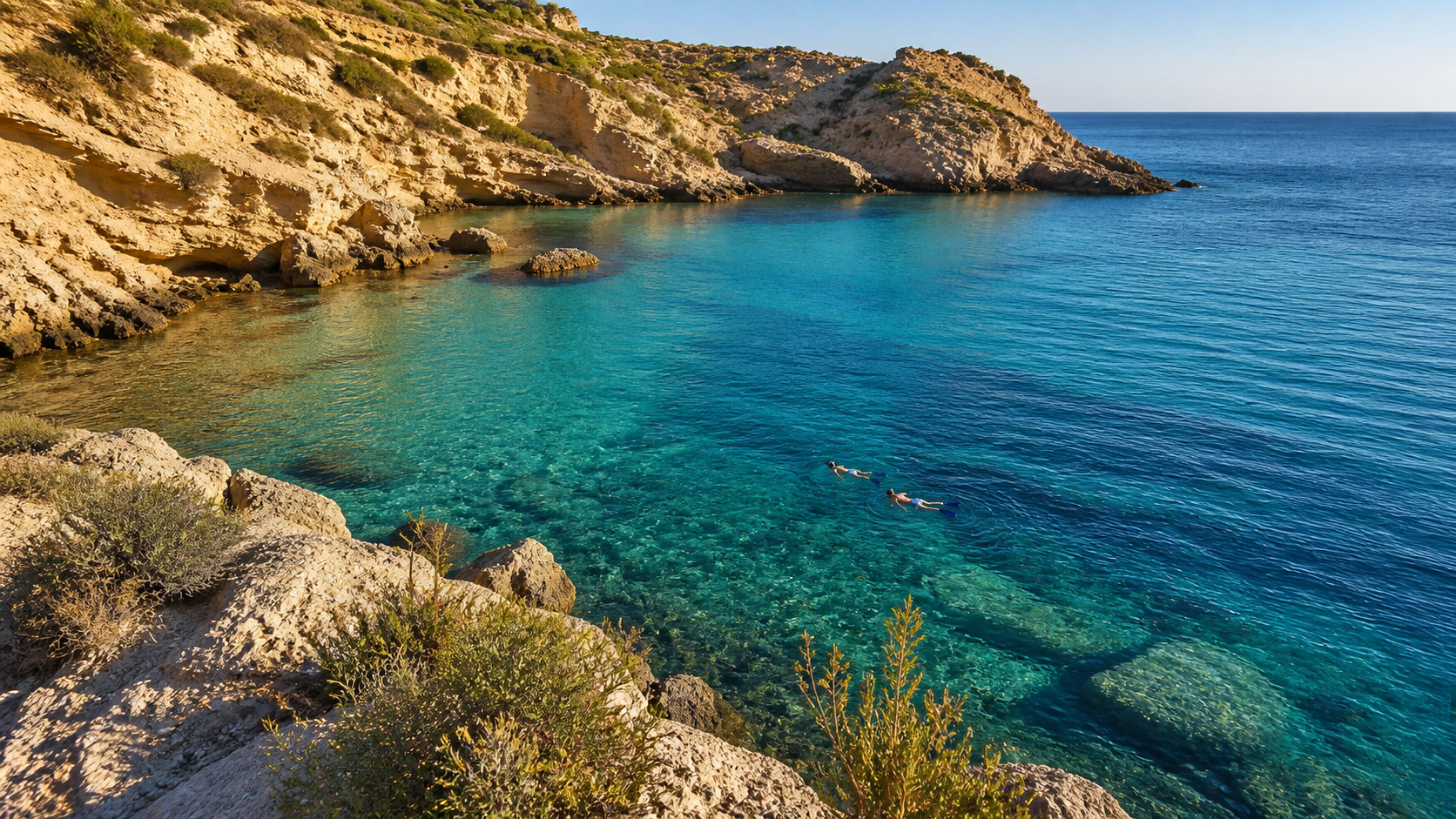
Cabo de la Huerta separates Albufereta from San Juan through a rocky headland indented by small coves. Cala Cantalares, Cala de los Judíos and Cala Palmera offer clear-water scenery and snorkelling possibilities when conditions are calm.
These are rocky environments, not conventional sandy beaches. Water shoes, a snorkel buoy and careful entry are essential. Surfaces become slippery, shade is scarce and some approaches are uneven. The coves are unsuitable for anyone expecting easy accessibility or full lifeguard coverage.
Respect marine life and never remove shells, plants or animals. Do not feed fish, touch octopuses or stand on fragile underwater habitat. Stay visible to boats and leave the water immediately if wind, waves or visibility deteriorate.
The cape also has walking routes and viewpoints, but summer heat can be punishing. Carry more water than you expect to need and avoid cliff edges. Sunset is beautiful, yet plan transport before darkness.
Saladares–Urbanova Beach
South of the city, Playa de los Saladares–Urbanova provides a long sandy alternative near a residential district. It generally feels less tourist-driven than Postiguet and San Juan, making it useful for visitors with a car or suitable bus connection.
The beach offers open views and room for long walks. Services are seasonal, and surrounding restaurant choice is more limited than in central areas. Verify the return route before staying late. Accessible facilities and assisted bathing may operate in designated summer periods.
Agua Amarga and San Gabriel
Agua Amarga lies south of central Alicante and has had specialised zones or services during different seasons. San Gabriel is another small urban shoreline closer to the southern districts. Neither is the automatic choice for a first-time beach day, but they may suit nearby residents or travellers seeking a specific facility.
Municipal arrangements, water quality and permitted uses can change. Consult official beach information on the day rather than relying on an old guide, especially when travelling with a dog or requiring accessible assistance.
Tabarca Island Beaches and Coves
Tabarca is not a city beach, but its marine reserve makes it Alicante’s most distinctive swimming excursion. Boats from the port take roughly an hour, with schedules depending heavily on season and weather. Summer brings frequent departures and heavy visitor numbers.
The main beach has seasonal lifeguards and accessible bathing assistance during defined periods. Small coves around the island offer clearer water and snorkelling, but boat traffic and rocky entries require caution. Carry a visibility buoy, stay close to shore and never enter rough or murky water.
Reserve the return boat and bring sun protection, water and suitable footwear. The island has little natural shade. Avoid treating the marine reserve as an aquarium: observe wildlife without touching or feeding it.
Best Beach for Families
San Juan is the strongest option for space, sand and a full day, while Albufereta suits a smaller sheltered setting. Postiguet works when convenience matters more than tranquillity. Choose a location near lifeguard coverage and toilets rather than the most photogenic empty stretch.
Children need constant supervision even in shallow water. Ask tourist offices about free identification wristbands or current family safety initiatives. Establish a meeting point and photograph the nearest beach access number when arriving.
Accessible Beaches
Alicante provides permanent accessible infrastructure at selected beaches and scheduled assisted bathing during the summer. Recent official information identifies services at San Juan, Postiguet, Saladares–Urbanova and Tabarca, but reservations, hours and exact access points matter.
Contact the official programme before travel. Assistance is not necessarily available every day or outside summer, and weather can suspend bathing. Confirm accessible parking, ramps, shade and companion requirements individually.
Sea Conditions and Flag Safety
A green flag does not remove risk, while yellow demands extra caution and red prohibits bathing. Currents, jellyfish, waves and water quality can change rapidly. Use the city’s official beach information and speak with lifeguards.
Never swim near harbour entrances, watercraft channels or rocky points in poor visibility. Alcohol, heat and overconfidence are a dangerous combination. If caught in a current, remain calm, signal for help and avoid exhausting yourself by fighting directly against it.
When to Visit Alicante’s Beaches
June through September offers the warmest water and most complete services. July and August are hot and crowded; visit early, rest around midday and return after 5 pm. May and October can deliver excellent beach weather with fewer people, though services and water temperature are less predictable.
Winter is better for promenades and sunny lunches than dependable swimming. Mediterranean storms can temporarily remove sand, damage access or produce powerful surf. Always assess current conditions.
What to Bring
Pack high-factor sunscreen, a hat, water, a secure bag and footwear for hot promenades. Add water shoes and a snorkel buoy for rocky coves. Natural shade is limited, so use an umbrella where permitted or rent one when services operate.
Avoid glass, remove all rubbish and use ash-free or smoke-free areas correctly. Fresh-water foot showers may be limited during drought conditions. A quick dry brush removes sand without wasting water.
A Perfect Alicante Beach Day
Start at San Juan before the heat, swim inside the supervised zone and walk part of the promenade. Reserve a rice lunch nearby, then rest in shade. Return to central Alicante in late afternoon and walk from the Explanada to Postiguet as the castle catches evening light.
For a more adventurous day, replace San Juan with Cabo de la Huerta when the sea is calm. Travellers with an extra day should take the boat to Tabarca rather than trying to combine the island with city sightseeing.
Alicante’s coast succeeds because it offers real choice. Match the beach to your needs, follow current safety guidance and treat the shoreline as a shared public environment. The result is a Mediterranean day that feels effortless without becoming careless.
Comments