
Spain is one of the easiest countries in Europe to explore by train. A high-speed network fans out from Madrid to Barcelona, Valencia, Seville, Málaga and beyond, often getting you from city centre to city centre faster than a flight once you count airport transfers and security queues. Competition between operators has also made fares far more flexible than they were a few years ago, so a little planning can save real money.
This guide explains how the Spanish rail network works, who runs the trains, roughly how long the key routes take, how and when to book, what to expect at the station, and whether a rail pass makes sense. Journey times below are approximate and fares change constantly, so always check live schedules and prices before you commit.
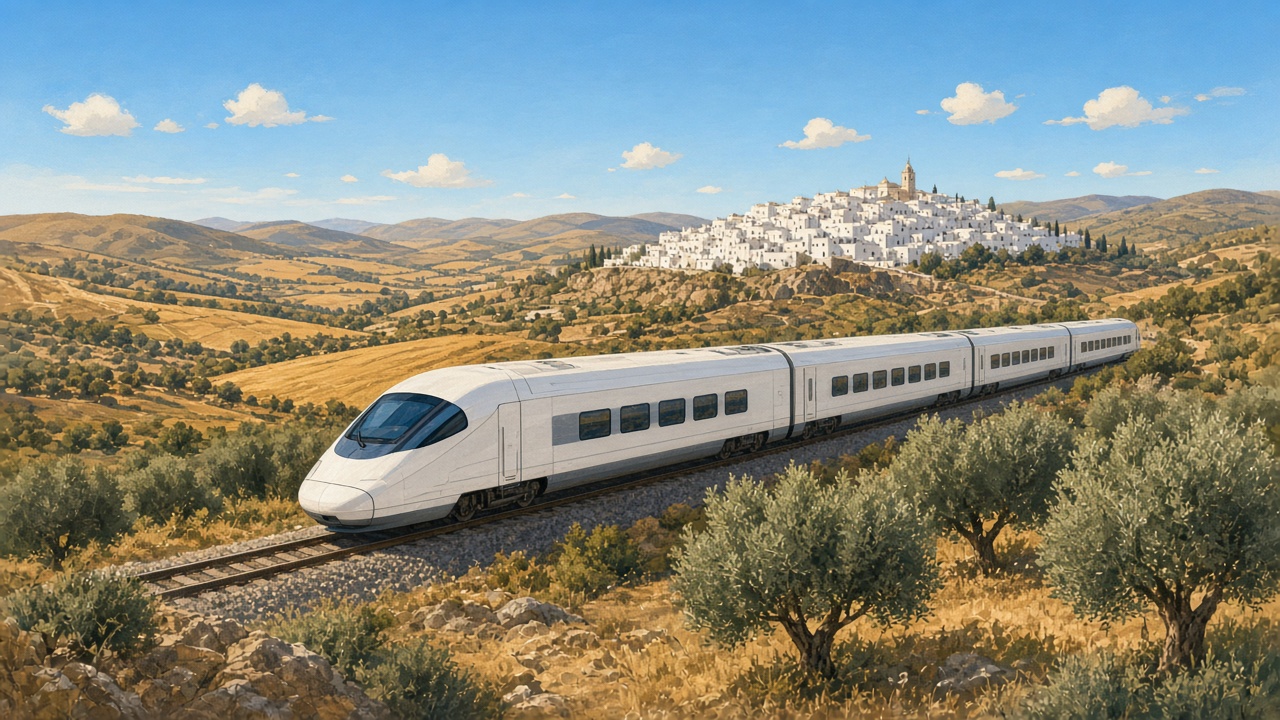
How the Spanish Rail Network Works
Think of Spain’s high-speed network as a star with Madrid at its centre. The main lines run from the capital north-east to Zaragoza and Barcelona (continuing to the French border), east to Valencia and Alicante, south to Córdoba, Seville and Málaga, and north-west towards Valladolid, León, Galicia and Asturias. The tracks are managed by the state company Adif, and several companies run trains on them.
The star shape matters for planning. Journeys to and from Madrid are usually fast and frequent. Journeys between two outer cities can be quick if they share a line (Seville to Córdoba, for example), but some cross-country trips are slower, involve fewer direct trains or require a change in Madrid. Barcelona to Valencia, for instance, runs along the Mediterranean coast on a route that is not fully high-speed.
Who Runs the Trains: Renfe, Iryo and Ouigo
Renfe
Renfe is the state-owned operator and still runs the largest share of services. Its main brands are:
- AVE: Renfe’s flagship high-speed service, with flexible fare options, comfort-class seating and the most generous luggage rules.
- Avlo: Renfe’s low-cost high-speed brand. Fares can be very cheap, but the basic ticket includes only a small bag and a cabin-size suitcase; a larger bag costs extra.
- Alvia: long-distance trains that can switch between high-speed and conventional tracks, useful for places like the Basque Country, Cantabria and parts of the north that are not fully on the high-speed network.
- Avant: shorter, mid-distance high-speed shuttles, such as Madrid to Toledo or Madrid to Segovia.
- Media Distancia and Cercanías: regional and commuter trains for shorter hops and suburban travel.
Iryo
Iryo is a private operator backed by Italy’s Trenitalia and Spanish partners. It runs red high-speed trains on the busiest corridors, including Madrid–Barcelona (via Zaragoza), Madrid–Valencia, Madrid–Alicante and Madrid–Andalusia (Córdoba, Seville and Málaga). Iryo offers several comfort levels, from a basic fare up to a premium option, and is often priced between Renfe’s AVE and the pure low-cost brands.
Ouigo
Ouigo España is the Spanish low-cost arm of France’s SNCF. Its blue double-decker trains run on major routes from Madrid, including Barcelona, Valencia, Alicante, Seville and Málaga, and the network has been expanding. Ouigo keeps the base fare low and charges for extras such as larger luggage and seat selection, so compare the final price, not just the headline fare.
On the big routes, three or four brands often compete on the same track, so search them all before booking.
Key Routes and Approximate Journey Times
These are typical times on the fastest direct services. Stopping trains, slower brands and some times of day can take longer, so treat them as planning ranges only.
- Madrid – Barcelona: roughly 2.5–3 hours (non-stop trains are quickest; services stopping at Zaragoza and other towns take longer).
- Madrid – Seville: roughly 2.5–3 hours, often via Córdoba.
- Madrid – Málaga: roughly 2.5–3 hours.
- Madrid – Córdoba: roughly 1.75–2 hours.
- Madrid – Valencia: roughly 1.75–2 hours.
- Madrid – Alicante: roughly 2.25–2.75 hours.
- Madrid – Granada: roughly 3–3.5 hours.
- Madrid – Zaragoza: roughly 1.25–1.75 hours.
- Seville – Córdoba: roughly 45 minutes to 1 hour.
- Barcelona – Valencia: roughly 3–3.5 hours along the coast.
- Barcelona – Seville or Málaga (direct): roughly 5.5–6.5 hours, where direct trains run.
Once you add airport transfers and security to a short flight, the train is usually as fast door to door, and far more relaxed.
Booking Tips: When and Where to Buy
Booking windows
Long-distance tickets typically go on sale a few months ahead; high-speed services are often released around 90 days before departure, but Renfe sometimes opens dates in blocks, and sales can open later around the twice-yearly timetable changes in June and December. If the train you want isn’t showing yet, it may simply not be on sale. Iryo and Ouigo set their own release dates, sometimes further ahead.
How fares work
Prices are dynamic, much like airline fares. Early tickets on quiet days can be dramatically cheaper than last-minute seats on a Friday evening or holiday weekend. A few habits help:
- Book early for peak dates: Easter (Semana Santa), July and August, long weekends (puentes) and Christmas fill up fast.
- Compare operators: on Madrid–Barcelona, Madrid–Valencia and Madrid–Andalusia, check Renfe (AVE and Avlo), Iryo and Ouigo side by side.
- Read the fare rules: the cheapest tickets usually have limited or no changes and refunds, and may restrict luggage or seat choice.
Where to buy
You can book directly on each operator’s website or app, through third-party booking platforms, or at station ticket offices and machines. Keep a backup payment card, as foreign cards are occasionally rejected. Tickets are personal: the name and ID number you enter should match the passport or ID card you carry.
Train fares are often one of the biggest variable costs of a multi-city trip. If you’re building an overall budget, our guide to how much a trip to Spain costs shows how intercity travel fits alongside accommodation, food and sightseeing.
Stations and Boarding

Main stations to know
- Madrid Puerta de Atocha – Almudena Grandes: the classic hub for high-speed trains to Andalusia and many services to Barcelona.
- Madrid Chamartín – Clara Campoamor: in the north of the city, used for many trains to Valencia, Alicante, Murcia and the north and north-west. Always check which Madrid station your train uses, as it can vary by operator and route.
- Barcelona Sants: the main long-distance station in Barcelona, well connected by metro and commuter rail.
- Sevilla Santa Justa: Seville’s main station, a short taxi, bus or long walk from the historic centre.
- Málaga María Zambrano: close to the city centre and linked by commuter train to the airport and the Costa del Sol.
- València Joaquín Sorolla: the high-speed station in Valencia, next to the older Estació del Nord in the centre.
Security screening and luggage
Unlike many European railways, Spain screens bags before most high-speed and long-distance departures. Your luggage goes through an X-ray scanner, and access gates to the platform typically close a couple of minutes before departure. At big stations, aim to arrive around 30 minutes early, more on busy Friday afternoons or holiday weekends.
Luggage allowances differ by operator and fare. Renfe’s AVE has historically been generous (several pieces within overall size and weight limits), while low-cost brands such as Avlo and Ouigo include smaller allowances and charge for larger suitcases. Check your fare’s rules before you travel; adding a bag in advance is usually cheaper than paying at the gate.
Getting to and from the station
Many Renfe long-distance tickets include a free connecting journey on the local Cercanías commuter network in the departure and arrival city (look for the “Combinado Cercanías” code on your ticket). It’s an easy way to reach your hotel without buying a separate ticket.
Rail Passes: Interrail and Eurail in Spain
Interrail (for European residents) and Eurail (for non-Europeans) passes are valid on Renfe services, but in Spain they work differently from countries like Germany or Switzerland. Almost all long-distance and high-speed trains require a paid seat reservation on top of the pass, and passholder seats are limited, so they can sell out before the train itself does.
- Expect to pay a reservation fee for each high-speed or long-distance journey; check the current amount on the Interrail or Eurail website.
- Low-cost brands such as Avlo and Ouigo generally do not accept passes, and Iryo acceptance depends on fare type and booking channel.
- Reservations can be booked through the pass provider’s reservation service, some third-party platforms, or at Spanish station ticket offices.
For a short trip that only links a few major cities, buying individual advance tickets is often cheaper than a pass plus reservations. A pass makes more sense if you’re travelling across several countries or want flexibility on many days.
Sample Multi-City Routes by Train
Classic first visit: Barcelona – Madrid – Seville (7–10 days)
Start in Barcelona, take a high-speed train to Madrid (roughly 2.5–3 hours), then continue south to Seville (roughly 2.5–3 hours). Add a day trip from Madrid to Toledo or Segovia and a stop in Córdoba on the way to Seville. For a detailed day-by-day plan, see our 10-day Spain itinerary for first-time visitors.
Andalusia loop: Madrid – Córdoba – Seville – Granada – Málaga
Ride from Madrid to Córdoba, continue to Seville, then head to Granada for the Alhambra and finish in Málaga. Some Andalusian links run less frequently, so check connections carefully.
Mediterranean route: Barcelona – Valencia – Madrid
Follow the coast from Barcelona to Valencia (roughly 3–3.5 hours), then cut inland to Madrid on high-speed rail (roughly 1.75–2 hours). It’s a good choice if you want beaches, paella and big-city culture in one trip.
Green north: Madrid – Bilbao or San Sebastián – Santiago de Compostela
Northern Spain is cooler and greener, and the rail picture is more mixed. Some routes use high-speed lines for part of the way and Alvia or conventional trains for the rest, so journeys can be longer. Combining trains with the occasional bus often works best here.
Season makes a big difference to all of these routes; our guide to the best time to visit Spain by region helps you match the itinerary to the weather.
Regional and Scenic Trains
High-speed trains are efficient, but some of Spain’s most memorable rail journeys are slower:
- Media Distancia routes: regional trains reach places such as Ronda in Andalusia, small towns in Castile and inland Catalonia. They are often cheap and usually don’t need booking far ahead, though seats can be reserved on some services.
- Narrow-gauge lines in the north: Renfe’s Cercanías and regional services along the Cantabrian coast connect towns in the Basque Country, Cantabria and Asturias through green hills and coastline.
- Commuter rail for day trips: Cercanías networks make easy day trips possible, for example to Sitges from Barcelona or the Costa del Sol beaches from Málaga.
Practical Tips for Train Travel in Spain
- Double-check the station: Madrid and some other cities have more than one long-distance station.
- Carry ID: staff may check that your name and document match the ticket.
- Keep your ticket on your phone: operator apps store QR codes, but a screenshot or printout is a useful backup.
- Watch the departure board: platforms are often shown only shortly before departure.
- Plan buffers: if you’re connecting to a flight or another train on a separate ticket, leave a generous margin.
Conclusion
Travelling around Spain by train is fast, comfortable and often cheaper than flying, especially when you book early and compare Renfe, Iryo and Ouigo on the main corridors. Build your trip around Madrid as the hub, allow time for security at the station, and treat the journey times here as approximate guides rather than fixed timetables. Then check live fares and schedules for your dates and lock in the key legs early.
Looking for more inspiration for your trip? Explore more travel guides on Jettripper.
Comments
[…] by high-speed trains, so it is easy to combine a cooler city with a warmer one. Our guide to travelling around Spain by train explains how to plan the […]