
Copenhagen combines royal history with an unusually relaxed urban rhythm. Copper spires rise above compact streets, cyclists move confidently through daily traffic, and former industrial waterfronts have become swimming places, food halls and architectural landmarks. The Danish capital is polished, but its best experiences remain simple: a harbor walk, an open sandwich and an evening in a neighborhood wine bar.
This Copenhagen travel guide covers Nyhavn, major palaces and museums, design, food, cycling, public transport and a practical four-day itinerary. Three full days suit the essentials; a fourth makes room for Louisiana Museum, Frederiksberg or a slower exploration of the harbor.
Why Visit Copenhagen?
Copenhagen excels at connecting old and new. Rosenborg Castle preserves royal treasures, Christiansborg occupies the historic center of power, and eighteenth-century façades line canals once used by merchants. Nearby, contemporary bridges, libraries and cultural buildings demonstrate the city’s continuing investment in design.
Quality of everyday space is another attraction. Parks are carefully maintained, harbor water is clean enough for designated swimming areas, and excellent bakeries appear in residential streets. The city is expensive, but free walks, public gardens and waterfront life balance museum and restaurant costs.
Nyhavn and the Inner Harbor
Begin at Nyhavn before breakfast, when its colorful houses and wooden boats can be appreciated without heavy foot traffic. The canal was developed in the seventeenth century as a commercial harbor, and Hans Christian Andersen lived at several addresses along it. Today the sunny side is lined with restaurants whose terraces become busy quickly.
Walk to the end of the canal and continue along the water past the Royal Danish Playhouse. The harbor opens toward the Opera House, while modern pedestrian and bicycle bridges connect Christianshavn and newer food areas. A canal tour provides a useful orientation, particularly for seeing low bridges and architecture from water level.
Amalienborg and the Royal Quarter
Amalienborg consists of four matching palaces around an octagonal square and remains a royal residence. The museum occupies part of the complex, presenting royal interiors and modern Danish monarchy. Changing-of-the-guard ceremonies attract crowds; check official timings and whether the royal family’s presence affects the procession.
Frederik’s Church, commonly called the Marble Church, closes the square’s architectural axis. Its vast dome is one of the skyline’s defining elements. From the waterfront, the axis extends across the harbor to the Opera House, producing one of Copenhagen’s most formal city views.
Walk north through Churchill Park to Kastellet, a star-shaped fortress whose green ramparts remain a pleasant public walk. The Little Mermaid statue sits nearby and is smaller than many visitors expect. See it as part of the harbor route rather than the sole purpose of a journey.
Rosenborg Castle and the King’s Garden
Rosenborg Castle was built as a royal summer residence and now contains richly furnished rooms, portraits and the Danish crown jewels. Its compact spaces can become congested, so timed entry is useful during busy periods. Lockers may be required for larger bags.
The surrounding King’s Garden is one of the center’s most popular green spaces. Locals picnic on lawns while formal avenues frame views of the castle. It is free to enter and pairs naturally with the nearby Botanical Garden.
Across the road, SMK—the National Gallery—covers Danish and international art. Select the sections that interest you rather than attempting every floor.
Christiansborg and Historic Copenhagen
Christiansborg Palace houses the Danish Parliament, Supreme Court and royal reception rooms on an island at the heart of the city. Separate areas include the Royal Reception Rooms, ruins beneath the palace, royal stables and kitchens. Access can change because this is a functioning government building, so verify the day’s openings.
Nearby, the compact streets around Magstræde and Snaregade preserve some of central Copenhagen’s most atmospheric façades.
Continue to the National Museum for Danish prehistory, Viking material and later social history. It is extensive, making two focused hours more rewarding than a rushed complete circuit.
Christianshavn and Christiania
Christianshavn was planned with canals and warehouses inspired partly by Dutch urbanism. Walk beside the water, cross small bridges and climb the external spiral staircase of the Church of Our Saviour if heights and narrow steps do not concern you. The tower requires a timed ticket and can close in poor weather.
Freetown Christiania developed from a squatted military area in 1971 and remains a self-governing community with homes, workshops, music venues and food. Visitors are welcome in public areas, but it is not an amusement park. Obey signs, never photograph people without permission and avoid illegal drug activity.
For a quieter continuation, follow the harbor south toward Islands Brygge or cross into the modern architecture of Holmen and Refshaleøen.
Harbor Baths and Waterfront Life
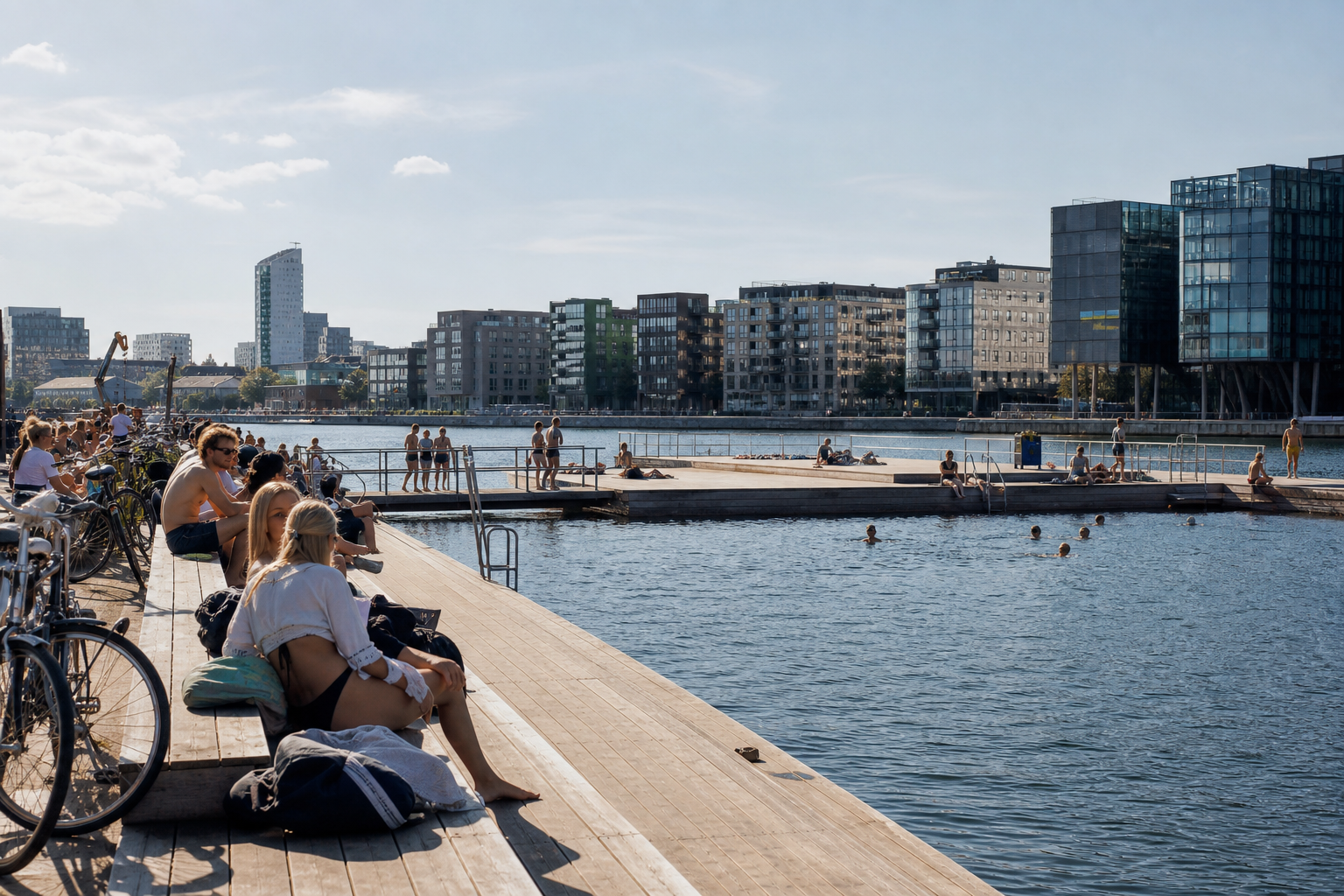
Copenhagen’s harbor is central to local summer life. Designated baths at Islands Brygge and other monitored locations provide ladders, platforms and separated swimming zones. Swim only where officially permitted, follow posted water-quality notices and never jump into navigation channels.
Even without swimming, the harbor route is excellent for walking or cycling. Bridges create loops between Islands Brygge, Christianshavn and the inner city, while benches and wooden decks encourage long pauses. Bring a windproof layer because conditions by the water can change quickly.
Danish Design and Architecture
Designmuseum Danmark traces decorative arts, furniture, craft and industrial design in a historic building near Amalienborg. Its presentation gives context to familiar names such as Arne Jacobsen and Hans Wegner while showing that Danish design extends beyond mid-century chairs.
Architecture can also be explored without tickets. The Black Diamond extension to the Royal Library angles toward the harbor, BLOX houses the Danish Architecture Center, and modern housing projects shape newer waterfront districts. A harbor bus is an inexpensive way to see several buildings from the water.
Tivoli Gardens
Tivoli combines rides, gardens, restaurants and evening illumination beside Central Station. Admission does not automatically include rides, and the park closes between seasons, so check dates and ticket options. Even non-riders may enjoy its historic atmosphere after dark.
Nordic Food on Different Budgets
Smørrebrød is the essential Copenhagen lunch: dense rye bread topped with fish, meat, egg or vegetables and eaten with a knife and fork. Traditional restaurants serve carefully composed versions, while casual counters offer simpler plates. Order two or three pieces depending on size.
Bakeries are central to daily life. Try a cardamom bun, cinnamon roll or laminated pastry early, when selection is widest. Coffee is consistently strong, although specialty cafés can be expensive.
Torvehallerne food halls near Nørreport combine produce, prepared dishes and specialty shops. Reffen offers seasonal street food in a former industrial setting. For dinner, Nørrebro, Vesterbro and Christianshavn provide broader value than the most famous central streets.
Neighborhoods Beyond the Center
Nørrebro is multicultural and energetic, with cafés, bars and independent shops around Jægersborggade, Elmegade and Sankt Hans Torv. Assistens Cemetery is both a burial ground for notable Danes and a leafy public space; behave respectfully around graves and ceremonies.
Vesterbro has evolved from a working-class and red-light district into a nightlife and dining hub. The Meatpacking District mixes restaurants, galleries and late venues, while residential streets west of it feel calmer. Frederiksberg, technically a separate municipality within the urban area, offers elegant avenues and a large landscaped garden.
Østerbro is quieter and family-oriented, with access to lakes, parks and the northern harbor. Metro connections make all these districts practical.
Cycling Safely
Bike lanes operate like roads. Keep right, signal before turning, check behind you and never stand in a cycle lane. Beginners should rent from a reputable shop and start outside rush hour on a quiet harbor route. Walking and metro are excellent alternatives.
Getting Around Copenhagen
Metro, S-trains, regional trains, buses and harbor buses share a zone-based ticket system. Buy the correct ticket before boarding through official apps or station machines and check in or validate according to the product used. Rejseplanen is the official journey-planning service.
The Copenhagen Card includes eligible transport and participating attractions. Calculate its value using current prices and realistic pacing. Walking remains best in the historic center.
Metro line M2 connects Copenhagen Airport at Terminal 3 with central stations in about fifteen minutes. Trains also serve Central Station. Confirm which option is closest to your accommodation and allow extra time during maintenance.
Best Time to Visit
May through September offers long daylight and active waterfront life. July and August are busiest, though many residents leave for holidays. Spring and autumn are cooler but comfortable with layers. Winter brings short days, wind and hygge-rich interiors, while December adds markets and Tivoli illumination.
Weather changes quickly year-round. Pack a waterproof outer layer and plan a flexible alternation of museums and outdoor routes.
Where to Stay
Indre By provides maximum convenience but premium prices. Vesterbro suits restaurants and nightlife, Nørrebro offers neighborhood energy, and Christianshavn is atmospheric near the canals. Østerbro and Frederiksberg are quieter choices with fast metro or S-train connections.
A Four-Day Copenhagen Itinerary
On day one, visit Nyhavn early, continue through Amalienborg, Kastellet and Rosenborg, then spend the evening around the inner harbor.
Use day two for Christiansborg, the National Museum and historic lanes. Visit Tivoli after dark if it is operating.
On day three, explore Christianshavn, climb the Church of Our Saviour and follow the harbor toward Islands Brygge or Refshaleøen.
Devote day four to SMK or Designmuseum Danmark, then explore Nørrebro, Vesterbro or Frederiksberg at a slower pace.
Final Tips for Copenhagen
Reserve popular restaurants, Tivoli events and limited-capacity tower climbs. Expect card payment almost everywhere, but check foreign transaction fees. Respect cycle lanes, designated swimming rules and quiet residential areas.
Copenhagen is best when you participate in its everyday rhythm: walk beside the harbor, sit in a garden, eat a simple bakery breakfast and observe how historic buildings meet contemporary public life. That balance explains the city better than any single landmark.
Comments