
Zurich is often described through banks and business, but the city feels most compelling beside water. Medieval lanes descend toward the clear Limmat River, swimming platforms turn into evening bars, and Lake Zurich opens toward the Alps. Switzerland’s largest city also supports outstanding art, independent design, energetic nightlife and a food scene that reaches far beyond fondue. Its compact centre and exceptional public transport make exploring remarkably easy. This Zurich travel guide covers the essential sights, neighbourhoods, food and practical planning for a first visit.
Why Visit Zurich?
Zurich combines urban polish with immediate access to nature. Visitors can tour a major museum in the morning, swim in the river after lunch and watch sunset from a wooded mountain. Historic guild houses and Reformation churches sit close to converted factories, creative districts and contemporary architecture.
Zurich’s Old Town
Altstadt spreads across both sides of the Limmat. On the east bank, Niederdorf’s pedestrian lanes contain restaurants, small shops and nightlife beneath historic façades. Walk uphill through quieter streets toward the university quarter, then descend through courtyards and passages rather than staying on the main route.
On the west bank, Augustinergasse is lined with colourful bay-windowed houses, while Rennweg follows a historic commercial street. Schipfe curves beside the river with artisan shops and an intimate atmosphere. The Old Botanical Garden and Schanzengraben canal provide peaceful detours close to busy Bahnhofstrasse.
Lindenhof is the essential central viewpoint. The elevated square occupies a site linked to Roman Turicum and overlooks the Limmat, university buildings and old-town roofs. Visit early or around dusk when chess players and residents reclaim the space from daytime groups.
Grossmünster and the Reformation
The twin towers of Grossmünster define Zurich’s skyline. The church became closely associated with Huldrych Zwingli and the Swiss Reformation. Its restrained interior, Romanesque crypt and modern stained glass reflect several eras rather than the rich decoration found in many European cathedrals.
Climb the Karlsturm tower for views over the old town and lake. The staircase is narrow and requires reasonable fitness, but the final panorama is worth the effort. Check current entry hours and fees, as the tower and church can operate separately around services.
Across the river, Fraumünster is known for stained-glass windows by Marc Chagall and Augusto Giacometti. Nearby St Peter has an enormous clock face and a quieter interior. Treat all three as active churches, not only attractions.
Lake Zurich
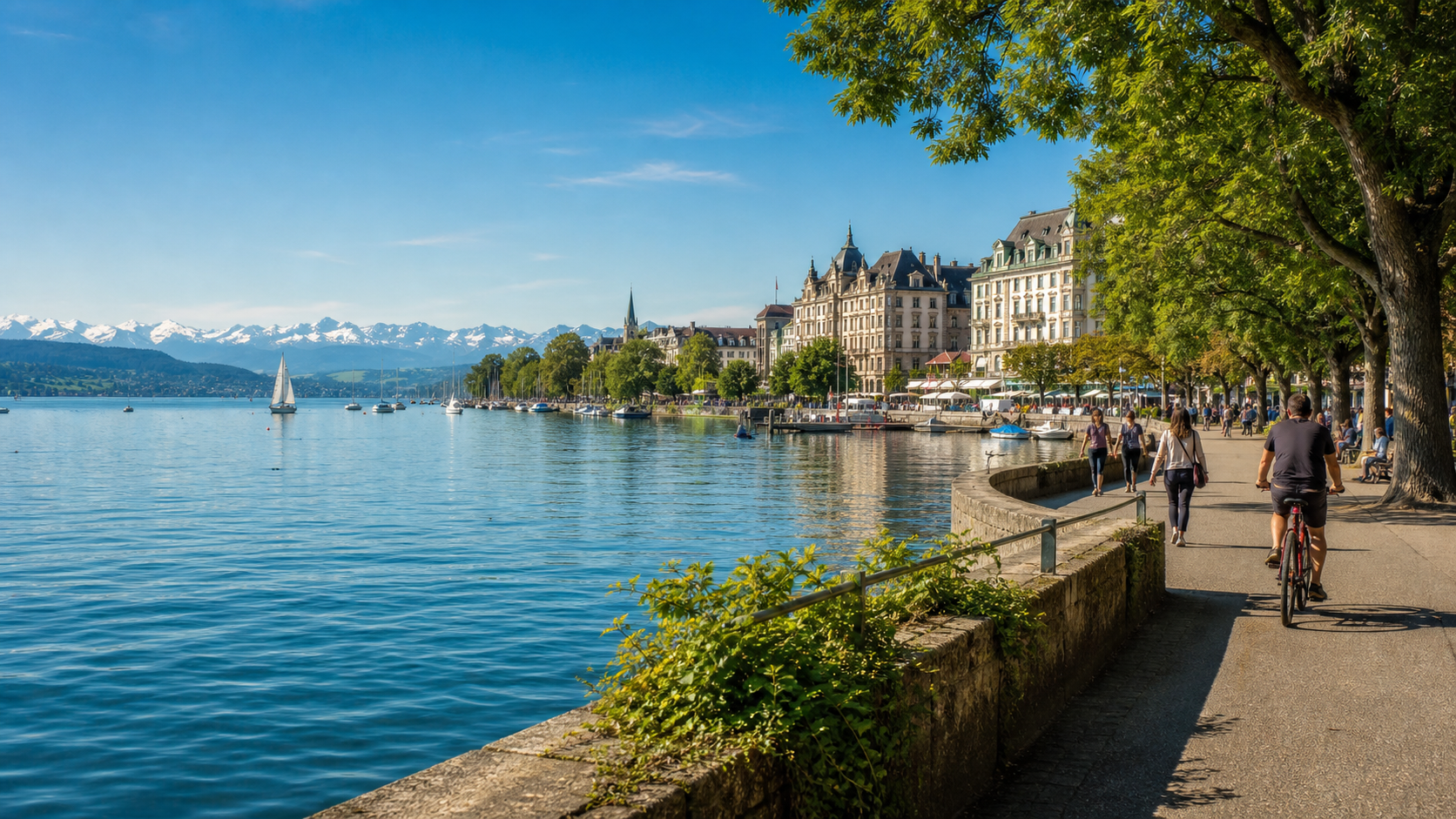
Lake Zurich begins at the southern edge of the centre. Bürkliplatz and Bürkliterrasse provide the classic outlook toward boats and Alpine peaks on clear days. From here, promenades extend along both shores through lawns, gardens and swimming areas.
Walk east past the opera house toward Sechseläutenplatz, Utoquai and the Chinese Garden. The western shore leads through Enge toward parks, Museum Rietberg and the Rote Fabrik cultural centre. Ferries and lake cruises range from short circular trips to longer journeys serving lakeside towns.
Public transport passes may cover certain scheduled boats within included zones, while special cruises require separate tickets. Check the precise route. Even without a boat, sunset beside the lower lake is one of Zurich’s most memorable free experiences.
Swimming in the City
Zurich treats clean water as public space. In summer, lakeside and riverside bathing facilities, known as Badis, attract residents before work, during lunch and into the evening. Some charge admission and provide changing rooms, lockers, platforms and food; others are simple public access points.
The Limmat has a strong current, and particular river pools are designed for confident swimmers. Follow posted rules, never enter where prohibited and ask staff about conditions. Lake facilities such as Seebad Enge and Utoquai offer more controlled settings. Several Badis transform into bars after swimming hours, creating a distinctive warm-weather nightlife experience.
Kunsthaus Zurich
Kunsthaus Zürich spans historic and contemporary buildings at Heimplatz. Its collection includes Swiss art, Old Masters, Impressionism, modern movements and important works by Alberto Giacometti. Temporary exhibitions and the scale of the expanded museum can easily fill half a day.
Plan around weekly hours; the museum normally closes on Monday and stays open later on Thursday. Collection admission has special free arrangements on certain days, while exhibitions may still cost extra. Use the museum’s layout tools to identify priorities rather than trying to see everything.
The building sits close to Grossmünster and the university quarter, so it combines naturally with an old-town day. Museum Rietberg offers an excellent alternative, presenting art from outside Europe within a park above the lake.
Bahnhofstrasse and Paradeplatz
Bahnhofstrasse runs from the main station to the lake and ranks among the world’s best-known shopping avenues. International luxury brands dominate the southern section, but the street also provides urban theatre, excellent window displays and convenient access to side lanes.
Paradeplatz is associated with Swiss banking and was once a livestock market. Stop for chocolate or pastries, then turn into the old town. Independent businesses in surrounding districts provide more variety than the main avenue.
Zurich West
Zurich West transformed from an industrial zone into a district of restaurants, clubs, design businesses and cultural spaces. The railway viaduct now houses shops and food venues beneath its arches, while Prime Tower and converted factories create a very different skyline from Altstadt.
Visit the indoor Markthalle, browse the Viadukt arches and walk toward Schiffbau and Turbinenplatz. Frau Gerolds Garten operates as a seasonal collection of food, gardens and creative spaces, though opening arrangements change. Evening venues around Hardbrücke and Escher-Wyss-Platz show Zurich’s less formal side.
Langstrasse and Creative Districts
Langstrasse crosses diverse Kreis 4 and Kreis 5, historically shaped by migration, nightlife and the railway. Today international restaurants, bars, clubs and independent shops mix with everyday businesses. The area becomes loud and crowded late at night, so use normal urban awareness.
Uetliberg
Uetliberg, Zurich’s local mountain, rises 871 metres above sea level. A train climbs from the main station area to Uetliberg station, followed by a short uphill walk. The summit lookout reveals the city, lake and Alps when visibility is good.
Go early on clear days or arrive before sunset, carrying a layer because conditions are cooler and windier than downtown. The Planet Trail continues along the ridge toward Felsenegg, with a hike of roughly two hours and frequent views. A cable car and train can complete a rewarding half-day circuit, subject to current operating schedules.
What to Eat in Zurich
Zürcher Geschnetzeltes is the classic city dish: sliced veal in a creamy mushroom sauce, commonly served with crisp rösti. Other Swiss staples include cheese fondue, raclette, sausages and seasonal game. Fondue is naturally suited to winter, though restaurants serve it year-round.
For casual food, try bratwurst with bread and mustard, bakery sandwiches or dishes from international businesses around Langstrasse. Birchermüesli originated in Zurich and makes a lighter breakfast. Chocolate shops range from global names to specialist producers, while Luxemburgerli are small filled macarons closely associated with a famous local confectioner.
Zurich has serious contemporary dining and excellent vegetarian options. Tap water from the city’s many fountains is generally drinkable unless marked otherwise, helping reduce costs. At restaurants, service is included, though rounding up for good service is customary.
Best Time to Visit
May to September provides long days, lake swimming and outdoor events. July and August can become hot, and popular Badis fill quickly. Spring and early autumn offer comfortable walking weather with fewer visitors, though mountain visibility changes rapidly.
Winter brings Christmas markets, nearby snow sports and atmospheric restaurants. Central Zurich may be grey or wet rather than snowy. Accommodation prices fluctuate around trade events, festivals and school holidays, so compare dates before booking.
Getting Around Zurich
ZVV integrates trams, buses, trains and many boats within a zone-based ticket system. Services are frequent, clean and precisely connected. Buy the correct zones and duration before travel and validate where required. The Zürich Card may offer value if combining transport with several included museums and discounts.
Zurich Airport connects directly to the main station by frequent trains, with trams serving additional districts. Zürich Hauptbahnhof is a national and international rail hub. Walking handles the centre, while bicycles are useful on designated routes. A car is unnecessary and parking is costly.
Managing Zurich’s Costs
Book accommodation early, use supermarkets and bakeries for some meals, and refill water at marked public fountains. Lunch menus can make high-quality restaurants more affordable. Parks, viewpoints, churches and waterfront walks balance paid museums.
Where to Stay
Altstadt provides charm and convenience but brings church bells, narrow access and nightlife noise. Around the main station, transport is unbeatable and rooms vary widely in atmosphere. Enge and Seefeld suit lake-focused stays with quick tram connections.
Zurich West offers modern hotels near restaurants and clubs, while Wiedikon provides a neighbourhood base at somewhat gentler prices. Check whether breakfast, city tax and air conditioning are included; many older properties lack cooling during summer heat.
A Three-Day Zurich Itinerary
On day one, explore both sides of the old town, visit Grossmünster and Fraumünster, pause at Lindenhof and walk the lakefront. On day two, tour Kunsthaus, browse Bahnhofstrasse and continue to Zurich West and Langstrasse for dinner.
On day three, ride to Uetliberg for views or the ridge hike, then return for a lake cruise or swim. With another day, visit Museum Rietberg, travel to Rhine Falls or explore a lakeside town by boat and train.
Practical Tips
Check Alpine visibility before scheduling Uetliberg, observe swimming rules and carry a waterproof layer. Buy correct transport zones, keep noise down in residential old-town lanes and reserve expensive restaurants only when they add real value.
Zurich balances serious art and relaxed swimming, medieval streets and converted factories, urban efficiency and nearby mountains. Leave time to walk beside the water; that is where the city feels most distinctive.
Comments