
Reykjavik is a small capital with an outsized personality. Colourful timber houses sit beneath a monumental concrete church, fishing boats share the harbour with whale-watching vessels, and geothermal water warms public pools while cold Atlantic weather moves rapidly overhead. Most central sights are within a twenty-minute walk, yet the city opens onto volcanic landscapes that feel almost limitless.
Two full days cover the main landmarks, museums, food and a local pool. Three or four days allow a slower city experience plus excursions into southwest Iceland. This Reykjavik travel guide explains what to see, where to wander, what to eat and how to plan around Iceland’s famously changeable conditions.
Why Visit Reykjavik?
Reykjavik is both Iceland’s cultural centre and the practical gateway to the country. Its downtown area offers striking architecture, independent design, excellent music, ambitious restaurants and a strong literary tradition. Nature is always visible: Mount Esja rises across the bay, seabirds circle the waterfront and winter darkness can reveal the northern lights.
Hallgrimskirkja and Skolavordustigur
Hallgrimskirkja is Reykjavik’s defining landmark. Architect Gudjon Samuelsson drew inspiration from Icelandic basalt formations, giving the Lutheran church a stepped facade that resembles cooling lava columns. Its restrained interior feels peaceful, while the paid tower lift leads to panoramic views over bright rooftops, Faxafloi Bay and distant mountains.
Visit early for shorter queues and clearer streets. In front of the church stands a statue of explorer Leif Erikson, presented by the United States in 1930. From here, walk downhill along Skolavordustigur, known for its rainbow-painted section, galleries, cafés and shops selling Icelandic design. Look beyond souvenir displays for locally made ceramics, prints, jewellery and wool products.
Laugavegur and Downtown Reykjavik
Laugavegur is the city centre’s main shopping and nightlife street. Historic corrugated-metal houses now contain boutiques, bakeries, record shops and bars. Nearby Hverfisgata has developed its own creative character, while quieter side streets reveal murals and small gardens.
Continue toward Austurvollur square, bordered by cafés and Iceland’s Parliament House, Althingi. Reykjavik City Hall stands beside Tjornin, the central pond where birds gather throughout the year. The paths around the water make a gentle walk, passing colourful homes and Hljomskalagardurinn park. This compact circuit provides a clear sense of the old city without requiring transport.
Harpa, Sun Voyager and the Waterfront
Harpa Concert Hall anchors the modern waterfront with a geometric glass facade inspired by basalt. Step inside to see reflections change across its faceted walls and check the programme for concerts or performances. Even without a ticket, the public areas provide attractive harbour views and shelter when the weather turns.
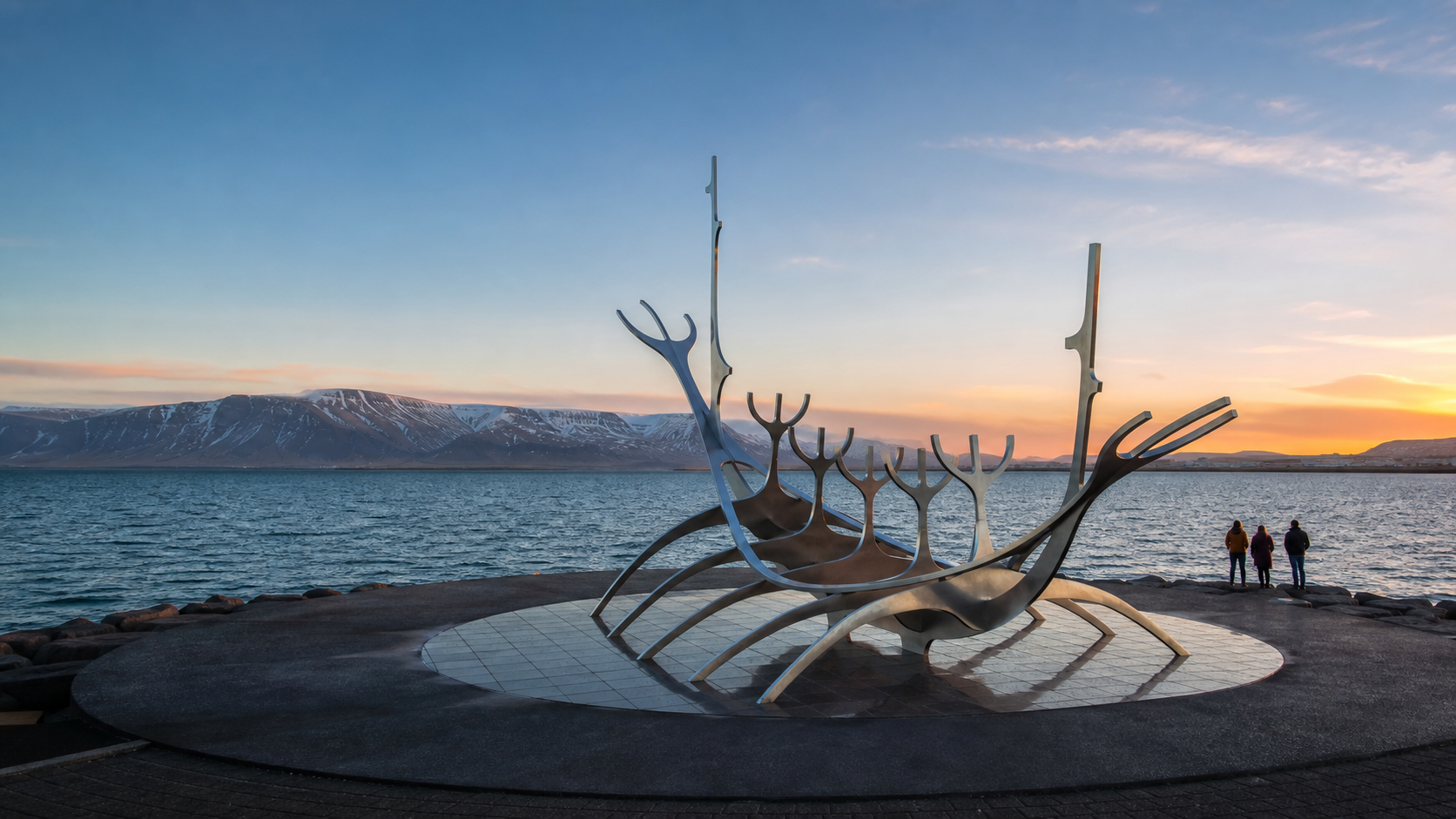
Walk east along Saebraut to the Sun Voyager, Jon Gunnar Arnason’s stainless-steel sculpture shaped like a dream vessel. It symbolises hope, freedom and undiscovered territory rather than serving as a literal Viking ship. Sunrise and sunset create the most dramatic photographs, but strong wind is common beside the bay.
Old Harbour and Grandi
West of Harpa, the Old Harbour retains links to Reykjavik’s fishing history while supporting museums, restaurants and boat tours. Whale-watching trips depart from here, though sightings and sea conditions can never be guaranteed. Choose a responsible operator, dress more warmly than seems necessary and consider seasickness medication if you are sensitive.
The adjoining Grandi district mixes working-harbour character with contemporary attractions. The Reykjavik Maritime Museum explains the relationship between Iceland and the sea, while the Saga Museum uses figures and scenes to introduce dramatic historical episodes. Food halls, coffee roasters and seafood restaurants have also moved into converted industrial buildings.
Essential Reykjavik Museums
The National Museum of Iceland is the best starting point for the country’s history, tracing settlement, conversion, hardship and modern independence through carefully presented objects. The Settlement Exhibition focuses more closely on Viking-age Reykjavik around the remains of a tenth-century longhouse.
Art travellers can choose among Reykjavik Art Museum’s locations, including Hafnarhus near the harbour and Kjarvalsstadir beside Klambratun park. Perlan, housed beneath a glass dome on wooded Oskjuhlid hill, uses immersive displays to explain glaciers, volcanoes, geothermal systems and Icelandic wildlife. Its observation deck adds broad city views.
Experience a Geothermal Swimming Pool
Public pools offer one of Reykjavik’s most authentic and affordable experiences. Sundhollin, close to Hallgrimskirkja, combines a historic indoor pool with outdoor hot tubs. Vesturbaejarlaug has a friendly neighbourhood atmosphere, while large Laugardalslaug provides several pools, hot pots and family facilities.
Shower thoroughly without swimwear before entering; this hygiene rule is taken seriously, and communal changing areas are normal. Move between swimming water, hot tubs and cooler areas at your own pace. Voices are generally relaxed, and conversation in the hot pots is part of local life.
Commercial lagoons offer polished scenery but cost considerably more. Book them well ahead and arrange transport carefully.
Food and Drink
Icelandic cooking reflects a North Atlantic environment. Look for lamb, Arctic char, cod, haddock, langoustine, rye bread and skyr. A bowl of fish or lamb soup is warming and often better value than a formal main course. Reykjavik’s famous hot dog, typically ordered with several toppings, remains a quick budget-friendly snack.
Bakeries serve excellent sourdough, cinnamon buns and pastries, while modern chefs use preservation, fermentation and wild herbs in creative ways. The city also has good vegetarian options and international food halls. Seafood close to the harbour can be memorable, but check menus and prices before sitting down.
Alcohol and restaurant meals are expensive. Happy-hour offers can reduce costs, and supermarkets are useful for breakfast or picnic supplies. Tap water is exceptionally good; choose cold water because hot water may carry a harmless sulphur smell from the geothermal system. Tipping is not expected, though rounding up for excellent service is welcome.
Day Trips from Reykjavik
The Golden Circle combines Thingvellir National Park, the Geysir geothermal area and Gullfoss waterfall. It is the most popular day tour because it presents history, tectonic landscapes and powerful water within a manageable route. The South Coast offers waterfalls, black-sand beaches and glacier views, but involves more driving.
Northern-lights tours operate during darker months, but cloud and solar activity determine success. Never treat a sighting as guaranteed.
If renting a car, check road and weather conditions through official Icelandic services before departure. Never stop on an active roadway for photographs, and do not enter closed roads. Wind, ice and visibility can change faster than distances on a map suggest.
Getting Around
Central Reykjavik is best explored on foot. Straeto operates city buses, but there is no urban rail system. Use the official journey planner and confirm current payment methods before boarding. The capital’s main international airport is Keflavik, roughly fifty kilometres away; airport coaches and private transfers connect it with Reykjavik, while a rental car suits wider road trips.
Do not confuse Keflavik Airport with Reykjavik Airport, the smaller domestic terminal near downtown. Taxis are available but expensive. A car is unnecessary for central sightseeing and parking can be inconvenient, so collect a rental only when your journey beyond the capital begins.
Best Time to Visit
June through August brings extraordinarily long daylight, relatively mild temperatures and the fullest selection of tours. It is also the busiest and most expensive season. Book accommodation, rental cars and major excursions early. Summer still demands waterproof and windproof layers.
September through March offers dark skies and a chance of northern lights. Winter weather can disrupt transport and shorten day trips, but pools, museums, concerts and cafés keep the city appealing. December adds festive lights; January and February can be particularly wintry.
Spring and autumn balance lower crowds with unpredictable conditions. Pack layers, waterproof shoes, gloves and a hat.
Where to Stay
Downtown 101 is most convenient for first-time visitors, placing Hallgrimskirkja, Laugavegur, Harpa and the harbour within walking distance. Rooms around the main nightlife streets may be noisy on weekends, so light sleepers should choose a side street.
Vesturbaer offers a quieter residential atmosphere near the harbour and a popular local pool. Laugardalur suits families and travellers interested in green space, sports facilities and the city’s largest pool, though buses are needed more often. Accommodation across Reykjavik is costly, so reserve well ahead and check whether breakfast and parking are included.
A Three-Day Reykjavik Itinerary
On day one, visit Hallgrimskirkja, descend Skolavordustigur and explore Laugavegur, Tjornin and Austurvollur. Continue to Harpa and the Sun Voyager, then finish with a public pool.
On day two, tour the National Museum or Settlement Exhibition before walking through the Old Harbour and Grandi. Choose a whale-watching trip if conditions are good, or spend more time at the Maritime Museum and Perlan.
Use day three for the Golden Circle or South Coast. If you prefer to remain near the capital, explore Oskjuhlid, visit another museum, enjoy a long lunch and book a lagoon. During northern-lights season, keep the evening flexible and monitor cloud forecasts.
Practical Tips
Iceland uses the Icelandic krona, but cards are accepted almost everywhere. English is widely spoken. Weather warnings, road closures and coastal barriers should always be respected. Keep away from rough water, avoid exposed viewpoints during severe wind and follow marked paths in geothermal areas.
Check attraction hours immediately before visiting because seasonal schedules change. Reserve popular restaurants and tours, but leave breathing room for weather adjustments. Reykjavik is most rewarding when treated as a destination in its own right: a creative, welcoming capital shaped by the sea, volcanic energy and the daily pleasure of warm water in cold air.
Comments