
Naples is vivid, layered and impossible to reduce to a tidy checklist. Greek streets survive beneath Baroque churches, laundry hangs above crowded lanes, and Mount Vesuvius rises beyond a bay scattered with islands. The city can feel intense at first, but its energy is inseparable from its appeal. Extraordinary archaeology, royal palaces, street shrines and one of Europe’s most influential food cultures reward patient exploration. This Naples travel guide covers the essential sights, neighbourhoods, cuisine and practical planning for a confident first visit.
Why Visit Naples?
Naples offers direct contact with history rather than history arranged at a distance. Its UNESCO-listed centre follows an ancient street plan and contains churches, workshops, homes and cafés in constant interaction. The National Archaeological Museum holds many treasures recovered from Pompeii and Herculaneum, while underground tours expose Greek quarries, Roman infrastructure and wartime shelters.
Spaccanapoli and the Decumani
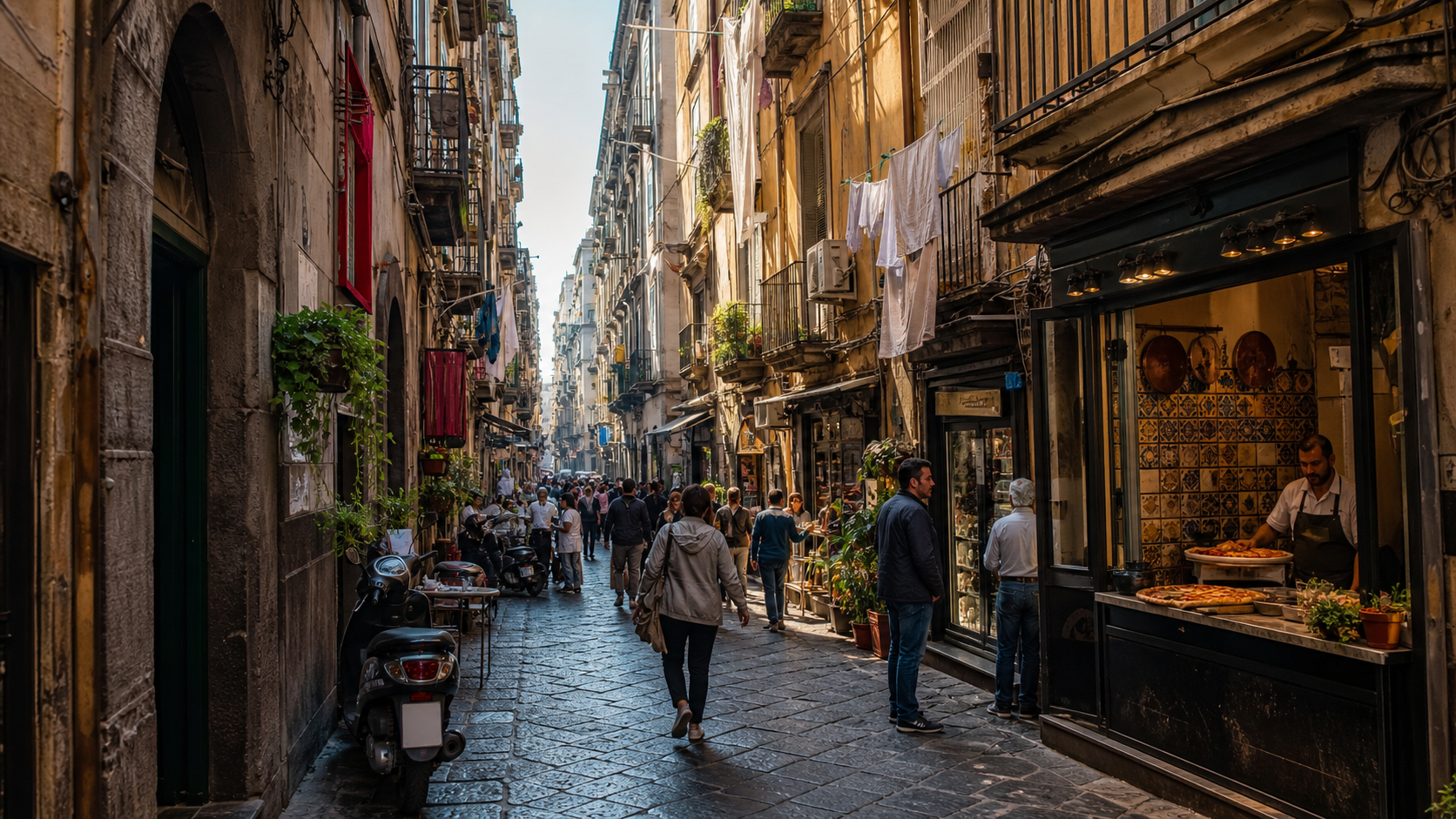
The historic centre preserves three principal east-west roads derived from the ancient Greek layout. Spaccanapoli, a sequence of streets forming the lower route, appears to split the dense city when seen from above. Walking it leads through Piazza del Gesù Nuovo, Santa Chiara, Piazza San Domenico Maggiore and countless small businesses.
Via dei Tribunali forms another major artery and is famous for churches, pizzerias and constant street life. Explore early, before tour groups and delivery traffic build, then return in the evening for food. Side lanes are part of the experience, but keep awareness around scooters and cars sharing narrow spaces.
Look upward for carved portals, balconies, religious niches and courtyards. Dress respectfully in churches and avoid photographing residents closely without permission.
Santa Chiara, Gesù Nuovo and Sansevero
The Church of Gesù Nuovo presents a severe diamond-patterned façade and a richly decorated interior. Across the square, the Santa Chiara complex includes a Gothic church, archaeological remains and a tranquil cloister decorated with colourful majolica tiles. The cloister provides welcome quiet after busy streets.
The Sansevero Chapel contains Giuseppe Sanmartino’s Veiled Christ, renowned for the illusion of transparent fabric carved from marble. Timed tickets often sell out, so reserve through the official channel. The chapel is compact and photography rules are strict. Give the sculpture focused attention rather than trying to combine it with every nearby church in a single rushed morning.
Naples Cathedral and San Gregorio Armeno
Naples Cathedral, or Duomo, is dedicated to the city’s patron saint, San Gennaro. The Chapel of the Treasure contains lavish Baroque decoration and objects connected to ceremonies involving the saint’s blood. Access may change around religious events, which are deeply important locally.
Nearby Via San Gregorio Armeno is known for workshops producing nativity figures. Traditional biblical characters appear beside politicians, footballers and celebrities, reflecting Neapolitan humour and current life. The street becomes exceptionally crowded before Christmas, but artisans work throughout the year. Visit early and purchase directly from workshops if taking home a figure.
Naples Underground
Naples rests above a network of tuff quarries, cisterns, tunnels and archaeological remains. Several organisations run different underground routes, so read descriptions carefully before booking. Some tours descend narrow staircases or pass through confined spaces and are unsuitable for visitors with claustrophobia or limited mobility.
National Archaeological Museum
The Museo Archeologico Nazionale di Napoli, commonly called MANN, contains one of the world’s great classical collections. Highlights include mosaics, sculptures and everyday objects from Pompeii and Herculaneum, the Farnese sculptures and extensive Egyptian and numismatic material. The Secret Cabinet preserves Roman erotic art within its historical context.
Allow at least three hours and check which galleries are open, as renovations or staff availability can alter routes. The museum can be visually overwhelming, so select priority collections instead of attempting every room. Visiting before Pompeii adds context; visiting afterward helps interpret details remembered from the site.
Quartieri Spagnoli and Via Toledo
Via Toledo is a major shopping street connecting the historic centre with Piazza del Plebiscito. Toledo metro station is known for its dramatic art-filled design. West of the avenue, the Quartieri Spagnoli climbs in a close grid of lanes originally developed for Spanish troops.
Today the district combines homes, shrines, food businesses, murals and busy nightlife. The area around murals celebrating football icon Diego Maradona draws significant crowds. Visit respectfully: these remain residential streets, not a theme park. Small trattorias and bars can be rewarding, though online popularity does not always equal quality.
Royal Naples and the Waterfront
Piazza del Plebiscito opens near the Royal Palace, San Francesco di Paola church and Teatro di San Carlo. The scale contrasts sharply with the dense old centre. Tour the palace for royal apartments and history, or continue past the opera house and Galleria Umberto I toward the waterfront.
Castel Nuovo stands near the port with a monumental triumphal arch. Farther along the seafront, Castel dell’Ovo provides classic bay views. The adjoining Borgo Marinari is attractive for an evening walk and seafood dinner.
Vomero and Panoramic Naples
Funiculars climb from central districts to Vomero, a hilltop neighbourhood with calmer streets and broad views. Castel Sant’Elmo, a star-shaped fortress, overlooks the bay, historic centre and Vesuvius. The nearby Certosa di San Martino contains cloisters, art and collections exploring Neapolitan history.
Walk down the Pedamentina stairs for changing perspectives if weather and footwear allow. The descent is long but rewarding; climbing is considerably harder. Vomero also provides cafés and shopping away from the busiest visitor routes.
Capodimonte and Sanità
The Capodimonte Museum occupies a former royal palace in a large park above the centre. Collections include works by Caravaggio, Titian, Raphael and major Neapolitan artists. The museum requires several hours and a dedicated bus or taxi journey, but art enthusiasts should make it a priority.
Below, the Sanità district is known for markets, Baroque palaces, catacombs and a strong local identity. Guided visits to the Catacombs of San Gennaro or San Gaudioso support cultural initiatives and explain early Christian history. Explore with the same respect appropriate to any lived neighbourhood.
Pizza and Neapolitan Food
Naples is the birthplace of modern pizza. A classic margherita uses tomato, mozzarella, basil and olive oil; marinara omits cheese and highlights tomato, garlic and oregano. The soft, blistered crust is eaten with knife and fork or folded as pizza a portafoglio. Famous pizzerias may have queues, but excellent alternatives exist across the city.
Beyond pizza, try pasta e patate with provola, ragù cooked slowly for Sunday meals, fried seafood and frittatine di pasta. Cuoppo packages assorted fried foods in a paper cone. Genovese is a rich onion-and-meat sauce despite its name.
For sweets, choose sfogliatella riccia or frolla, babà soaked in rum and seasonal pastries. Espresso is short and intense; pay first at the cashier where required, then present the receipt at the bar. A suspended coffee, caffè sospeso, reflects the tradition of paying forward a drink for someone else.
Pompeii and Other Day Trips
Pompeii and Herculaneum are reached by regional rail, though services can be crowded. Pompeii is vast and requires comfortable shoes, sun protection and several hours. Herculaneum is smaller, with remarkably preserved buildings and upper floors. Official opening details and transport disruptions should be checked before departure.
Capri, Ischia and Procida are accessible by ferry, while Sorrento connects by rail and boat. Amalfi Coast travel takes longer than maps suggest, especially in summer. Choose one destination per day rather than combining multiple famous stops.
Best Time to Visit
April to June and September to October offer warm weather and good conditions for city walks and archaeological sites. July and August are hot, crowded and intense, particularly during midday. Begin early, rest indoors and reserve air-conditioned accommodation.
Winter is quieter and mild, though rain and cool evenings occur. Museums and food experiences remain strong, but ferry schedules may be reduced. Christmas brings elaborate nativity traditions and large crowds around San Gregorio Armeno.
Getting Around Naples
The centre is best explored on foot, but paving is uneven and traffic requires attention. Metro lines, buses and funiculars connect major districts. Validate tickets according to current rules and allow extra time because services may be irregular. Taxis should use official ranks or recognised booking methods.
Alibus links Naples Airport with the central station and port, while fixed taxi arrangements may apply to designated routes. Napoli Centrale connects with high-speed trains; Piazza Garibaldi beneath it serves metro and regional lines. A rental car is a disadvantage within central Naples.
Where to Stay
The historic centre provides maximum atmosphere and easy access to churches and food, but noise and stairs are common. Chiaia offers polished streets, waterfront access and restaurants at higher prices. Around Toledo and the Spanish Quarter, visitors are central to nightlife and transport.
Santa Lucia near Castel dell’Ovo suits travellers prioritising sea views and calmer evenings. Accommodation near the central station can be practical for day trips, though the immediate area is busy. Check reviews for noise, lift access and air conditioning.
A Three-Day Naples Itinerary
On day one, walk Spaccanapoli and Via dei Tribunali, visit Santa Chiara, Sansevero and the cathedral, then eat pizza in the historic centre. On day two, tour MANN, explore Via Toledo and Quartieri Spagnoli, and continue through Piazza del Plebiscito to the waterfront.
On day three, ride the funicular to Vomero for Castel Sant’Elmo and San Martino, then descend for more neighbourhood food. Alternatively, devote the day to Pompeii or Herculaneum. With extra time, add Capodimonte, Sanità or an island excursion.
Practical Tips
Reserve Sansevero, major underground tours and popular restaurants ahead. Carry only what you need, secure valuables in crowded transport and watch for scooters when crossing lanes. Wear supportive shoes, stay hydrated and approach the city’s density with patience.
Naples reveals itself through contrasts: sacred art beside markets, royal spaces near crowded alleys and a volcano beyond the sea. Let those contrasts coexist; that is where its character lives.
Comments