
Turin is one of Italy’s most rewarding understated cities. Elegant arcades run beneath Baroque façades, historic cafés preserve the ritual of chocolate and coffee, and the Mole Antonelliana rises against a backdrop of Alpine peaks. As the first capital of unified Italy and the former seat of the House of Savoy, Turin possesses royal confidence without the crowds of Rome or Florence. Its museums rank among Europe’s best, while parks and riverbanks bring nature close to the centre. This Turin travel guide covers the essential sights, neighbourhoods, food and practical details for a first visit.
Why Visit Turin?
Turin combines formal architecture with a creative, contemporary identity. Royal apartments, armouries and ceremonial squares explain the Savoy dynasty; industrial sites tell the story of Fiat and modern Italy; galleries and design businesses occupy converted buildings. The city also claims foundational roles in Italian cinema, vermouth and gianduja chocolate.
Piazza Castello and the Royal Museums
Piazza Castello forms Turin’s ceremonial centre. Palazzo Madama stands in the middle with a medieval rear and Baroque façade, while the Royal Palace anchors the northern side. Arcaded streets lead toward theatres, churches and civic buildings.
The Musei Reali complex brings together the Royal Palace, Royal Armoury, Savoy Gallery, archaeological collections, gardens and Chapel of the Holy Shroud. The complete route extends for kilometres, so allow at least three hours and identify priorities. The armoury and palace rooms reveal court life; the gallery suits art enthusiasts; archaeological sections explain Turin’s Roman origins.
Buy tickets ahead during weekends and special exhibitions. Some spaces may close independently, and the Holy Shroud itself is not permanently displayed. The adjacent cathedral houses the shroud in a protected chapel but ordinarily shows only contextual information and reproductions.
Mole Antonelliana and Cinema Museum
The Mole Antonelliana began as a planned synagogue and became Turin’s defining landmark. Its soaring interior now houses the National Cinema Museum, whose displays spiral upward around a vast central hall. Film sets, posters, optical devices and interactive exhibitions trace cinema from early experiments to modern production.
A panoramic glass lift rises through the centre to a viewing platform beneath the spire. The experience rewards travellers comfortable with height and enclosed glass lifts, providing a 360-degree view of the city and Alps when skies are clear. Museum and lift tickets can sell out separately; reserve a timed entry if both matter.
Allow two to three hours for the museum rather than treating the building only as a viewpoint. The inventive layout is part of the attraction, and temporary exhibitions can be substantial.
Museo Egizio
Turin’s Egyptian Museum is one of the world’s leading collections devoted to ancient Egypt. Founded in 1824, it displays statues, papyri, coffins, jewellery and reconstructed tomb assemblages across several floors. Highlights include the Gallery of Kings and material from the workers’ village of Deir el-Medina.
Reserve a timed ticket and allow at least three hours. The collection is dense, so use the official audio or guided interpretation and take breaks. Families can focus on several galleries rather than attempting every case. Current routes may change as the museum continues research and updates its presentation.
The museum sits close to Piazza Carignano, whose curved Baroque palace houses the National Museum of the Italian Risorgimento. Combining both in one day is possible but intellectually demanding; a historic café break between them helps.
Turin’s Historic Cafés
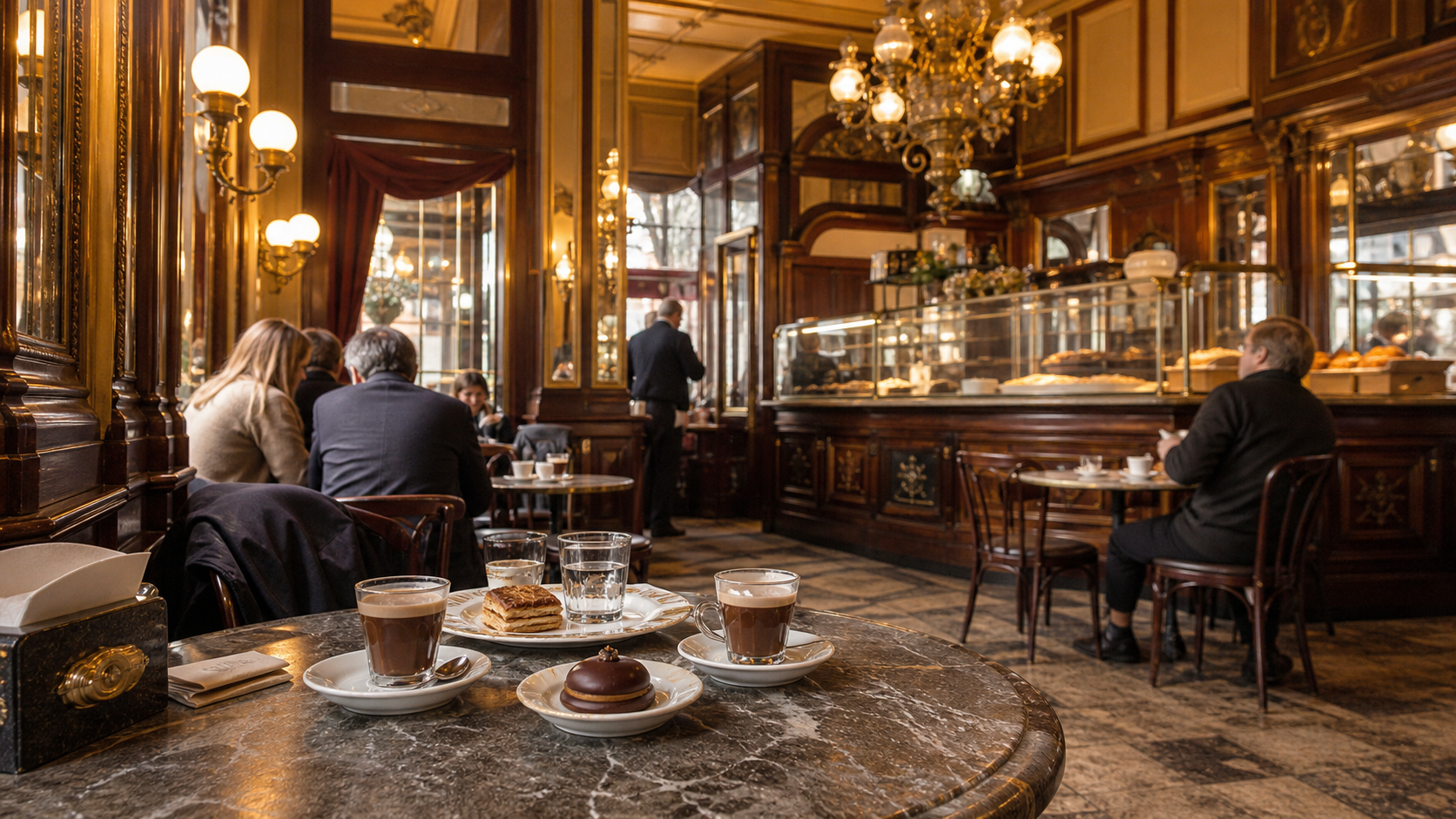
Turin’s cafés were meeting places for politicians, writers and aristocrats, and several preserve mirrored rooms, carved wood and attentive table service. Prices at a table are higher than standing at the bar, but the setting is part of the experience. Choose one historic café and linger rather than moving rapidly between famous addresses.
Order bicerin, a layered Turin drink of coffee, chocolate and cream, usually served without stirring. Gianduiotti combine cocoa with local hazelnuts, while small pastries and marrons glacés reflect Piedmont’s confectionery tradition. For an aperitivo, vermouth has deep local roots and appears in classic cocktails.
Via Po, Piazza Vittorio and the River
Via Po runs beneath arcades from Piazza Castello toward the river. Bookshops, cafés and university buildings line the route. It opens into Piazza Vittorio Veneto, a vast sloping square facing the Po and the church of Gran Madre di Dio.
Cross the bridge and climb to Monte dei Cappuccini for one of Turin’s classic views. The city grid, Mole and Alps align dramatically on clear mornings or around sunset. Continue along the river through Valentino Park, where lawns, paths and historic buildings offer a relaxed change from museums.
The park’s reconstructed medieval village has undergone restoration, so check access before making it a priority. The surrounding San Salvario neighbourhood is excellent for restaurants and evening bars.
Quadrilatero Romano and Porta Palazzo
The Roman Quarter lies west of Piazza Castello, following part of the ancient street plan. Narrower streets now hold restaurants, wine bars and small shops. Roman-era Porta Palatina survives near the cathedral and helps make the earlier city legible.
Beyond it, Porta Palazzo hosts one of Europe’s largest open-air markets. Produce, household goods and ingredients from multiple communities fill the square, while covered halls specialise in food and clothing. Visit in the morning, guard belongings in crowds and remember that this is an everyday workplace rather than a staged attraction.
Nearby Balôn hosts antiques and flea-market activity on designated days. Check the schedule before travelling specifically for it.
Art, Cars and Industrial Heritage
Automotive history is central to Turin. The National Automobile Museum presents design, engineering and social history in a modern display south of the centre. Nearby Lingotto was once Fiat’s great factory and retains the rooftop test track, now integrated with the Pinacoteca Agnelli and public cultural spaces. Architecture and car enthusiasts can devote half a day to this district.
Reggia di Venaria and Superga
The Reggia di Venaria Reale is a monumental Savoy residence north of Turin, with grand halls, exhibitions, gardens and a restored estate. It merits most of a day and requires planning around public transport or the seasonal visitor shuttle. Reserve during weekends and allow time for the gardens, not only the palace.
East of the city, the Basilica of Superga crowns a hill with views over Turin and the Alps. A historic rack railway traditionally links Sassi with the summit, but operating arrangements can change. Check official information before departure and use buses if necessary. The site also carries solemn importance as the location of the 1949 air disaster that killed the Grande Torino football team.
What to Eat in Turin
Piedmontese food is rich, seasonal and closely linked to wine. Start with vitello tonnato, thin veal with a tuna-caper sauce, or carne cruda prepared from finely chopped raw beef. Agnolotti del plin are small filled pasta parcels often served with butter, roasting juices or broth. Tajarin are thin egg-rich noodles paired with ragù, mushrooms or truffles.
Main dishes include brasato al Barolo and bollito misto. Bagna càuda combines anchovies, garlic and olive oil as a warm dip for vegetables. Autumn brings white truffles from nearby Alba, though prices rise sharply and authenticity matters.
For casual eating, explore aperitivo buffets and small plates, but quality varies. Wines to try include Barbera, Nebbiolo, Barolo and Barbaresco. Reservations are wise for respected traditional restaurants, particularly on weekends.
Best Time to Visit
April to June and September to October offer comfortable weather, green parks and frequent Alpine visibility after clear fronts. Autumn is especially attractive for truffles, wine and rich regional cooking. Summer can be hot and humid, though arcades and evening river walks help.
Winter is cold and sometimes foggy, but cafés, museums and chocolate suit the season perfectly. Snow usually remains on the mountains rather than central streets. Major festivals, exhibitions and football matches can affect accommodation demand, so check the calendar.
Getting Around Turin
The centre is highly walkable. GTT operates buses, trams and a driverless metro line useful for Porta Nuova, Porta Susa and Lingotto. Validate tickets according to current rules. A day pass may suit museum-heavy itineraries involving outer districts.
Turin Airport connects by train and bus with the city, while taxis provide fixed or metered options under current regulations. Porta Susa and Porta Nuova receive high-speed trains. A rental car is unnecessary unless exploring rural Piedmont.
Where to Stay
The city centre near Piazza Castello provides maximum convenience for royal sites and cafés. Around Porta Nuova, visitors gain rail and metro access plus easy walks into San Salvario. Quadrilatero Romano suits nightlife, though rooms above busy streets may be noisy.
Vanchiglia near the Mole offers creative businesses and local evening life. Crocetta is elegant and quieter, while Lingotto works for conferences, car enthusiasts and modern hotels. Confirm air conditioning in summer and parking restrictions if arriving by car.
A Three-Day Turin Itinerary
On day one, tour the Royal Museums, walk Via Po and cross to Monte dei Cappuccini for sunset. On day two, visit Museo Egizio, enjoy a historic café and explore Quadrilatero Romano and Porta Palazzo. Reserve the evening for Piedmontese cuisine.
On day three, visit the Cinema Museum and Mole lift, then choose Valentino Park, the Automobile Museum or Lingotto. With another day, travel to Venaria Reale or Superga. Avoid packing all major museums together; Turin rewards a measured pace.
Practical Tips
Reserve Museo Egizio, the Mole lift and major royal sites ahead. Check weekly museum closure days, validate transport tickets and keep market valuables secure. Use the arcades in poor weather and seek viewpoints when Alpine visibility is clearest.
Turin’s charm is cumulative rather than loud: a palace courtyard, an inventive museum, mountain light and chocolate in a mirrored café. Give these details time, and the city reveals one of northern Italy’s most distinctive personalities.
Comments