
Paris rewards both careful planning and spontaneous wandering. Its famous monuments deserve their reputation, but the city becomes memorable through smaller moments: a morning pastry at a neighborhood bakery, sunlight on the Seine, a quiet courtyard behind a busy boulevard or an evening table at a lively bistro. The best first visit balances essential sights with time to experience everyday Paris.
Three days provide an introduction, while four or five allow you to explore without turning every day into a race. Group attractions by neighborhood, reserve only the places where timed entry matters, and walk whenever distances are reasonable. Paris is compact compared with many world capitals, yet every arrondissement has its own rhythm.
Why Visit Paris?
Paris has an exceptional concentration of art, architecture, food and urban beauty. Medieval churches stand near grand nineteenth-century boulevards, former railway stations house masterpieces, and contemporary galleries occupy old industrial spaces. The Seine links many major landmarks and provides a natural route through the historic center.
The city also suits different travel styles. Museum lovers can spend days at the Louvre, Musée d’Orsay and smaller collections. Food-focused travelers can explore markets, bakeries and restaurants across every budget. Families have parks, river cruises and interactive museums, while dedicated walkers can discover covered passages, village-like streets and panoramic viewpoints.
The Eiffel Tower and Western Paris
The Eiffel Tower is most impressive when approached gradually. See it first from Trocadéro in the early morning, walk through the Champ de Mars, or watch it appear between buildings from surrounding streets. If you plan to ascend, buy a timed ticket from the official website. Summit and elevator tickets can sell out, and security lines still apply even with a reservation.
Views from the second floor are already excellent, placing monuments and avenues into perspective. The summit adds height and ceremony but may close temporarily because of weather or crowd management. Travelers comfortable with stairs can choose a more active route. Large luggage is not accepted, and there is no storage facility at the tower.
Nearby, the Musée du Quai Branly explores arts and cultures from Africa, Asia, Oceania and the Americas. Les Invalides contains military collections and Napoleon’s tomb, while the elegant streets around the seventh arrondissement reveal a calmer residential side of central Paris. At sunset, return to the Seine for views from Pont de Bir-Hakeim or a riverside promenade.
The Louvre, Tuileries and Historic Core
The Louvre is a palace and a museum on a scale that makes complete coverage impossible. Select a few departments or masterpieces before arrival rather than following the largest crowd from room to room. A timed reservation is strongly recommended and may be required in busy periods. The museum closes on Tuesdays, and some galleries can close on a rotating schedule.
Allow at least three hours for a focused visit, more if art is a primary reason for your trip. The Denon wing includes several famous works, while the Richelieu and Sully wings often feel calmer and reveal sculpture, decorative arts and the history of the palace itself. Afterward, recover in the Tuileries Garden rather than immediately entering another museum.
From the Louvre, walk east toward the Palais Royal, its arcades and courtyard, or continue along the river to Pont Neuf and the Île de la Cité. Notre-Dame Cathedral once again anchors the island, while Sainte-Chapelle is celebrated for towering stained glass. Nearby bridges provide views of the Conciergerie and bookstalls along the Seine.
Musée d’Orsay, the Seine and Saint-Germain
The Musée d’Orsay occupies a former railway station and offers a more manageable alternative to the Louvre. Its collection is especially strong in nineteenth-century art, including Impressionist and Post-Impressionist works. The building’s great clock and upper-level views add to the experience. Reserve a time slot during busy seasons.
Cross into Saint-Germain-des-Prés for galleries, bookshops, churches and cafes. Historic establishments attract visitors, but the neighborhood is best enjoyed by exploring side streets toward the Luxembourg Gardens. The gardens combine formal terraces, shaded paths, fountains and spaces used by local families, students and runners.
Montmartre and Northern Paris
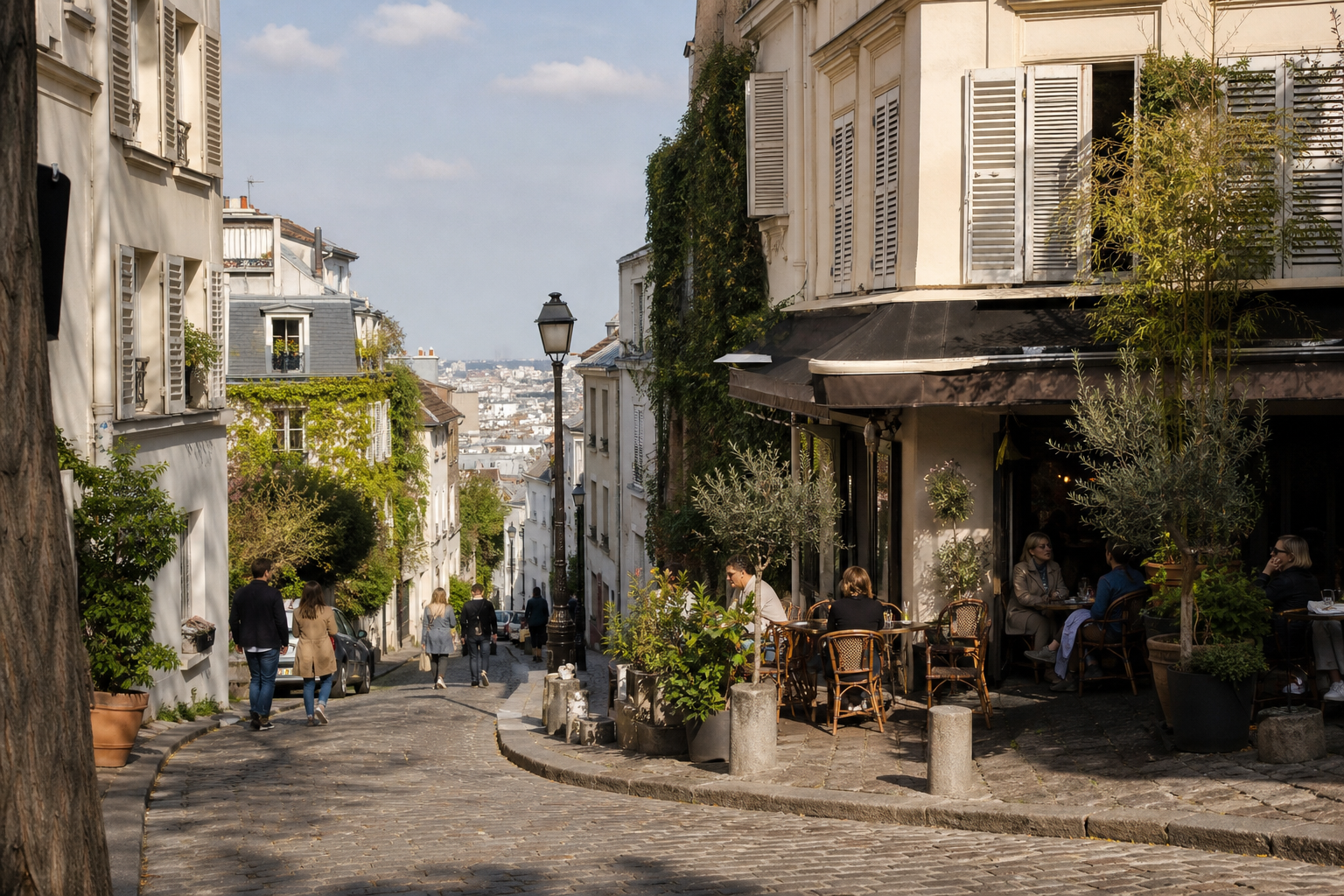
Montmartre sits on a hill in the eighteenth arrondissement and retains traces of the village that existed before it became part of Paris. Sacré-Cœur provides a broad city view, but the steps and central square become crowded. Arrive early, then move beyond Place du Tertre into residential streets around Lamarck-Caulaincourt.
Look for steep stairways, old windmills, small gardens and vineyard remnants. The neighborhood’s artistic mythology is visible in museums and studios, yet ordinary bakeries, schools and apartment buildings keep it grounded. Respect residential spaces when photographing picturesque houses and doorways.
South of the hill, Pigalle has music venues, bars and a different energy after dark. Farther east, the Canal Saint-Martin offers waterside walks, independent shops and relaxed cafes. These northern districts provide a useful contrast to monumental central Paris.
Le Marais and Eastern Neighborhoods
Le Marais combines aristocratic mansions, Jewish heritage, fashion, nightlife and museums within a walkable network of narrow streets. Place des Vosges is one of the city’s most harmonious squares. The Musée Carnavalet explains Parisian history, while the Picasso Museum occupies an elegant mansion.
Visit the historic Jewish quarter around Rue des Rosiers respectfully, especially on religious holidays. The area becomes extremely busy on weekends, so weekday mornings are calmer. North of the central Marais, streets around the third arrondissement offer galleries and cafes with slightly more breathing room.
Food and Café Culture
Begin with a good bakery. A croissant should be crisp outside and layered within, while a traditional baguette has a deeply colored crust. Not every photogenic shop is exceptional, so notice where local customers form a morning line. Markets are ideal for fruit, cheese, prepared food and picnic supplies.
At lunch, a fixed-price formule can offer strong value. Traditional bistros serve dishes such as onion soup, steak frites, duck confit and seasonal specials, but Parisian food now extends far beyond classic French cooking. North African, West African, Middle Eastern and Asian communities have shaped the city’s dining landscape. Explore beyond the most famous addresses.
Cafe tables are rented in a sense: one drink allows time to sit, watch the street and slow the day. Service may appear direct rather than effusive. Greet staff with “bonjour,” say “s’il vous plaît,” and ask for “l’addition” when ready to pay. A service charge is included by law, though rounding up or leaving a small amount for good service is common.
Parks, Views and River Walks
Parisian parks create natural pauses. Luxembourg Gardens suits a central afternoon break, while the Tuileries connects the Louvre with Place de la Concorde. Parc des Buttes-Chaumont offers hills, dramatic landscaping and local atmosphere in the northeast. Parc Monceau is elegant and compact.
Walking beside the Seine is free and endlessly variable. The lower quays between the Eiffel Tower and the islands reveal bridges, monuments and evening activity. A river cruise is touristy but worthwhile on a first visit, particularly after dark when illuminated facades create a different sense of the city.
Getting Around Paris
The Métro is fast and dense, while RER trains handle longer cross-city and suburban journeys. Buses are slower but provide street views and can reduce stairs. Tickets and passes are available through official mobile apps and Navigo Easy cards; products and fare rules change, so check current RATP or Île-de-France Mobilités guidance before traveling.
Validate or tap correctly and keep proof of payment until leaving the system. Not every station has step-free access, and transfers can involve long corridors. Travelers with limited mobility should plan routes carefully and may find buses more convenient.
Walking remains essential. Central sights often appear farther apart on a transit map than they are in reality. Cycling is increasingly practical thanks to expanded lanes, but busy intersections require confidence. Avoid driving: parking, traffic and restricted zones make it unnecessary for most visitors.
Best Time to Visit
April to June and September to October usually combine pleasant weather with long sightseeing days. Spring brings blossoms and occasional rain; early autumn often feels warm and active. July and August offer long evenings but also heat, crowds and changing local business schedules. Major events can significantly affect prices and availability.
Where to Stay
The first through sixth arrondissements place many landmarks within walking distance but command premium prices. Saint-Germain is elegant, the Latin Quarter is lively, and areas around the Louvre are exceptionally central. Le Marais offers restaurants and nightlife, though street noise varies.
The ninth arrondissement balances transport, shopping and neighborhood streets. Montmartre can be romantic if you stay away from its busiest nightlife corridors. The eleventh suits restaurants and evening activity, while the Canal Saint-Martin area appeals to travelers who prefer a more local base. Always check the walk to the nearest Métro station and recent hotel reviews.
A Suggested Four-Day Itinerary
On day one, explore the Eiffel Tower area, Invalides and the Seine, ending with a river cruise. Spend day two at the Louvre, Tuileries, Île de la Cité and Le Marais. On day three, visit Musée d’Orsay, Saint-Germain, Luxembourg Gardens and the Latin Quarter.
Use day four for Montmartre in the morning, followed by Canal Saint-Martin, Belleville or another neighborhood matching your interests. Add Versailles only if you have an additional day; the palace and gardens require enough time to justify the journey.
Paris is most satisfying when it feels neither rushed nor overplanned. Choose one major reservation per day, connect it with nearby streets and parks, and protect time for meals. The monuments provide structure, but the walks between them are what turn a checklist into a genuine experience of the city.
Comments