
Antalya is often introduced as a gateway to all-inclusive resorts, but the city deserves to be explored in its own right. Its historic center descends through lanes of Ottoman-era houses to a Roman harbor, broad parks overlook Mediterranean cliffs, and beaches stretch toward the Taurus Mountains. Beyond the urban area, waterfalls and some of Türkiye’s most impressive ancient sites make easy day trips.
Three days are enough for the old town, a beach and a nearby excursion. Four or five days allow a more relaxed combination of history, swimming, museums and regional travel. The Antalya province is vast, so distinguish between the city and distant coastal towns when planning: places described as “Antalya” may be several hours apart.
Why Visit Antalya?
Antalya combines a substantial modern city with a genuine historic core and immediate access to the sea. You can examine Roman sculpture in the morning, swim below mountain views in the afternoon and eat in a centuries-old district after sunset. That variety makes the destination useful for travelers who want more than a conventional beach holiday.
The region’s history is unusually rich. Pamphylian, Lycian, Roman, Byzantine, Seljuk and Ottoman cultures left cities, theaters, gates, tombs and religious buildings across the coast. Natural scenery is equally varied, from travertine cliffs and waterfalls to pine forest, canyons and long beaches.
Explore Kaleiçi, Antalya’s Old Town
Kaleiçi is the heart of a first visit. Enter through Hadrian’s Gate, a well-preserved Roman monument built for the emperor’s visit in the second century, then follow narrow streets between stone walls and tile-roofed houses. Restored buildings now contain boutique hotels, cafes, restaurants and small shops, but traces of several historical periods remain visible.
The landmark Yivli Minaret rises above the northern edge of the district. Its fluted brick form is associated with Antalya’s Seljuk heritage and provides an orientation point when the streets become confusing. Nearby religious buildings, tombs and former schools reflect the city’s transition from a classical Mediterranean port to a Turkish and Islamic center.
At the lower end of Kaleiçi, the old harbor sits in a sheltered cove. Boat operators offer short cruises along the cliffs and longer trips toward the Lower Düden Waterfall. Compare routes, vessel size and inclusions before purchasing, and check sea conditions if you are sensitive to motion. The harbor is particularly atmospheric in the early morning and around sunset.
Walk south to Hıdırlık Tower and Karaalioğlu Park for open Mediterranean views. The park’s terraces look across the cliffs toward the mountains and offer shade during hot afternoons. Kaleiçi becomes busy at night, with restaurant terraces, bars and music. Choose accommodation carefully if quiet sleep matters.
Beaches in and Around the City
Konyaaltı Beach extends west of the center beneath a dramatic mountain backdrop. Much of the shore is pebbled rather than sandy, so water shoes can be useful. Beach parks provide cafes, showers and recreational spaces, while paid sections rent loungers and umbrellas. The water deepens relatively quickly in places, and conditions can change with wind.
Lara lies east of central Antalya and is associated with sandy stretches and large resort hotels. Public beach areas remain available alongside private facilities. It is closer to the airport and Lower Düden Waterfall but less convenient for walking to Kaleiçi. Travelers focused on resort comfort may prefer Lara; those prioritizing city access and mountain scenery often choose Konyaaltı.
Düden Waterfalls
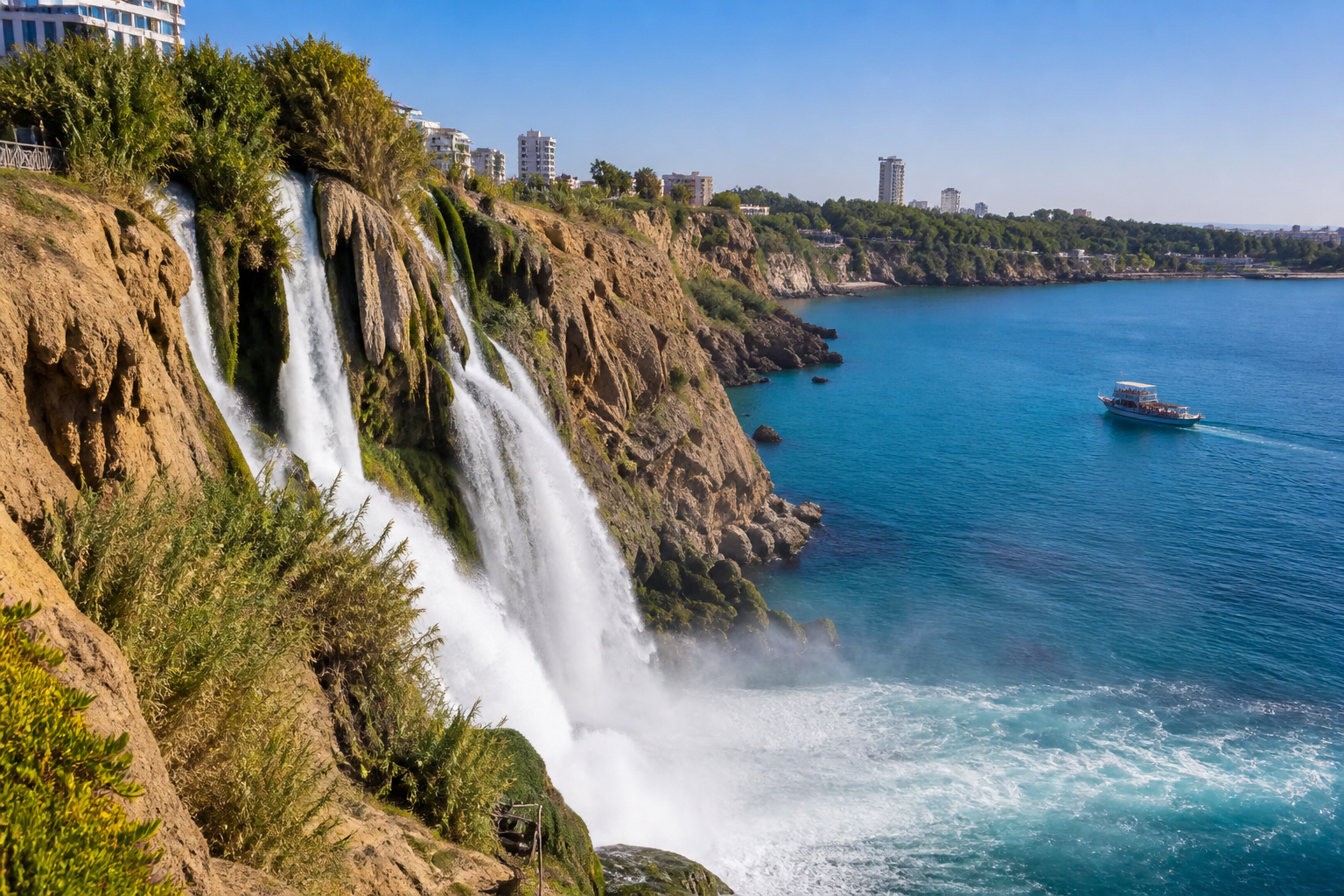
Antalya has two very different Düden waterfall experiences. Upper Düden lies inland in a green park where paths lead around and behind sections of falling water. It is a cool break from urban heat and can be combined with other northern-city stops.
Lower Düden is the more dramatic coastal sight. The river drops from high cliffs directly into the Mediterranean east of the center. Viewpoints in the surrounding park are free and particularly attractive when afternoon light reaches the water. Boat trips from Kaleiçi approach from the sea, offering a stronger sense of scale but also spray and movement.
Water flow and appearance can vary with season and weather. Wear shoes with grip near wet surfaces, stay behind barriers and protect cameras from mist. Kurşunlu Waterfall, farther outside the city, offers another forested option with paths and small pools.
Antalya Museum
The Antalya Museum is one of the best archaeological museums on Türkiye’s Mediterranean coast. Its collections explain the ancient regions of Lycia, Pamphylia and Pisidia, helping visitors understand the ruins scattered around the province. Sculpture excavated at Perge is a major highlight, displayed in galleries where the scale and craftsmanship can be appreciated at close range.
Allow two or three hours and check official opening information before visiting, as schedules and gallery access can change. The museum is near the eastern end of Konyaaltı Beach and connects well with the city’s tram network. Visiting before an excursion to Perge or Aspendos gives valuable context; visiting afterward helps connect objects with the places where they were found.
Ancient Perge and Aspendos
Perge lies east of Antalya and preserves a monumental urban landscape. Visitors can walk through Roman gates, baths, a large agora and a long colonnaded street with a water channel. The stadium and theater demonstrate the city’s scale, though access to individual structures may vary during conservation work.
Aspendos is famous for its remarkably preserved Roman theater, still used for selected performances. The stage building and seating create a powerful sense of ancient spectacle. The wider archaeological site includes aqueduct remains and a hilltop settlement, so allow more time than a quick theater photograph.
The two sites combine naturally on a full-day trip, sometimes with Side added. A rental car offers flexibility, while guided tours simplify transport and interpretation. Public travel is possible but can involve changes and long waits. Carry water, a hat and sturdy shoes because shade is limited.
Termessos and Mountain Scenery
Termessos occupies a mountain setting northwest of the city and feels entirely different from the coastal ruins. Forest trails climb past walls, tombs and civic structures to a theater with views across rugged peaks. Its defenders famously resisted Alexander the Great, and the difficult terrain still shapes the visit.
The site requires hiking on uneven, sometimes slippery paths. It is unsuitable for a rushed stop or extreme midday heat. Bring water, allow several hours and confirm access conditions before leaving Antalya. Independent transport is usually the practical choice. Travelers with limited mobility may prefer Perge or Aspendos.
Food and Drink
Antalya’s food reflects Mediterranean produce and regional Turkish traditions. Look for piyaz, a bean salad that in Antalya often includes a rich tahini sauce, and şiş köfte served with bread, vegetables and herbs. Fresh fish, grilled meats, meze and vegetable dishes are widely available.
Turkish breakfast combines cheese, olives, tomatoes, eggs, preserves and bread, while bakeries sell simit, börek and sweet pastries. Summer fruit is excellent. Try local citrus products and tahini-based sweets, but compare prices in heavily visited parts of Kaleiçi.
Getting Around Antalya
Antalya’s tram lines connect useful areas including the airport, city center, bus terminal, museum district and parts of the coast. Buses fill the gaps, while a reloadable Antalyakart and supported contactless payment options are used for fares. Systems and prices change, so verify current municipal transport information after arrival.
Kaleiçi itself is best explored on foot, though steep lanes and polished stones require comfortable shoes. Taxis are useful late at night or for awkward connections; insist on the meter and follow the route on a map. Driving is most valuable for ancient sites and remote beaches, not for central sightseeing.
The airport is close to the city by regional standards, but transfer times depend on traffic and your district. The tram is economical when the route suits your luggage and hotel. Arrange a licensed transfer for late arrivals or distant resorts.
Best Time to Visit
April to May and October usually offer the best conditions for sightseeing, with warm days and less intense heat. Swimming becomes increasingly comfortable through late spring. September remains hot and popular but is often easier than July or August.
High summer brings strong sun, high temperatures and crowded beaches. Plan outdoor ruins for early morning, rest during the hottest hours and drink more water than usual. Winter is mild compared with northern Europe but can be rainy, and some seasonal businesses or boat services reduce operations.
Where to Stay
Kaleiçi suits travelers who want history, restaurants and atmosphere at the door. Rooms occupy characterful buildings, but stairs, vehicle access and nightlife noise can be issues. Areas just outside the walls offer easier transport while remaining walkable.
Konyaaltı is practical for a beach-focused city stay, especially with mountain views and access to the museum. Lara offers sandy beach areas, resorts and airport convenience. Always check the exact location: a hotel using “Antalya” in its description may sit far outside the center.
A Suggested Four-Day Itinerary
Spend day one exploring Hadrian’s Gate, Kaleiçi, the harbor and Karaalioğlu Park. On day two, visit Antalya Museum and relax at Konyaaltı Beach. Use day three for Perge and Aspendos, ideally with an early departure.
On day four, choose the Düden waterfalls and Lara, or take a longer excursion to Termessos, Side or another coastal destination. Travelers with an extra day can add a boat trip or a slower beach day.
Antalya works best when city, coast and archaeology receive equal attention. The old town supplies atmosphere, the beaches and waterfalls reveal the landscape, and the ancient sites show why this coastline has attracted communities for thousands of years. Plan around heat and distance, and the city becomes far more than a resort gateway.
Comments