
Barcelona brings together monumental architecture, medieval streets, Mediterranean beaches and a food culture with a strong Catalan identity. The city is compact enough for walking yet varied enough to fill a week. A first visit might begin with Gaudí’s extraordinary buildings, continue through the Gothic Quarter and end with dinner in a neighborhood square.
Four days provide a balanced introduction. Three can cover the essentials at a faster pace, while five or six allow time for Montjuïc, beaches and less-visited districts. Reserve the most popular monuments before arrival, group each day geographically and remember that Barcelona is a living city facing intense tourism pressure. Thoughtful choices improve both your trip and local life.
Why Visit Barcelona?
Few European cities have such a recognizable visual identity. Antoni Gaudí and other Modernisme architects reshaped streets with organic forms, stained glass, mosaics and elaborate stonework. Older layers survive in Roman fragments, Gothic churches and the lanes of the historic center. The sea and surrounding hills add natural viewpoints and breathing room.
Barcelona also rewards travelers beyond its headline sights. Markets display regional produce, independent galleries occupy former workshops, and each district has its own rhythm. Catalan language and traditions distinguish the city culturally from the rest of Spain. Food, festivals, football and design all form part of contemporary Barcelona.
Sagrada Família
The Basílica de la Sagrada Família is Barcelona’s essential reservation. Gaudí’s unfinished church is not simply a famous exterior: inside, branching columns support a luminous space transformed by colored glass. The Nativity and Passion façades use radically different visual languages, and the museum explains the project’s geometry, construction and long history.
Tickets are timed and should be purchased from the official site. The standard visit includes an app-based audio guide, so download the app, charge your phone and bring earphones. Tower access requires a specific ticket and may be affected by weather or operational conditions. Arrive at the correct entrance before your slot and carry minimal luggage.
Allow around ninety minutes for the basilica and museum, longer with a tower. Walk afterward to the Hospital de Sant Pau, a major Modernisme complex designed by Lluís Domènech i Montaner. The tree-lined avenue between the two offers one of the city’s most satisfying architectural approaches.
Park Güell and Gaudí’s Residential Works
Park Güell began as an ambitious residential project and became a public park filled with viaducts, mosaic surfaces and playful structures. The monumental zone requires timed admission. Early morning offers cooler temperatures and fewer groups, while late afternoon can provide warm light. Respect barriers and avoid sitting on fragile decorative surfaces.
Elsewhere in the city, Casa Batlló and La Pedrera stand along or near Passeig de Gràcia. Both reveal how Gaudí transformed private homes through ventilation, light, structure and symbolism. Visiting both is expensive and can feel repetitive on a short trip, so choose according to interest: Casa Batlló is intensely decorative, while La Pedrera offers a sculptural roof and a strong architectural exhibition.
Casa Vicens in Gràcia shows an earlier phase of Gaudí’s work and often feels less crowded. The Güell Palace near La Rambla provides another perspective, with dark interiors giving way to a colorful rooftop. Booking one major house and viewing the others from outside creates a sensible balance.
Gothic Quarter and Roman Barcelona
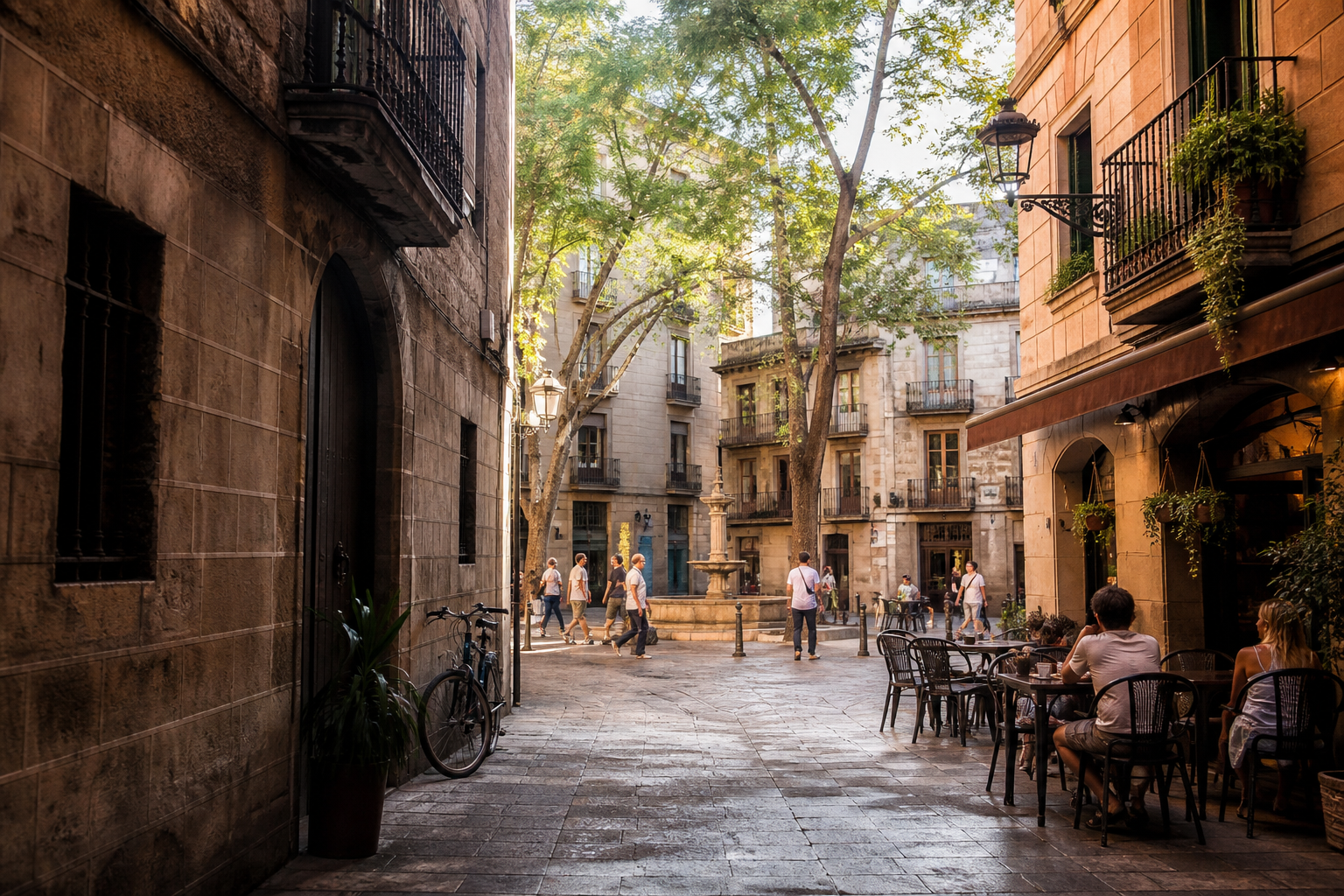
The Gothic Quarter is a web of lanes, plazas and religious buildings at the heart of the old city. Barcelona Cathedral anchors the district, while remnants of the Roman walls and ancient Barcino appear in unexpected courtyards. The city history museum helps connect underground archaeology with the streets above.
Walk early before tour groups fill the narrow routes. Seek Plaça del Rei, the columns of the Temple of Augustus and quieter streets behind the cathedral. Some “Gothic” details were restored or created in later centuries, but the district still preserves the scale and pattern of medieval Barcelona.
La Rambla borders the quarter to the west. It is famous and worth seeing once, especially for the entrance to La Boqueria market, but it is also crowded and heavily commercial. Keep valuables secure, ignore distractions and move into parallel streets for better restaurants and calmer walking.
El Born, Barceloneta and the Waterfront
El Born combines medieval streets with boutiques, bars and cultural sites. Santa Maria del Mar is a powerful example of Catalan Gothic architecture. The Picasso Museum occupies a group of historic palaces and requires advance planning in popular periods. Nearby, the former market structure of El Born preserves archaeological remains and historical interpretation.
Continue through Parc de la Ciutadella toward the waterfront. Barceloneta began as a fishing and working-class district and now experiences significant visitor pressure. Its narrow streets still contain local businesses, but beach tourism and short-term rentals have changed daily life. Dress appropriately away from the sand and keep noise low in residential lanes.
Barcelona’s urban beaches are convenient rather than secluded. Barceloneta is busiest; walking northeast leads to broader, sometimes calmer sections such as Nova Icària and Bogatell. Watch belongings carefully and follow sea-condition flags. For a dedicated beach day, coastal towns reached by train may offer a more relaxed setting.
Eixample and Passeig de Gràcia
The Eixample is defined by its grid, chamfered street corners and broad avenues. It was planned as Barcelona expanded beyond the old walls and contains a remarkable concentration of Modernisme architecture. Looking upward reveals carved balconies, stained glass and decorative façades that hurried visitors often miss.
Gràcia and Local Neighborhood Life
Gràcia retains the pattern of an independent town absorbed by Barcelona in the nineteenth century. Small squares, low-rise streets and independent businesses give it a different atmosphere from the Eixample below. Plaça del Sol and Plaça de la Vila de Gràcia become social spaces in the evening.
Montjuïc
Montjuïc rises above the port and combines gardens, museums, sports venues and viewpoints. The National Art Museum of Catalonia occupies the imposing Palau Nacional and holds an important collection, including Romanesque mural paintings. The nearby Mies van der Rohe Pavilion is compact but influential in modern architecture.
Food and Markets
Catalan cooking draws on vegetables, seafood, pork, olive oil and combinations of sweet and savory flavors. Try pa amb tomàquet, bread rubbed with tomato and oil, as well as escalivada, grilled meats, rice dishes and seasonal seafood. Crema catalana provides a classic finish.
Tapas are popular, but not every dish is specifically Catalan. Vermouth bars, bakeries and neighborhood restaurants often reveal more local character than menus beside major sights. Meal times run later than in northern Europe: lunch commonly begins after 1:30 p.m., and dinner after 8:30 p.m.
La Boqueria is visually impressive but busiest near its main entrance. Explore deeper stalls and avoid blocking working aisles. Sant Antoni, Santa Caterina and neighborhood markets offer alternatives. If purchasing seafood or produce to eat immediately, ask clearly about preparation and price.
Responsible and Safe Visiting
Pickpocketing is a real concern in crowded transport, La Rambla, beaches and major stations. Keep phones and wallets out of open pockets, close bags and remain alert when someone creates a distraction. The city is generally safe for sightseeing, but ordinary urban awareness matters.
Getting Around Barcelona
The metro is the fastest option for longer urban journeys, while buses reveal more of the city. Many central routes are walkable, and the grid makes orientation straightforward. Official transport products range from stored-journey tickets to unlimited Hola Barcelona cards lasting one to five days. The tourist card includes airport metro journeys and several Zone 1 operators, but not every special service.
Choose a pass based on actual trips rather than marketing convenience. Validate correctly and keep the ticket until the journey ends. Airport connections include metro, train, bus and dedicated express services; the best choice depends on terminal and accommodation location.
Best Time to Visit
April to June and September to October provide warm weather suited to walking. Spring can be variable, while early autumn often supports beach time. July and August are hot, humid and extremely busy; schedule outdoor architecture early and rest during peak heat.
Winter is mild and quieter, though shorter days and occasional rain change the experience. Major trade fairs, football matches and festivals can raise hotel prices in any season. Book well ahead when your dates overlap with a large event.
Where to Stay
The Gothic Quarter and El Born place you near historic sights but can be noisy and crowded. Eixample offers broad transport choice, architectural streets and many hotels. Gràcia feels more residential, while Sant Antoni balances restaurants with central access.
Poble-sec suits Montjuïc and evening dining; Poblenou offers a quieter grid near beaches and creative businesses. Wherever you stay, verify licensing, soundproofing and the walk to a metro station. Avoid choosing solely by distance from La Rambla.
A Suggested Four-Day Itinerary
Spend day one at Sagrada Família, Sant Pau and Passeig de Gràcia. On day two, visit the Gothic Quarter, El Born, Ciutadella and the waterfront. Use day three for Park Güell, Gràcia and one Gaudí house.
On day four, explore Montjuïc and choose a museum, then finish with dinner in Poble-sec or Sant Antoni. With an extra day, add a beach excursion, more Modernisme or a trip to Montserrat.
Barcelona is at its best when architecture, neighborhood life and the Mediterranean receive equal attention. Make essential reservations, but leave room for markets and squares. Moving thoughtfully through the city helps preserve the qualities that make it worth visiting.
Comments