
Hamburg is a maritime city shaped by water, trade and reinvention. Ocean-going ships move through a working harbour, red-brick warehouses rise directly from narrow canals, and the glass waves of the Elbphilharmonie transform the old waterfront skyline. Yet Germany’s second-largest city is not only about its port. Lakes, parks, independent music venues, major museums and distinctive neighbourhoods make Hamburg an unusually varied city break. This Hamburg travel guide covers the essential sights, local food, transport and planning for a rewarding first visit.
Why Visit Hamburg?
Hamburg feels different from Germany’s inland capitals. The Elbe links it to the North Sea, canals cut through central districts and ferries form part of public transport. Its merchant history produced grand offices and warehouses, while former dockland now hosts striking contemporary architecture.
Speicherstadt
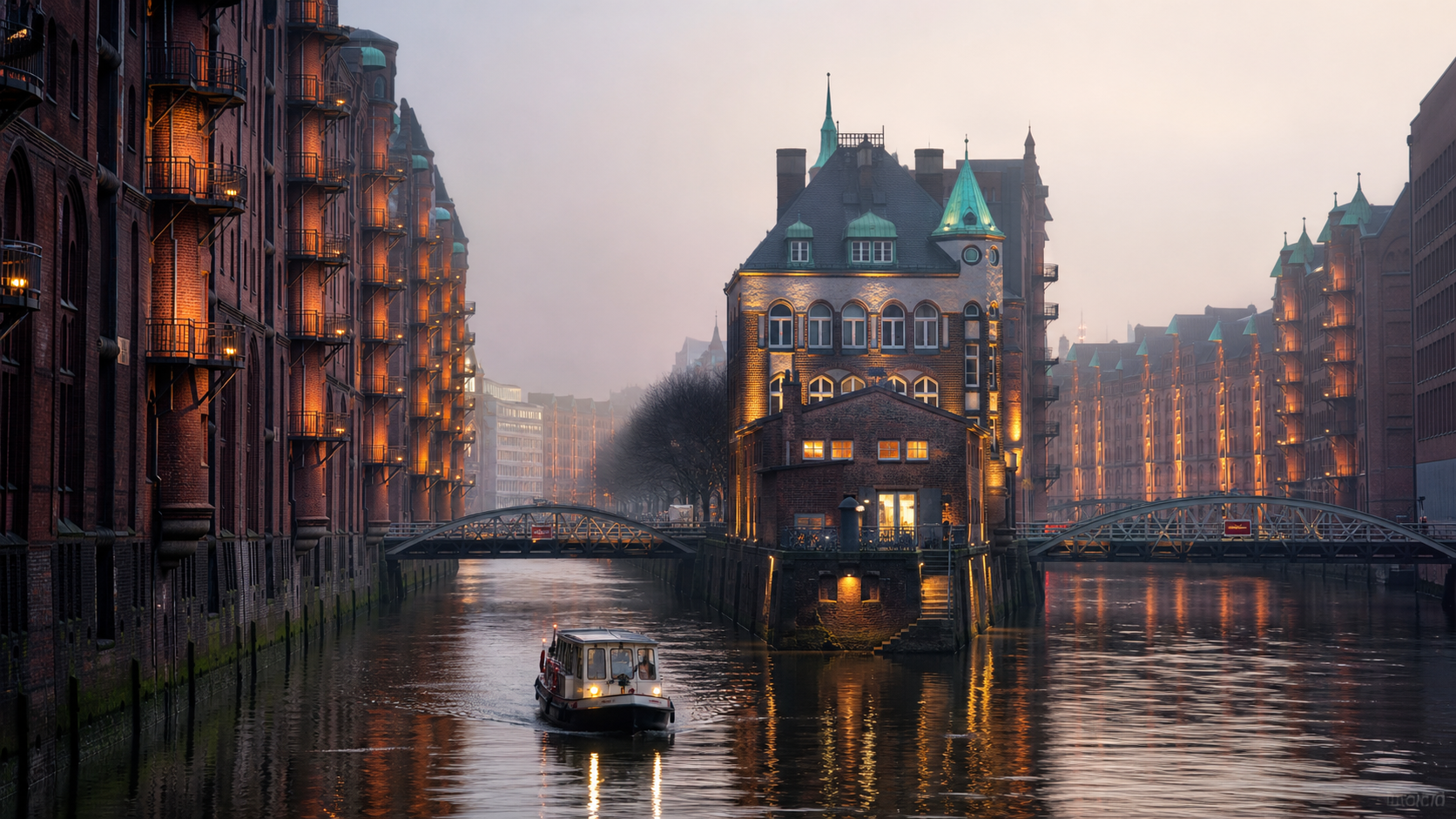
Speicherstadt is the world’s largest historic warehouse district and forms part of Hamburg’s UNESCO World Heritage Site. Neo-Gothic red-brick buildings stand on timber foundations between canals crossed by steel bridges. Warehouses once stored coffee, tea, spices and carpets arriving through the port.
Walk through early in the morning when delivery traffic and tour groups are limited. Poggenmühlenbrücke gives a classic view toward the Wasserschloss building, while bridges around Kehrwieder and Wandrahmsfleet provide changing perspectives. At night, illuminated façades reflect beautifully in the canals.
Attractions include Miniatur Wunderland, the International Maritime Museum and a spice museum. Miniatur Wunderland is enormously popular, so book a timed entry well ahead. Choose one substantial museum rather than spending the day moving between indoor attractions.
Kontorhaus District and Chilehaus
Across from Speicherstadt, the Kontorhaus district completes the UNESCO listing. These early twentieth-century office buildings express Hamburg’s commercial power through brick façades, courtyards and sculptural details. The Chilehaus is the masterpiece, with a sharply angled eastern tip resembling a ship’s bow.
Explore on foot between Burchardplatz and Meßberg, entering public courtyards where permitted. The area is active office space rather than a preserved museum, and weekday mornings reveal its everyday rhythm. Combine it with nearby St Catherine’s Church and the streets toward the city centre.
Elbphilharmonie
The Elbphilharmonie rises above a former warehouse at the western edge of HafenCity. Its curved glass exterior reflects water and sky, while the brick base connects the building with the harbour’s industrial history. Concert tickets offer the fullest experience, but the public Plaza provides panoramic access without attending a performance.
A long curved escalator leads to the Plaza, 37 metres above ground. The outer walkway circles the building with views of docks, city towers and Speicherstadt. Entry capacity is controlled by tickets; booking a timed slot guarantees access and rules or prices can change. Check official information before arrival.
Guided tours do not necessarily enter the concert halls, so read inclusions carefully. If attending a concert, arrive early because late seating is not guaranteed and the building takes time to navigate.
HafenCity and the Waterfront
HafenCity is one of Europe’s largest inner-city redevelopment projects. New apartments, offices, parks and cultural buildings extend east from the Elbphilharmonie. The district’s wide promenades and changing construction make it interesting for architecture enthusiasts, though parts can feel quiet outside business hours.
Landungsbrücken and a Harbour Ferry
St Pauli Landungsbrücken is Hamburg’s busiest waterfront gateway. Harbour cruises, public ferries and sightseeing boats depart beneath a long terminal building. The Old Elbe Tunnel begins nearby and carries pedestrians and bicycles beneath the river, providing an industrial landmark and unusual view back toward the city.
For an inexpensive harbour experience, ride an HVV ferry included in the appropriate public transport ticket. Routes pass shipyards, container terminals, riverside homes and beaches. A commercial harbour cruise adds detailed commentary and may enter narrower waterways depending on tides and vessel size.
Weather on the river is colder and windier than central streets. Bring a layer even in summer and allow extra time around weekend crowds.
St Michael’s Church
St Michael’s Church, known locally as Michel, is Hamburg’s most recognisable traditional landmark. Its copper-topped tower served as a reference point for ships approaching the city. The Baroque interior includes spacious galleries, multiple organs and a large crypt.
Climb or take the lift to the tower platform for views across the harbour and city. Separate arrangements may apply to the church, crypt and tower. Evening ascents are offered on selected dates. Dress respectfully and check for services before planning a purely sightseeing visit.
Alster Lakes and the City Centre
The Binnenalster and Außenalster form a broad recreational centre north of the old town. Jungfernstieg overlooks the smaller inner lake, lined with shops, hotels and boat departures. Walk through the elegant arcades toward Hamburg City Hall, whose richly decorated façade overlooks Rathausmarkt.
The larger Außenalster is ringed by parks, running paths and attractive residential streets. A complete circuit is lengthy, but a short walk through Alsterpark or a boat cruise reveals a greener Hamburg. Cafés near the water suit a slower morning after harbour sightseeing.
St Pauli and the Reeperbahn
St Pauli has long mixed sailors, nightlife, political culture, football and music. The Reeperbahn remains the centre of its entertainment district, with theatres, clubs, bars and adult businesses. Beatles history is marked around Große Freiheit, where the band performed before international fame.
Visit with awareness after dark, use normal city precautions and avoid photographing people working in the district. The neighbourhood is broader than nightlife: side streets contain restaurants, independent venues and community initiatives. FC St Pauli’s Millerntor stadium and the nearby Karolinenviertel reflect a strong local identity.
Sternschanze, Karoviertel and Ottensen
Sternschanze, commonly called the Schanze, offers street art, bars, restaurants and small shops around the former Rote Flora theatre. It is lively throughout the week and crowded on warm evenings. Adjacent Karoviertel adds boutiques and cafés beside the exhibition grounds.
Farther west, Ottensen developed from an industrial town into a dense neighbourhood of food businesses, cinemas and pedestrian streets. It makes an excellent dinner destination and feels distinct from the monumental centre. Use S-Bahn connections rather than judging distances only on a map.
Fish Market and Elbe Beaches
Hamburg’s Sunday Fish Market begins very early and combines produce, seafood, flowers, souvenirs and energetic sales performances. Nightlife crowds sometimes arrive as morning shoppers begin. Verify current hours, bring cash options and consider whether the early start fits the rest of your itinerary.
Continue west along the Elbe to Övelgönne, where historic vessels and a narrow beach face passing container ships. Blankenese lies farther out, with hillside lanes and staircases descending toward the river. These districts show a calmer maritime side of Hamburg.
Museums and Culture
Hamburger Kunsthalle contains major German Romantic, modern and contemporary works near the central station. The Museum für Kunst und Gewerbe covers decorative arts, design and photography. Deichtorhallen hosts large temporary art and photography exhibitions in former market halls.
What to Eat in Hamburg
Fischbrötchen, a fish sandwich with herring, salmon, shrimp or fried fish, is the essential harbour snack. Quality is often best at busy waterfront stands with rapid turnover. Labskaus combines corned beef, potato and beetroot, traditionally served with egg, pickles and herring. It is more appealing than its appearance suggests.
Try panfish with mustard sauce, North Sea shrimp and seasonal plaice. Franzbrötchen is a cinnamon-rich local pastry ideal for breakfast. Hamburg also has excellent international dining shaped by its trading history and diverse communities.
Craft beer, traditional breweries and serious cocktail bars coexist easily. Reserve popular restaurants from Thursday through Saturday, but leave room for casual market and neighbourhood meals.
Best Time to Visit
May to September offers long days, outdoor events and the best chance of pleasant ferry weather. Conditions remain unpredictable: rain, wind and cool evenings occur in summer. Pack a waterproof layer rather than relying on forecasts.
Spring blossom and autumn colour suit lakeside walks. Winter is dark and damp but works well for museums, concerts and Christmas markets. Large port events and trade fairs can raise hotel prices, so check the calendar.
Getting Around Hamburg
The HVV network combines U-Bahn, S-Bahn, buses and public ferries. Tickets cover fare zones and must meet current validation rules. Day tickets are often convenient for travellers using ferries and outer neighbourhoods. Central districts are walkable, but water and rail lines make routes less direct than they appear.
S-Bahn trains connect Hamburg Airport with the centre. Hamburg Hauptbahnhof is the primary rail hub, while Altona serves western districts and regional routes. Cycling is popular, though construction and wet surfaces require care. A car is unnecessary for most visits.
Where to Stay
Altstadt and Neustadt provide central access to landmarks and shopping. HafenCity offers modern hotels near the waterfront but quieter evenings. St Pauli suits nightlife and live music, while Sternschanze attracts visitors interested in restaurants and independent culture.
Around the central station, transport is excellent but street atmosphere varies by block. Altona and Ottensen provide neighbourhood life with fast rail connections. Check the precise distance to an S- or U-Bahn station and confirm soundproofing near nightlife areas.
A Three-Day Hamburg Itinerary
On day one, explore Speicherstadt, the Kontorhaus district and HafenCity, then visit the Elbphilharmonie Plaza near sunset. On day two, see St Michael’s, walk through Landungsbrücken and take a harbour ferry. Continue into St Pauli and dine in Sternschanze.
On day three, tour City Hall and the Alster, choose an art museum, then travel to Ottensen or Övelgönne. With another day, add Blankenese, a longer harbour cruise or more time in Hamburg’s cultural venues.
Practical Tips
Reserve Miniatur Wunderland, Plaza entry and important concerts ahead. Carry a waterproof layer, use public ferries strategically and check tidal or construction-related route changes. Keep valuables secure in nightlife crowds and respect working harbour restrictions.
Hamburg’s character emerges between water and city: canal bridges, cranes beyond a concert hall and ferries passing giant ships. Give these transitions time, and the port becomes more than a backdrop.
Comments